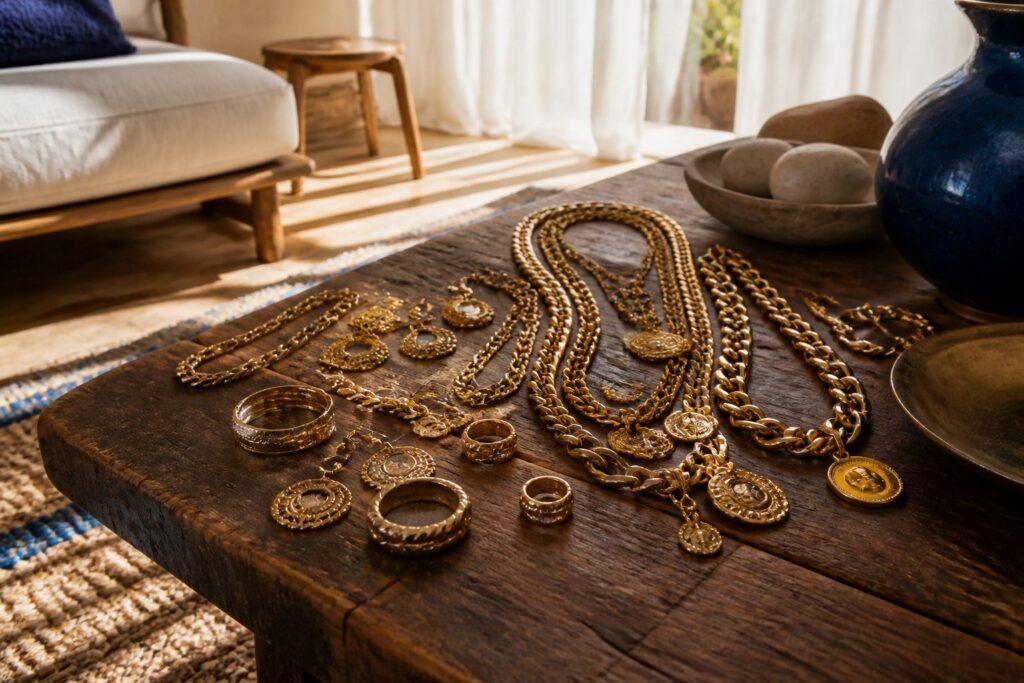
Maximalist jewelry gold is the deliberate wearing of oversized, layered, and densely stacked gold pieces as a single styling statement.
Scale without restraint turns into costume; the two-inch minimum clearance between layered necklaces, for example, is what keeps chains from tangling into a single metallic knot by noon.
The trend pulls from West African filigree, Indian temple jewelry, and Byzantine coin pendants, but demands you build a private lineage rather than borrow a complete costume.
Oversized Earrings
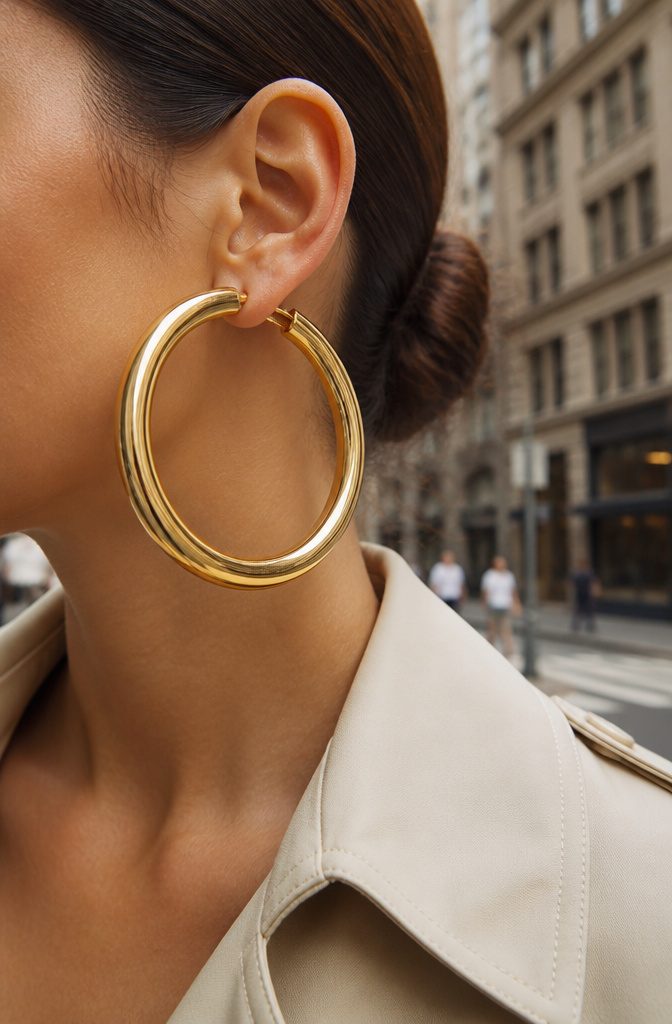
Scale is what separates a gold earring from a maximalist gold earring, and oversized pieces sit at the center of this trend.
Five industry voices point to large earrings as the entry point: hoops blown up to two or three times standard size, drops that brush the collarbone, and sculptural forms that read as wearable art rather than simple accessories.
Gold handles this scale better than silver because the warmth keeps big shapes from looking clinical.
A 3-inch forged hoop in 14k yellow gold catches light differently than the same form in rhodium-plated brass; the color softens the silhouette so it frames the face rather than dominating it.
Hair and neckline become part of the styling calculation. An oversized drop earring gets lost against loose waves, so I pull hair back or tuck it behind the ear when I wear mine.
High necklines compete for territory with large shapes; a bare collar or simple crew avoids that clash.
The one rule I follow: one oversized piece per ear, and let everything else recede.
That restraint is what makes maximalist earrings wearable rather than costume. You want the shape to do the work, not the volume alone.
Chunky Necklaces
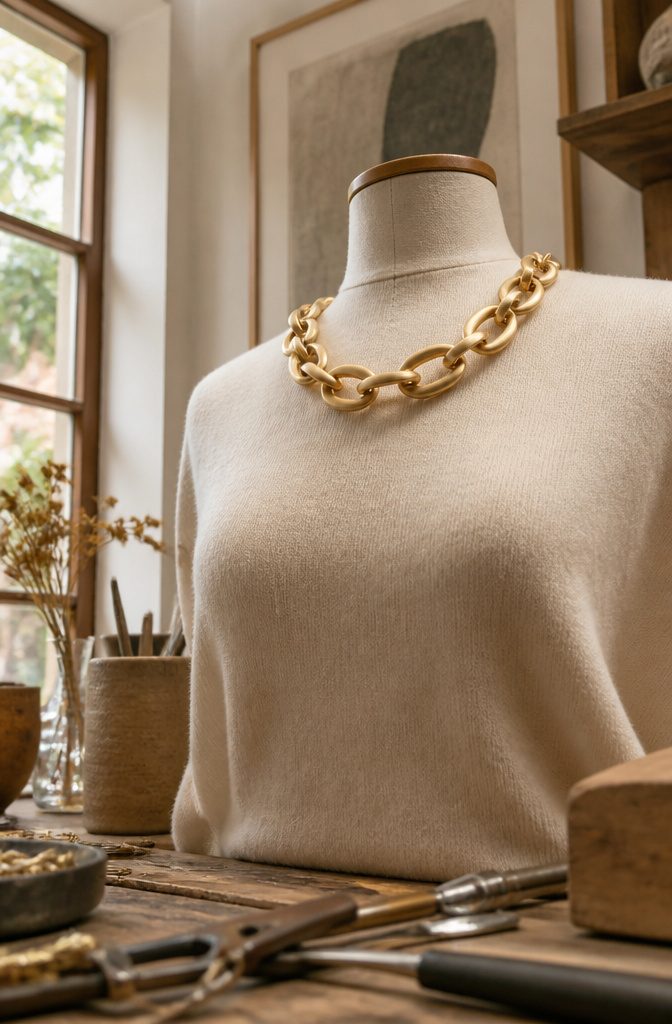
Chunky necklaces sit at the center of maximalist jewelry gold, and five separate trend reports mark them as essential this year. I see two ways to wear them, and the choice changes the whole outfit.
One heavy 18-inch or 20-inch chain with oversized links does the anchoring for you.
Wear it over a plain crewneck or a buttoned collar and let the weight speak. This is the safer play, and it works for offices that tolerate some flash.
The other route is the "neck mess": three or four chains at staggered lengths, mixing styles, maybe a rope chain at 16 inches, a paperclip chain at 18, a curb chain at 22.
The cascading effect reads as intentional only if you vary the textures deliberately. Two similar chains look like a mistake; two opposing ones look like a decision.
I prefer the stack, but it costs more and tangles more.
A single clasp holding multiple strands solves the tangle, and several designers now build them that way. Start there if you are new to the look.
Stacked Rings
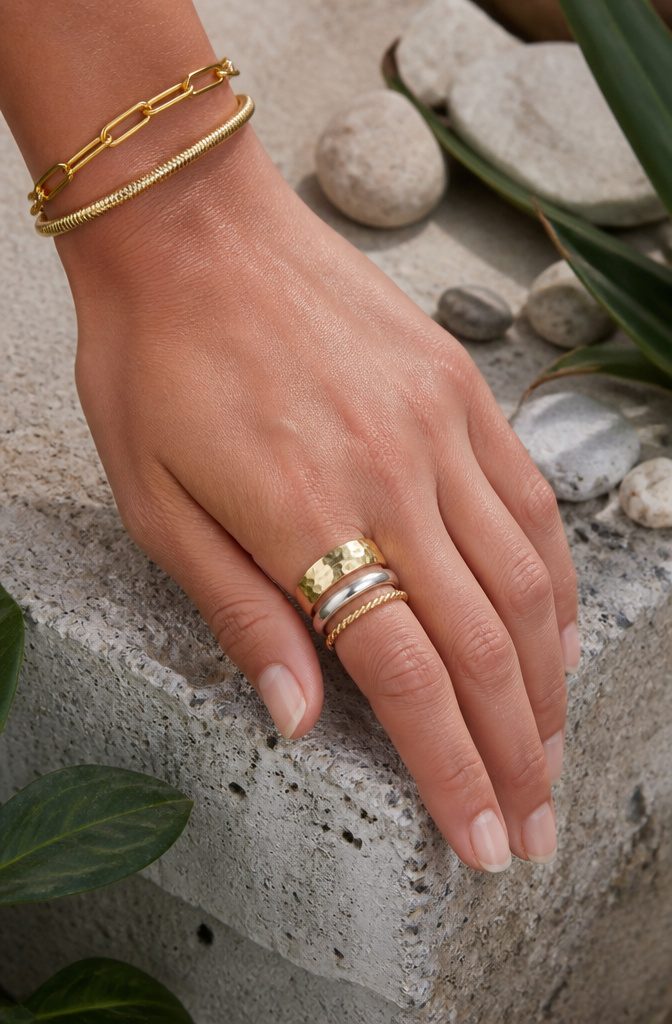
Stacked rings give maximalist jewelry gold its density without turning fingers into junk drawers.
The move is to start with one base ring, something with weight or texture that can hold the center, then add bands that vary in width and finish around it.
A 2 mm hammered band beside a 5 mm smooth one creates the contrast that makes the stack read as intentional rather than accumulated by accident.
Placement matters as much as the rings themselves. I spread stacks across three or four fingers rather than loading everything onto one hand, and I leave at least one finger bare so the eye has somewhere to rest.
Balance, not sheer volume, is what separates maximalism from mess. Mixing metals is allowed, though I prefer to keep the palette tight, maybe one warm gold tone with a single silver accent rather than scattering every finish I own.
For texture, I pair chain-link rings with solid domes or rope-twist bands against flat surfaces. The rule I follow: no two adjacent rings should share the same texture, or the stack collapses into one visual blob.
Start with your base, add one complementary piece, and stop when adding another would mean removing something to make room. That is usually the right number.
Bold Bracelets
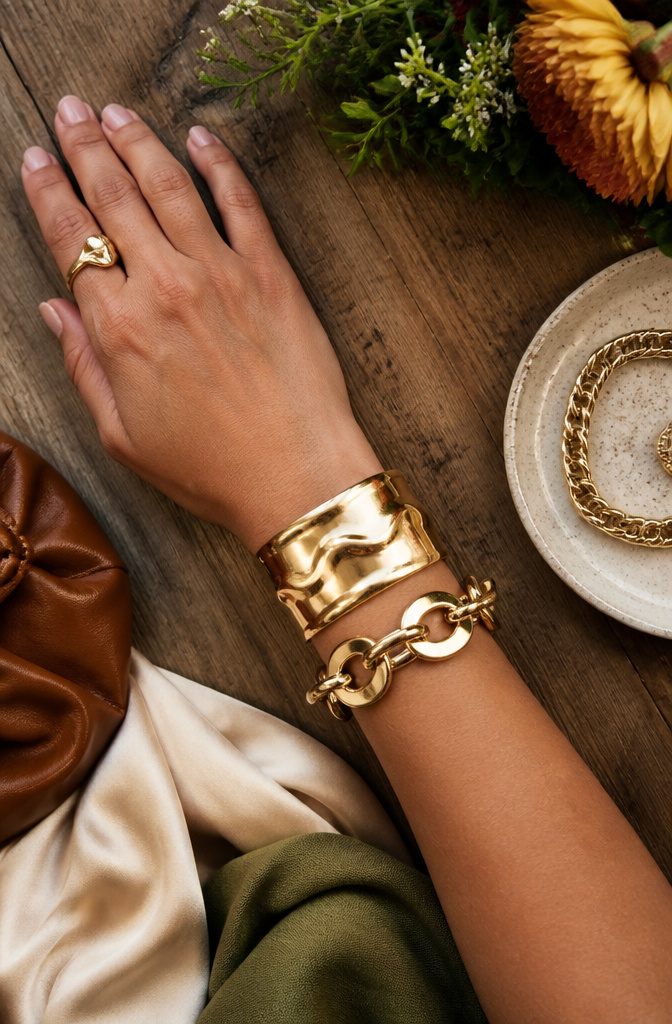
Cuffs anchor a maximalist wrist better than anything else. A solid gold-plated cuff like the Turquoise Solstice or Horizon styles sits at the forearm’s widest point and stays put without a clasp, which matters when you’re stacking.
The weight concentrates at the center of the wrist, so a single heavy piece feels more stable than three thin bangles sliding toward your hand.
Chain-link bracelets work on a different principle. Wider links, 8–12 mm, read as bold even in a smaller overall silhouette.
The BRACHA Roma Nail Cuff and Rolly bracelet show how a brand can split the difference, cuff structure with chain flexibility. I prefer the Rolly for all-day wear because the links let the wrist bend naturally.
Asymmetry wins over matching sets. One cuff on the right wrist, two slimmer chains on the left, breaks the symmetry that reads as costume.
Selena Gomez’s stacked approach works because the pieces vary in weight, not just size. For daily comfort, keep the total under roughly 60 grams per wrist, anything heavier and you’ll be conscious of it by 3 p.m.
The Twenty-Something bangle stack connects with an oval link, which keeps five pieces from rattling separately, a smart construction move I wish more brands copied.
Gold-plated stainless steel wraps, like the multi-layer Wolf & Badger style, solve the durability problem for pieces you plan to wear hard. The plating eventually wears at contact points, but the steel underneath doesn’t green your skin.
Statement Brooches
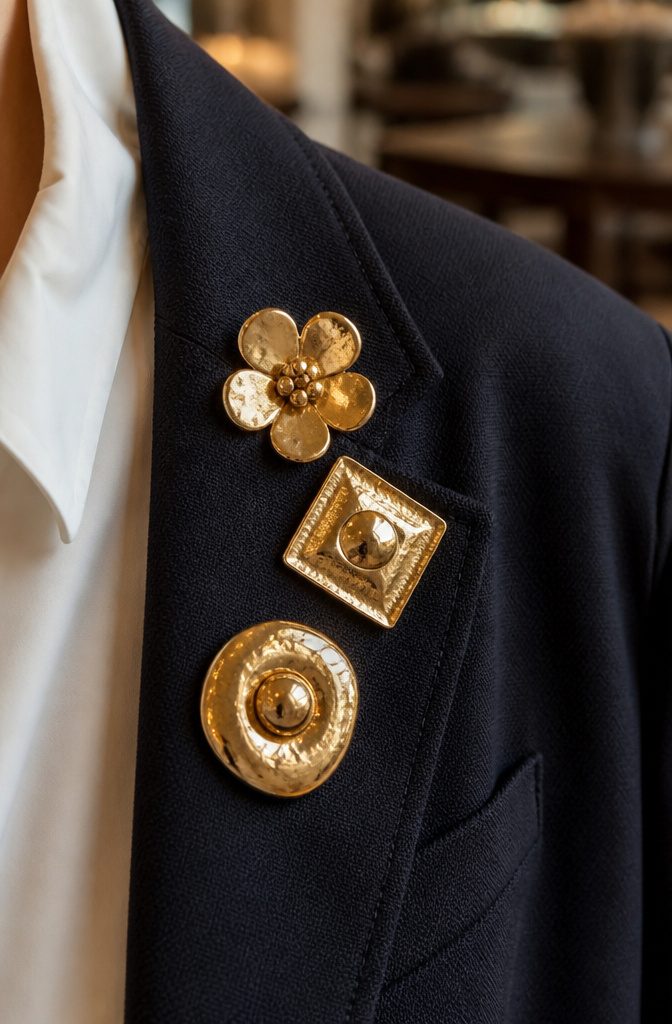
Brooches have shaken off their vintage reputation and landed at the center of maximalist jewelry gold styling.
At Miu Miu’s Autumn/Winter show, they appeared in clusters layered without apology across lapels, pockets, and straps, a styling move that reads as deliberate excess rather than inherited costume.
I see the appeal: a single brooch still whispers grandmother’s jewelry box, but three or four pinned along a collar or gathered at the shoulder turn the same piece into something aggressively current.
Gold is what completes that shift. Yellow gold, especially hammered or high-polish finishes, catches light the way antique silver or dark patina cannot, so the brooch registers as runway rather than estate sale.
The metal’s warmth also lets brooches travel to placements that would look off in cooler tones: a cluster at the waist of a dress, one anchoring a silk scarf, two framing a neckline like displaced earrings.
Three brooches minimum is where the effect turns from accent to statement; below that, the eye still searches for the practical reason the pin exists.
Brooches are back as part of the more-is-more era, and the styling is what saves them from nostalgia.
What I would add is that gold weight matters here. A thin, plated brooch in a cluster looks cheap up close; the same piece in solid gold or substantial brass carries the scale the trend demands.
"We’ve entered our more-is-more era, and it’s about time someone coined a hashtag for it. Across the runways, the mood was gloriously excessive… At Miu Miu, brooches sparkled in clusters, layered unapologetically."
For the reader, this means the brooch you already own becomes wearable again if you simply stop treating it as a solitary accent.
Gather what you have, add one new piece in a warmer gold if your collection skews cool, and pin them where a necklace would sit. The lapel is the starting point, not the rule.
Mixed Metal Pieces
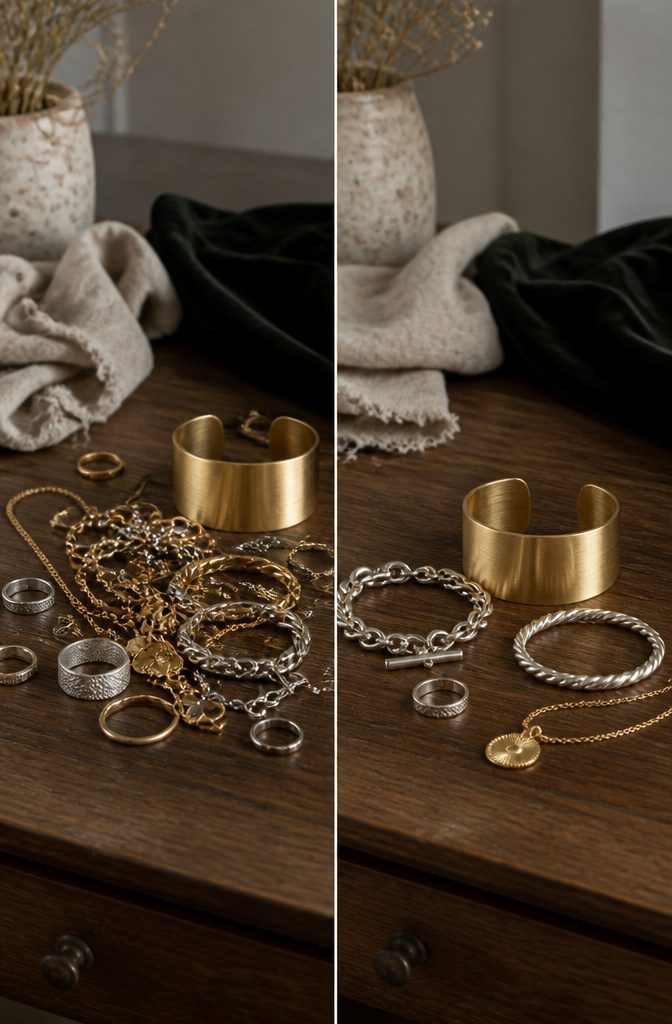
Mixed metal pieces let you wear gold without committing to an all-gold look, and in maximalist styling that choice matters more than most people think.
A monochrome wall of yellow metal flattens fast against skin or fabric. Introducing silver, rose gold, or even oxidized steel breaks that density into readable layers and gives the eye somewhere to travel.
The combinations that read intentional rather than accidental follow a few patterns I have noticed.
Pairing gold with silver works when the pieces share heft or finish, so a brushed gold cuff against polished silver rings looks considered, not like you grabbed the wrong box.
Rose gold with yellow gold softens the contrast and reads as tonal variation rather than clash. What fails is mixing one delicate chain in one metal with massive pieces in another; the scale mismatch signals accident, not curation.
Start with one dominant metal at about sixty percent and let the second metal do the interrupting work.
That ratio keeps the look cohesive while still building the visual confidence maximalist jewelry is after. Balance here does not mean symmetry; it means every piece earns its place in the stack.
Layering Techniques
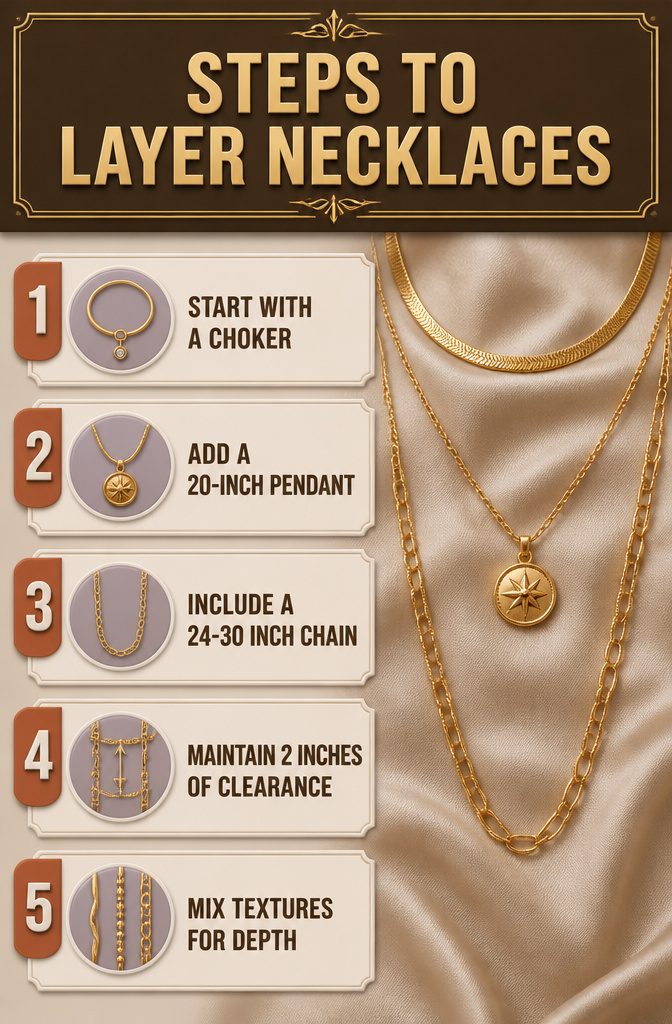
Layering necklaces is the core move in maximalist jewelry gold, and the difference between a put-together look and a tangled mess comes down to length spacing.
I start with a choker or 16-inch collar as the anchor, add a 20-inch pendant for the middle tier, and finish with a 24- to 30-inch chain that draws the eye downward.
The cascading effect works because each strand has room to move without overlapping its neighbor; two inches of clearance between clasps is the minimum that keeps chains from marrying themselves by noon.
Texture mixing is where the look gains depth. A smooth snake chain against a hammered link or a strand of small gold beads creates contrast that reads as intentional rather than haphazard.
I avoid putting two identical chain styles next to each other, the way a single texture repeated at different lengths flattens into something uniform and loses the maximalist point entirely.
For bracelets and rings, the same logic applies but with more tolerance for crowding. Stack rings across three fingers rather than loading one, which keeps the hand looking dressed rather than weighed down.
Bracelets need movement; a tight stack that cannot shift reads as a cuff, not layers. More pieces mean more time adjusting, and thin chains will tangle if you rush the morning routine.
Styling Balance
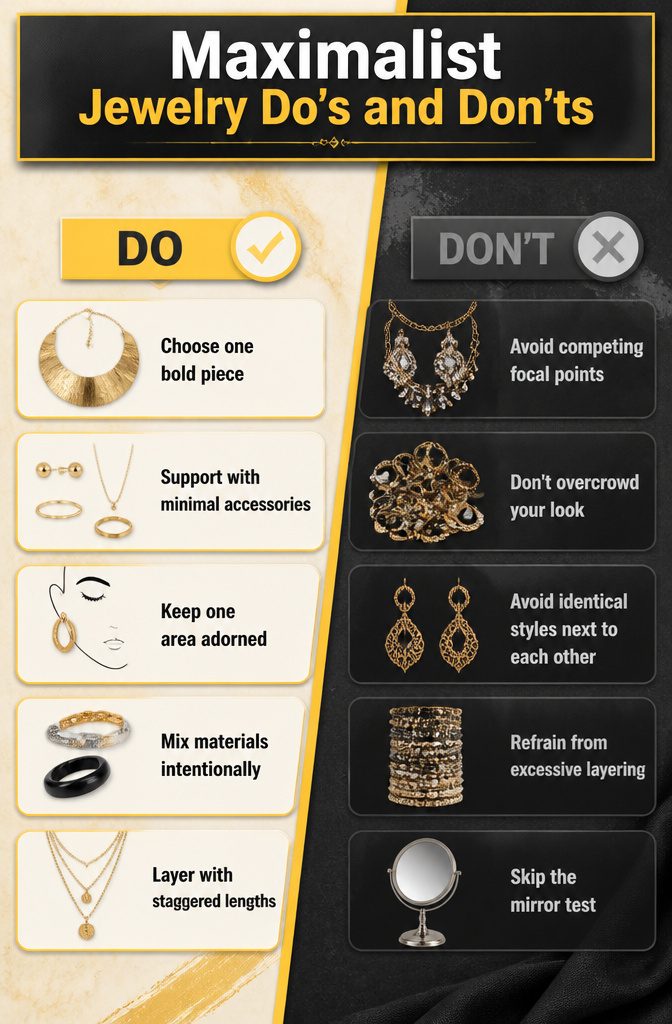
A single bold piece does the heavy lifting. I start with one oversized earring, a broad collar necklace, or a cuff bracelet that commands attention, then let everything else fall back.
The supporting cast stays small: thin chains, simple studs, a plain band. That contrast is what makes the statement piece read as intentional rather than accidental.
The real decision is where to load up and where to stay quiet. I load the neckline or the ears, rarely both at full volume.
A chunky necklace with bold earrings works only when one of them steps down in scale or texture. Two competing focal points split the eye and flatten the effect.
The same logic runs down the arms: a stack of wide bangles on one wrist needs bare skin or a single slim ring on the other hand to keep the rhythm from turning to noise.
Layered and overloaded sit on opposite sides of a thin line.
Layered means pieces at staggered lengths, varied widths, materials that talk to each other. Overloaded is when the eye cannot settle, when removal would improve rather than diminish.
Coco Chanel’s old advice was to take one thing off before leaving the house; the maximalist move is to add one more, but only after the base already holds together.
The test I use: if I can name every piece I am wearing without looking in a mirror, I have probably hit the mark. If I lose count, I have crossed into costume.
Cultural and Historical Roots
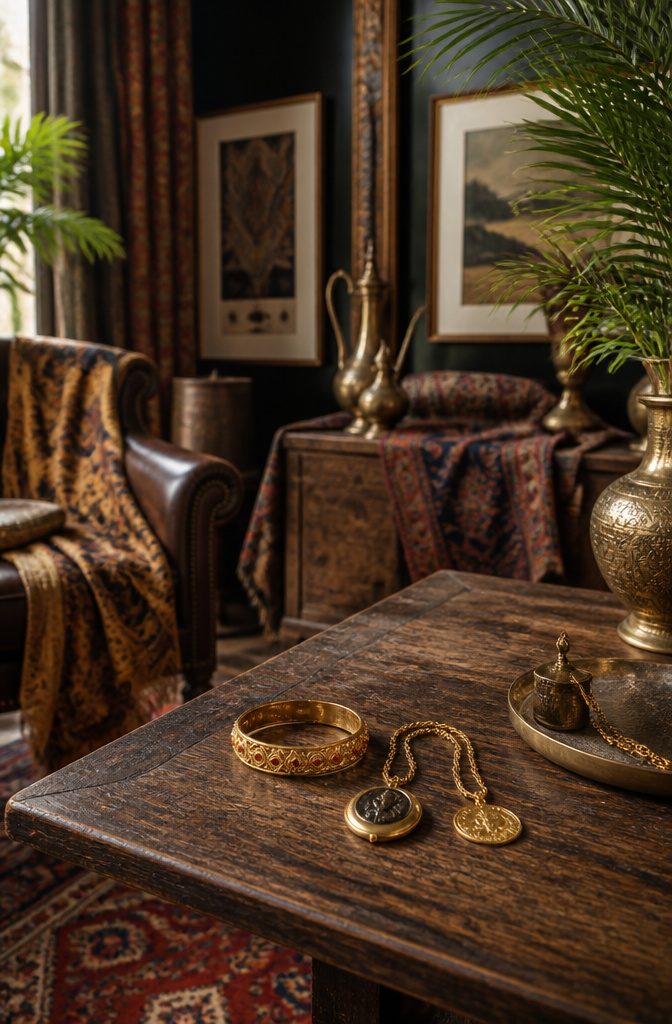
Gold carries weight in almost every tradition you can name, and that shared history is what makes maximalist jewelry gold feel less like costume and more like inheritance.
West African filigree, Indian temple jewelry, Byzantine coin pendants, Victorian mourning lockets reworked into something louder: the trend borrows from all of them without pledging full allegiance to any. The mix is the point.
I see the appeal in how little it demands of you in the way of purity. A 22-karat Indian bangle sits fine against a hammered brass collar that only looks ancient; neither apologizes.
The person wearing both is building a private lineage, not a costume for a single origin story. That freedom matters more now than it would have twenty years ago, when matching sets still ruled.
Coherence is the hard part. Pile too many reference points together and the look reads as shopping, not curating.
I lean toward one clearly historical piece per stack, everything else kept simpler in form so the gold itself ties it together. The metal does that work if you let it.
Social Media and the Trend Cycle
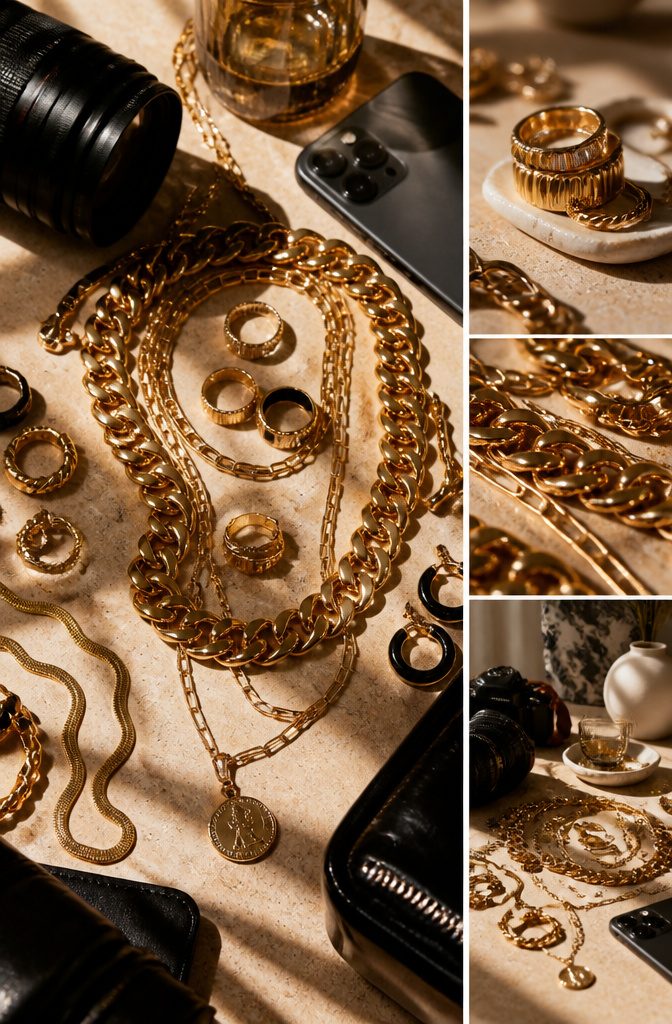
Instagram and Pinterest reward the same quality that makes maximalist jewelry gold worth wearing: visual density that fills the frame.
A single chunky hammered-gold collar or a stacked wrist of bangles reads as texture and light even on a phone screen, which is why influencers build their shoots around these pieces rather than tucking them in as accents.
The styling that gains traction treats the body as a display surface. Layered brooches clustered at a lapel, earrings heavy enough to tilt the head slightly, wrists armored in multiples: these configurations give the camera something to circle.
I watch feeds where the same necklace is shot three ways in one carousel, each angle revealing a different scale relationship with the wearer’s jawline or collarbone.
That repetition teaches the viewer how to wear it, not just how to buy it.
What performs best is not the most extreme piece but the most legible combination. A single oversized Schiaparelli-style alligator-scale pendant against bare skin photographs cleaner than six competing statements, even though the trend whispers more-is-more.
The influencers who understand this use one anchor piece and build outward in threes: collar, ear, wrist, never all screaming at equal volume.
The platform algorithm favors dwell time, and a stack that rewards a second look, a zoom, a save, outranks the one that exhausts its information in half a second.
Frequently Asked Questions
What is maximalist jewelry?
Maximalist jewelry is bold, complex, and extravagant, built around oversized earrings, chunky necklaces, stacked rings, and layered bracelets worn together.
The look relies on scale, texture mixing, and deliberate excess rather than matching sets. Gold handles this scale especially well because its warmth keeps large shapes from looking clinical or cold.
How do you style maximalist jewelry?
Start with one statement piece, like a broad collar necklace or oversized earrings, then let everything else recede.
Load up at either the neckline or the ears, rarely both at full volume, and leave at least one finger bare so the eye can rest.
The test that works: if you can name every piece without a mirror, you have probably hit the mark.