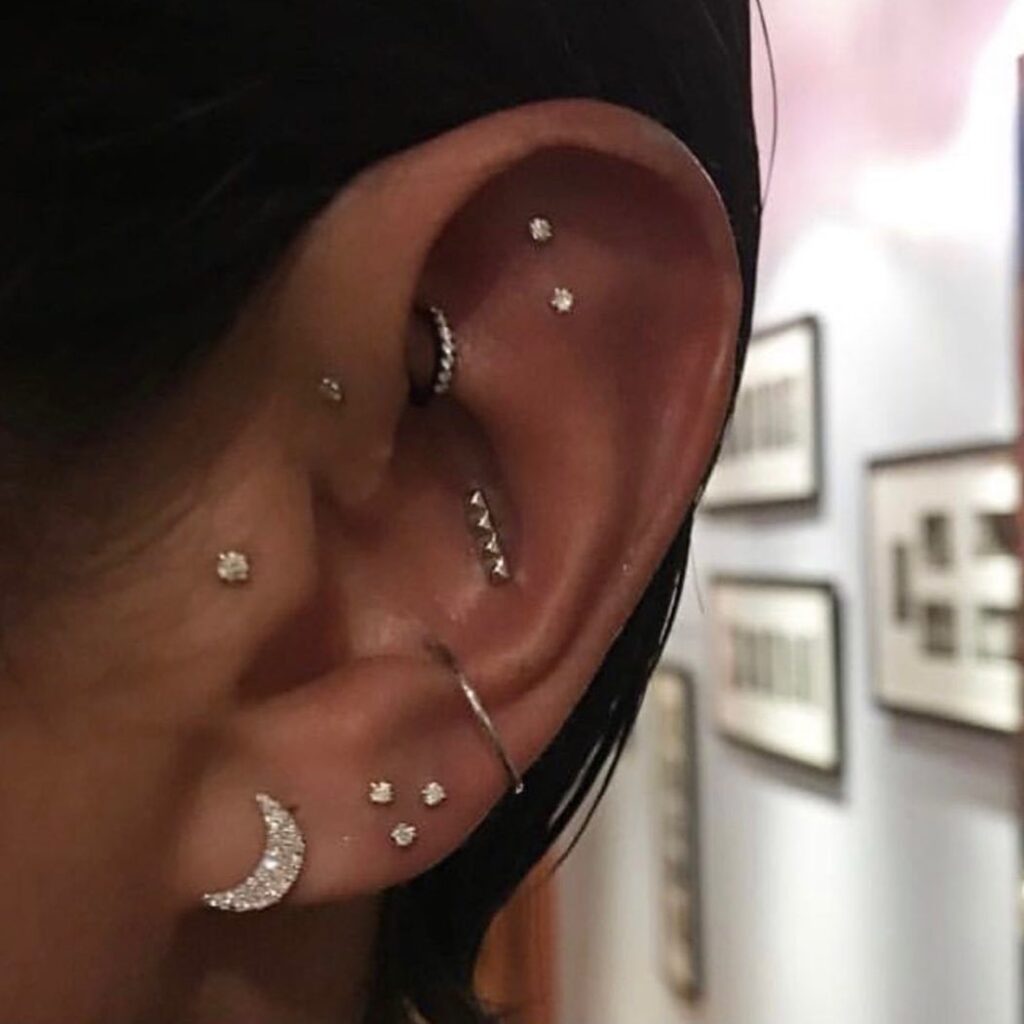
Cute ear piercings range from a single butterfly stud in the lobe to a mapped constellation of cartilage studs.
Your daily habits decide which idea belongs on your ear first: side sleepers and headphone users face different constraints than someone who can leave their tragus alone.
A 2mm to 3mm round stud in the upper lobe keeps things minimal while a helix heals.
1. Constellation Piercings
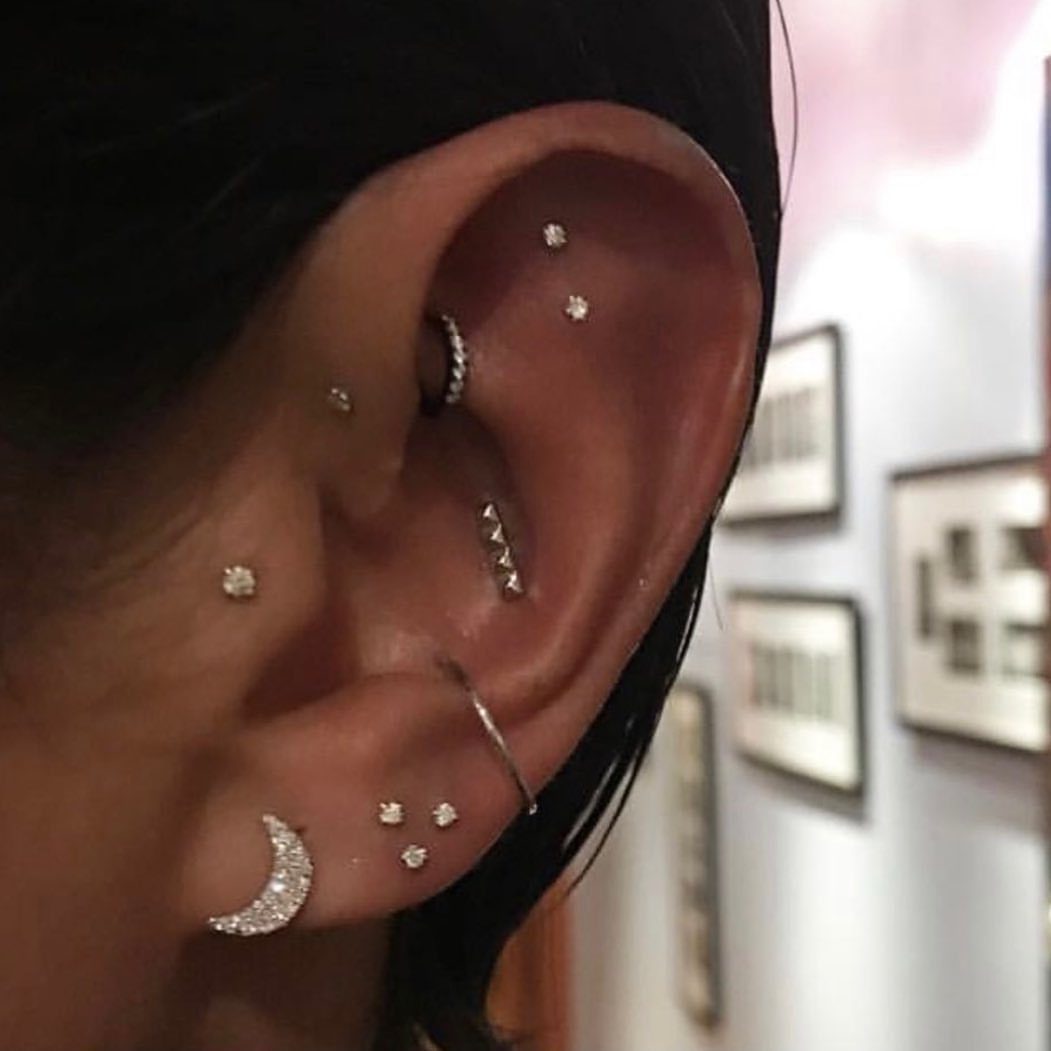
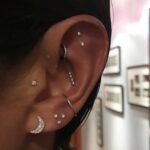
Constellation piercings map tiny studs across the ear in deliberate clusters, the way stars group in the night sky.
I like this approach for anyone building their collection slowly; each stud adds to a larger shape without requiring a single dramatic commitment.
Start with two or three placements close together, spaced a little under a quarter inch apart, then build outward as you heal. A crescent moon paired with small rounds reads as intentional rather than scattered.
2. Helix Piercing
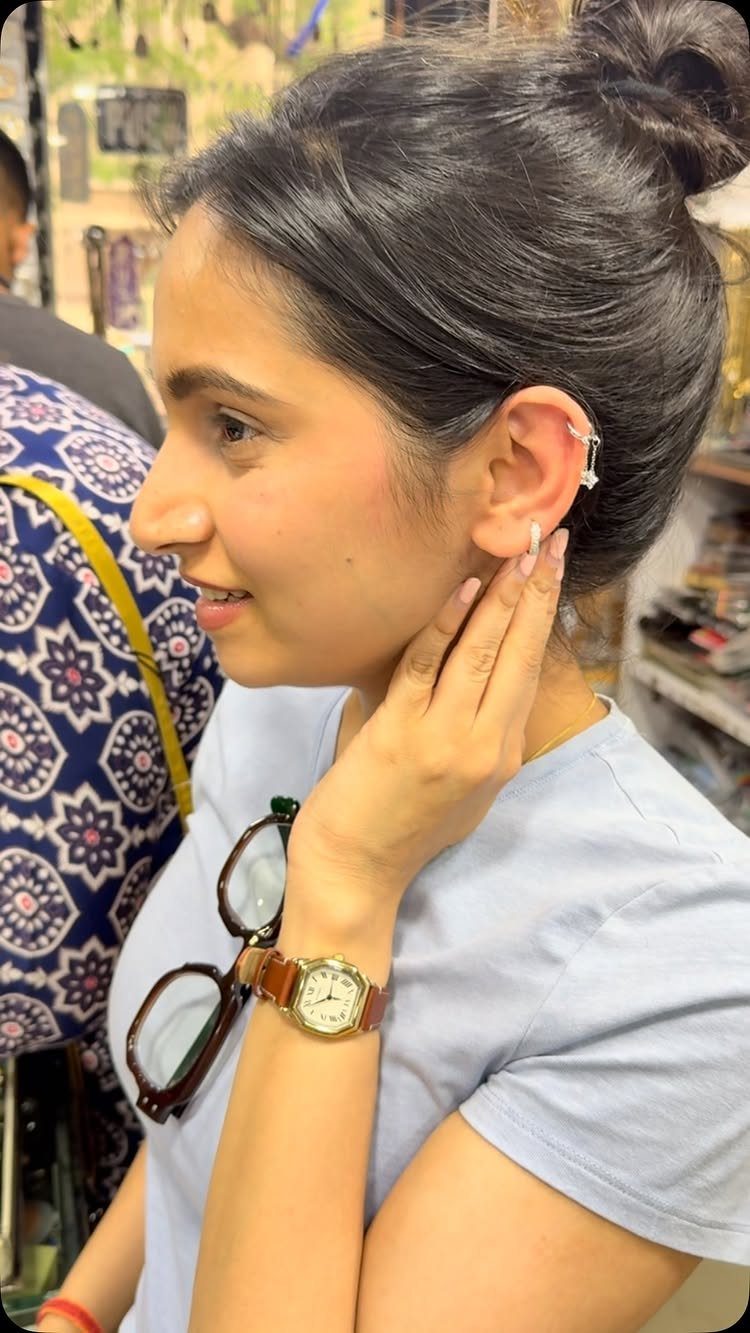
The helix sits on that flat rim of cartilage running along the upper ear, high enough to catch light but easy to tuck away.
A small hoop there, paired with a simple lobe stud below, gives you 2 levels without crowding.
I find cartilage here takes the better part of a year to settle fully, so choose your metal carefully from the start; implant-grade titanium or 14k gold minimizes the irritation that can prolong healing.
3. Tragus Piercing
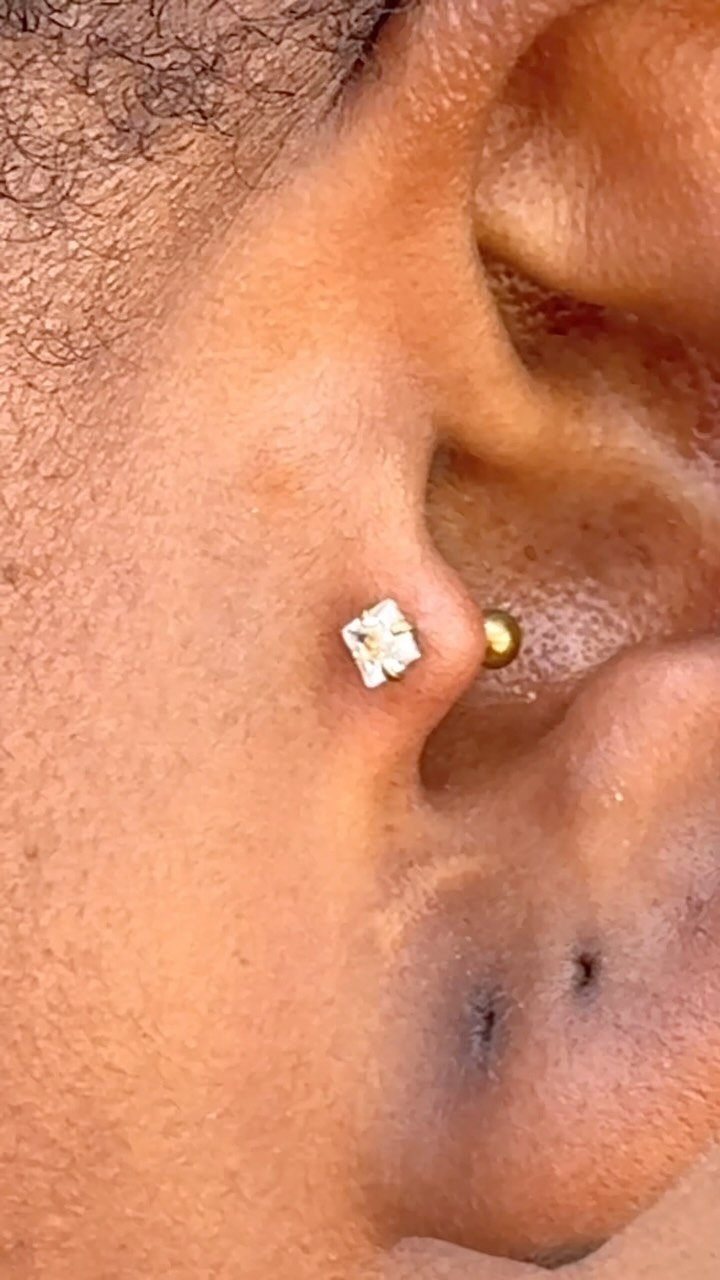
A tragus piercing threads through that tiny flap of cartilage directly in front of your ear canal, which makes it one of the more discreet placements you can choose.
A flower stud sits flat and low-profile, so it does not snag on hair or headphones the way a protruding piece might.
I would go with a labret-style backing rather than a butterfly clutch; the flat disk sits flush against the skin behind the tragus and stays put.
Healing runs several months, and you will need to keep earbuds clean or avoid them early on.
4. Conch Piercing
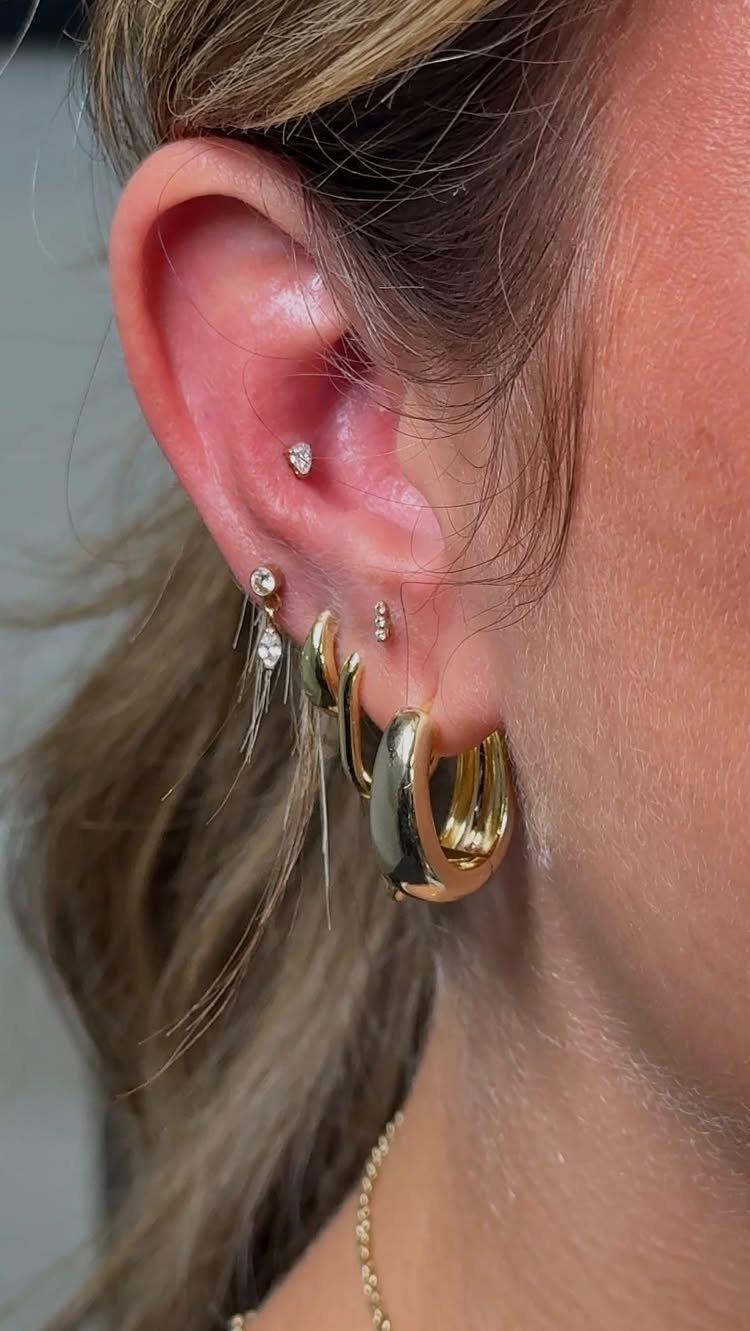
The conch occupies that broad, cup-shaped hollow at the center of the ear, which gives you room for either a snug hoop that hugs the rim or a stud that sits like a single point of light in the middle.
A stud placement surrounded by lobe hoops is a combination I prefer because the conch stud anchors the eye while the hoops keep things moving.
Inner ear cartilage thickens here, so expect a firm pinch and a long healing window. A piercer using a needle rather than a gun matters more for this spot than almost anywhere else on the ear.
5. Daith Piercing
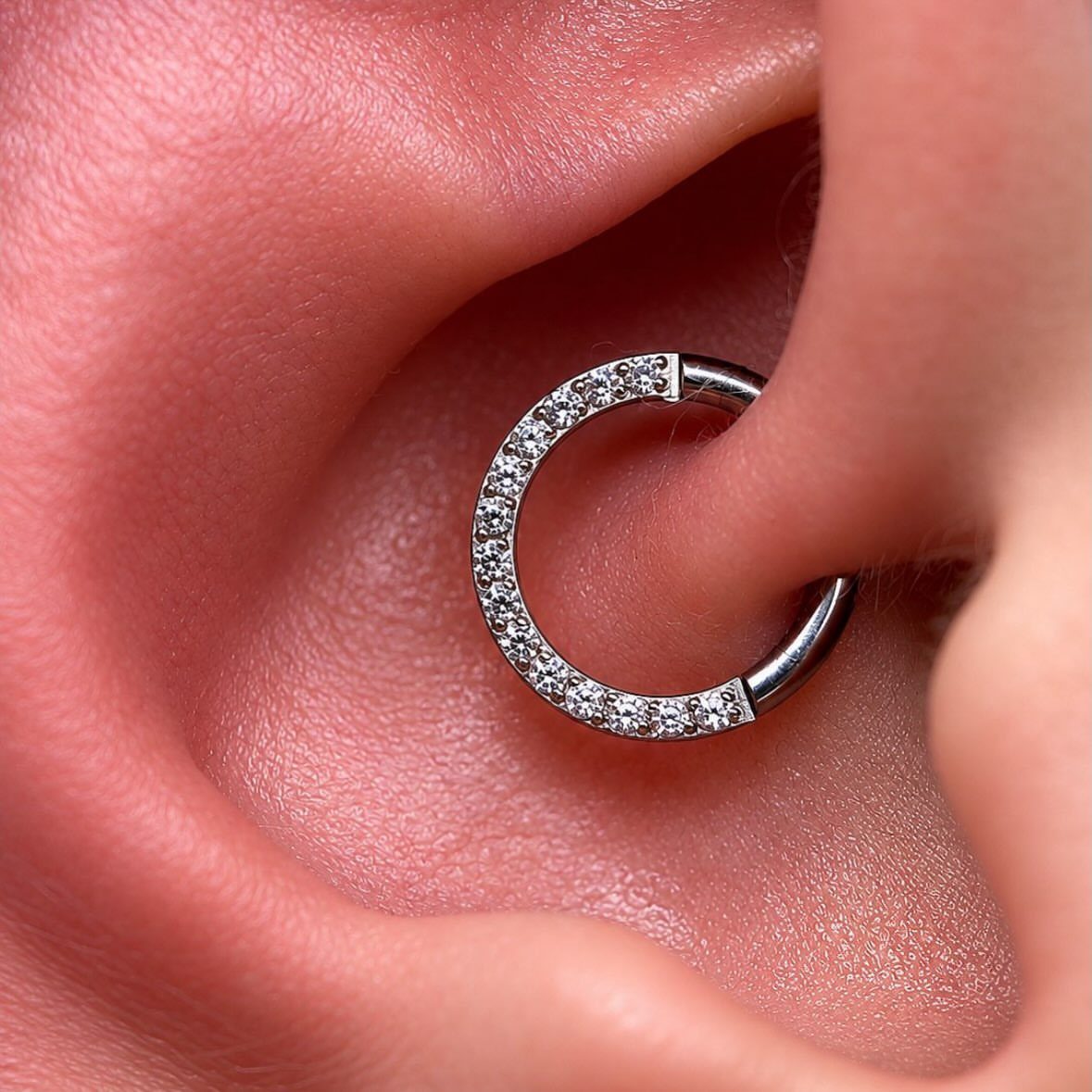
Daith piercings pass through the innermost cartilage fold, the one that curves just above the ear canal. A captive bead hoop with small stones follows that natural arc and stays surprisingly tucked in.
I have heard the migraine claims and I will say this: the anatomy varies enough that placement precision counts more than any pressure-point theory, so choose a piercer who maps your fold carefully before marking.
Healing is slow, often most of a year, and the tight space means swelling can feel dramatic early on. Sleep on the other side if you can manage it.
6. Minimalist Stack with Tiny Studs
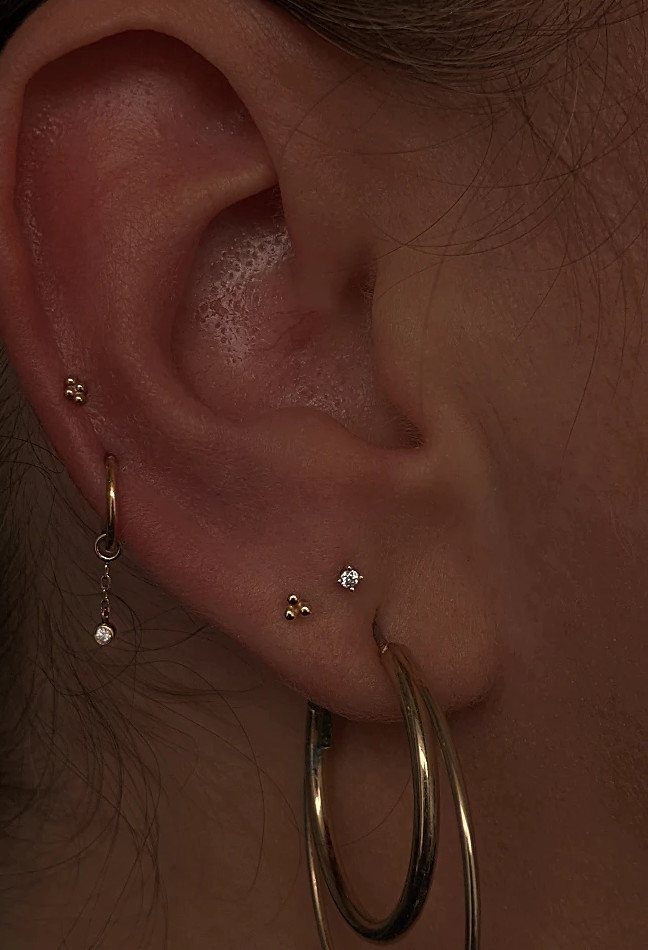
Tiny studs in graduated sizes, lined up the ear with one or two small hoops mixed in, give you a clean look without the commitment of cartilage work.
I would keep all the metals matched; the warmth of the gold works because nothing interrupts it.
Start with 2mm to 3mm rounds in the upper lobes and save slightly larger stones for the lowest placement, where the earlobe is fullest.
This stack suits anyone whose workplace or taste runs conservative, and you can build it over years without any single healing period to manage.
7. Garden Ear
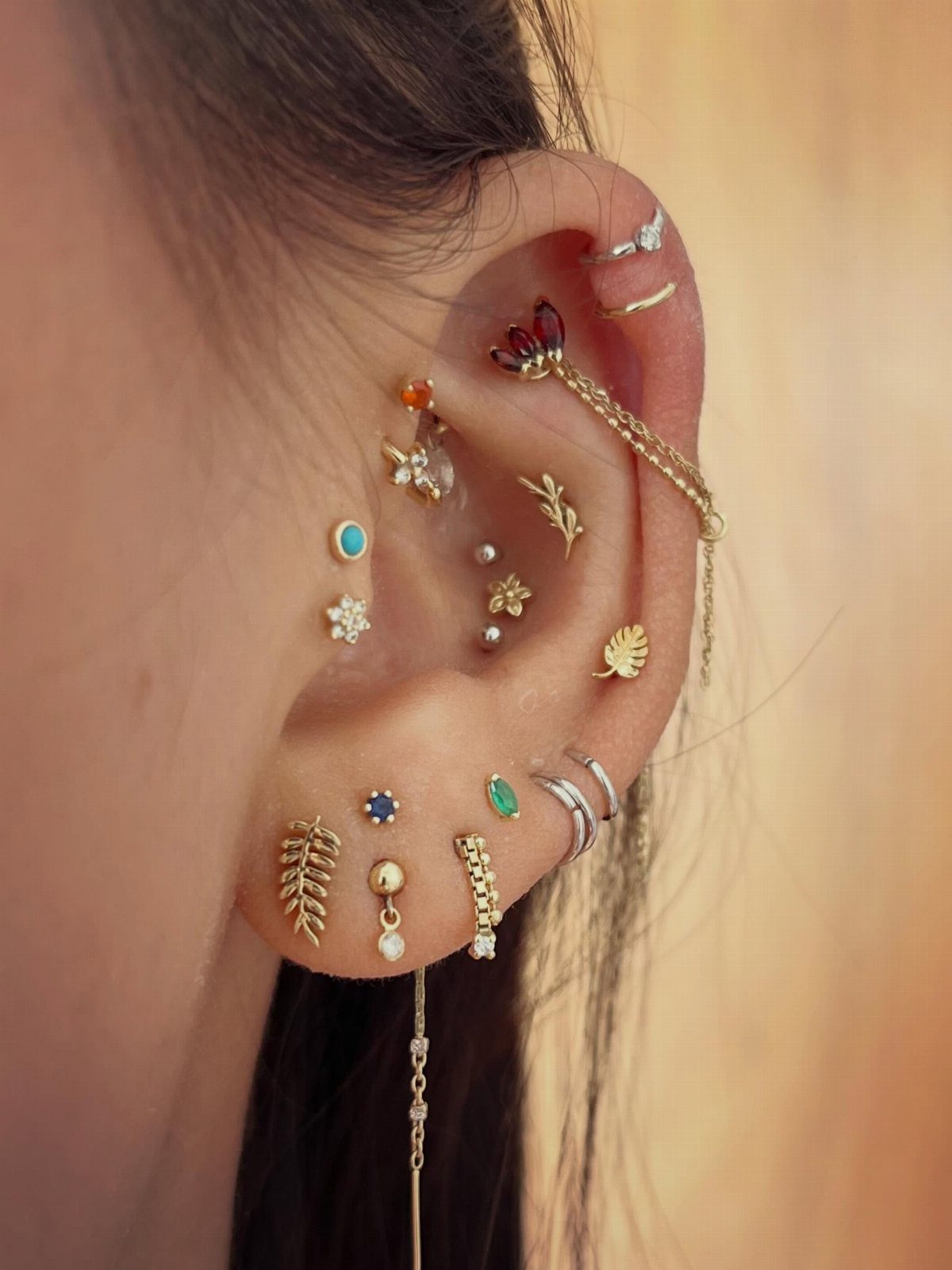
A garden ear builds its look from botanical shapes, leaf and vine studs, and small colored stones that read as buds or berries.
I would keep the metal uniform, all gold or all silver, so the organic shapes tie together rather than competing.
Start with two or three floral pieces in the lobe and helix, then add a delicate chain linking two piercings if your anatomy allows it.
A fine chain threaded between 2 lobe piercings adds movement without extra holes, which suits anyone who wants complexity without committing to more cartilage work.
8. Butterfly Stud Lobe Piercing
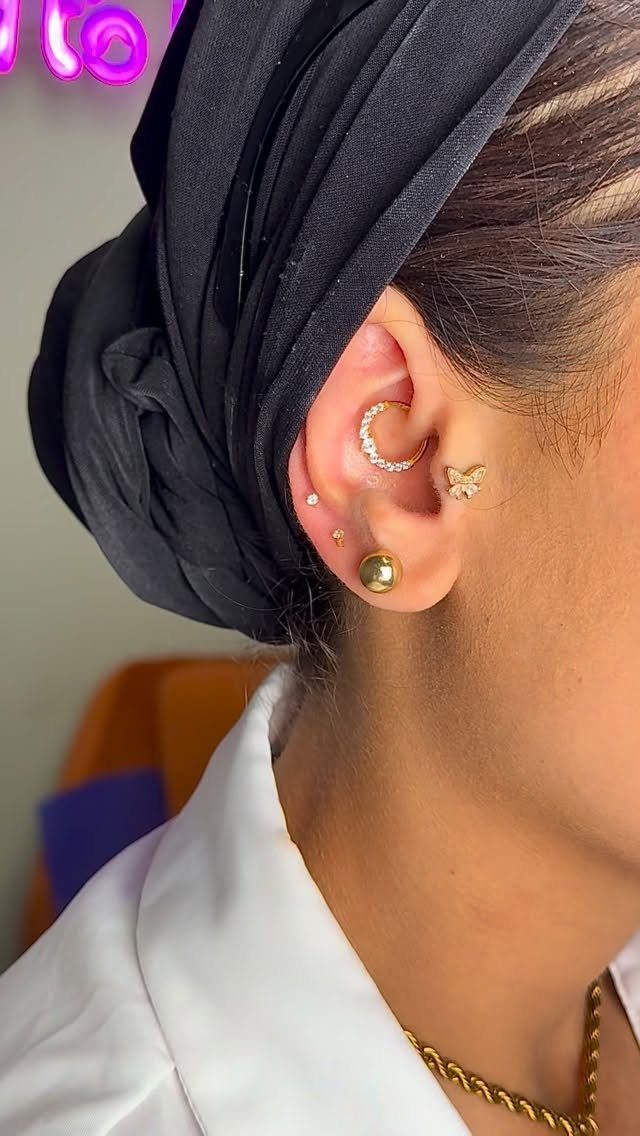
A butterfly stud in the lobe works as the single playful piece in an otherwise simple stack.
Placing a butterfly stud between a cartilage hoop above and a plain ball stud below lets the butterfly carry all the personality without clutter.
I would choose a solid gold or gold-plated version with small engraved detail rather than colored enamel; enamel chips with daily handling, and a lobe stud gets touched more than almost any other earring.
Size matters here: a wingspan that reads as intentional on an adult ear sits in a narrow range, while anything oversized tips toward costume.
Healing Times for Piercings
Lobe piercings heal faster than cartilage, which makes them the practical starting point if you want a full ear sooner. Cartilage anywhere on the ear, tragus and conch included, can take up to a year to settle fully.
That gap matters for planning: a lobe stack lets you switch jewelry and sleep normally while your helix or conch is still tender.
Clean any fresh piercing twice daily with saline and keep your hands off between cleanings. Touching extends healing more than most people expect.
For conch piercings aiming at larger gauge jewelry, a piercer may use a dermal punch after initial healing is complete and the tissue shows no damage or infection.
This is not a first-session procedure; the cartilage needs time to stabilize before stretching.
Jewelry Styles for Piercings
Flat-back studs work for almost any placement because the post sits flush and does not poke the skin behind the ear. I prefer them for tragus and conch spots where protruding hardware would catch on hair or headphones.
Clicker rings work well in daith, rook, and helix spots where you want a hoop that carries some detail.
The hinged opening snaps shut without threading a bead, so you spend less time fumbling with the jewelry than you would with a captive bead ring.
Most people gravitate toward gem-set pieces, tiny pendants, or hammered metal finishes in these placements.
“Social media has made it easier to see what types of ear piercings are possible and the unique, modern jewelry you can wear with them,” says Sam Hayler, lead piercer at London’s Astrid and Miyu jewelry shop and salon.
— Glamour
Planning Ear Piercings
Bring reference photos to your appointment and describe the overall look you want, not just the next single hole.
A good piercer will map your anatomy and tell you which placements complement each other visually, plus the order that lets each one heal without interference from fresh neighbors. Some spots heal better once others are already established.
Your daily habits should shape the sequence. Side sleepers should start with lobes, since they are easier to avoid pressing on.
If you rely on earbuds or headphones, delay the tragus until you can keep that area clean and pressure-free. Budget matters too: building over months spreads cost and lets each piercing settle before you add the next.
Frequently Asked Questions
What is the most attractive ear piercing?
The helix and conch currently draw the most attention in contemporary piercing culture, though attractiveness depends on your ear shape and personal style.
A helix placement catches light along the upper rim and pairs cleanly with lobe studs below, while a conch stud anchors the eye at the center of the ear.
The most attractive placement depends on your particular fold and rim shape; a piercer can map which spots flatter your anatomy rather than chasing whatever trend is current.
Should ear piercings be symmetrical?
Matching sides is optional; deliberate imbalance, different counts per ear, or entirely separate placements can read as intentional personal style.
I would plan the overall composition rather than mirroring, since your ears may have slightly different folds and rims that suit different jewelry.
Mapping both ears lets a piercer identify which asymmetries flatter your actual anatomy rather than looking like a mistake.