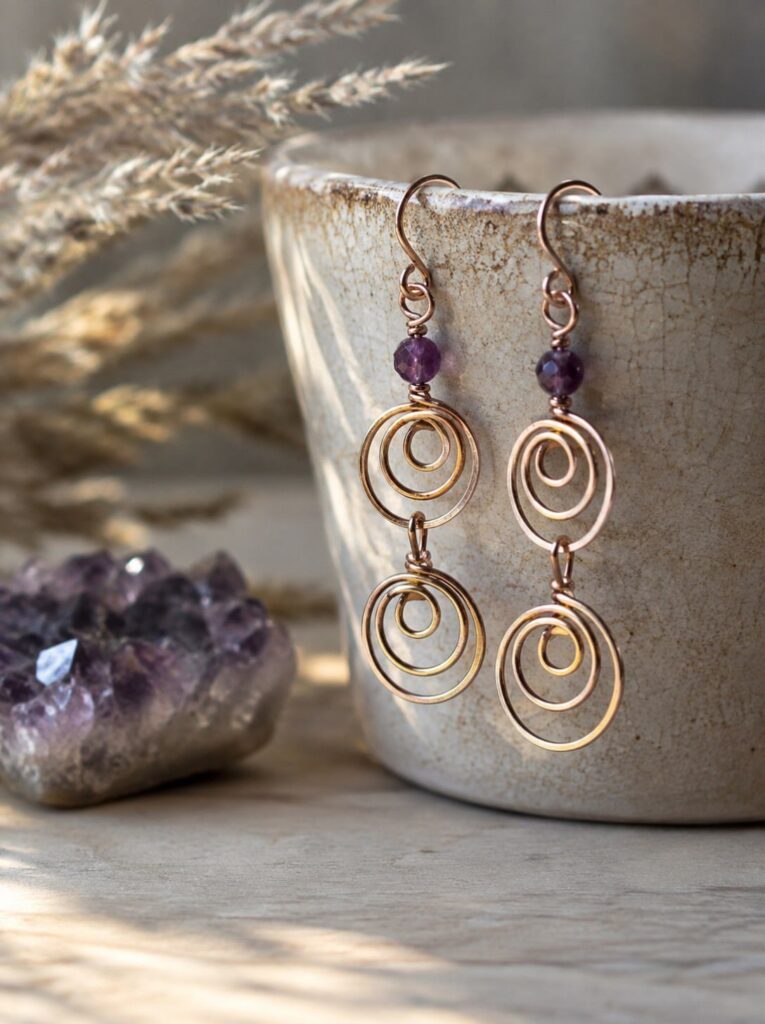
Wire-wrapped beaded jewelry runs from a quick loop on copper practice wire to a full floral bracelet in 2 gauges of dead soft gold, with plenty of stops in between for tools, materials, and techniques.
The deciding factor is whether you plan to wear the piece through daily rough handling or save it for occasions where a bent frame is not a risk.
I use 28 gauge for the fine wraps and 24 gauge for structure, because that pairing lets the petals keep their shape without soldering.
1. Wrap Wire Around Beads
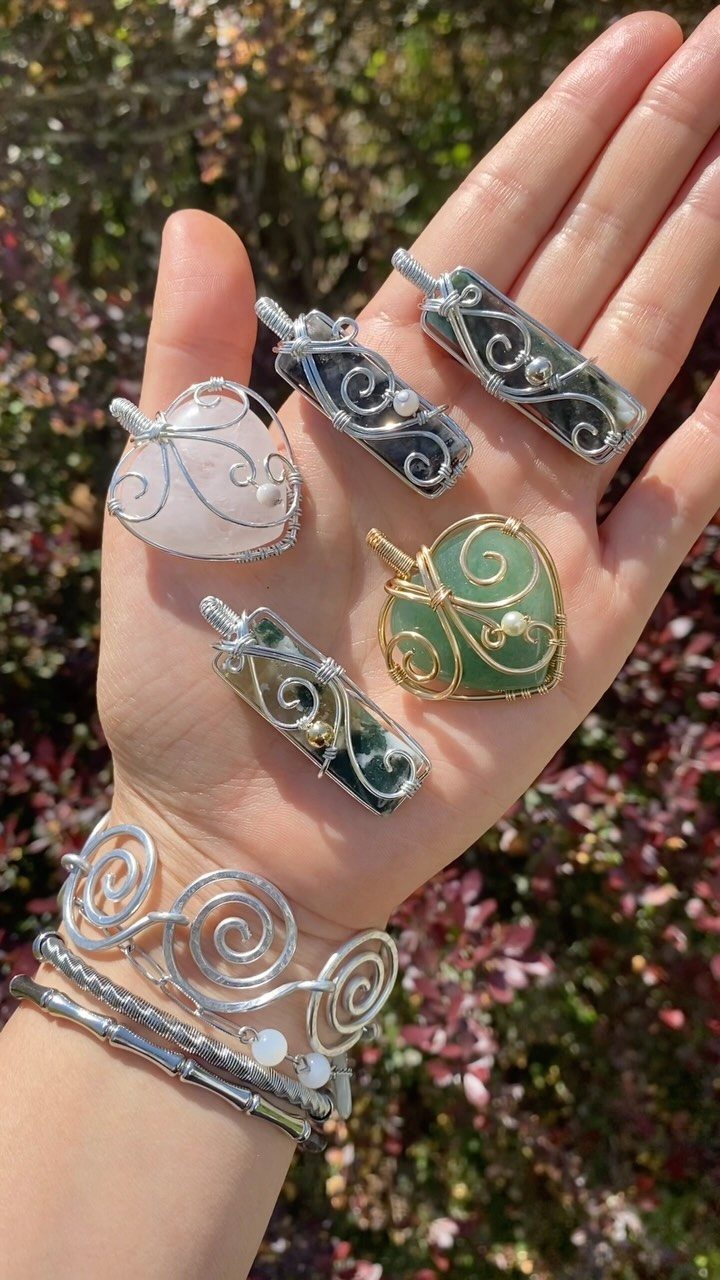
Wrapping wire around a bead by hand gives you a setting without glue or pre-made findings. I start with about 6 inches of 20-gauge dead soft wire and a bead with a hole that clears the wire by a hair.
Thread the bead to center, bend both tails up, twist them once at the top, then spiral each tail down around the bead’s sides. Press the wire flat against the bead with chain nose pliers so the cage grips tight.
The wire marks the bead surface over time; I use this for tumbled stones where a few scratches add character rather than for polished faceted gems.
2. Wrapped Loops for Beaded Links
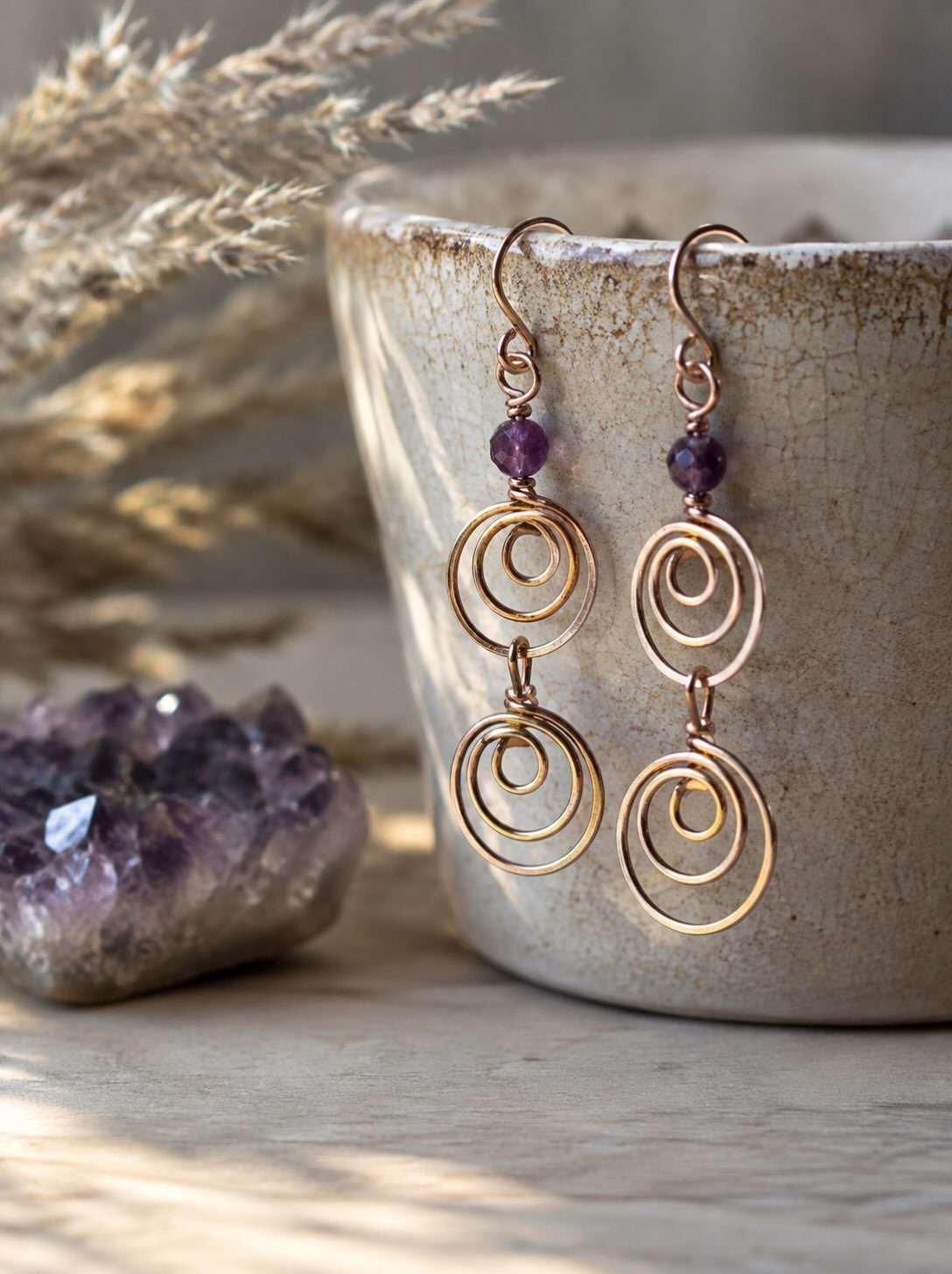
Wrapped loops keep beads from sliding off wire and let you chain them into earrings or bracelets without jump rings. The loop itself becomes the link.
Cut a short length of wire, bend it sharp above the bead with round nose pliers, wrap the tail around the jaw to form a circle, then coil the rest down the neck.
Snip the end close and press it flat with flat nose pliers so nothing catches.
A wrapped loop becomes muscle memory fast; my first ones were slow and lumpy, nothing like the clean circles I make now.
Copper wire practice pays off here because the metal work-hardens as you bend, teaching you to get it right in fewer moves.
3. Beaded Bracelet with Lobster Clasp
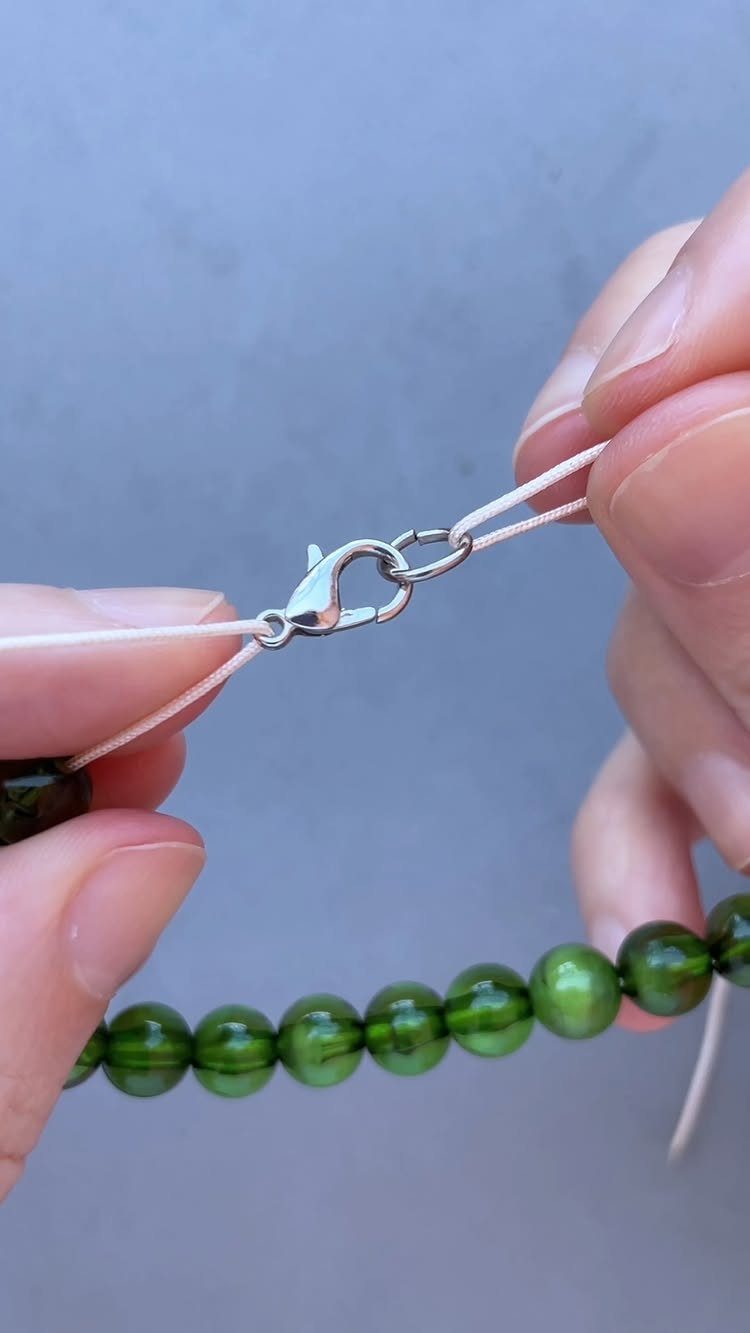
A lobster clasp on a beaded wire bracelet gives security without the fuss of a toggle that needs 2 hands and a flat surface.
I thread beads onto beading wire, crimp one end to a clasp half, run through the beads, then crimp the other clasp half with a crimping plier in two stages: first to seat the wire, then to fold the crimp closed.
Beading wire is cheap by the foot, and a bracelet needs only a short length plus whatever the clasp eats up. The wire shows between beads unless you pack them tight or choose colored wire to match.
I add a little extra length past my wrist measurement so the bracelet drapes without sliding halfway down my hand.
4. Gold Wire Floral Beaded Bracelet
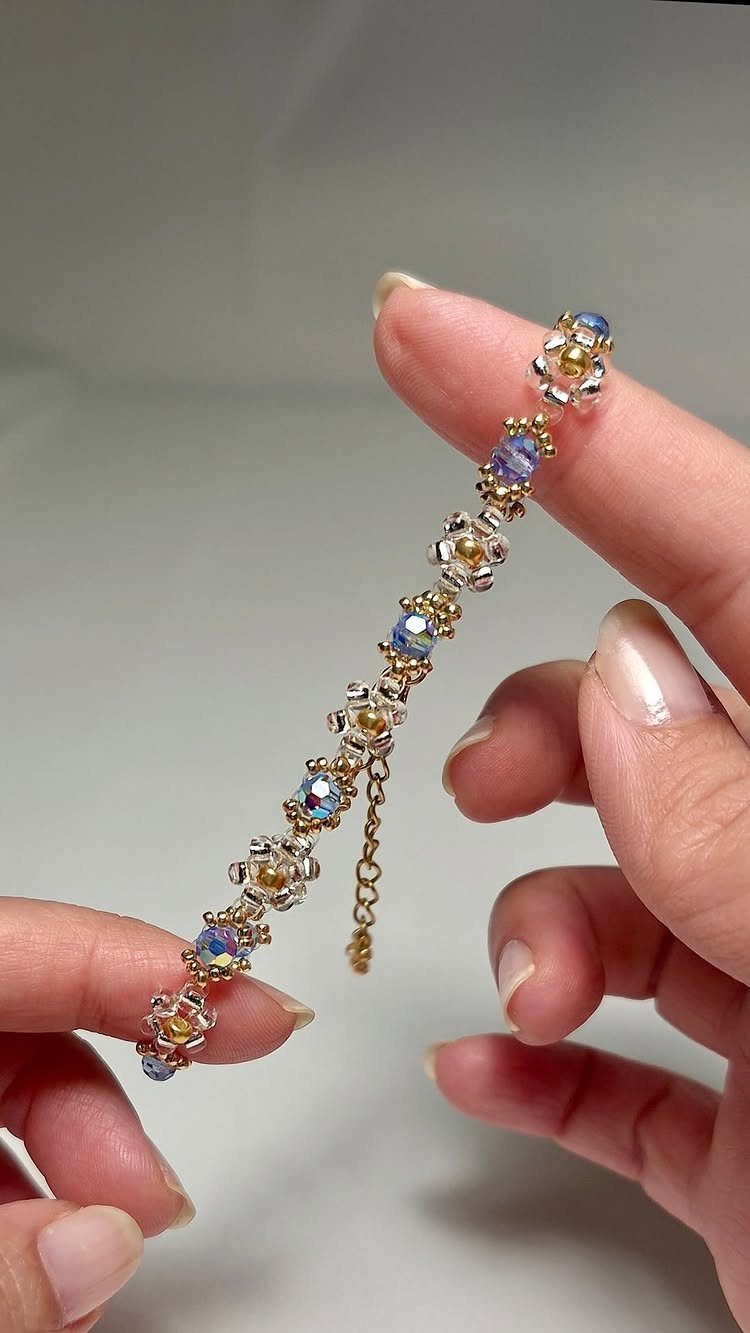
Gold wire shaped into petals around iridescent blue beads reads floral without any casting or soldering.
I use 28-gauge wire for the wraps and 24-gauge for the frame, both dead soft so the curves come from finger pressure and a dowel rather than hammering.
The blue flash against warm gold is what sells this; I have made the same shape with clear beads and it disappears on the wrist. Fire-polished Czech beads give that same gleam as crystal at a fraction of the price.
This bracelet wants a light touch in construction and in wear; the wire frame bends if you sleep in it or haul groceries with it on.
5. Floral Beaded Wire Chain Necklace
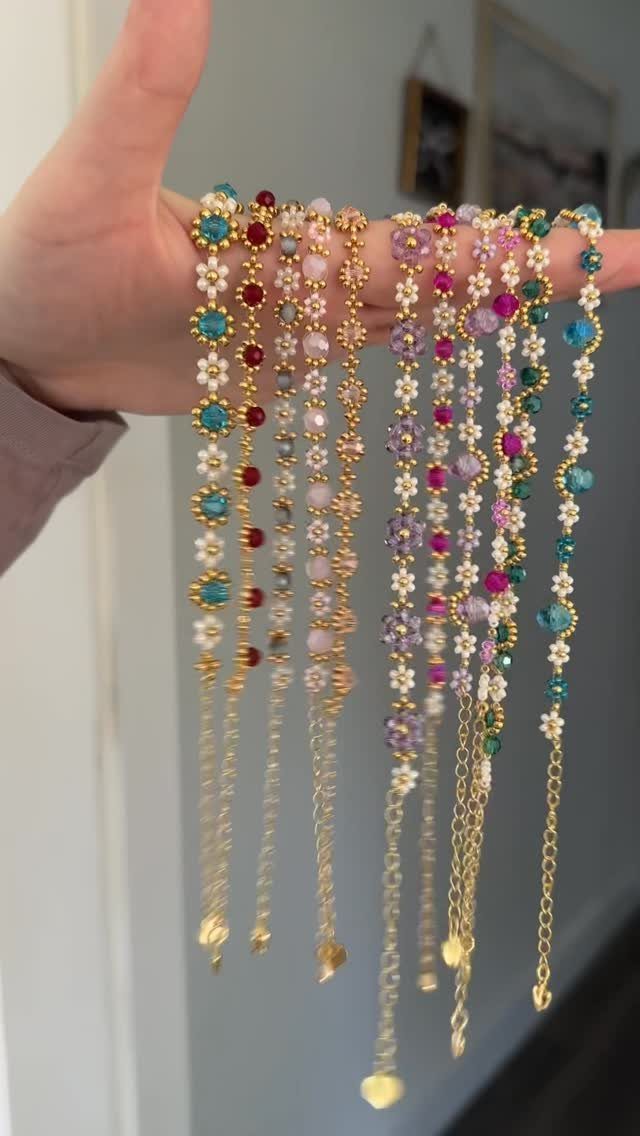
Linking floral beads with short wire wraps into a chain, then adding a longer cable chain for the back, lets the pattern sit centered without engineering a full necklace of wrapped units.
I space the wired beads along the chain with plain links between, which saves material and keeps the eye on the flowers, not the metal.
A small heart charm at the clasp end gives you something to grip; I learned that from losing a necklace in a parking lot because I couldn’t find the clasp behind my neck.
The wire color should match the chain or read as intentional contrast; mixed silvers, in particular, look like a mistake once they tarnish to different tones.
Choosing the Right Wire
For most wire-wrapped beads and links, 24 to 28 gauge dead soft wire gives you the flexibility to shape by hand without fighting the metal.
Thinner wire at 28 gauge is fine enough for beads with small holes, while 24 gauge holds its shape better for frames and structural work.
Memory wire sits outside this range entirely. It is a hardened spring steel that keeps its coil shape no matter how many times you take it on and off.
You cut it to length with specialized memory wire cutters; regular side cutters will chip or dent because the wire is that strong. Bracelet sizes come in small, medium, and large diameters, with medium fitting most wrists.
If you plan to string large beads, size up so the coil still springs closed; seed beads let you use a smaller diameter for a tighter fit.
Tools for Wire Jewelry
Round nose pliers form the loops in wrapped links because their tapered jaws give you a consistent circle size depending on where you grip.
Chain nose or snipe nose pliers handle the straight bends and tucking wire ends flat. Side cutters snip the excess; for memory wire, you need the dedicated cutters instead.
Crimping pliers do a different job for strung bracelets.
Needle nose pliers can substitute in a pinch, but the finish is bulkier and less secure. A basic set of round nose, chain nose, side cutters, and crimping pliers covers almost everything you will need for wire jewelry projects.
Bead Types for Wire Jewelry
Gemstone beads with small holes need the finest wire, 28 gauge, because anything thicker simply will not thread through.
Metal beads and spacers add weight and texture but check that the hole clears your wire gauge; a bead that fits 28 gauge may stop 24 gauge at the entry.
Larger holes make thicker wire easier to work, though the wrapping itself takes more force.
For memory wire projects, hole size still matters because the wire passes through the bead, and the hole must be wide enough for your chosen gauge.
I start with gemstone or glass beads in the 6mm to 8mm range; they are large enough to handle but not so heavy that the wire frame distorts under their weight.
Frequently Asked Questions
What type of wire is best for beading jewelry?
Dead soft wire in the 24 to 28 gauge range bends willingly by hand, which makes it the practical choice for wrapping beads and forming links.
Beads with tiny holes call for 28 gauge, while 24 gauge gives enough stiffness for frames and structural pieces that need to keep their shape.
Memory wire breaks the rules entirely; it is spring steel already set in a coil, ideal for fast projects, and it demands its own cutters since the hardened metal will ruin ordinary wire cutters.
How to keep beads in place on wire?
Wrapped loops keep beads from sliding off wire and let you chain them into earrings or bracelets without jump rings; the loop itself becomes the link.
For strung bracelets, crimp beads at each end secure the wire to the clasp, and a crimping plier seats the wire in 2 stages before folding the crimp closed.
On memory wire, the coil tension alone will not keep beads in place; you need to turn loops with pliers or glue on end caps to stop them from sliding off.