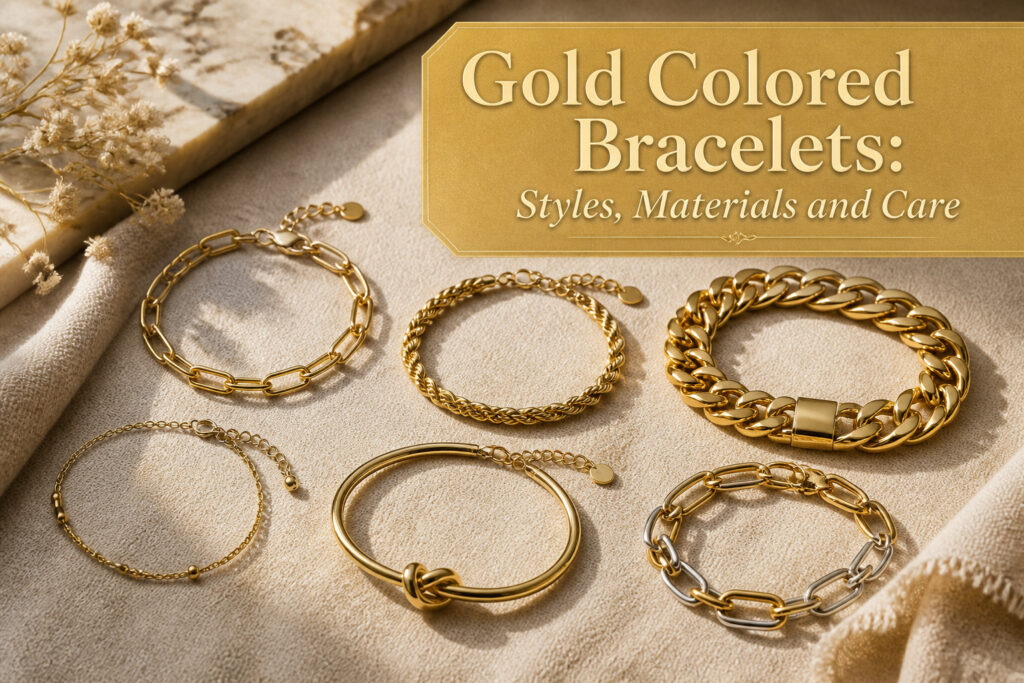
Gold colored bracelets are alloy or plated wristwear finished in yellow, white, or rose tones that range from thin chains to heavy curb links. The catch is that "gold colored" covers everything from 10K solid gold to brass with a micron of plating, and the difference shows up in how the piece survives daily wear, not in the first glance under store lights. A 10K bracelet shrugs off desk dings that scar 14K, but the color runs paler. A plated chain can look identical for weeks, then turn green at the clasp.
Bangles
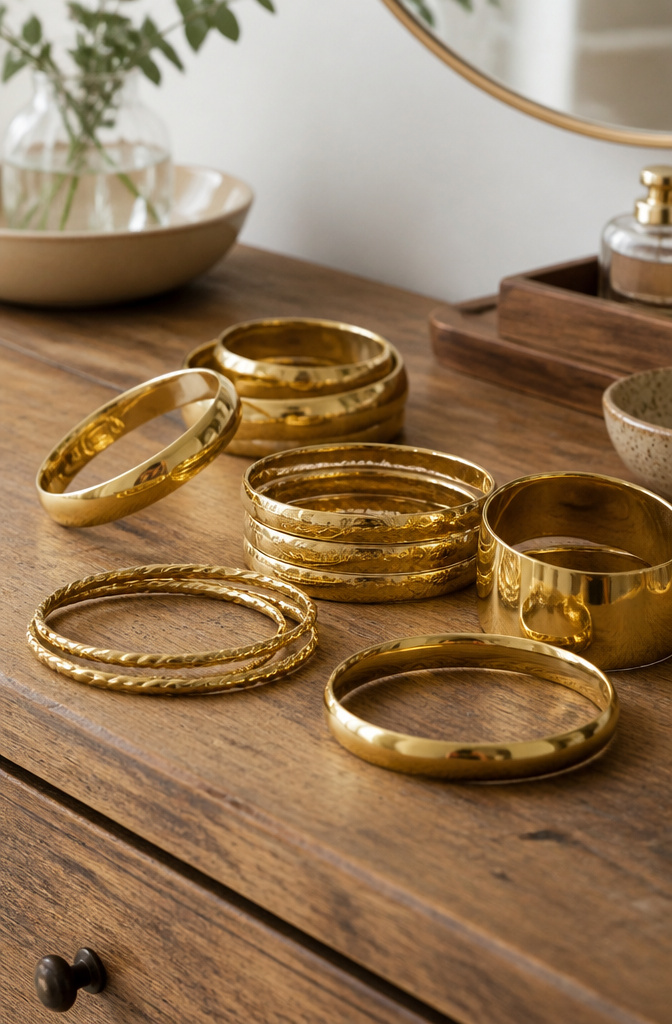
Bangles sit somewhere between jewelry and architecture. A rigid circle of metal has to clear your hand without falling off your wrist, which means the opening or the hinge matters more than the clasp ever could on a chain bracelet. I learned that the hard way with a vintage piece that slid on beautifully at the store and spent the next three weeks threatening to escape every time I reached for a subway pole.
The classic version is a solid slip-on band, no moving parts, sized to your hand rather than your wrist. Hinged bangles solve the sizing problem with a subtle clasp mechanism built into the design, though the seam is always a weak point if you stack them. Speaking of stacking, that is where bangles earn their keep in a way other gold colored bracelets rarely do. A single wide bangle reads as formal, almost sculptural. Three or four thin ones in 10K or 14K yellow gold turn into something you wear with a t-shirt without thinking twice.
Metal fineness shapes the whole experience. 10K yellow gold carries less pure gold content, so it holds up to daily knocking around without denting the way softer alloys might. 14K yellow gold gives richer color but asks for slightly more care in a stack where they are clinking against each other all day. Helzberg lists both options in their bangle collections, and the choice tracks whether you want the piece to disappear into your routine or stand slightly apart from it.
I tend toward thinner 14K pieces for stacking and keep one heavier 10K bangle for solo wear. The weight difference is noticeable after an hour, and not always in the way you expect.
Chain Bracelets

Chain bracelets owe their staying power to a simple mechanical truth: hundreds of tiny links working together let the whole piece flex and settle against the wrist like a second skin. That movement matters more than most people notice until they try something rigid. A bangle sits where it sits. A chain bracelet shifts when you type, when you drive, when you reach across a table, and it keeps shifting back rather than fighting you.
The drape comes from how the links are shaped and joined. Rounder profiles roll smoothly; flatter ones spread contact wider against the skin. Either way, the weight distributes so you are not aware of one pressure point, which is why these tend to be the bracelets people actually sleep in, swim in, forget they are wearing. Daily wear is where chain bracelets win outright. They tolerate the small abuses, catch less on sleeves than chunkier styles, and when a link eventually wears, a jeweler can repair it without rebuilding the whole piece.
For me, the real test is putting one on in the morning and not touching it again until night. Most chain bracelets pass. Few other styles do.
Bolo Bracelets
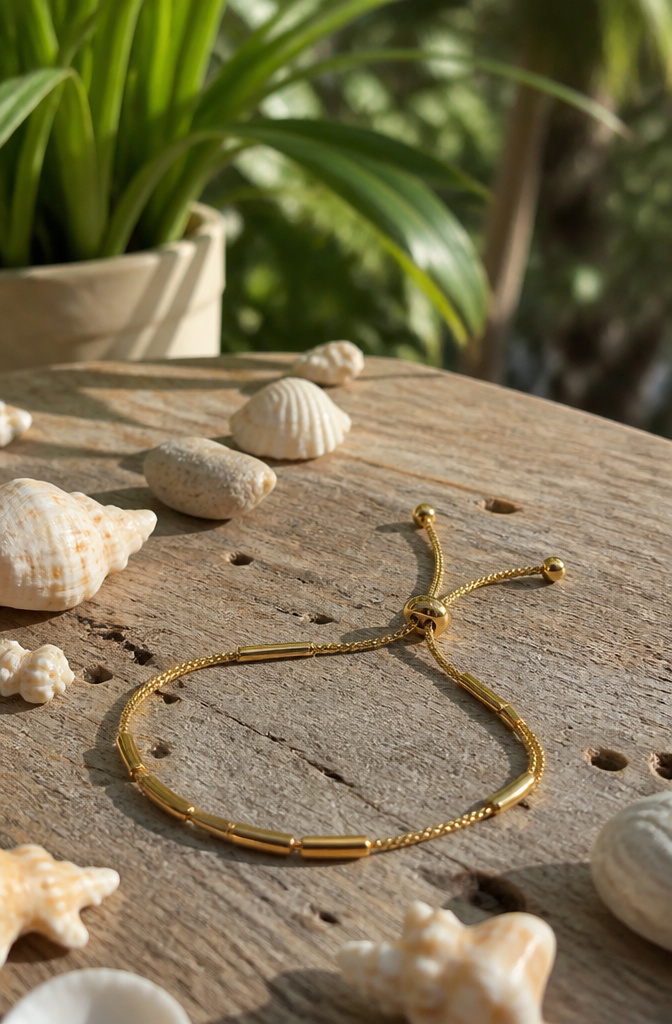
The sliding clasp on a bolo bracelet is the kind of detail that solves a problem most people do not think about until they are standing in a jewelry store with a gift receipt in hand. Two small beads or metal stops sit on a thin cord or chain, and pulling them together tightens the bracelet while sliding them apart loosens it. No lobster claw to fasten one-handed, no fixed length that either pinches or dangles.
That adjustability matters most for wrists that change size. Morning puffiness, summer heat, weight fluctuation over months, a bracelet passed between two people with different builds. A bolo closes the gap without a trip to a jeweler for links removed or added. For gifting, it removes the gamble of guessing a wrist measurement; the recipient sets the fit themselves the first time they put it on.
Gold colored bolo bracelets typically run the sliding mechanism along a snake chain or a cord finished to match the metal. The bead itself becomes part of the design, sometimes set with a small stone or given a brushed finish against a polished chain. The tradeoff is that the cord or chain takes more wear at the point where the beads slide, so the mechanism benefits from an occasional check that it still holds tension. A bolo that slips open in the middle of the day has lost the one thing that makes it useful.
Diamond-Accented Styles

Small diamonds set into gold links or bezels hit a useful middle ground between everyday wear and dress jewelry. The sparkle lifts a simple chain bracelet enough for an evening out, yet the stones sit low enough that the piece still works with a sweater sleeve or a keyboard. I tend to think of these as the bracelet equivalent of a white shirt: dressed up or down by what surrounds it.
The settings matter more than the carat weight here. Bezels hold the stone flush and protect it from catching on fabric, while prong-set diamonds in open links throw more light but need occasional checking for looseness. 14K gold in yellow, white, or rose gives the structure, and the diamond accent becomes the detail that shifts the tone.
Stacking these with plain chain bracelets of the same metal color keeps the look casual. Wearing one alone, the diamond links read as intentional rather than leftover. The price jump over an unaccented piece is real, but the versatility pays back if your jewelry box runs small.
Curb Link Bracelets

Flat, interlocking oval links are what set curb chains apart from every other style in the gold colored bracelets aisle. Each link twists slightly so the whole chain lies smooth against the wrist, which matters more than you’d think when you’re wearing something under a shirt cuff all day. That flat profile is also what lets the metal catch light evenly; there are no high points to dull or catch on sweater knits.
The design started with horse bridles, not jewelry. Somewhere in the translation to wristwear, the proportions shifted: shorter links, heavier gauge wire, a tighter interlock that could take daily torque without pulling open. By the mid-20th century it had become the default for men’s gold bracelets in particular because the structure reads as solid even when the piece is hollow to save weight.
What sold me on the style was watching how differently it ages compared to round-link chains. The broad contact surfaces develop a soft, even patina rather than the spotty wear you get on chains that pivot on a single point. Curb links do tend to kink if you sleep in them, though, and the repair is never invisible because the flat planes show every distortion. I keep mine for daytime wear and swap to something lighter after dark.
Miami Cuban Link Bracelets
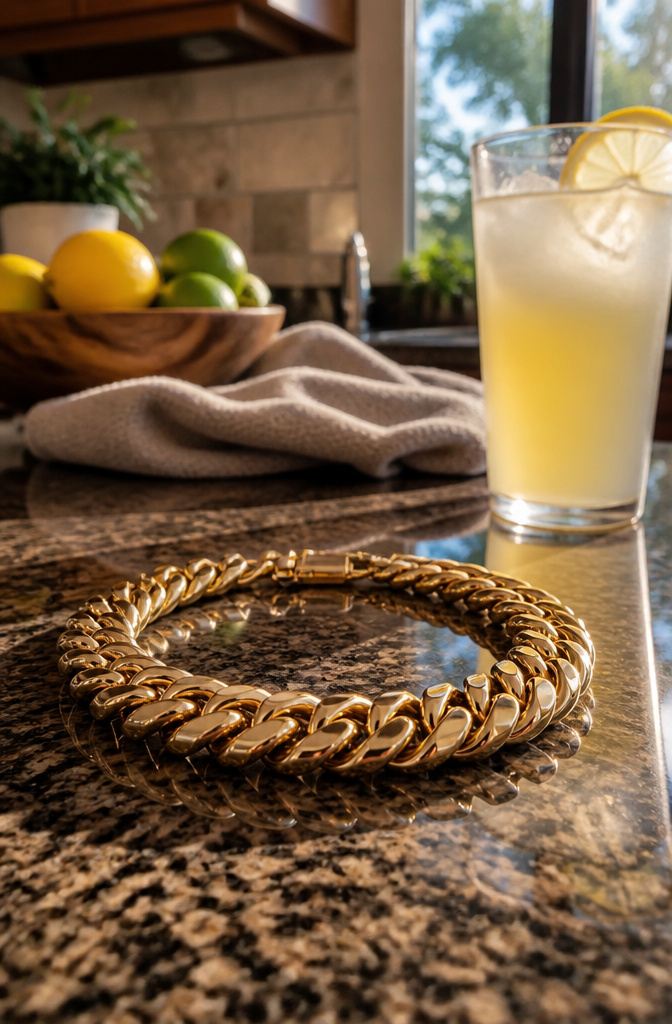
A Miami Cuban link bracelet announces itself the second it hits your wrist. The links are thick, rounded, and packed so tightly together that the whole band feels almost solid, like a flexible cuff with real heft behind it. That tight interlock is what separates the style from looser chains; nothing snags on sweater sleeves or desk edges because the surface is nearly flush.
All that metal adds up fast. A Miami Cuban carries more gold weight than nearly any other bracelet style in the same length, which is exactly why the price jumps so dramatically from a seven-inch piece to an eight-and-a-half. Width matters too. A 6 mm band sits in one bracket; push to 10 mm and you are often looking at double the material for the same clasp. I have watched shoppers assume the difference is mostly labor, then realize the gram count is the whole story.
The style works best on someone who wants the bracelet to stay put. The weight keeps it from spinning around, and the rounded links do not pinch skin the way sharper profiles can. If you type all day or stack with a watch, the low profile sits comfortably under a sleeve without the bulk you would expect from something this substantial.
Rope Bracelets

The twisted spiral of a rope bracelet catches light in a way flat chains never manage. Each woven strand faces a slightly different angle, so the surface flickers as you move, and the kink resistance comes from that same braid structure: torque gets distributed across multiple strands instead of concentrating at one weak point.
I learned why this matters the hard way after tossing a rope bracelet into a travel pouch with a delicate cable chain. The cable emerged knotted and slightly bent; the rope piece simply untangled itself when lifted. Woven construction lets the bracelet twist and return to shape without memory marks.
The making follows a straightforward logic. Multiple thin strands get twisted into a larger cord, then those cords get braided or twisted again. Gold colored versions use this technique across brass, stainless steel, or plated bases, so the visual texture stays consistent even when the core material changes. Weight varies with strand count, but the silhouette reads as substantial without the bulk of a solid cast piece.
For daily wear, the smooth outer surface slides under sleeves without snagging, and the rounded profile sits comfortably against a wrist bone. The only real limitation is repair: if one strand frays, the whole braid needs attention, not just a single link replacement. Most people wear rope bracelets for years before that becomes an issue.
Figaro Link Bracelets

The alternating rhythm of a Figaro link bracelet, one elongated oval followed by two or three shorter rounds, was developed in Italy and still carries that workshop sensibility. What convinced me, comparing this pattern against uniform chains, is how the long link acts like a visual comma. It breaks the line so the metal does not read as a solid band across the wrist.
In gold colored bracelets, that interruption matters more than it does in silver or steel. Yellow tones draw the eye and can feel heavy fast. The Figaro spacing lets light hit at different angles, so the piece catches glints rather than sitting as a flat stripe of color.
The proportion to watch is the ratio between the long link and the shorts. A long link too dominant, and the bracelet looks interrupted rather than rhythmic. Too short, and you lose the signature stagger entirely. I have found the sweet spot sits around three to one, though that varies by wrist size. Thinner chains in this pattern wear closer to a strand of soft ribbon; thicker gauges read more like watch links.
Clasp choice shapes the experience more than people expect. A lobster claw on a Figaro chain slides the weight toward the closure, which can flip the long link to the underside. A box clasp, integrated into one of the short links, keeps the pattern centered where you actually see it.
Polished Bracelets

A polished finish on gold colored bracelets throws light back in a single clean flash, the kind of shine that reads as new and expensive from across a room. That mirror surface comes at a cost, though. Every desk edge, every car door, every time the clasp swings around to tap the front face, those marks show up as dull scratches against the bright field. Brushed or matte finishes hide the same abuse; polished ones announce it within weeks of daily wear.
The maintenance is not difficult, just constant. A soft cloth brings back the luster for surface smudges, but actual scratches need a jeweler’s buffing wheel to truly erase. Someone who wants the look without the upkeep should expect to polish at home every few days, or budget for professional refinishing once or twice a year. For my own buying, that tradeoff has pushed me toward polished pieces I reserve for evenings, not the bracelet that lives on my wrist through typing and commuting.
Children’s Bracelets

Smaller wrists need smaller bracelets, and the gap between a standard six-and-a-half-inch adult size and what actually fits a five-year-old is wider than most people guess. Children’s gold colored bracelets typically run five to five-and-three-quarter inches, with spring-ring or lobster clasps that close securely but open under moderate pull so the chain does not tighten if caught on playground equipment.
The weight difference matters too. A child’s piece in hollow curb link or thin cable chain sits at a fraction of an adult bracelet’s heft, which keeps it from sliding up toward the elbow or snagging during climbing or art projects. Lower price points follow naturally from less metal, though that same thin construction means active wear takes a toll. Kinks in hollow links, stretched springs in clasps, and worn plating at high-contact spots show up faster than on adult pieces worn to desks and dinners.
For a child who swims, sleeps, and wrestles with the bracelet on, solid links and a slightly heavier gauge repay the small extra cost within a single summer. I have seen too many lightweight children’s chains retired after eight weeks of camp.
Mesh and Woven Styles

Mesh and woven gold colored bracelets sit somewhere between chain and fabric. Hundreds of tiny rings link together into sheets that bend and fold like ribbon against the wrist. The drape is the whole point: these pieces move when you move, catching light across their textured surface in a way solid bands never manage.
The flexibility comes with a cost. Snagging is the real enemy here. A loose thread on a sweater, a rough edge on a desk drawer, and the weave can pull or kink. Once that happens, the bracelet never lies flat again. Store these flat in a soft pouch rather than dangling from a hook, and put them on after your sleeves are already in place. The time saved skipping that step is not worth a ruined bracelet.
Water is less of a worry than you’d think for something so delicate-looking, but soap residue will dull the finish between those tiny links. A quick rinse under warm water and immediate pat-dry with a lint-free cloth keeps the surface bright. Skip the ultrasonic cleaner: the vibration can work rings loose where you cannot see the damage starting.
10K Against 14K Gold

The alloy mix in 10K gold colored bracelets runs 41.7% actual gold against 58.3% in 14K, and that gap changes almost everything in daily wear. Lower karat means harder metal. A 10K bracelet shrugs off desk dings and gym snags that would leave faint scratches on 14K, so the trade-off leans toward durability if you never take it off. Color shifts too. The higher copper and silver filler in 10K mutes the warm yellow tone; 14K keeps closer to what most people picture as "gold." Price follows content, not linearly, but a 14K curb link of similar weight typically costs noticeably more per gram.
| Attribute | 10K | 14K |
|---|---|---|
| Gold content | 41.7% | 58.3% |
| Durability | Harder, more scratch-resistant | Softer, shows wear faster |
| Color | Paler, more muted yellow | Deeper, warmer yellow |
| Price per gram | Lower | Higher |
I would not put a 10K bracelet next to a 14K one under direct jewelry counter lights and expect most buyers to spot the difference immediately. The contrast shows in side-by-side wear over months, not in the first glance. For someone who rotates pieces and stores them carefully, 14K wins on color and resale. For the bracelet that lives on your wrist through yard work and sleep, 10K is the harder call to regret.
Clasps That Hold

A lobster clasp gives the most security of the three common types, which is why it sits on most of the gold colored bracelets I actually wear. The spring-loaded arm snaps shut around a fixed ring and needs deliberate pressure to open; that same mechanism makes it easier to fasten one-handed than its smaller cousin, the spring ring. Spring rings work identically but shrink the whole mechanism down, so the gap you thread the ring through is narrow and the internal spring wears faster from the tighter coil. I have had two spring rings fail after roughly a year of daily opening and closing, both times because the spring lost tension and the gate would not stay shut. Toggle clasps trade security for speed: a bar slips through a ring and rests perpendicular to hold. They look clean on a bracelet front, but the bar can slide back through if the chain catches on a sleeve or a bag strap. For anything I cannot afford to lose, lobster clasps are the only choice; toggles I keep for occasions where I am taking the bracelet off before anything strenuous happens.
Cleaning Gold at Home
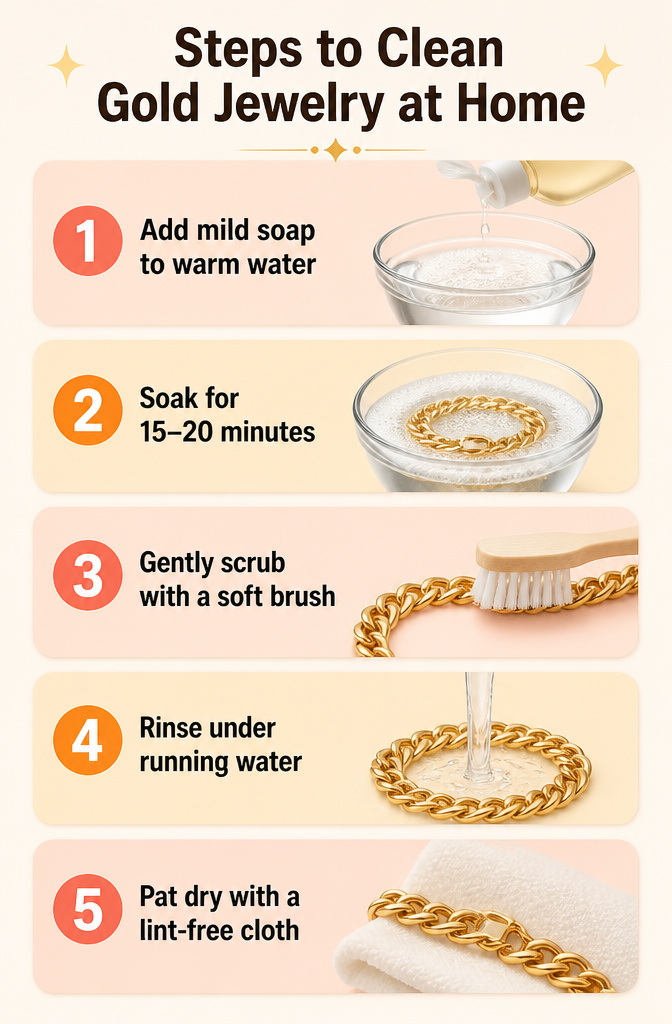
The method every jeweler and manufacturer repeats still works. A few drops of mild dish soap in warm water, 15–20 minutes of soaking, then a gentle scrub with a soft-bristled brush. Rinse under clean running water and pat dry with a soft cloth that will not leave lint behind.
I have learned to do this more often than I once thought necessary. Skin oils and hand lotion build up faster than they show, especially on chain links and under clasps. Once every two weeks keeps the finish brighter than waiting until the bracelet looks dull.
What not to use matters more than the cleaning itself. Ultrasonic cleaners, toothpaste, and anything marketed for silver will strip plating or cloud stones. Warm water and mild soap are slow, but they are the method that does not subtract years from the piece.
Real Gold or Plated

A bracelet stamped 10K or 14K somewhere on the clasp or a flat link is almost certainly real gold, though the number tells you how much: 10K is 41.7% gold by weight, 14K is 58.3%. The rest is alloy for hardness. No stamp does not automatically mean fake, but it shifts the burden to you.
When the stamp has worn down or sits somewhere awkward to read, a magnet helps. Real gold is not magnetic, so if the bracelet pulls toward a standard magnet, the core is something else. That test has limits: thick plating over brass can still feel non-magnetic, and some clasps use steel springs that will stick on their own. What the magnet really rules out is cheap magnetic filler, which is common in the lowest-end gold colored bracelets that turn green at the wrist inside a week.
The color alone is a softer clue. 10K reads paler, sometimes almost brassy; 14K carries a deeper, more buttery tone. After handling enough of them, the difference becomes something you notice before you hunt for the stamp.
How a Bracelet Should Fit
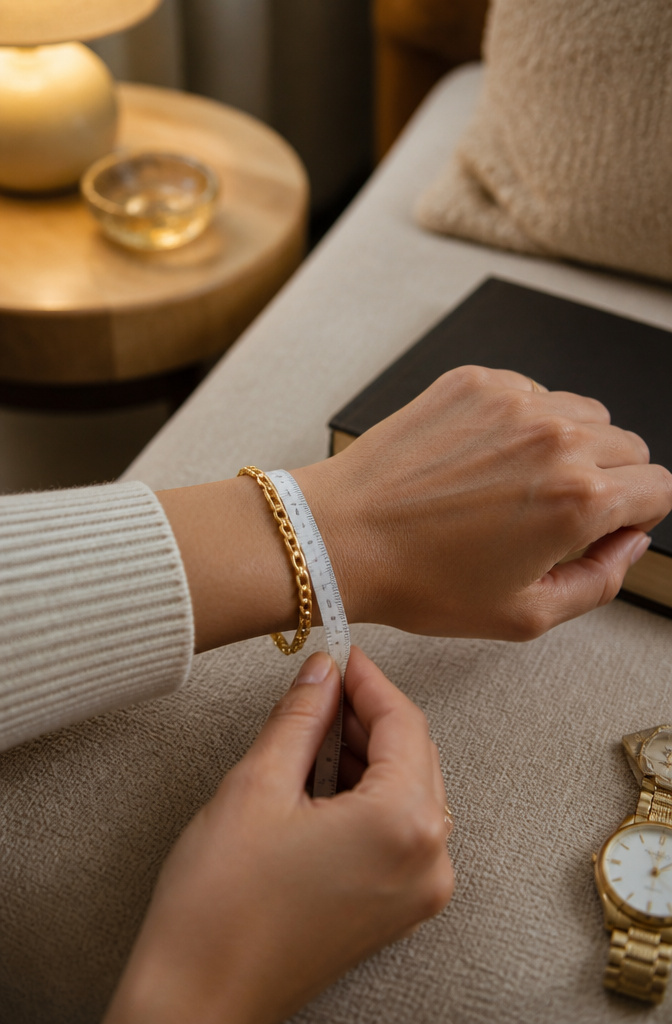
A gold bracelet that fits well leaves room for one or two fingers between the band and your wrist. That small gap is the difference between a piece you forget you’re wearing and one you keep adjusting all day.
Too tight, and the links take stress they weren’t built for. The bracelet pinches at the wrist bone, the clasp works harder than it should, and over time the individual links can warp or weaken at the joints. Too loose, and the bracelet slides down toward your hand, where it catches on door handles, desk edges, and the rim of a coffee cup. A chain with that much slack also has room to snag on softer fabrics, which is how you end up with pulled threads in a sweater and a bracelet that needs repair.
The one-to-two-finger rule gives the bracelet just enough movement to sit naturally without migrating. It stays where you put it, feels comfortable through a full day of typing or driving, and keeps the metal from absorbing wear it doesn’t need.
Frequently Asked Questions
How can you tell if a gold bracelet is real?
Check for a stamp on the clasp or a flat link that reads 10K or 14K. If the stamp has worn away, hold a magnet near the piece; real gold will not pull toward it, though steel springs in some clasps might. The color offers a softer clue over time: 10K reads paler, almost brassy, while 14K carries a deeper, more buttery yellow.
How do you clean a gold bracelet?
Mix a few drops of mild dish soap into warm water and soak the bracelet for 15 to 20 minutes. Gently scrub with a soft-bristled brush, rinse under clean running water, and pat dry with a cloth that will not leave lint. Skip ultrasonic cleaners, toothpaste, or silver polish; they strip plating and cloud stones faster than the soap method ever could.
How should a gold bracelet fit?
Leave room for one or two fingers between the band and your wrist. That small gap lets the piece sit naturally without pinching at the bone or sliding down toward your hand, where it would catch on door handles and desk edges. Too tight stresses the links and clasp; too loose invites snags on fabric and unnecessary wear.