Stud earring storage runs from a hanging ribbon organizer and lace embroidery hoop holder to a wall-mounted slotted bar rack, with ceramic trinket dishes and small shadow boxes in between.
The right choice depends on whether you need grab-and-go speed from a compact travel case for weekday mornings or display value from a velvet cushion tray for a vanity you face while dressing.
1. Hanging Organizer
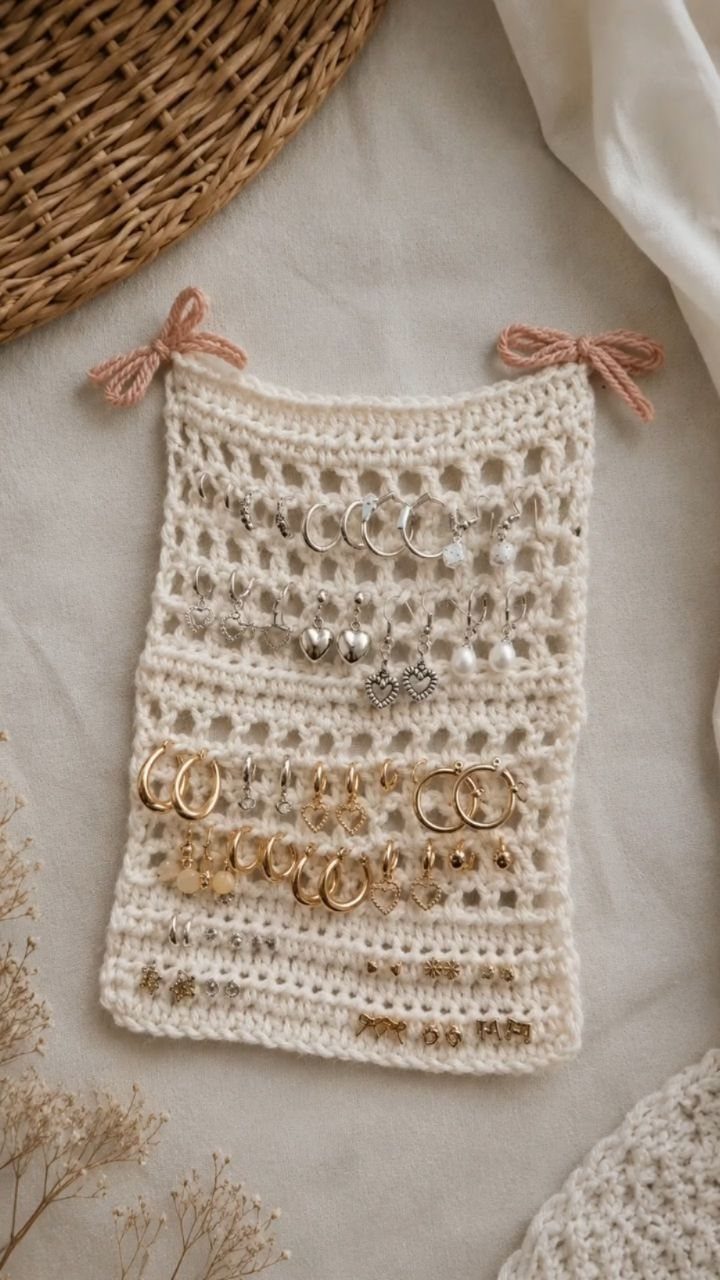
A crochet hanging organizer with staggered pockets keeps studs visible and sorted without taking up dresser space.
I like the soft cream color here because it reads as neutral decor rather than storage gear hung on a closet rod or hook.
The open-weave pockets let you scan earrings fast, and the fabric protects posts from bending.
Pick one with enough pockets so pairs do not share space and tangle. Mine hangs near my mirror so I grab and go.
2. Cork Board
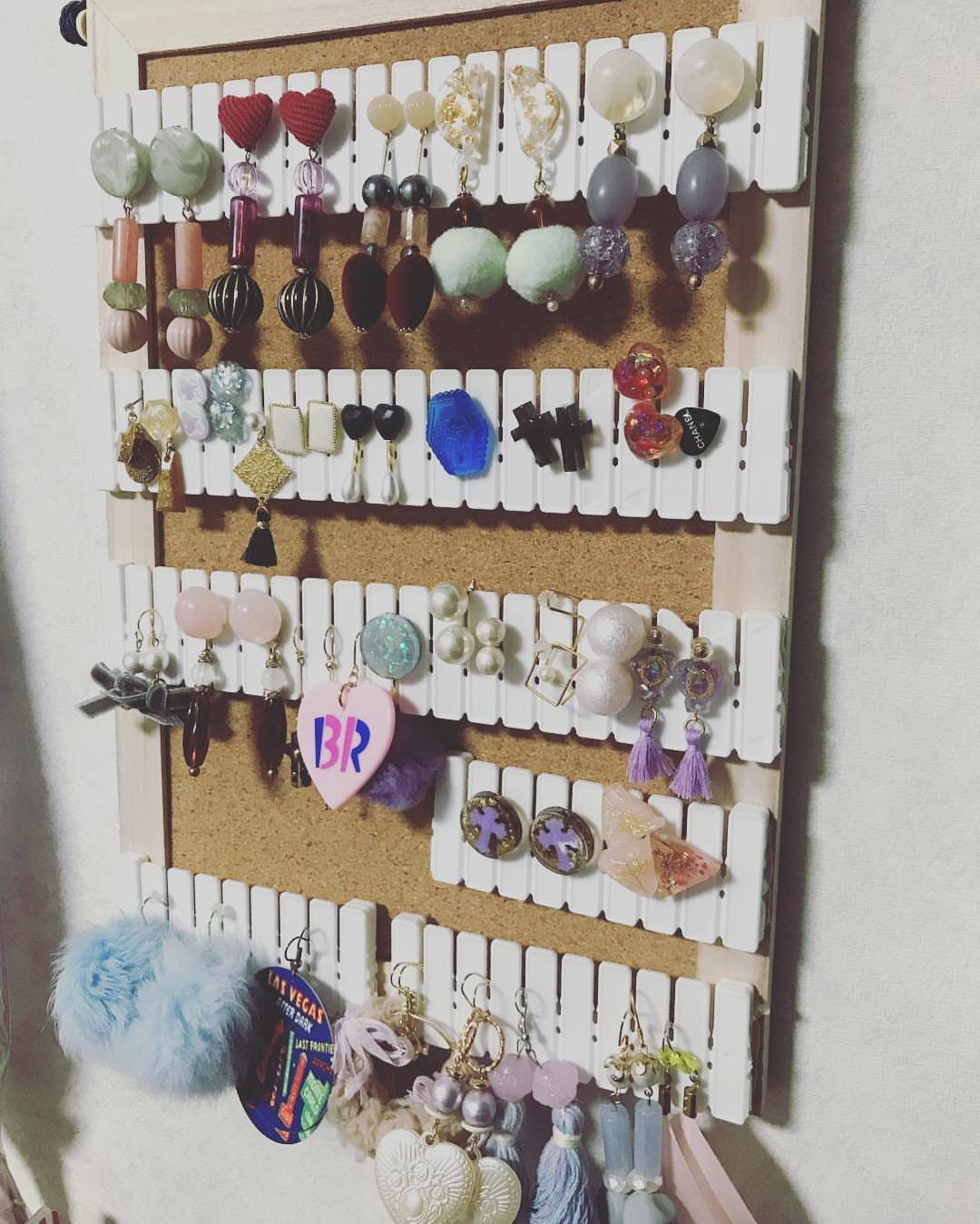
Plain cork board works because push-pins become instant earring posts. The white-painted slats in this version add rows for hooks and drops, but the cork itself handles studs straight through.
I keep a board inside my closet door, sized to the gap so it does not swing against the door jamb.
Cost runs low if you salvage frame lumber and buy cork by the roll. It doubles as memory board, which I find more useful than a display that only holds jewelry.
3. Earring Holder Frame
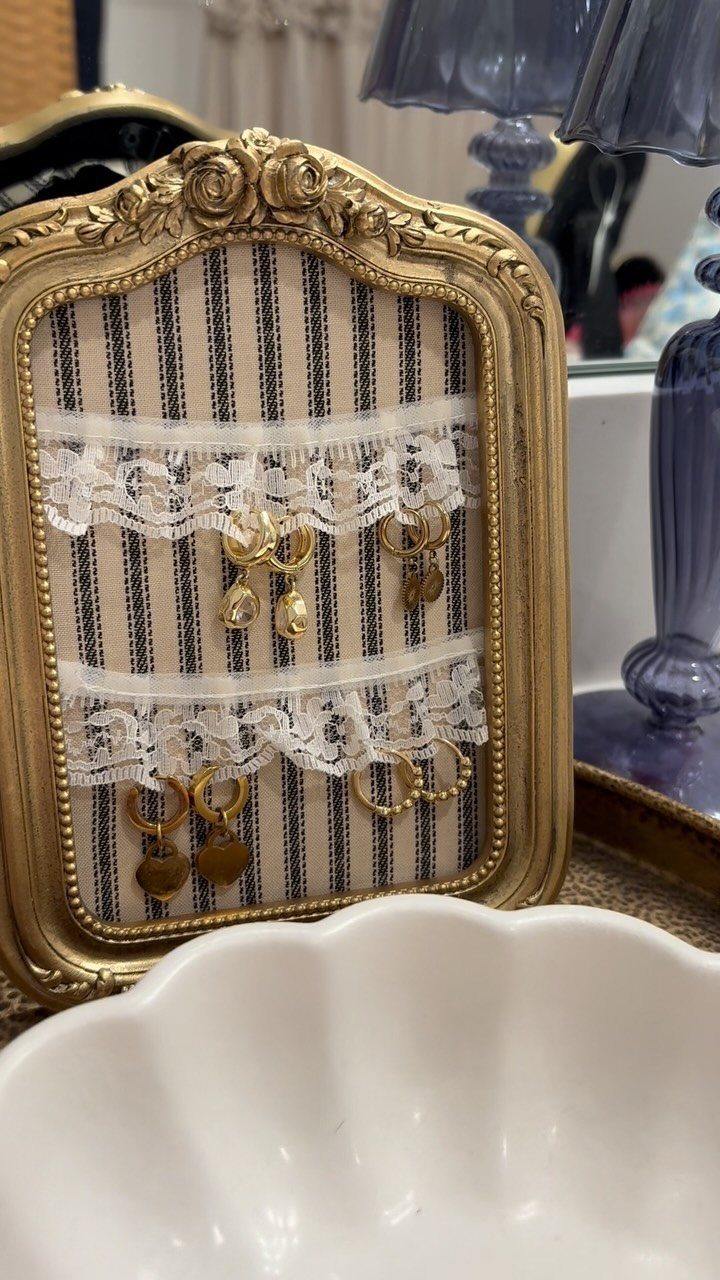
Striped fabric stretched inside a gold frame turns a flea-market find into something that earns its wall space. Lace ribbons layered over the backing give studs something to grip, and the ornate frame reads as deliberate art rather than organizer.
I would choose a frame large enough that the ribbons do not crowd; smaller sizes bunch the earrings together.
Secure fabric with staple gun on the back, add ribbons with hot glue at top and bottom only so posts slip behind. The white bowl and lamp nearby show this lives on a vanity, but it hangs well too.
4. Jewelry Stand
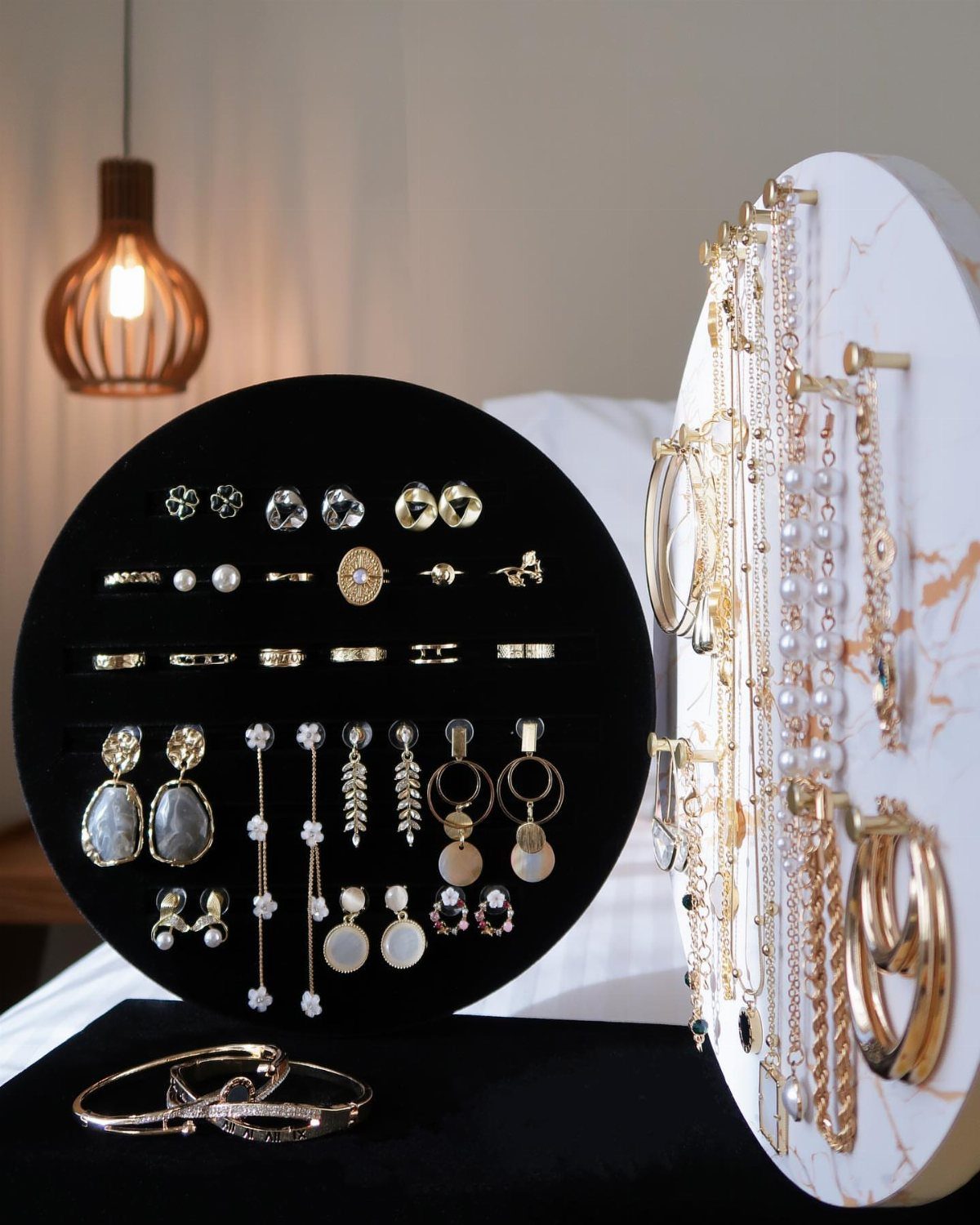
A dedicated stand with tiered holes keeps studs upright and paired, which trays and dishes cannot manage.
Stands cost more for metal or acrylic, less for 3D-printed versions.
Hole diameter matters: a very small hole fits standard posts, but butterfly backs need clearance below. I check that before buying, since some stands suit hooks only and waste half my collection.
5. Compartmentalized Drawer Inserts
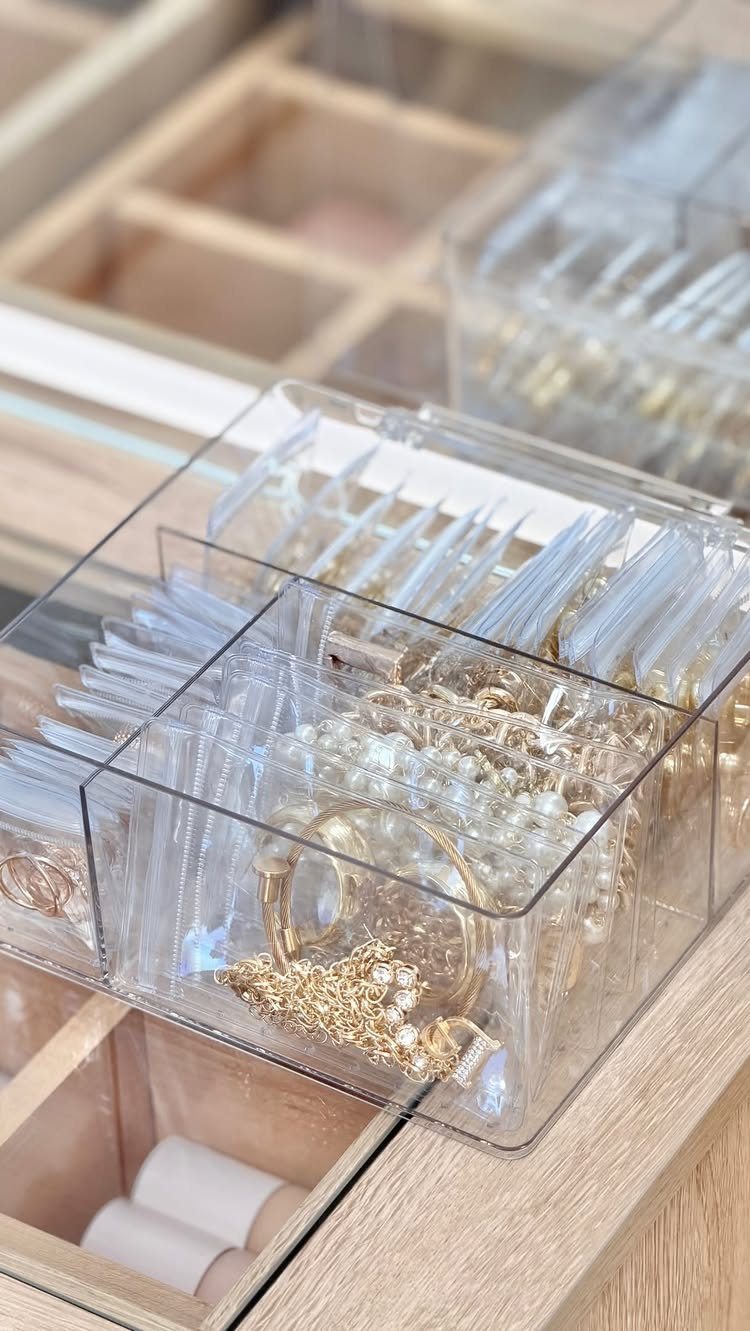
Clear acrylic inserts let you sort by metal, stone, or frequency of wear without committing to a permanent layout.
The small bags in this drawer hold pairs together through moves and travel, a habit I picked up after losing one pearl stud to loose rolling.
Measure your drawer first; standard inserts come in common squares and rectangles and trim with a utility knife.
I prefer small square compartments for studs, larger ones for hoops. The light wood drawer here shows the insert, but it hides equally well in painted or dark interiors.
6. Compact Travel Jewelry Case
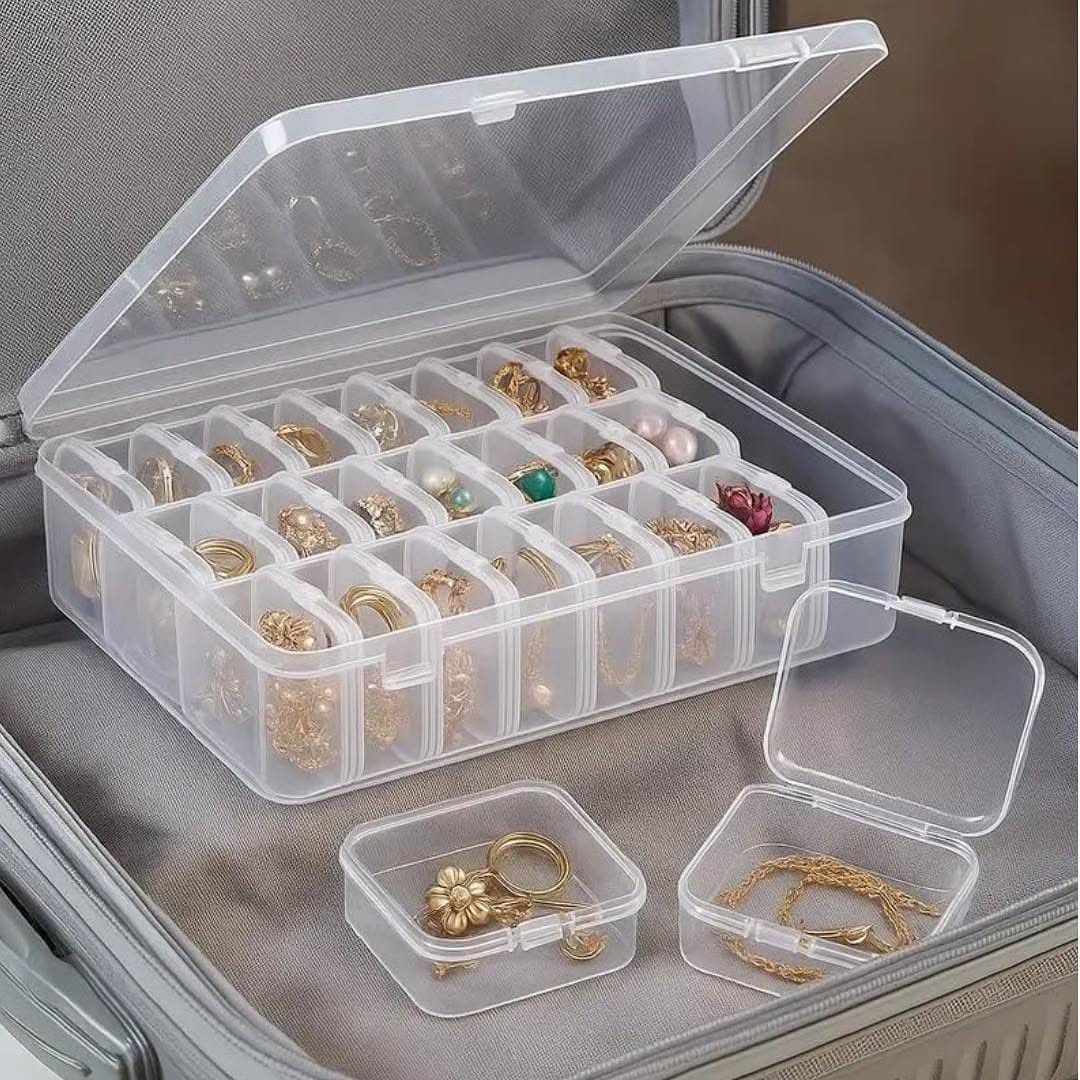
A case with fixed small compartments keeps studs from migrating into each other inside luggage. A clear case lets security see contents without opening, and a system of nested smaller boxes lets you move daily pieces separately from occasion studs.
I look for lids that hinge or latch, not slide; sliding lids open in transit and scatter.
The grey suitcase context matters: this fits carry-on dimensions, so I keep it in my personal item rather than checked bag where temperature swings risk glue joints in costume pieces.
7. Velvet Cushion Display Tray
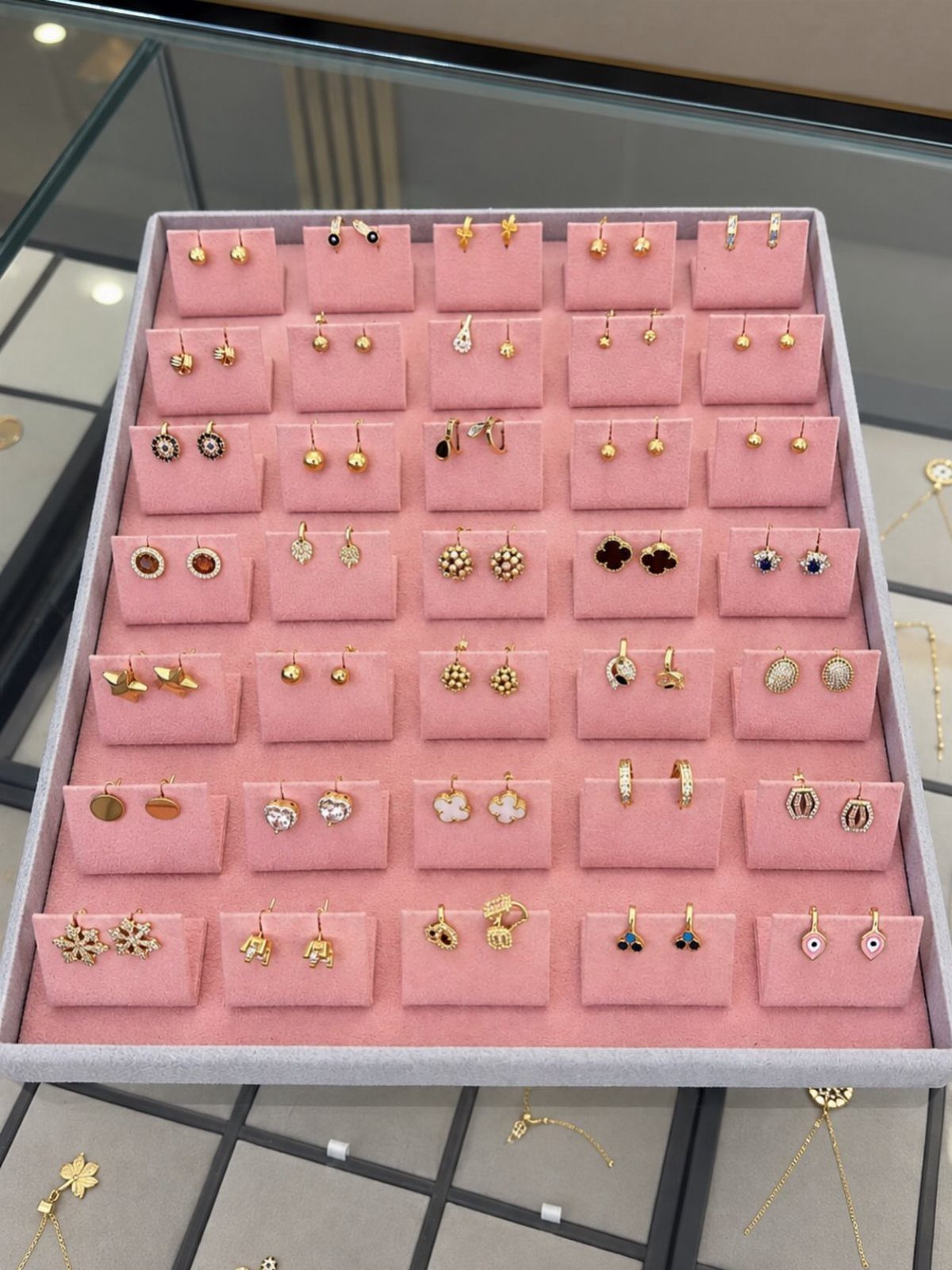
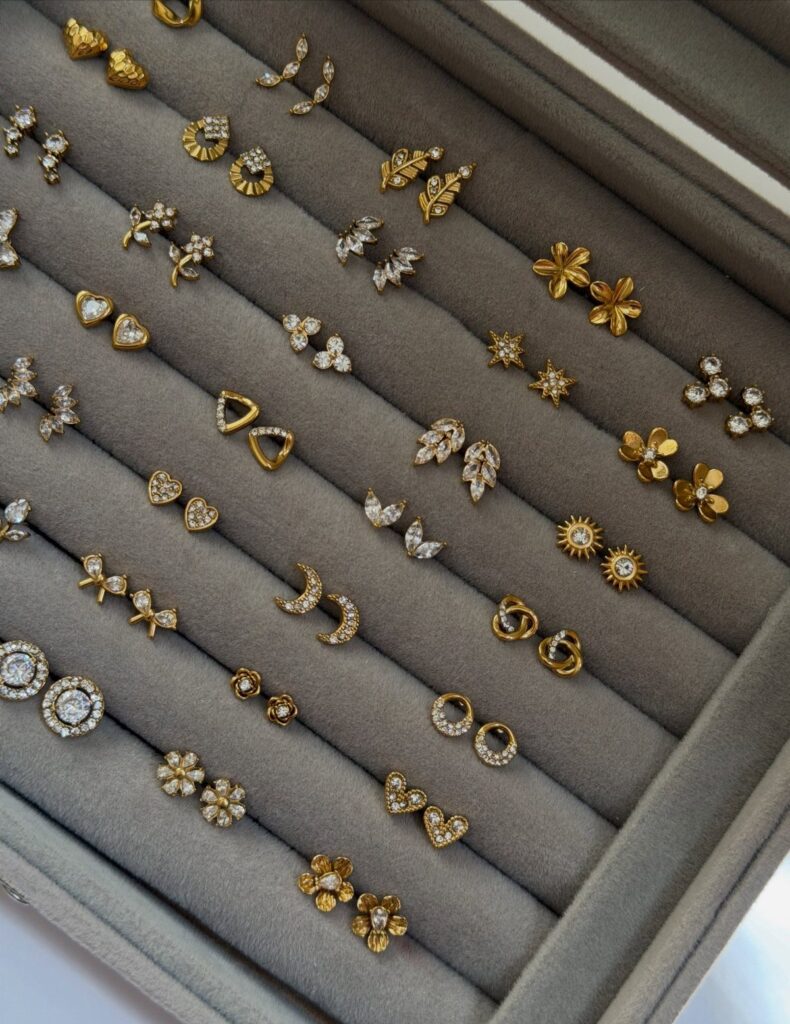
Velvet cushions in a grid pattern keep studs from rolling flat and hiding their stones. The soft pile grips posts without bending them, and the low profile lets the tray slide into dresser drawers or stack on a vanity.
Pink against grey reads feminine without clashing with most bedroom palettes.
I would choose cushion spacing based on my largest pair; overcrowded studs scratch each other. Wipe the velvet monthly with a lint roller, since dust settles fast in the pile.
8. Ceramic Trinket Dishes
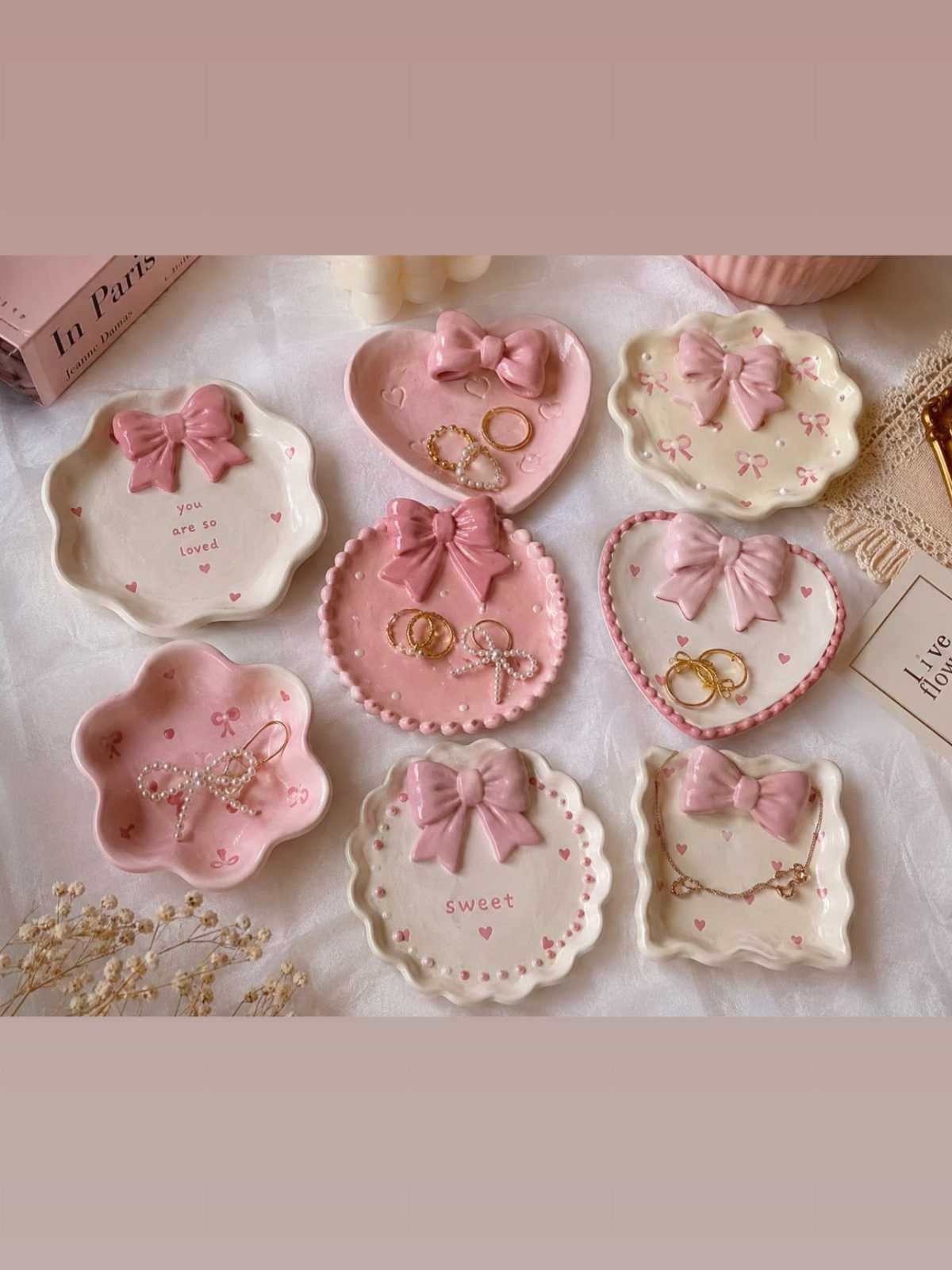
Small ceramic dishes scatter well across a dresser, letting you sort tomorrow’s pair from special-occasion studs by location. The heart and flower shapes here lean gift-shop cute; white or unglazed versions read more grown-up if your taste runs minimal.
Weight matters more than size. A dish too light scoots when you drop earrings in.
I check that a dish sits flat and the glaze is smooth inside, since rough spots snag butterfly backs. These read as decor first, storage second, which suits open vanity displays.
9. Earring Card Display Board
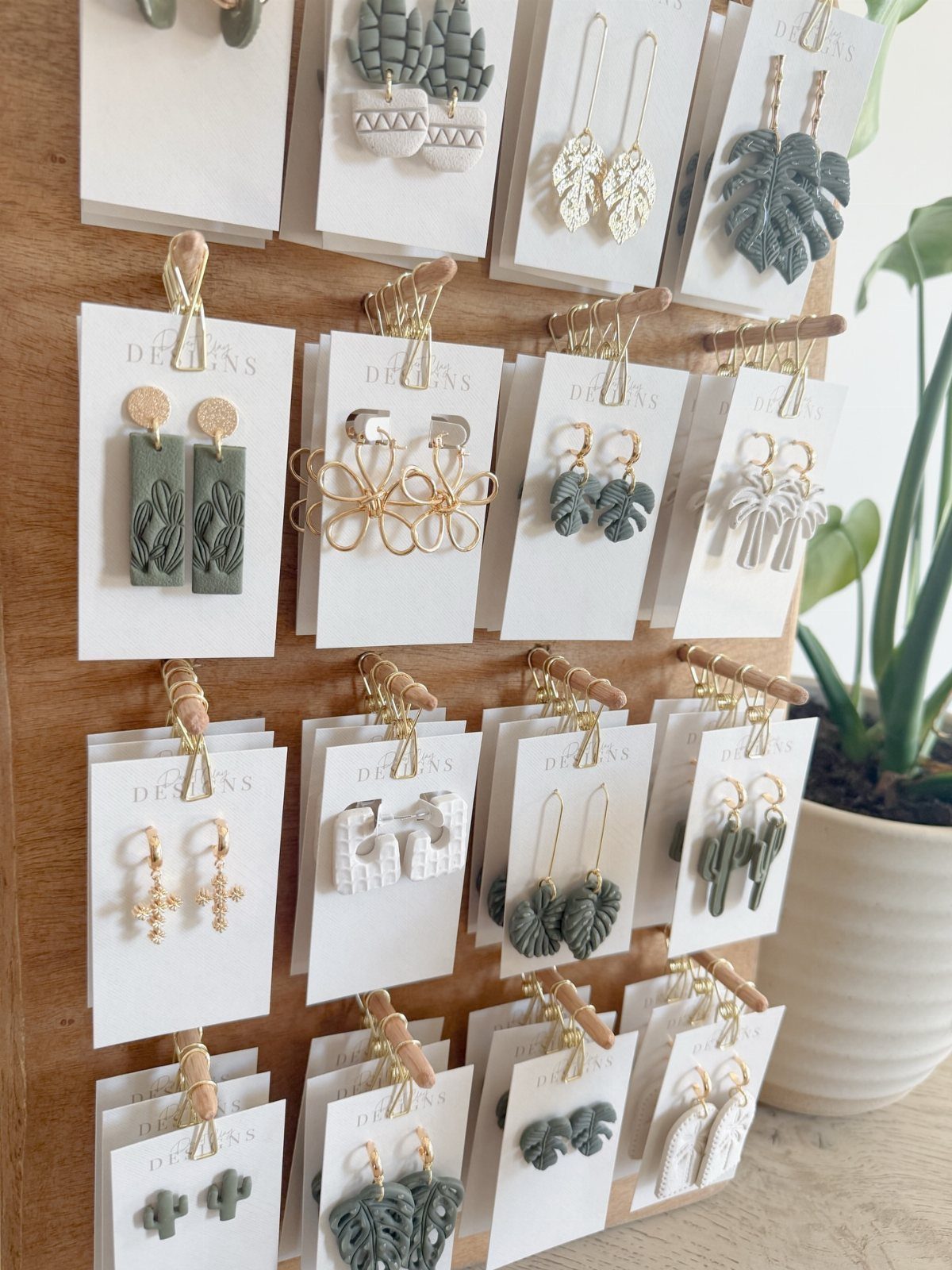
Clip-based boards turn earring cards into wall-hung inventory. The gold clips here grip standard card stock without tearing, and the natural wood suits bohemian or craft-room spaces better than sleek acrylic.
I like this for sellers or makers who photograph stock, since clips let you swap cards fast. The "DESIGNS" print suggests commercial use, but a plain board works for personal collections too.
Space clips evenly; tight packing hides the earrings behind each other. Keep it out of direct sun or card stock fades and cheap metal tarnishes faster.
10. Vintage Tennis Racket Display
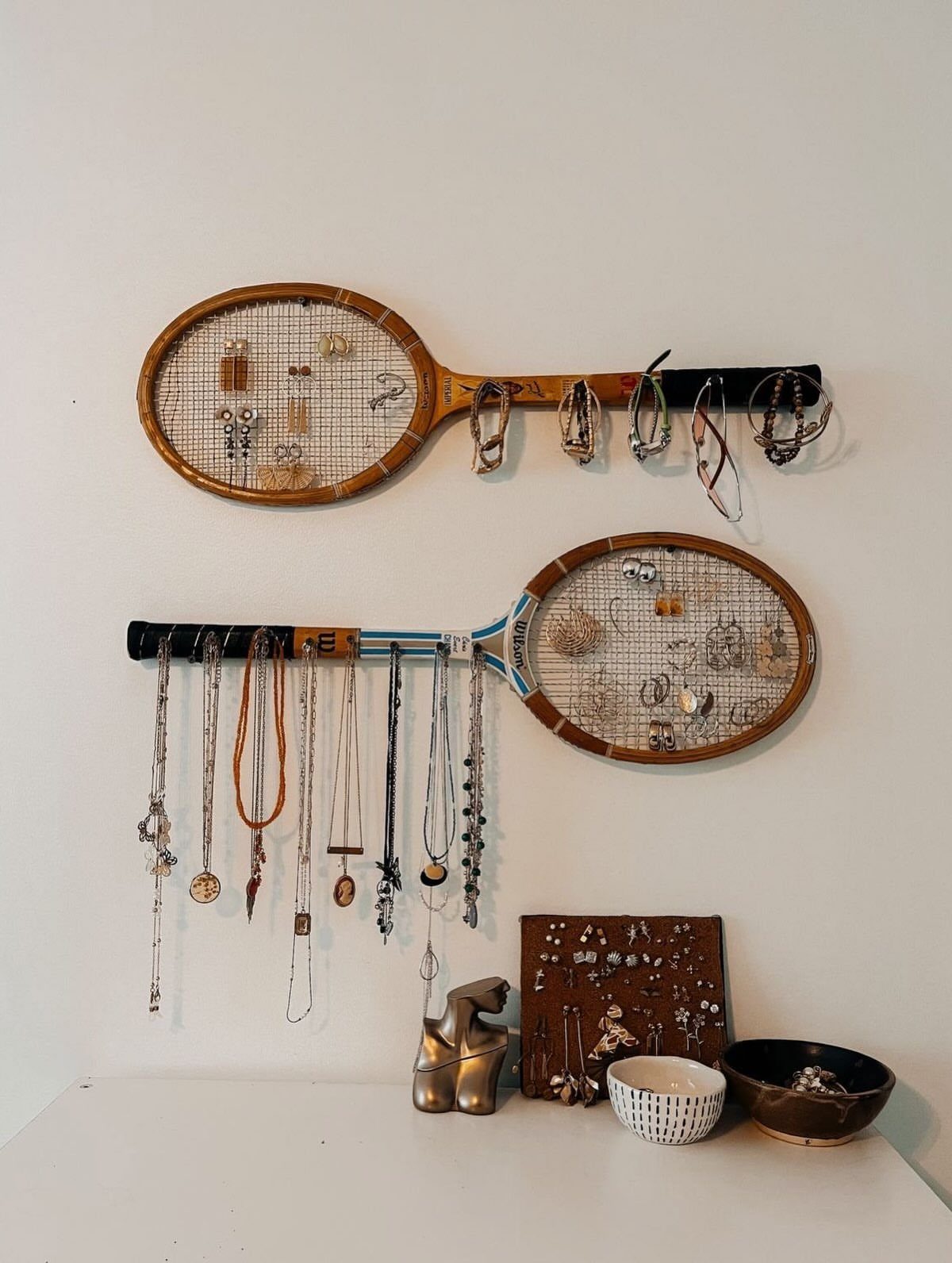
Old wooden rackets bring mesh strings and frame geometry ready-made: hoops hook over the strings, posts can thread through at the frame edge, and the oval shape fills wall space vertically.
Mount two or three for a cluster, or one above a dresser as anchor piece.
Playable-condition wood rackets with intact strings turn up cheap at estate sales and thrift stores; cracked frames cost even less and still work fine for display. Check that strings hold tension; slack mesh drops earrings.
I would seal the wood lightly where hands grip, since decades of sweat leave residue. It trades polished for character, which suits eclectic rooms rather than sleek ones.
11. Hanging Ribbon Organizer
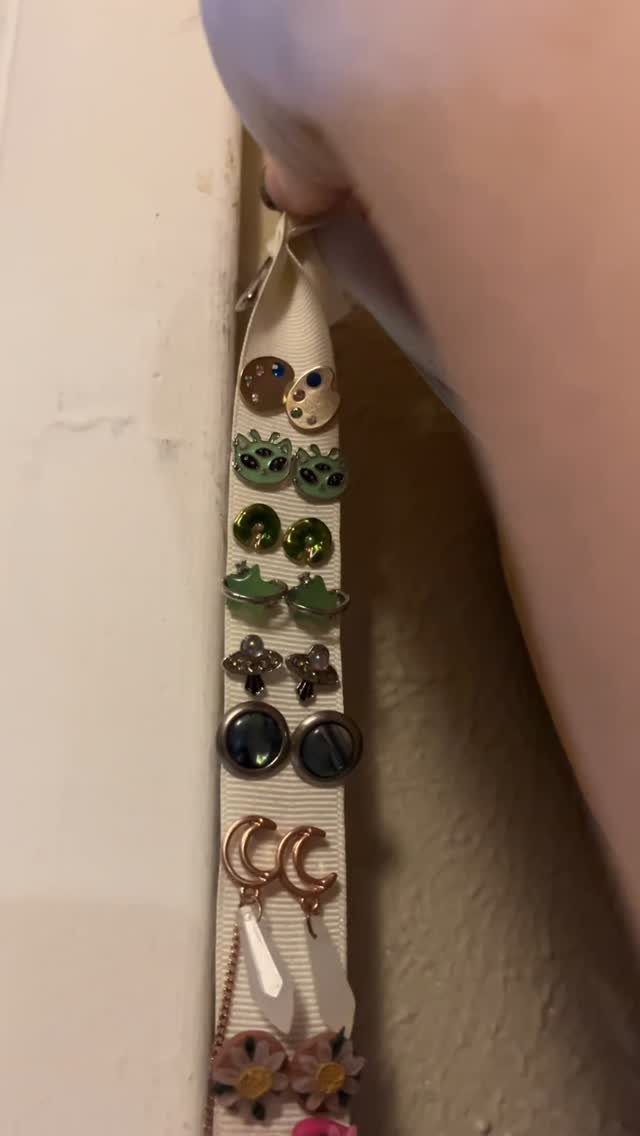
A pinned ribbon hangs studs in a vertical line, taking wall space thin as the fabric itself. The white cotton here shows studs clearly; printed patterns compete with metal colors.
Pin through post holes, not fabric alone, or studs slide.
I use flat-headed sewing pins pushed deep enough that backs catch against the ribbon weave. The loose end can roll or tangle without a weight or second anchor point, so I tension mine with a dowel at bottom.
Cost stays low: ribbon remnant, pins, and 2 thumbtacks. It suits renters who cannot drill for hardware.
12. Lace Embroidery Hoop Holder
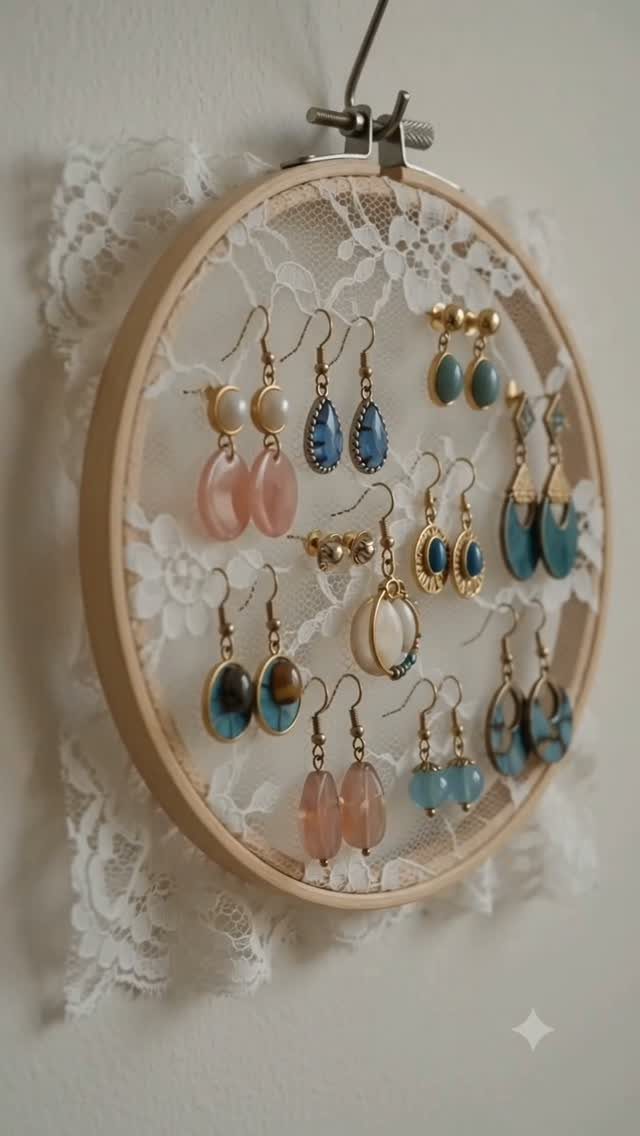
Lace stretched in an embroidery hoop gives studs a delicate grip and dangles a frame for hooks. The circular shape fills odd wall gaps that rectangles waste, and the natural wood here reads warmer than painted versions.
Tension the lace taut as a drum or posts pull threads free over time.
I secure with hot glue on the inner hoop, not the outer, so glue stays hidden. White lace soils fast near makeup areas; ivory or grey hides wear better.
The open weave suits studs and light drops, but heavy chandeliers stretch the fabric. A standard embroidery hoop holds plenty of pairs without crowding, and lace stretched across it keeps studs visible and easy to grab.
13. Wall-Mounted Slotted Bar Rack
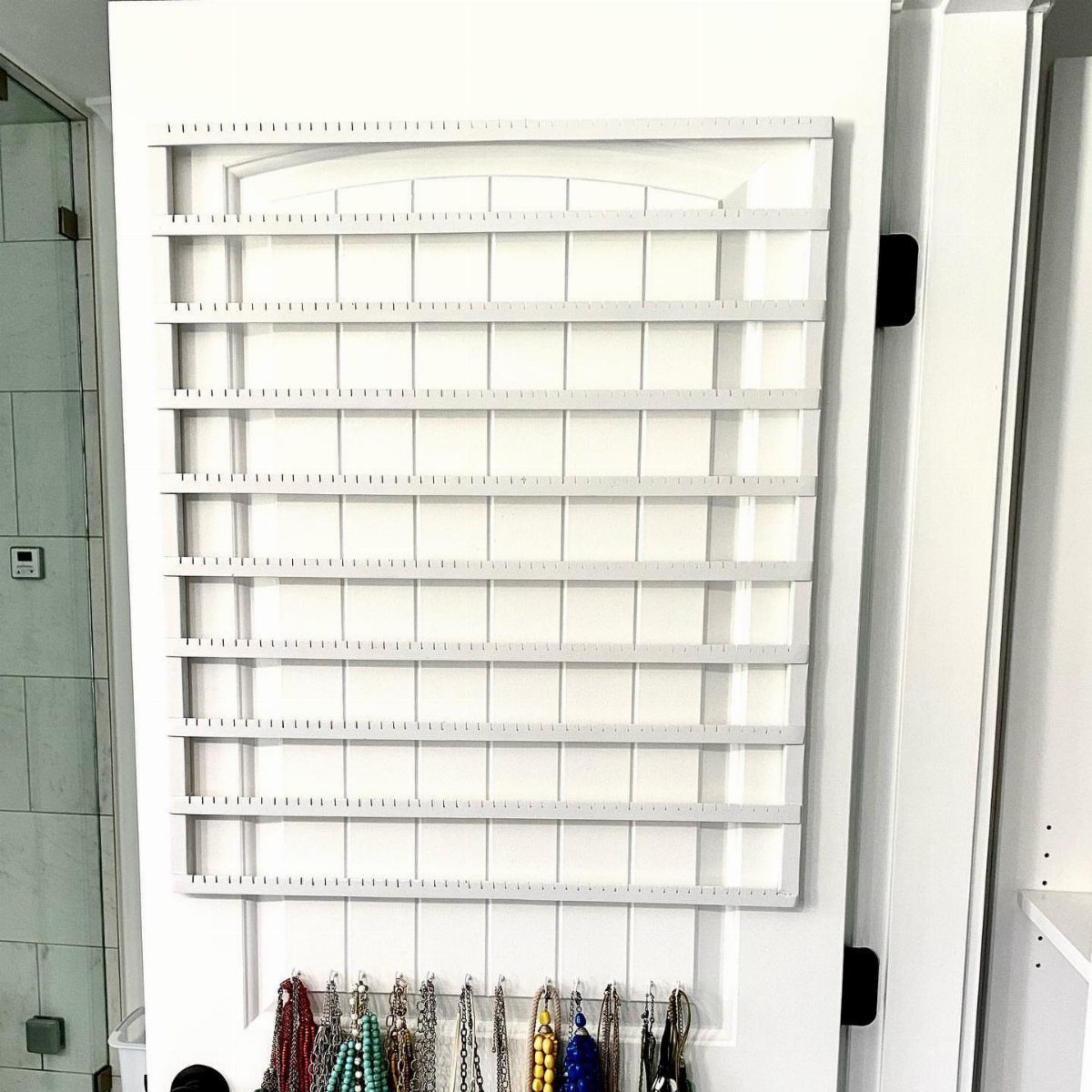
A slotted bar rack mounted on a door back turns dead space into sorted storage. The horizontal slots let studs slide in paired, while lower hooks handle necklaces that would tangle in a drawer.
White finish against white tile reads clean in a bathroom, but the same rack in black or brass suits bedroom walls.
I check slot width before buying; narrow slots grip posts without wobble, wide ones let studs tilt and scratch. Mount with the door closed to clear the jamb, and use anchors if studs do not hit wood.
This trades drawer concealment for grab-and-go speed, which suits morning routines more than open-display vanities.
Tips for Organizing Earrings
Sort your earrings twice a year, not when the mood strikes.
I pull everything out, check posts for bent wires, and set aside pieces I have not worn in a full year. Broken earrings go to a repair pile or the trash; hesitation turns a collection into clutter.
Clean before you store.
A soft cloth removes skin oils and makeup residue that tarnish metal and dull stones. I do this monthly for daily studs, quarterly for occasion pieces.
Dividers only work if you commit to categories.
I sort by occasion first, then metal, since that matches how I choose in the morning. Labels on drawer inserts save the mental load of remembering which compartment holds pearls versus cz.
Covered storage beats open trays for anything you do not reach for weekly. Dust settles in days, moisture in bathrooms warps glue joints in costume pieces.
But over time, it can be a struggle to keep them organized in a way that separates the hoops from studs without creating mismatched pairs and tangled up danglers.
— Hunker
Benefits of Earring Storage
Proper storage pays back in minutes every morning and in years from the earrings themselves. A bent post from tossing studs loose in a bag costs more to repair than a basic organizer.
Time saved is the benefit I notice most.
Divided compartments or visible hanging storage let me grab the right pair without dumping a drawer. That matters on work mornings when decision fatigue already runs high.
Reduced clutter has its own psychological weight.
A dresser top cleared of scattered earrings reads as calm; the same surface with dishes and loose stones reads as task waiting. I notice this more in small bedrooms where every visible item competes for attention.
Accessibility shapes what you actually wear.
Earrings buried in a box get forgotten; the same pair hung on a ribbon or slotted in clear acrylic gets chosen. Storage that displays your collection increases the use you get from what you already own.
Maintaining Earring Collections
Declutter on a schedule, not by feeling.
I set a phone reminder for spring and fall, since seasonal change already prompts closet sorting. Earrings that survived the last 2 rounds without being worn go to donation or resale; sentiment is not a storage strategy.
Cleaning method depends on material.
A soft cloth handles most daily wear; anything more aggressive risks stripping plating or clouding stones. I clean after the last wear before storage, not before the next wear when I am rushed.
Dust-free storage means lids, covers, or drawers, not open dishes for long-term keeping.
Velvet trays inside closed boxes work; the same velvet on an open vanity collects airborne skin cells and hair spray. I use open displays only for the week’s rotation.
Moisture is the hidden enemy.
Bathroom storage needs tighter seals than bedroom storage; occasion pieces belong out of humid rooms entirely. Silica gel packets in closed boxes extend the interval before metal tarnishes, especially for silver.
Frequently Asked Questions
What is the best way to store my earrings?
The best storage matches how you choose and how often you wear.
How can I make a DIY earring holder for studs?
A picture frame with fabric or lace stretched across the opening makes a stud holder that earns its wall space.