Copper wire jewelry runs from a single wrapped ring you finish in an afternoon to braided bracelets and tube necklaces that need a few more tools and some patience.
The material itself decides most of the choices here: dead-soft wire bends easy for swirls and pendants, half-hard holds angles for earrings that stay flat, and raw tubing from a hardware supplier cuts down to necklace bars.
Half-hard temper is what keeps a geometric frame from going soft on your wrist by dinnertime.
1. Minimalist Wire Wrap Rings
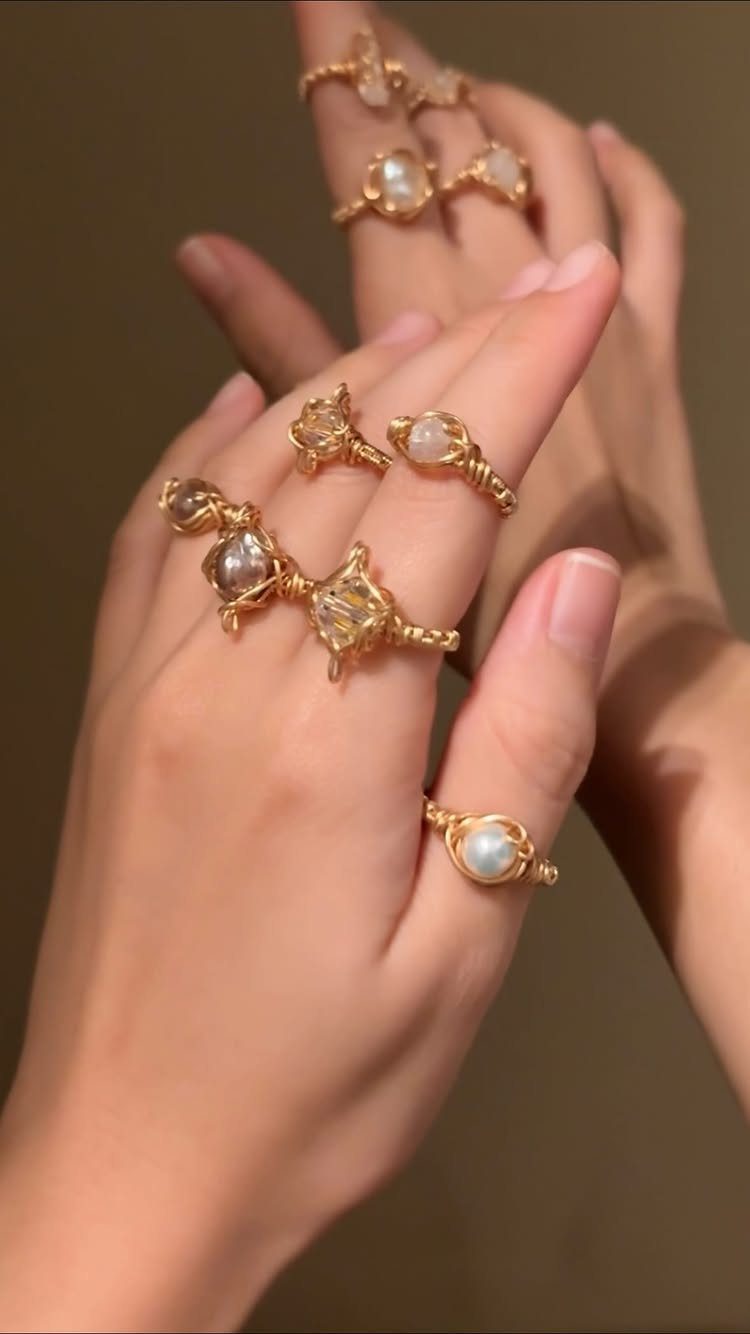
A stack of wire-wrapped rings sits light on the fingers, each one holding a small stone in a knot that keeps it there without glue.
I like this for beginners because the wrap itself is the setting; you learn one technique and the ring is finished. Dead-soft wire bends easily around a ring mandrel or even a marker.
The stone stays put because the wire crosses over itself, and that crossing is what you shape for size. Make three at once and you have a set that wears together without matching.
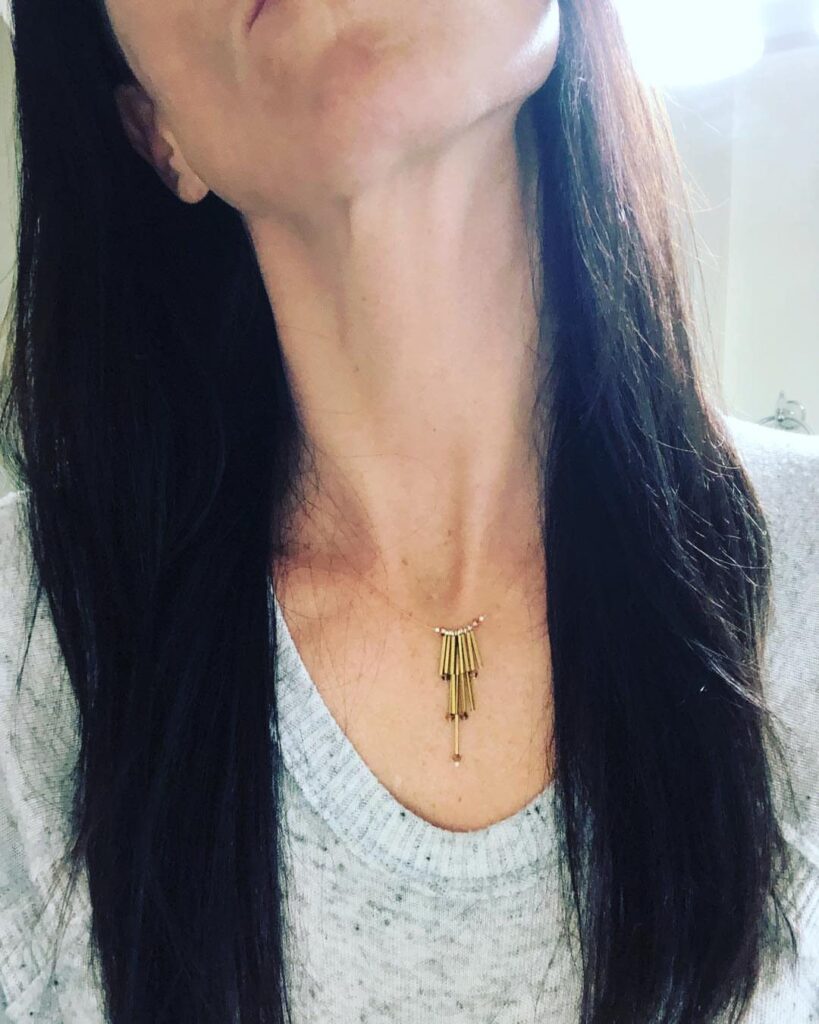
2. Raw Copper Tube Necklaces
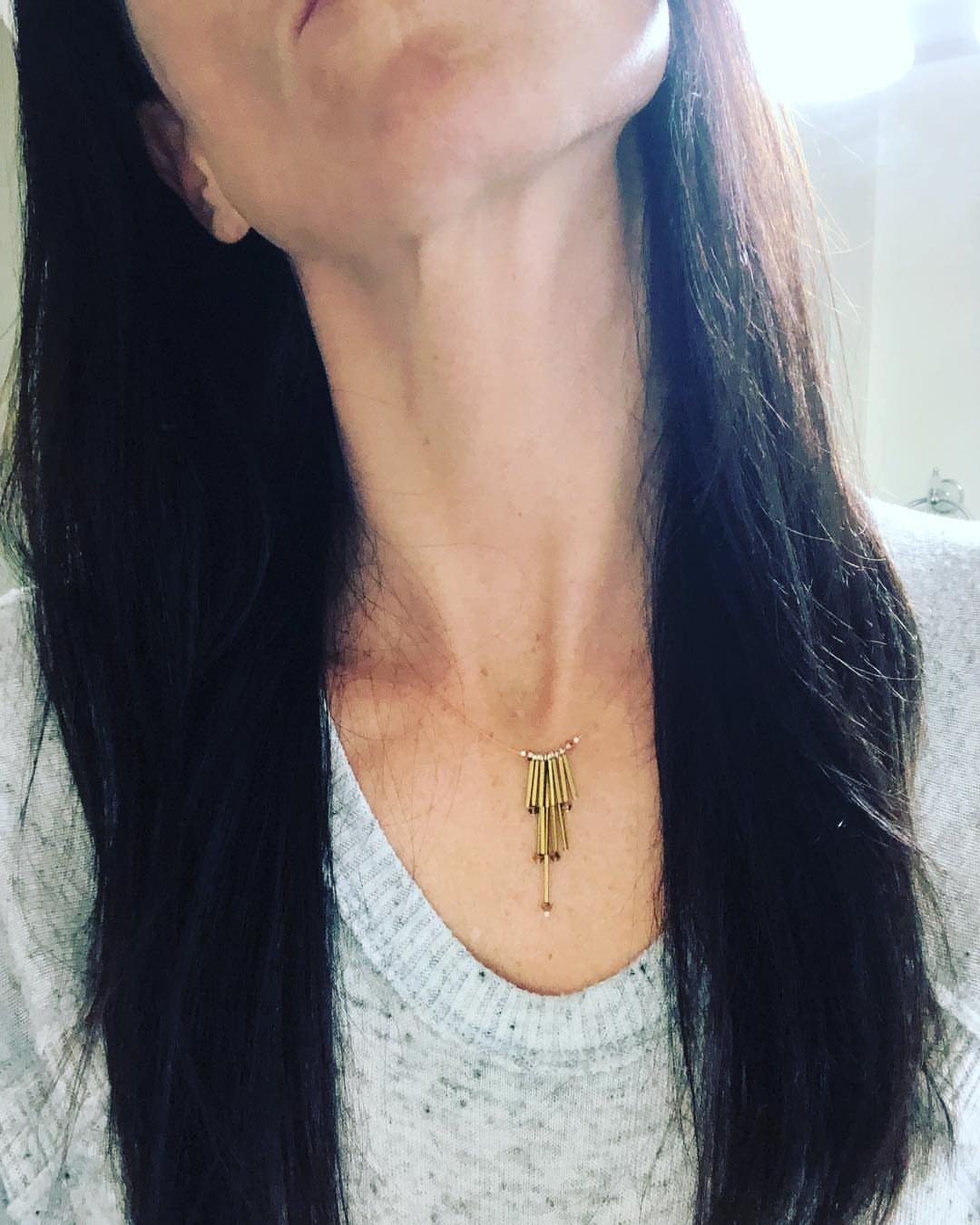
Vertical copper tubes on a fine chain read as bars of light against skin, and the spacing between them does the work no pendant could.
I buy tubing from hardware suppliers, cut to length with a tube cutter, and file the ends smooth before stringing.
The chain threads through each tube; crimp beads or small knots keep them separated. The weight stays low even with several pieces, and the raw copper darkens to a warm brown that looks intentional on this design.
3. Geometric Triangle Earrings
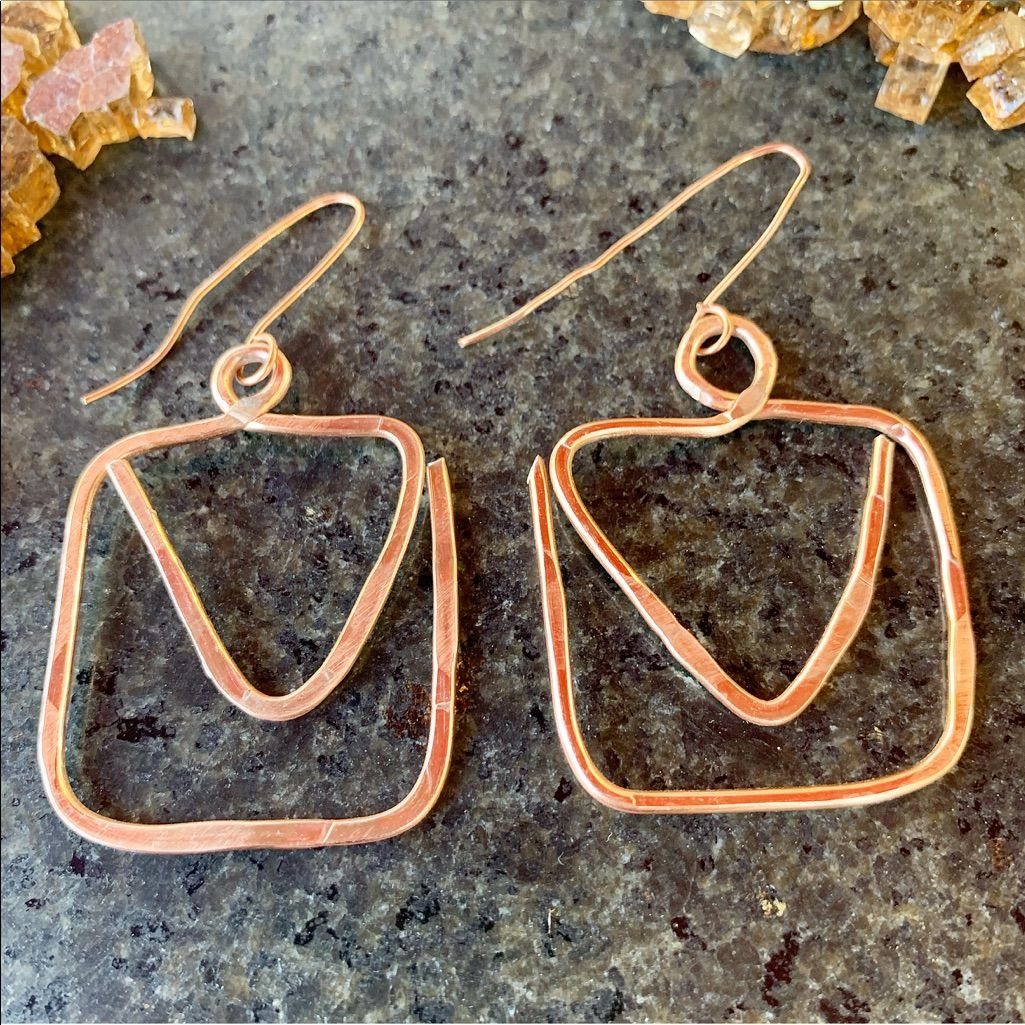
A triangle framed inside a square gives these earrings their architecture, and the negative space between the wires matters as much as the shapes themselves.
I build the outer square first, solder or wrap the corners, then suspend the inner triangle from short lengths of wire that also hold any bead or crystal.
The whole piece stays flat, so it hangs clean and does not twist. This is where I reach for half-hard wire; it holds angles that dead-soft would relax.
4. Sea Glass Wrapped Pendants
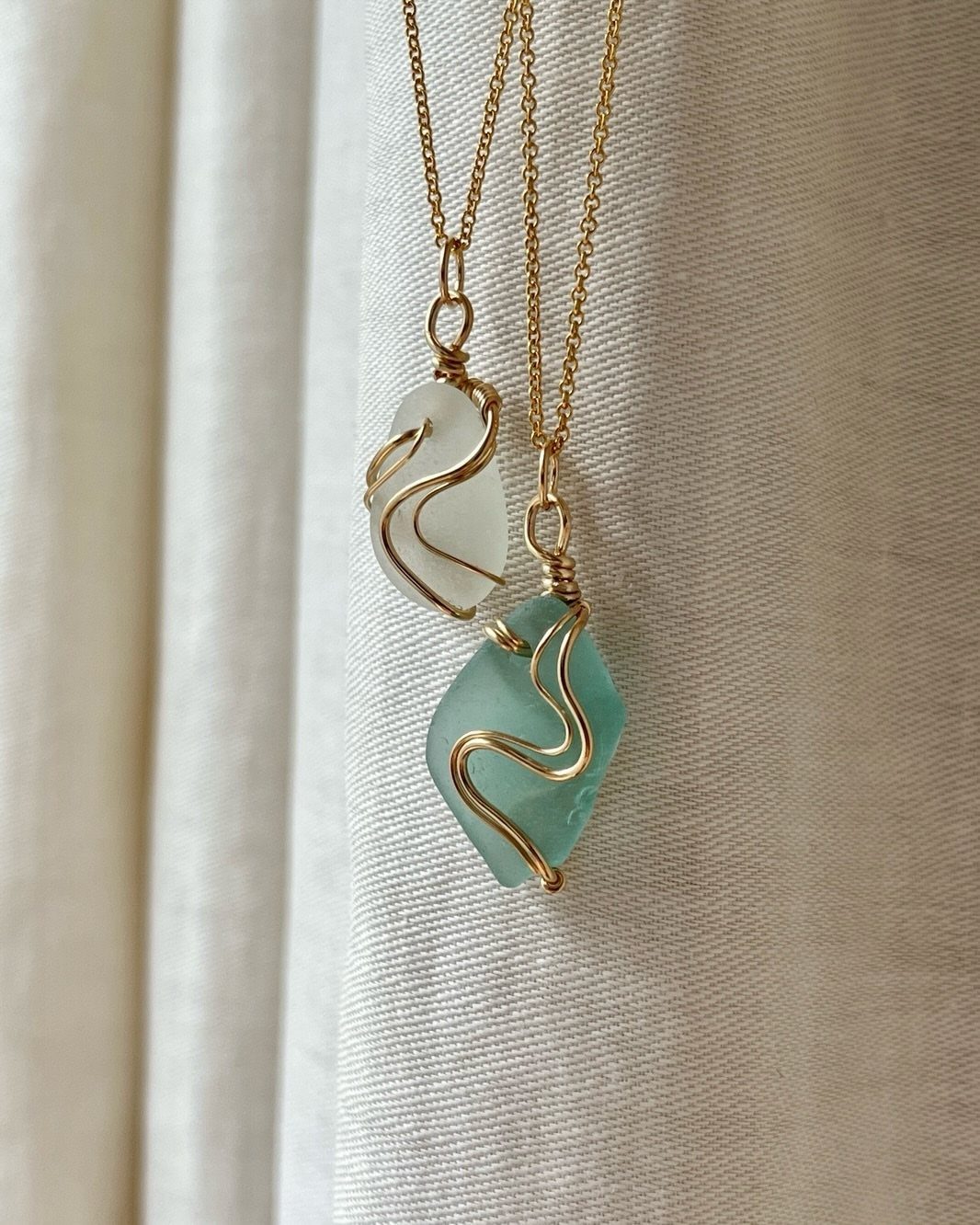
Sea glass has already spent years in water and sand, so the wire’s job is to hold it without fighting its shape.
I work with the piece’s own curves, wrapping where the glass is thickest and letting thinner areas stay free. Thin wire follows contours without adding bulk, and a single loop at top becomes the bail.
Tumbled glass from craft stores works if you do not live near a beach, though I prefer the rounded edges of genuine pieces; they wear against skin without catching.
5. Minimalist Copper Hair Pins
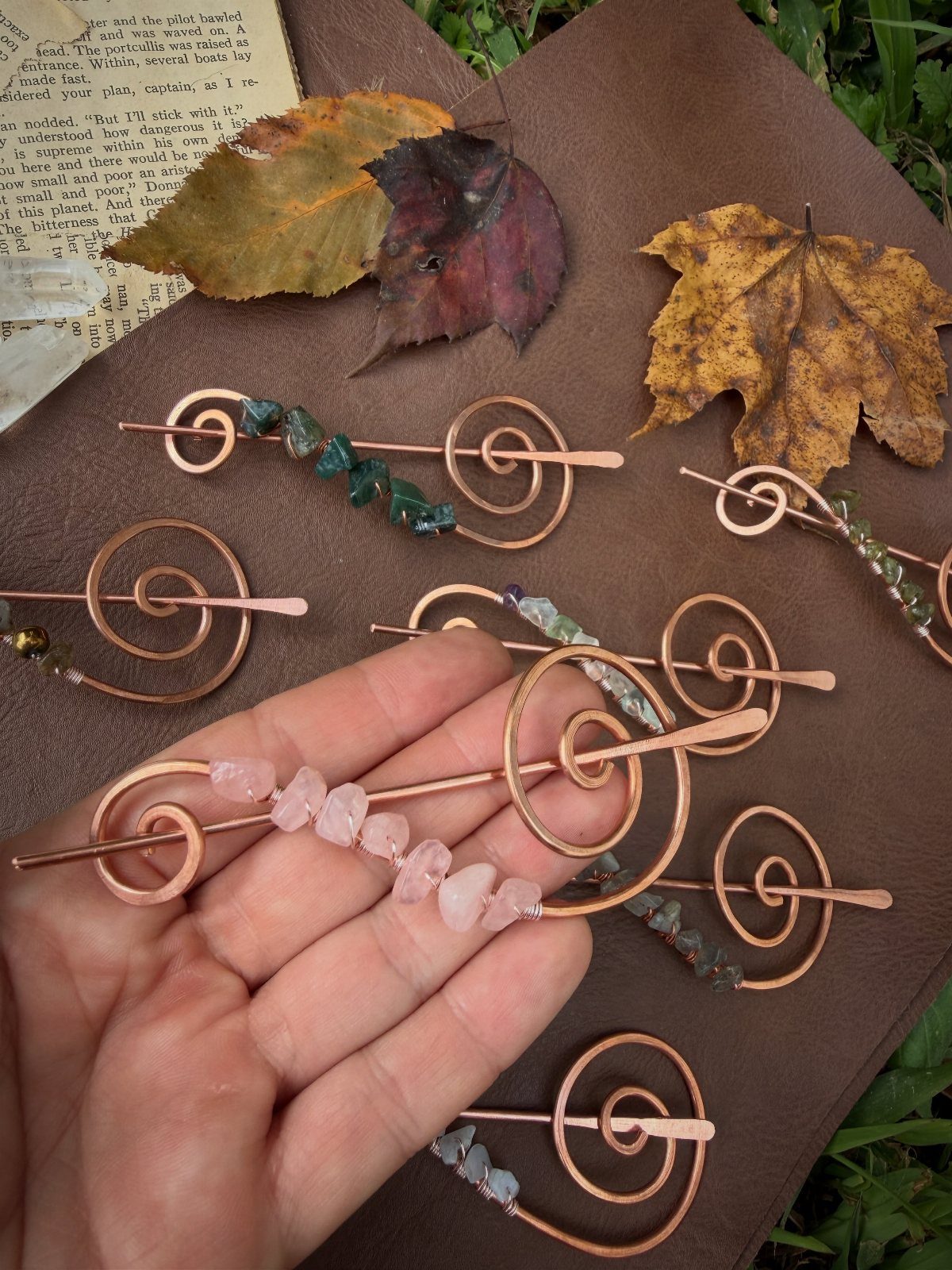
A hair pin needs to slide in and stay, which means the straight shaft does the holding and the decorated head does the showing.
I bend a short length of sturdy copper to a gentle curve at the bottom, then wrap the top with thinner wire and a small stone or crystal.
The bend grips hair without piercing it, and the weight of the head keeps it upright. These suit fine to medium hair best; thick coils need a longer shaft or a steeper curve to hold.
6. Boho Copper Hoop Earrings
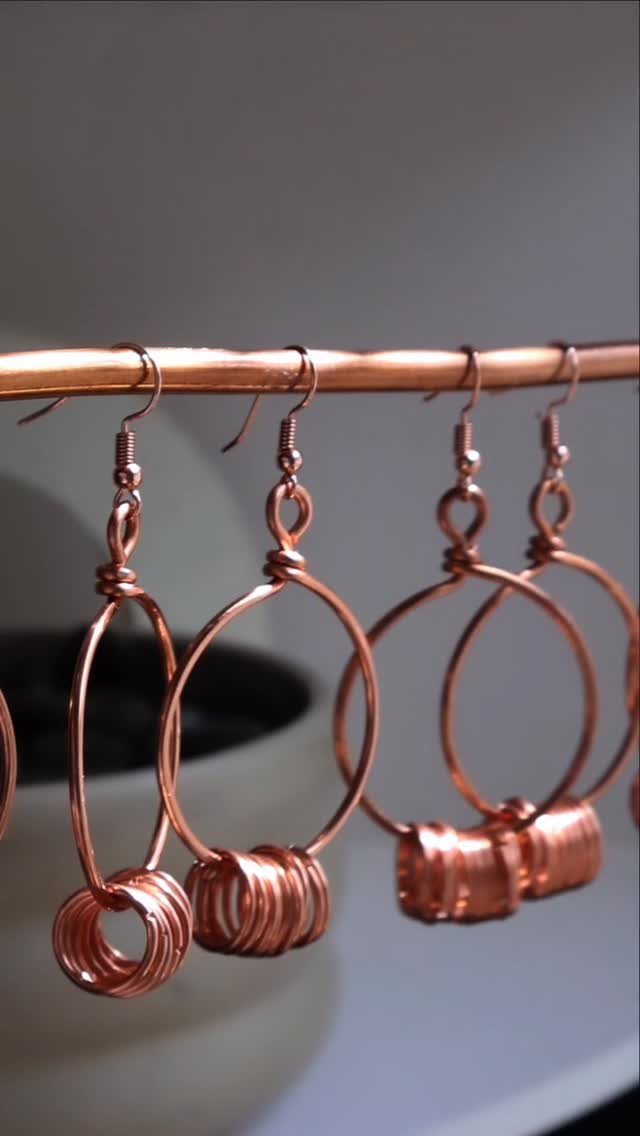
I form the base on a mandrel or round form smaller than my finished size, since wire springs back. Decorative wraps of thinner wire add texture without weight, and the copper warms as it darkens.
These are large enough to read from a distance but light enough for all-day wear, which is the combination I look for in a hoop I will actually reach for.
7. Braided Copper Wire Bracelets
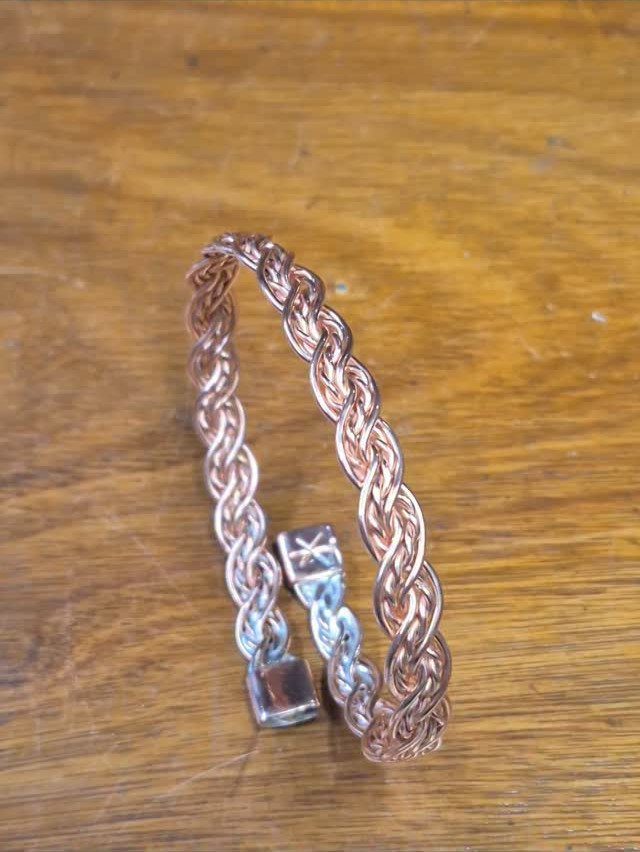
3 strands of dead-soft copper wire twist into a flat braid that holds its shape without kinking, and the clasp finishes it clean.
I start with equal lengths, tape one end to a table edge, and braid as I would hair, keeping tension even so the band does not narrow at one end.
The braid spreads pressure across the wrist, so this one sits easy through a full day at a desk or running errands. A hook clasp or magnetic finding keeps the line simple; anything bulky fights the braid’s texture.
8. Copper Wire and Leather Chokers
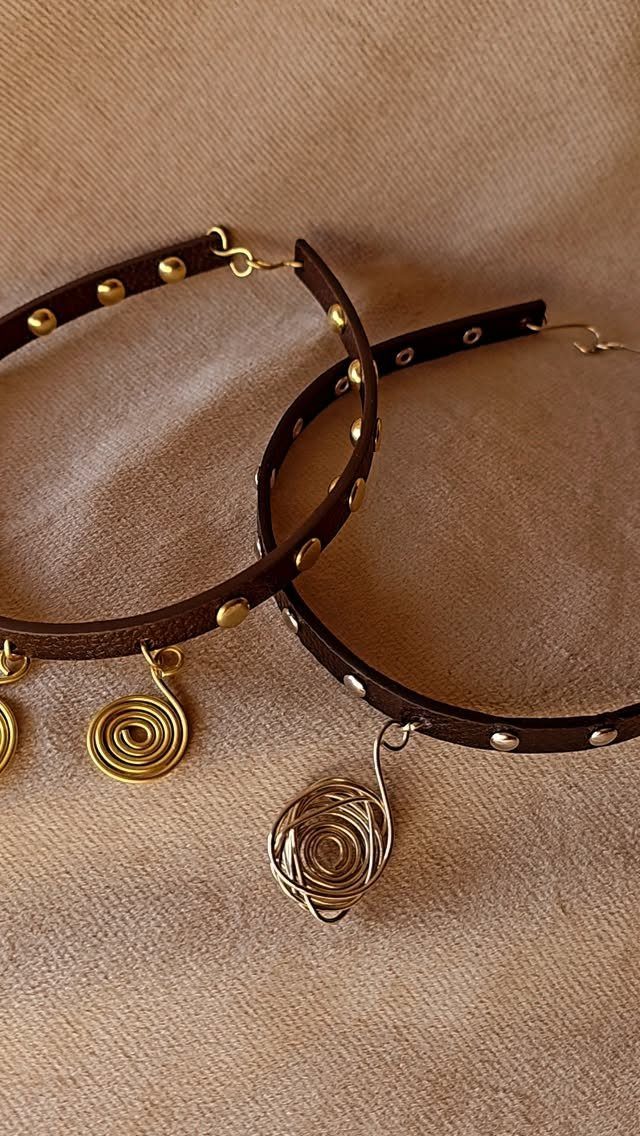
Leather cord gives the copper something to push against, and the spiral charm moves with the body instead of hanging stiff.
I cut leather to neck size plus overlap, add snaps or a slider clasp, then wind the copper spiral freehand around round-nose pliers and thread it onto a jump ring.
The metal darkens faster than the leather ages, which I like; the 2 tones stay distinct instead of matching too neatly. Keep the spiral open and light; a heavy coil pulls the cord forward and sits wrong.
9. Copper Wire Swirl Earrings
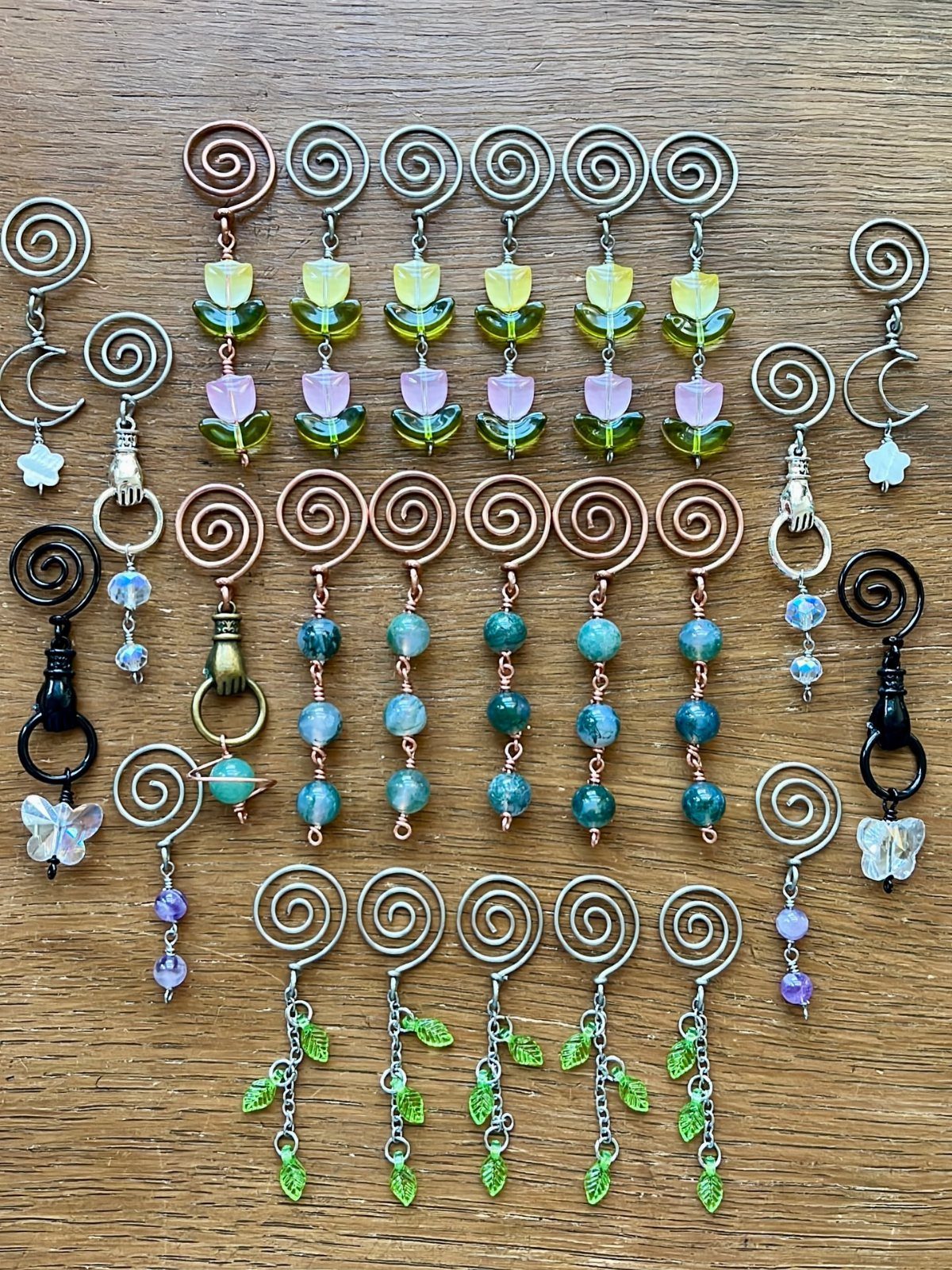
A swirl is one continuous line that loops back on itself, and the earring lives or dies on whether that line balances.
I work from the center outward, shaping on mandrels in graduated sizes so each curve echoes the last. Beads thread on at the outer loop and stay put because the wire crosses beneath them.
Dead-soft copper is my choice here; half-hard fights tight curves and springs open. These read as playful without reading as loud, which is the earring I want for days when studs feel too small and drops feel too much.
Frequently Asked Questions
Can copper be worn as jewelry?
Copper sits against skin without irritation for most people, and the patina it builds, that mottled warm brown from air and skin oils, reads as intentional aging rather than decay.
Wire labeled dead-soft yields to finger pressure for wrapping and organic curves, while half-hard copper keeps its angles when you need crisp geometry.
Some people notice a green mark on skin where copper sits; this is harmless oxidation and washes off.
What can I use copper wire for?
Copper wire works for rings, necklaces, earrings, hair pins, bracelets, and chokers, with different gauges suited to each.
I use 18-gauge for structured pieces like rings and hoops, 22-gauge for fine weaving and stone wrapping, and 14-gauge for sturdy items like hair pins.
What are some DIY wire craft ideas?
Copper wire crafts include minimalist wrap rings with small stones, raw tube necklaces cut from hardware tubing, geometric earrings with framed negative space, sea glass pendants that follow the glass’s own curves, and spiral charms that move with the body.
I also braid 3 strands into flat bracelets and form continuous-line swirl earrings that balance from the center outward. Each technique uses the wire’s properties, whether dead-soft for tight curves or half-hard for held angles.