An ear piercing stack can run from 3 studs in matching silver to a mapped constellation of mixed metals and colored stones, with soft tissue healing faster than cartilage work that demands patience.
What decides your stack is not taste alone but your ear’s actual flat areas and curves, which a piercer maps before any needle touches skin, and which the placement advice below helps you think through yourself.
1. Mixing Studs and Hoops
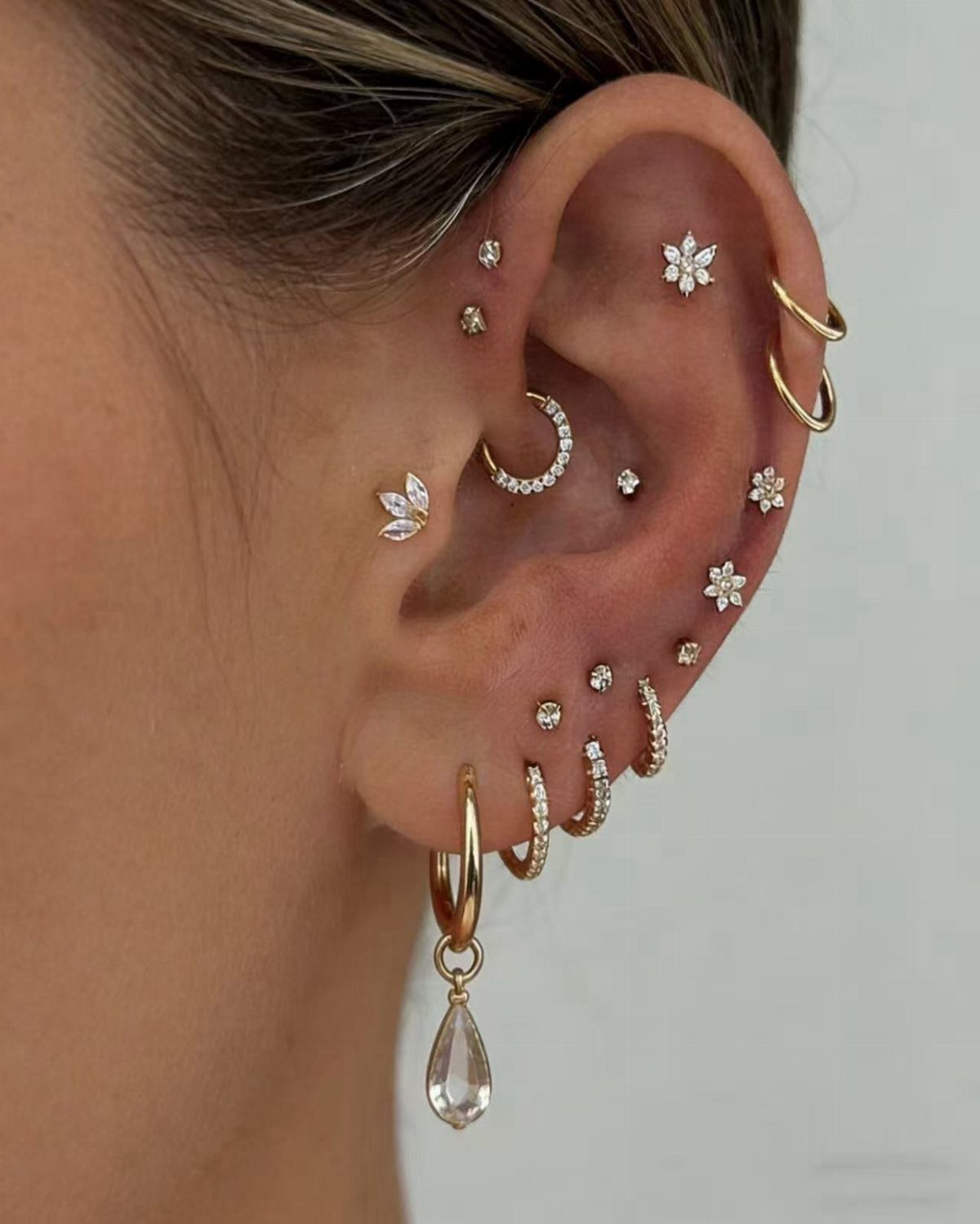
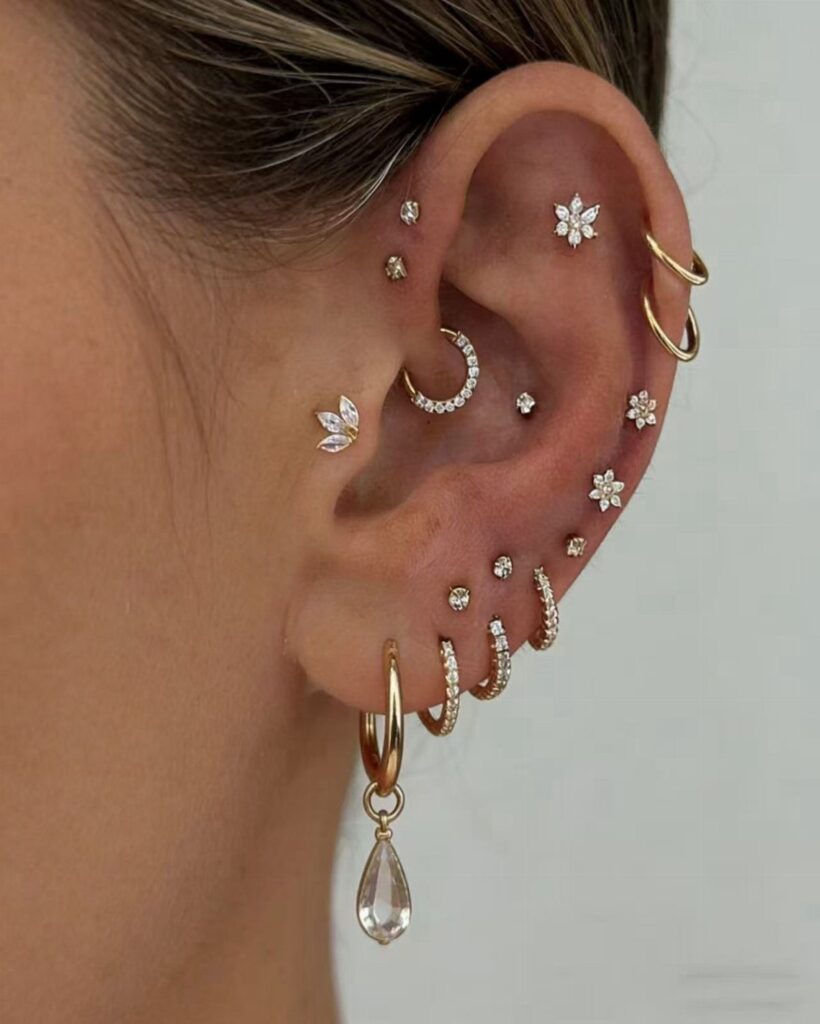
Gold studs catch light differently than hoops do, and pairing the two shapes keeps an ear stack from flattening into one note.
I like placing the largest hoop at the lobe and working upward with smaller studs, or reversing that if the helix piercing can take the weight.
The teardrop visible here adds a third geometry that breaks up any symmetry that feels too tidy.
2. Constellation Style
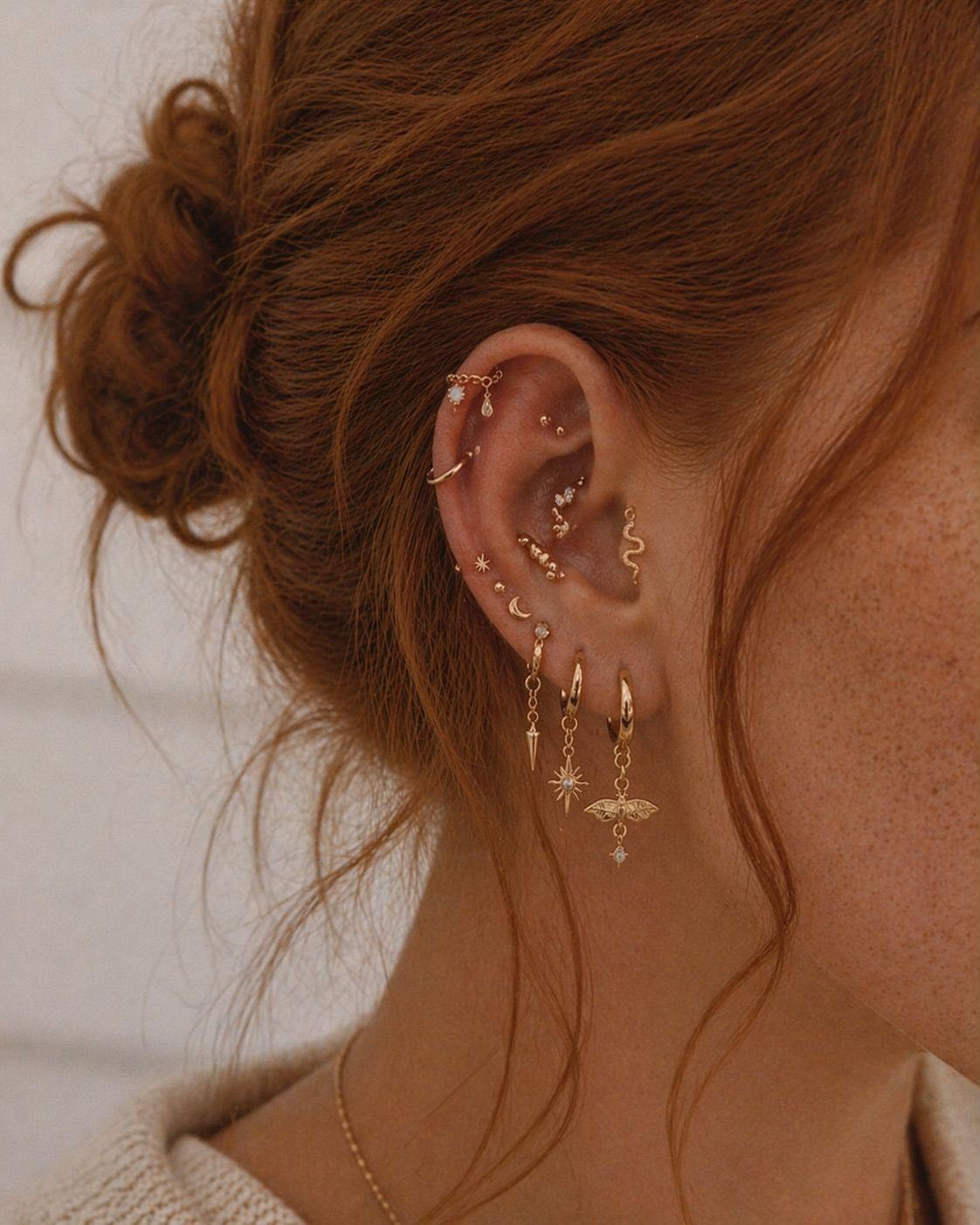
Star and moon charms scattered across multiple piercings read as a deliberate map rather than random placement. Spacing makes or breaks this: too even and the effect goes rigid, too clustered and the shapes compete.
I prefer odd counts, three or five celestial pieces, with one slightly larger anchor point, usually at the lobe, and finer stars trailing up the cartilage.
3. Three-Piece Earring Stack
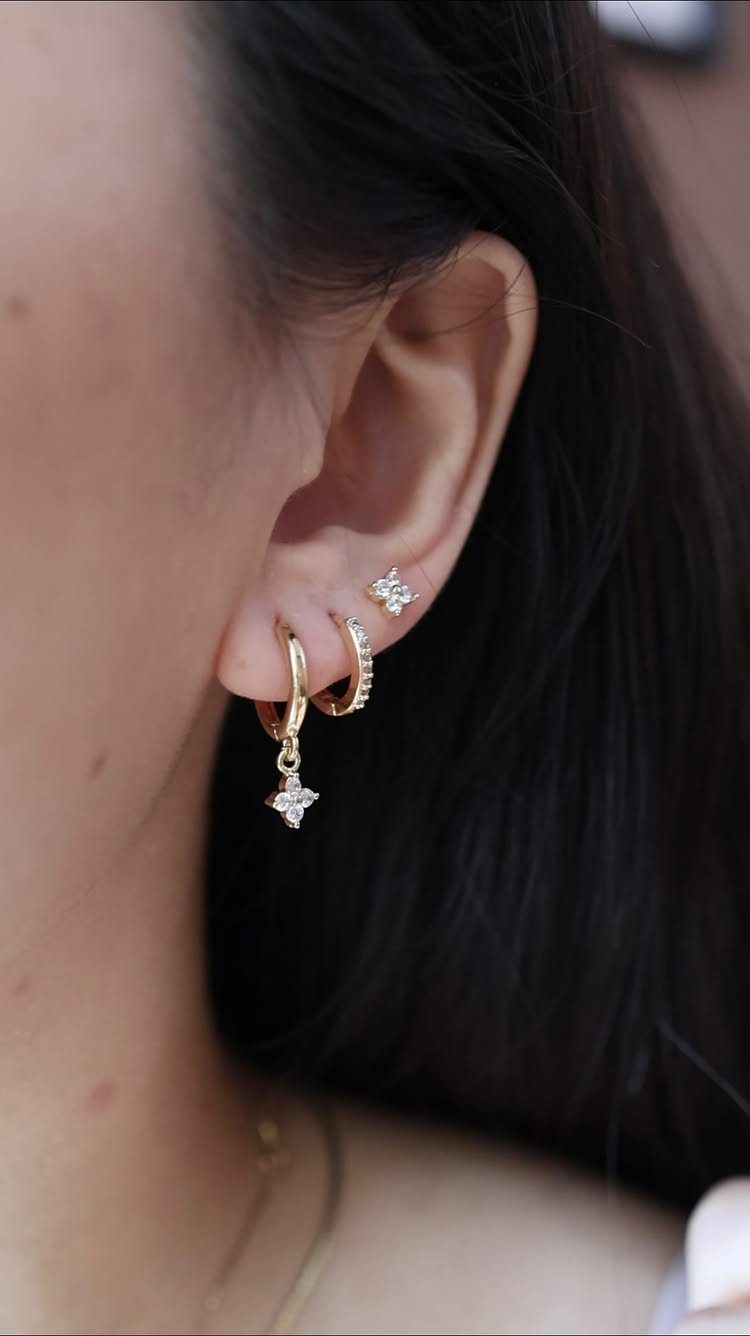
3 pieces let you build a rhythm without committing to a full ear. The visible stack runs stud, plain hoop, then a hooped charm, each step gaining complexity as the eye moves up.
That progression counts for more than the specific shapes. I would keep all three in the same metal family; mixed metals with only three items tends to read as accident rather than intention.
4. Curated Ear Piercing
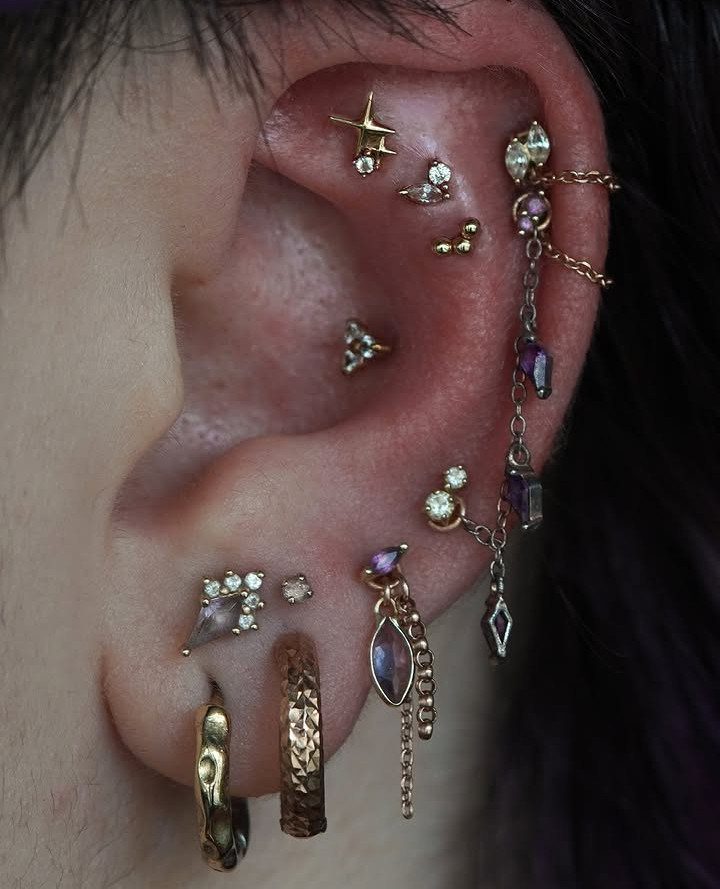
A curated ear treats the whole ear as one piece of jewelry rather than a collection of separate purchases.
The connecting chain is the telling detail; it links 2 piercings into a single gesture and costs more in planning than in dollars, since both piercings need to align.
Purple stones against gold warm most skin tones, though I would swap to green or blue for someone with strong olive undertones.
5. Mixed Metals Ear Stack
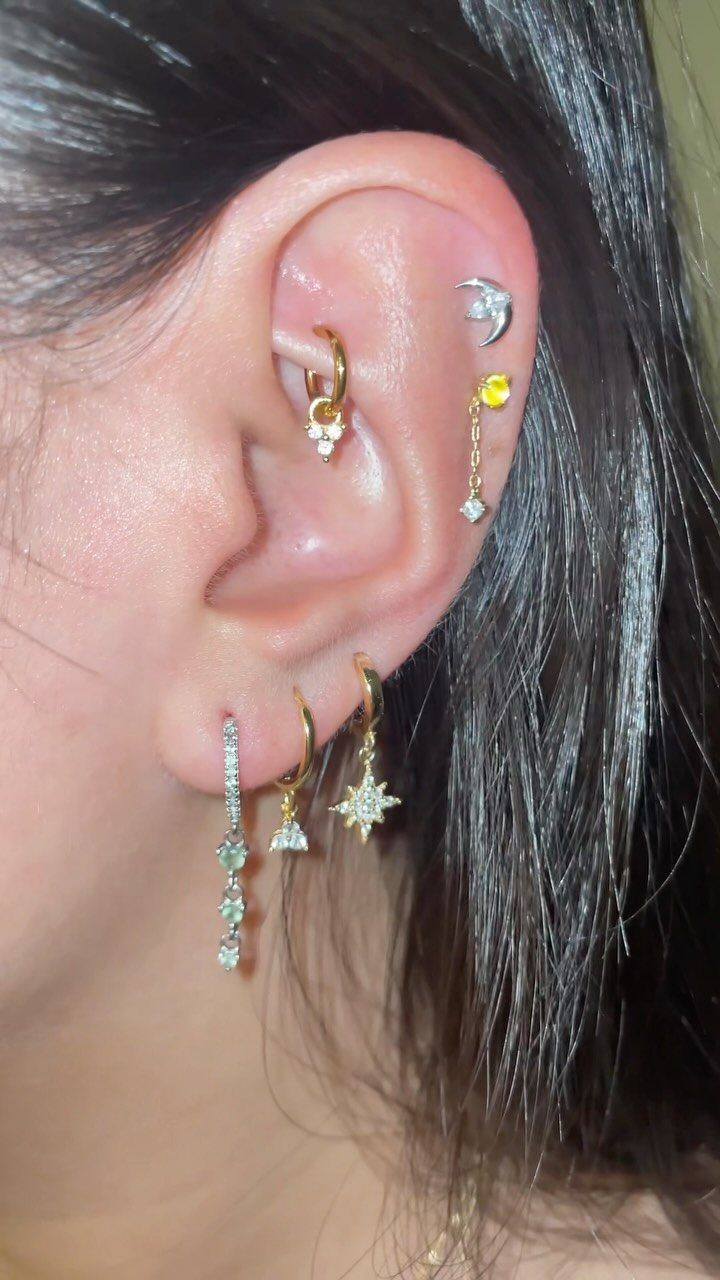
Gold and silver together used to be a rule you broke, now it is a choice you make deliberately.
The crescent moon reads as silver against gold stars, and that contrast works because the shapes are simple enough not to fight.
I find one metal needs to dominate, roughly two-thirds to one-third, or the eye flattens everything to gray. Start with whichever metal your existing collection favors and add the other in accents.
6. Ear Piercing Size Gradation
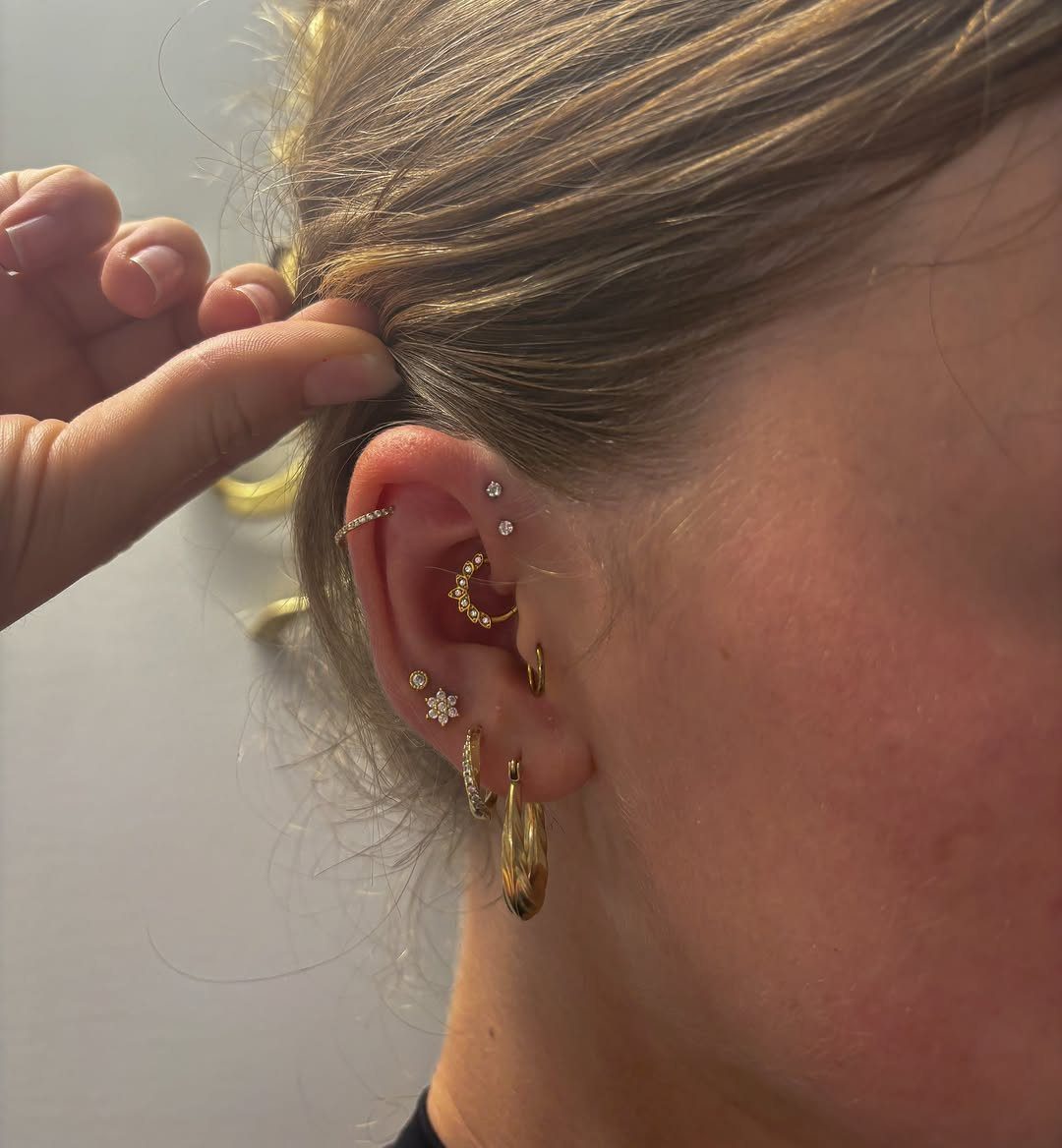
Largest at the lobe, smallest at the top: the old earring rule still holds because gravity and anatomy agree on it.
The visible stack uses diamond studs scaling upward, but the principle works with plain metal too, and costs far less.
I would keep the graduation subtle, no more than doubling the size between steps, or the jump starts to look like a missing piece rather than a sequence.
7. Forward Helix
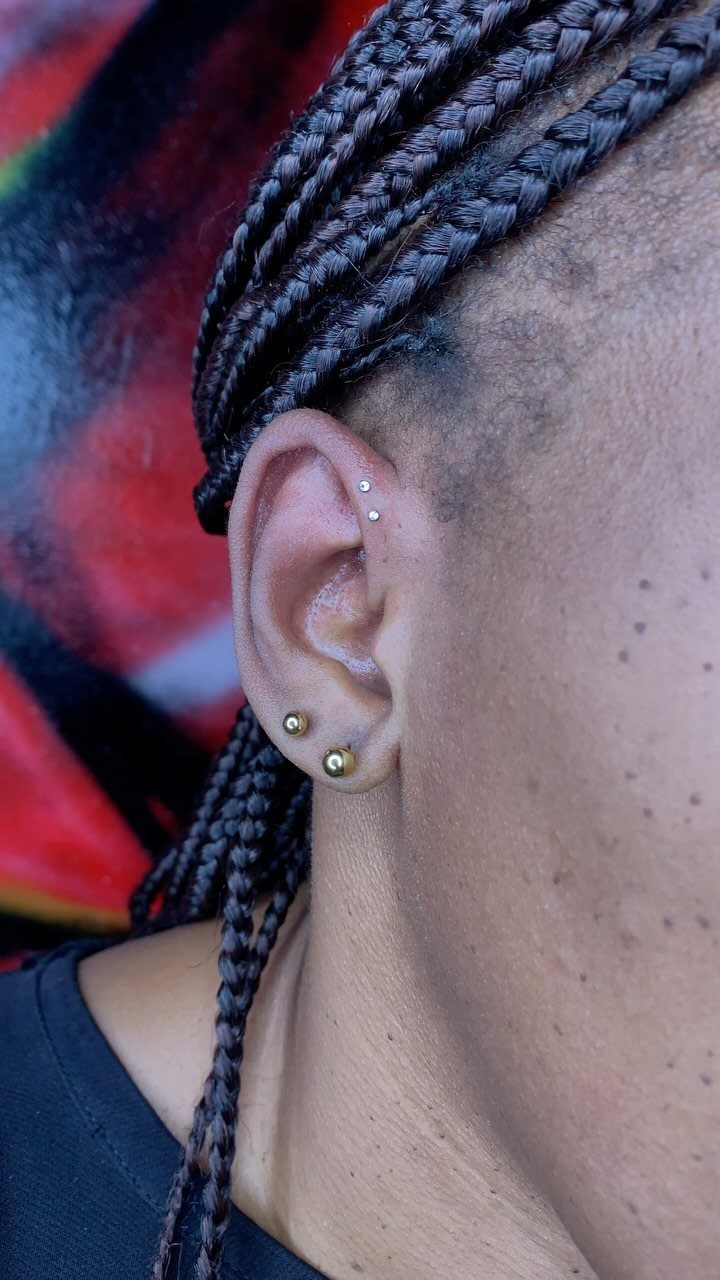
A forward helix sits at the ear’s front rim, visible in profile without turning your head.
A silver stud reads as a quiet accent against the gold lobe below it; I like that contrast because it draws the eye forward rather than up.
Placement matters more than jewelry choice for this piercing, since the angle has to sit flat against the cartilage to heal clean. I would keep the stud small, or the front of the ear starts to look crowded.
8. High Lobe Piercing
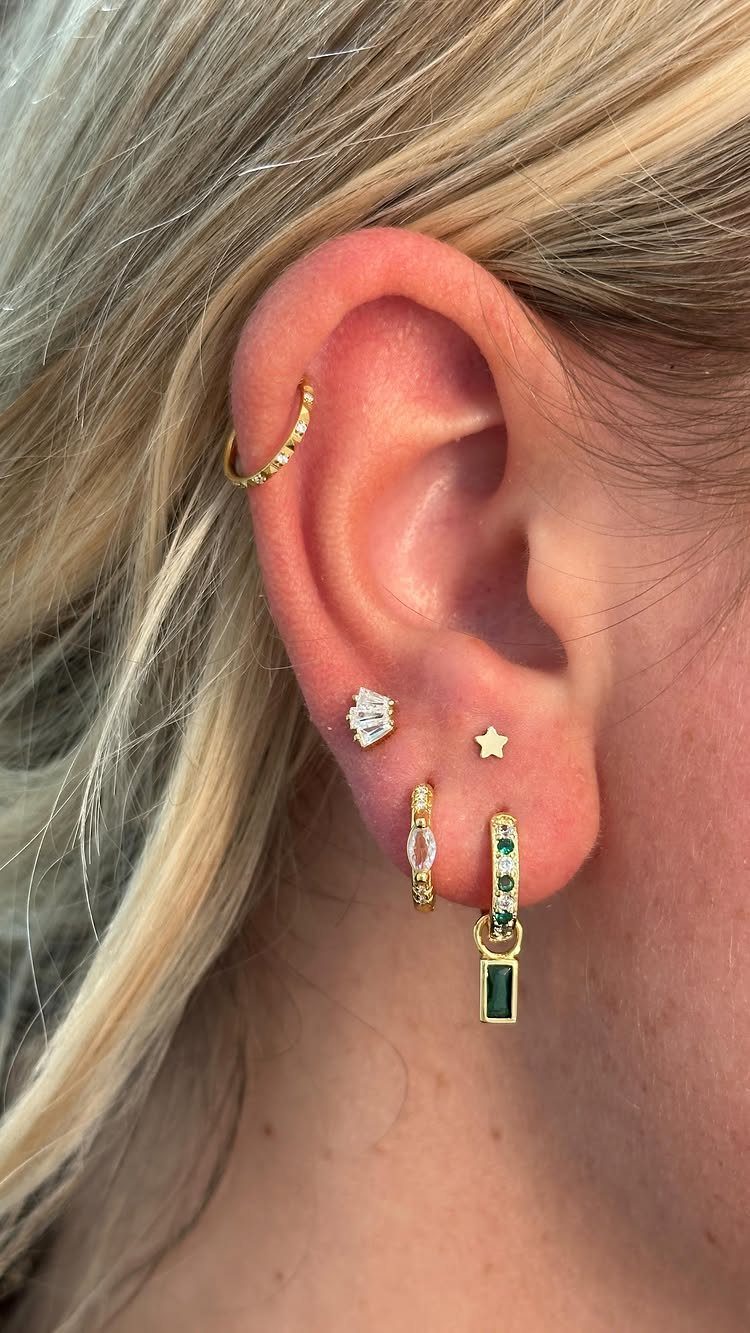
The high lobe sits in that narrow band between standard lobe and cartilage, close enough to stack with either.
The star stud visible here fills a gap that would otherwise break the vertical line; without it, the helix hoop and lower lobe would read as 2 separate ideas.
Healing tends to mirror standard lobe timing, roughly 6–8 weeks, since the tissue is similarly soft. I would match the metal to your existing stack rather than introducing a third tone here.
9. Emerald and Gold Ear Stack
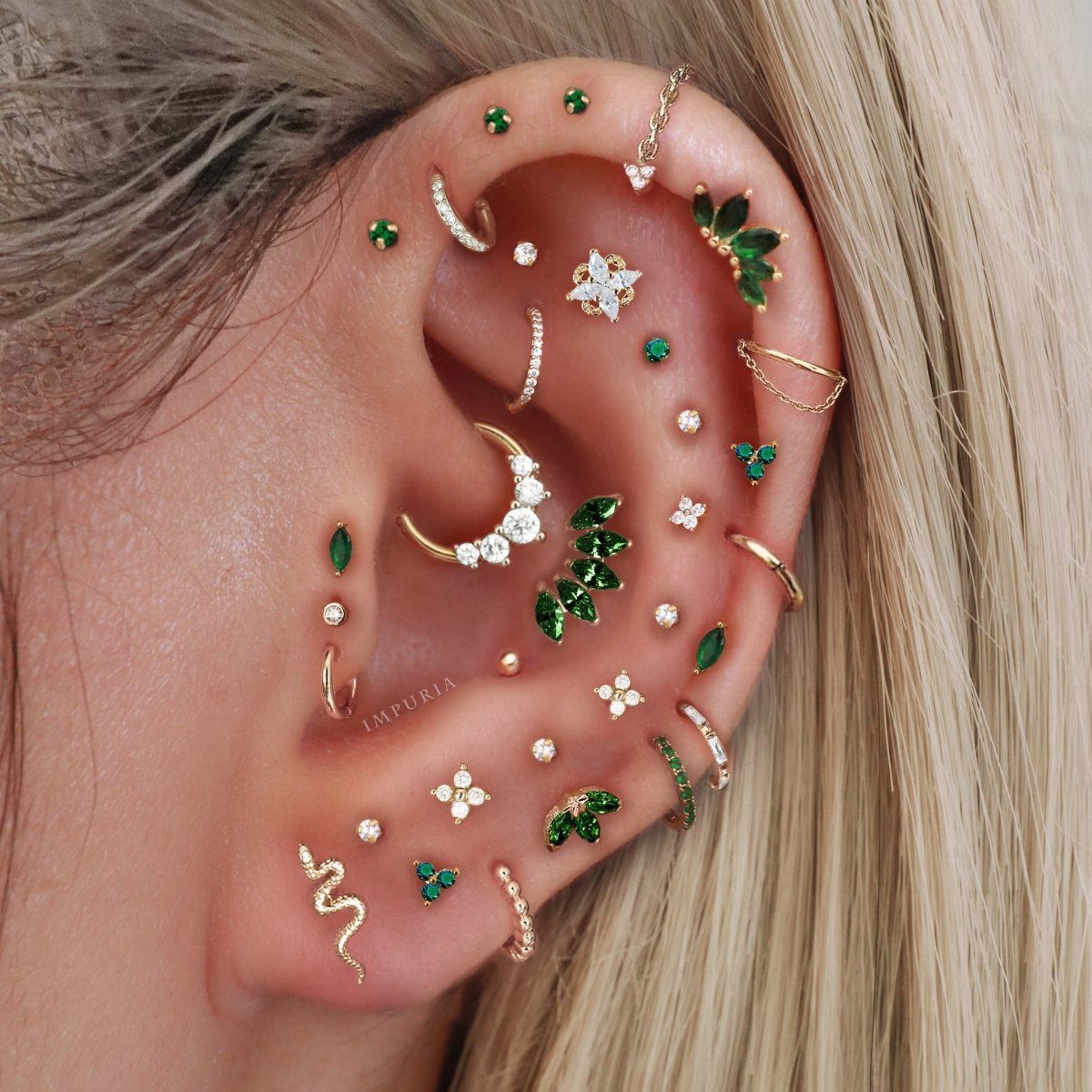
Green stones against gold carry a formality that plain metal cannot, and the cut of these emeralds keeps the look refined without tipping into costume.
The emeralds here are small enough to read as color accents rather than statements; I would keep any single stone under 4 mm or the ear starts to look dressed for an occasion you are not attending.
This palette suits warm skin tones directly, though the green itself is neutral enough that the gold setting does most of the complexion work.
10. Minimalist Silver Stud Stack
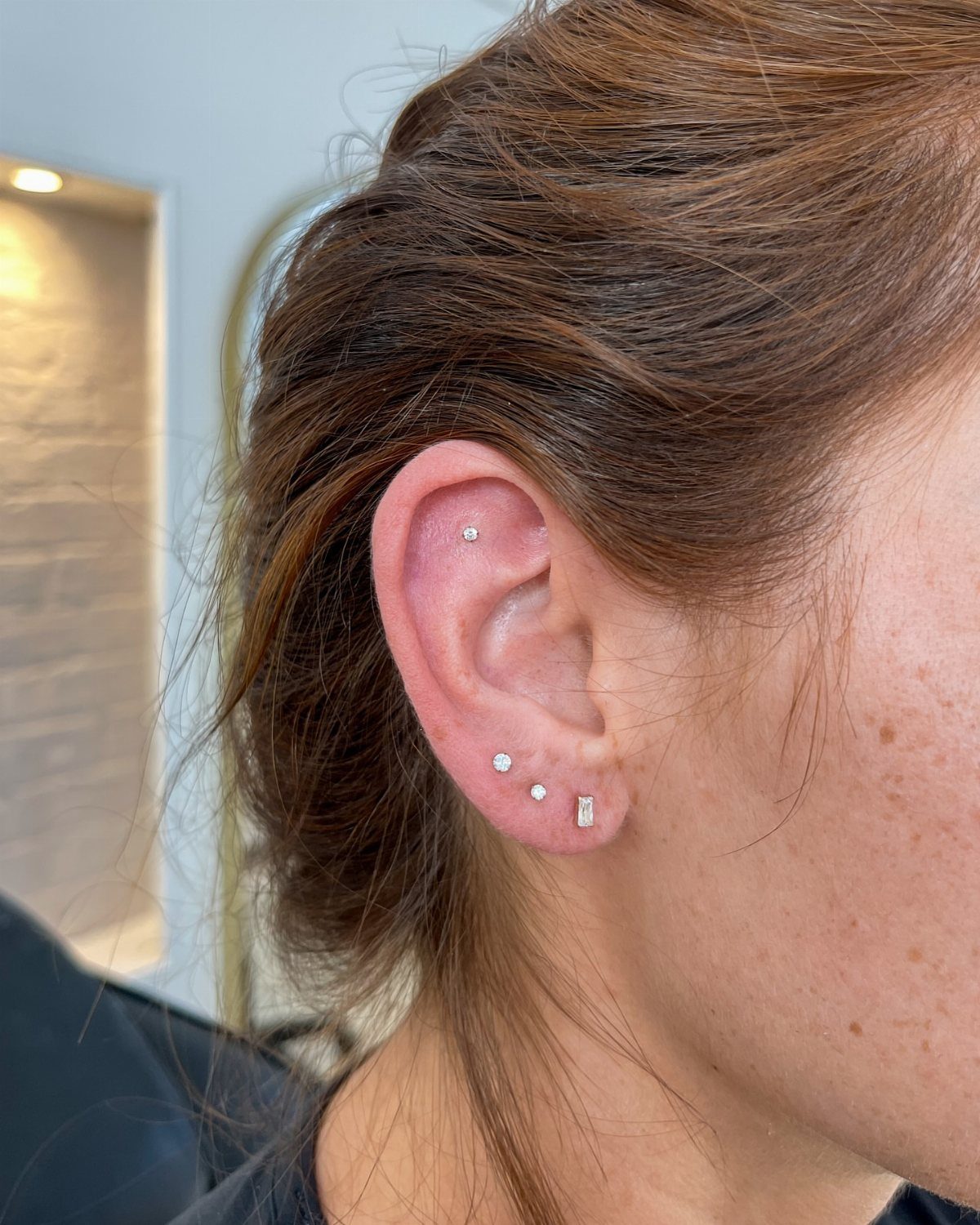
Studs in one metal, evenly spaced, ask the ear itself to provide the shape rather than the jewelry.
The silver here is bright enough to catch light at each point without competing for attention; I find this works best when the studs share one finish, all polished or all matte, since mixed finishes break the calm.
Cartilage placement at the upper end extends the line without requiring additional lobe piercings, which suits anyone whose lobes are already crowded.
11. Double Diamond Lobe Stack
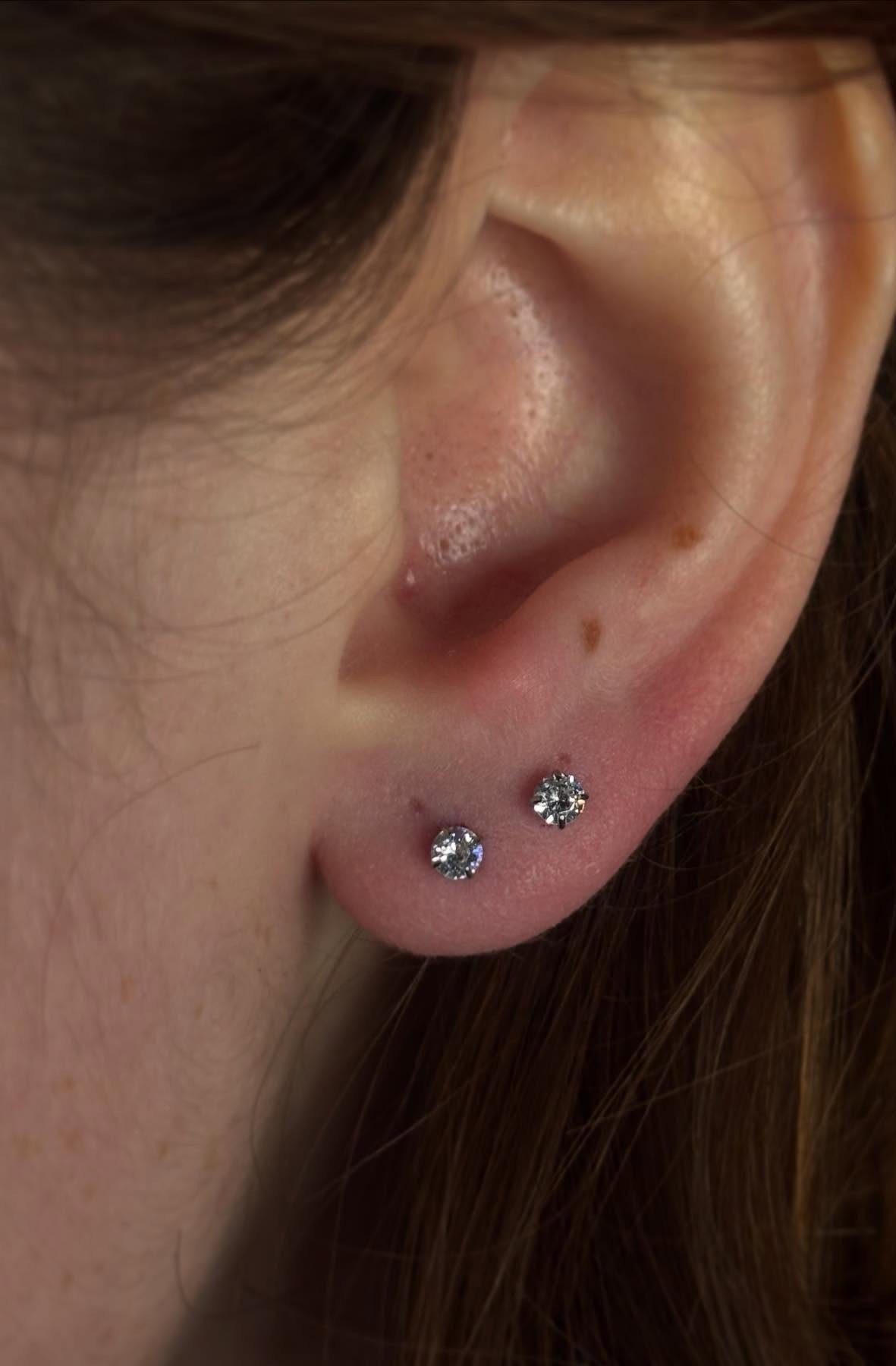
Two studs in one lobe, aligned horizontally, treat the lobe as a wider canvas than single placement allows.
The diamonds here are matched in size, which I prefer to graduated pairs; uneven sizing on one lobe looks like a replacement rather than a plan.
Spacing should clear the edge by at least 2 mm on both sides or the lower stud risks catching. This is the simplest stack to build toward, since it needs only one additional standard lobe piercing and heals on ordinary timelines.
Advice on Piercing Placement
Your ear’s flat areas, curves, and existing piercings form the actual canvas, and no 2 ears share the same layout.
A piercer maps this before any needle touches skin, since a helix that sits beautifully on one ear can angle wrong on another.
The standard placements, lobe through helix, conch, tragus, and daith, each carry different tissue types and healing demands.
Cartilage piercings need at least 6 months to settle, sometimes longer, which matters when you are scheduling a stack you want complete by a particular date.
I would book the consultation separately from the piercing appointment itself, so you have time to consider the map without pressure.
Bring photos of stacks you admire, but expect the piercer to redirect based on what your anatomy actually allows. The names come easier with practice; until then, pointing works fine.
Earring Maintenance Tips
Flat-back studs and secure closures suit anyone active, since a snagged earring in gym equipment or a helmet strap turns a styling choice into an injury.
I switch to lighter designs in warmer months, not for fashion but for comfort; heavy metal against sweaty skin irritates faster than most people expect.
Cleaning is simple and needs doing: sterile saline, no twisting the jewelry, and patience while the piercing settles.
A polished look depends on this more than on the price of the pieces. Breathing space between piercings matters for hygiene as much as appearance; clustered jewelry traps moisture and skin oils against the hole.
Check closures weekly, especially on hoops with hinged segments, since the one that loosens is always the one you forget about.
Styling for Different Occasions
Your stack should adapt to the setting without requiring a full jewelry box.
Professional environments favor smaller studs and minimal movement; anything that clicks against a phone headset or catches light during a video call becomes a distraction you did not intend.
Celebrations allow more weight and more sparkle, though I still keep the total ear balanced rather than loading one piercing with everything.
The seasonal switch to lighter pieces is practical as much as aesthetic; heavy earrings in humid heat fatigue the lobe and stretch the hole over time.
Mood matters too, and one advantage of a multi-pierced ear is the ability to change a single element and shift the whole effect.
I keep a small rotation ready: one subdued set for workdays, one with more color or movement for evenings, and I swap between them in under a minute.
Frequently Asked Questions
What ear piercings compliment each other?
Piercings that sit at different heights and carry different visual weights build a balanced stack without matching exactly.
I like lobes paired with helix or forward helix placements, since the lower and upper points anchor the eye while the middle fills in. The ears work best as sisters, not twins: related themes and metals, but not mirror images.
What is a helix piercing?
A helix piercing sits through the upper ear cartilage, along the outer rim where the ear curves inward.
It heals slower than lobe piercings, typically needing at least 6 months to settle fully. I find it works best with small hoops or studs that sit flush against the cartilage, since protruding pieces catch on hair and clothing.
Are earring stacks in style?
Multiple piercings now read as one intentional piece rather than separate accessories, and that shift has made stacks permanent rather than passing.
The look appears across professional and social settings, though the styling shifts with context. A smaller, quieter stack reads professional for daytime; adding weight or color shifts the same placements to evening without any new holes.
Is a double ear piercing classy?
A double lobe piercing reads as intentional and polished when the two studs match in size and metal, spaced evenly with at least 2 mm clearance from the edge.
2 holes set side by side use the full width of the lobe in a way a single piercing never reaches.
I set my doubles at identical diameters; mismatched sizing on one lobe reads like a lost earring, not a design.