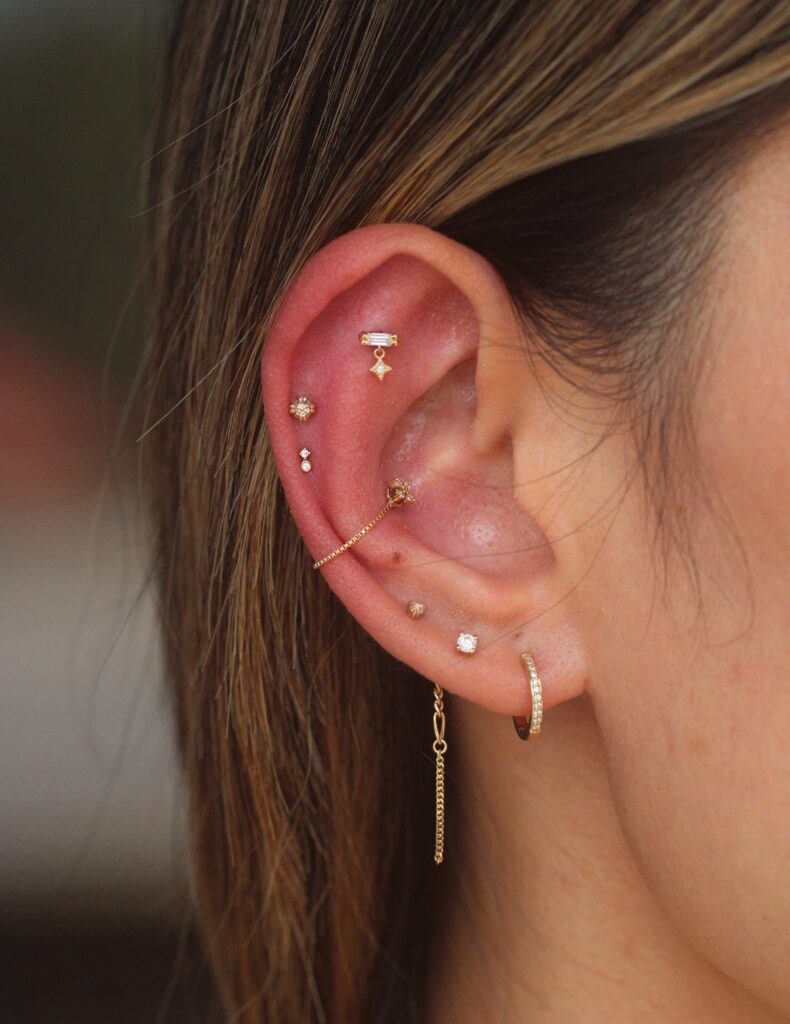
The pieces below run from a simple flat-back stud in 14K gold to full curated-ear systems that tie lobe and cartilage into one gesture, with implant-grade titanium and sterling silver filling the middle.
What settles the choice is whether the piercing is fresh or long-healed: new cartilage needs extra post length and metal that will not flake into broken skin, while healed holes can carry dangling charms and chains that would catch on a fistula still knitting closed.
1. Helix Piercing Jewelry
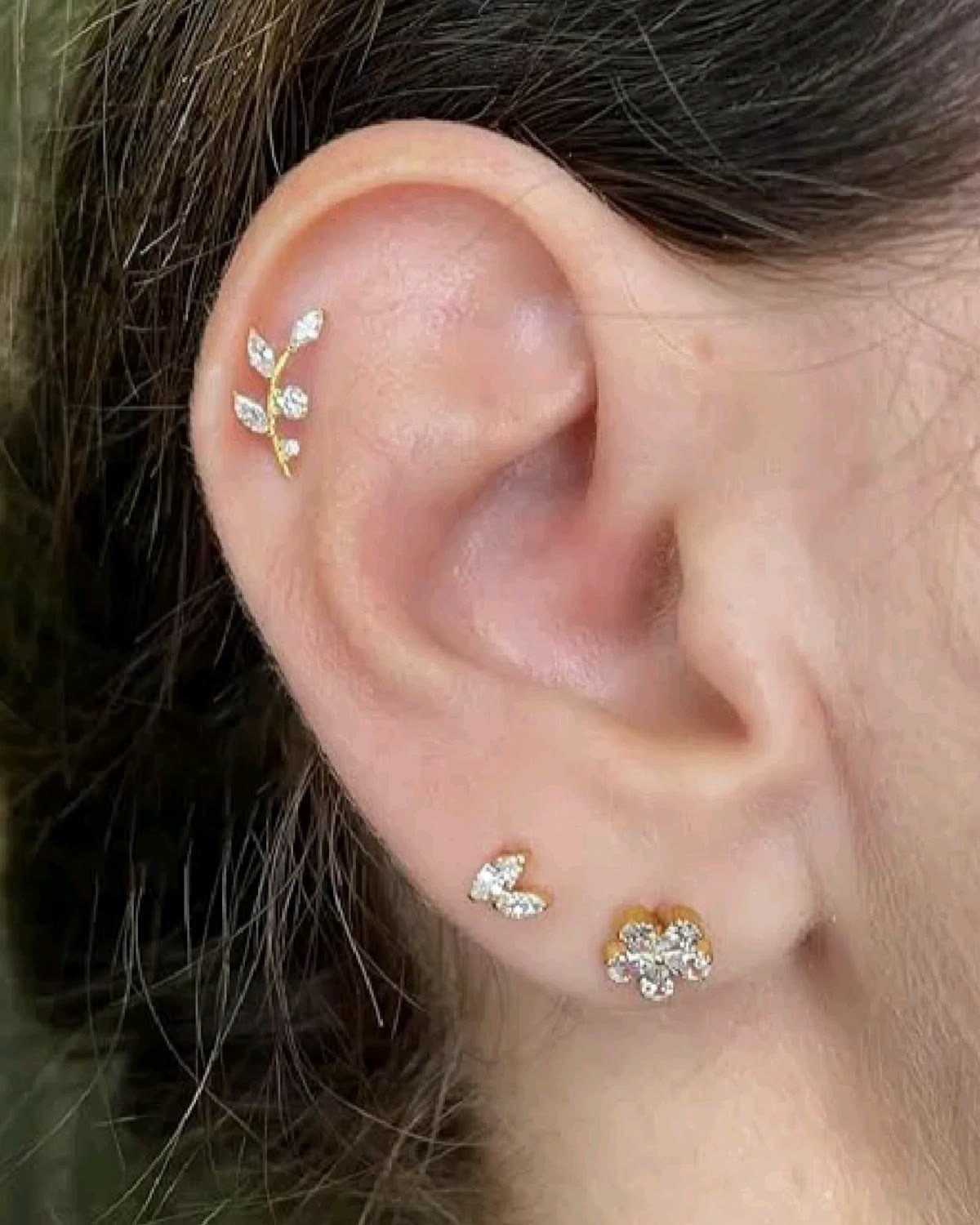
A helix piercing sits on the outer rim of cartilage, high enough to catch light without crowding the lobe below. A slim leaf-shaped profile matters for side-sleepers who roll onto that ear.
I would pick 14K gold for everyday use; it holds up against hair products and sweat better than plated options, though it costs more upfront. A flat-back post stops the backing from digging into the skin during healing.
2. Tragus Piercing Jewelry
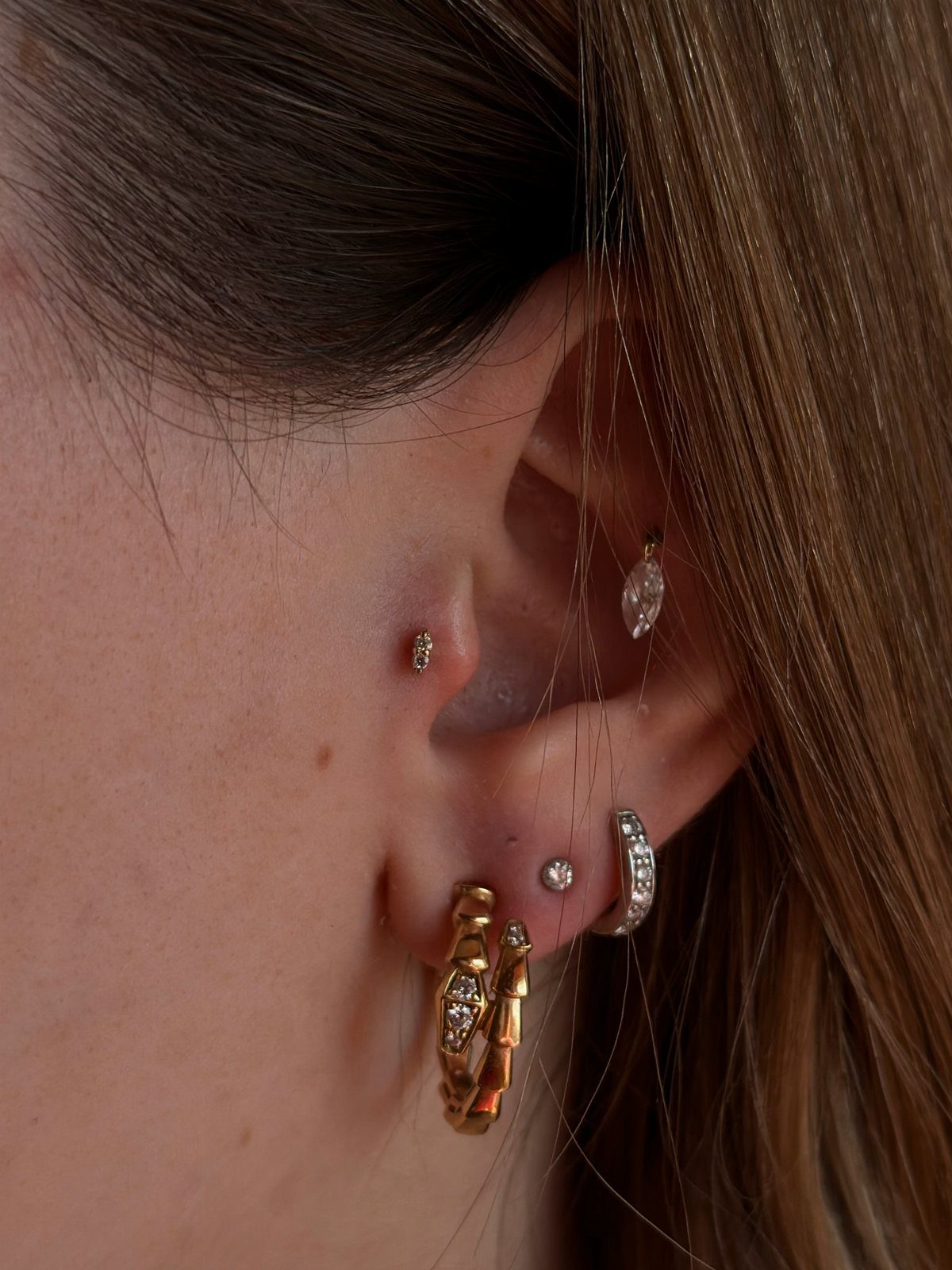
The tragus, that small pointed flap in front of the ear canal, takes a stud or tiny hoop that sits almost flush against the face.
What I like about the placement: it frames the face from the side without the commitment of multiple lobe holes. A small stone or metal ball keeps the scale right; anything larger catches on earbuds and masks.
Healing runs longer than lobes because cartilage gets less blood flow. I would avoid anything with prongs that could snag on knit hats or towel-dried hair.
3. Daith Piercing
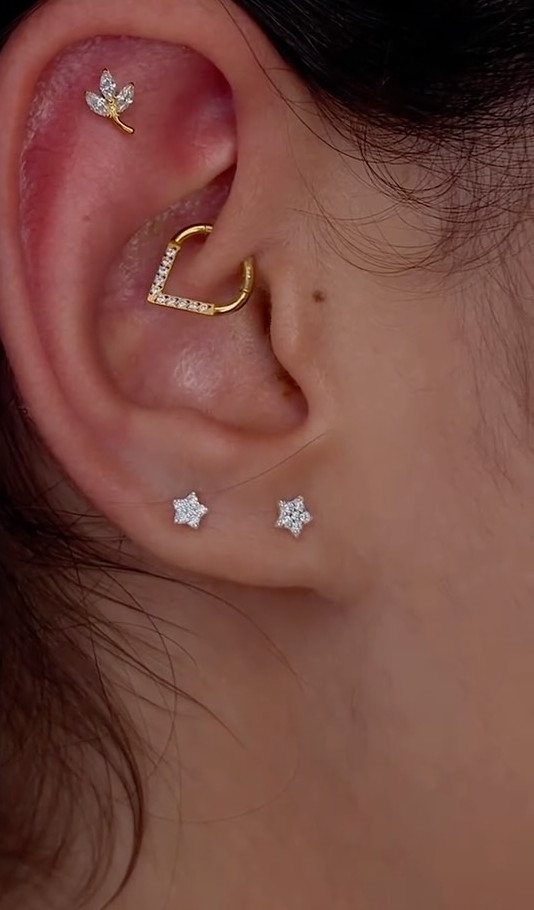
The daith curves through the innermost fold of cartilage, the spot some people press for tension headaches, though I would not count on that as a reason to get pierced.
A gold hoop with sparkle works because the daith is tucked enough that even a little flash reads as subtle.
I would plan on months of careful cleaning, since the curve sits deep and traps moisture. A piercer who has done this placement dozens of times is worth the trip; the angle has to clear the inner cartilage without rubbing.
4. Industrial Barbell
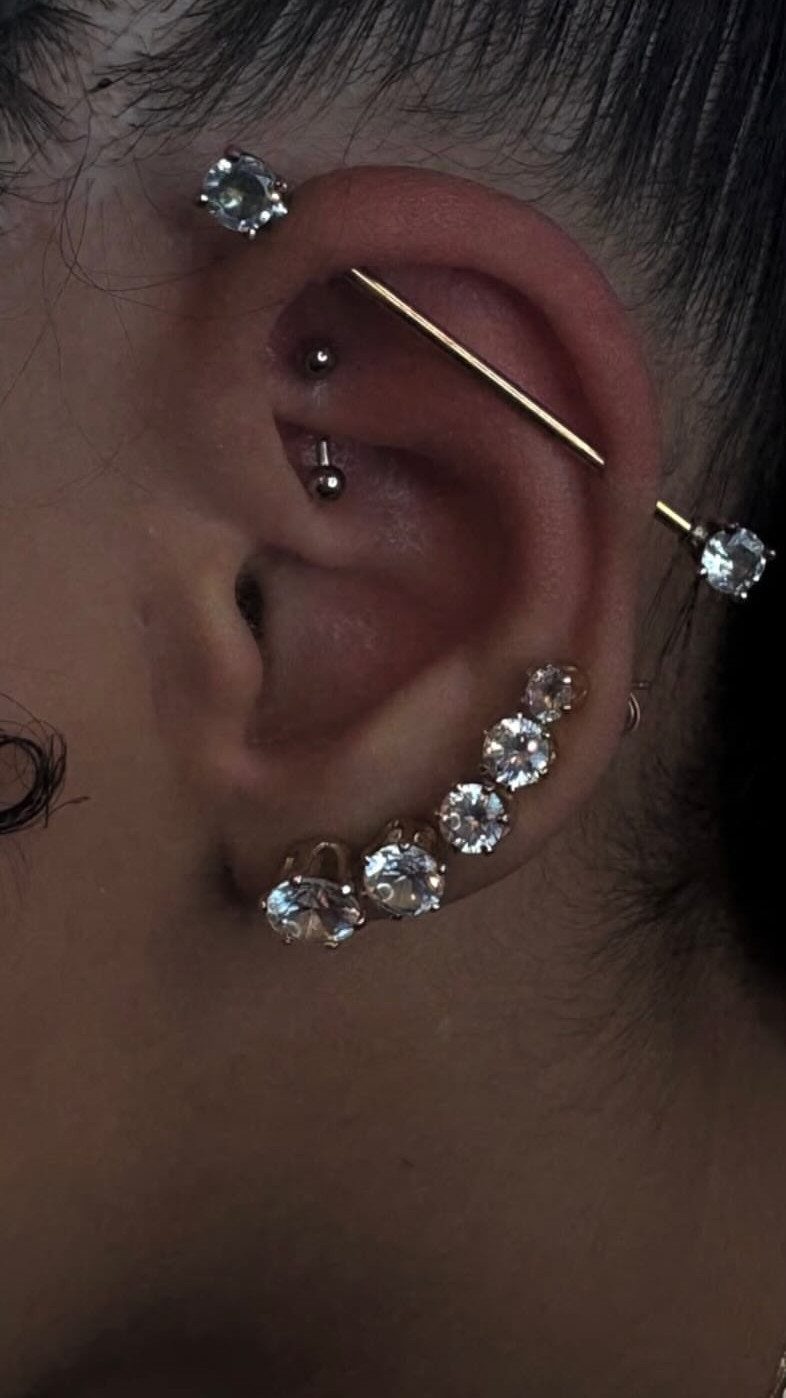
An industrial piercing connects 2 holes in the upper ear with a single straight barbell sized to the ear.
I would stick with implant-grade titanium or 14K–18K gold until fully healed; the long bar moves more than a stud, so cheaper metals irritate faster.
The angle between the 2 piercings has to line up precisely, or the bar torques against the tissue and forms bumps. Not every ear anatomy suits this; a reputable piercer will measure the flatness of your cartilage ridge before committing.
5. Gold Upper Ear Earrings
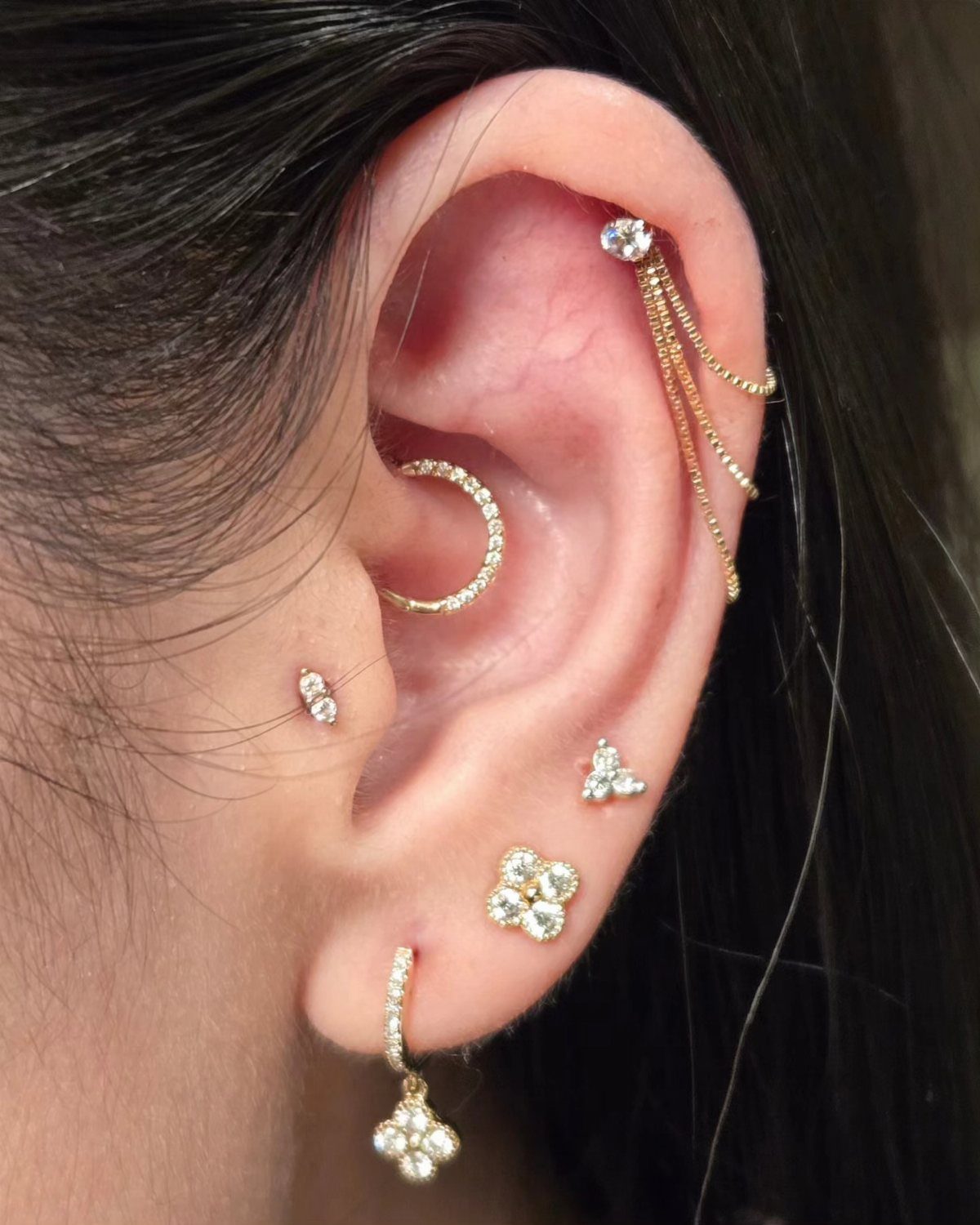
Gold upper ear pieces work as a system rather than singles; a helix chain links a stud to a hoop below, tying the lobe and cartilage into one gesture.
I would match the gold karat across pieces so the colors stay consistent; 18K reads richer and warmer than 14K, which carries more alloy and looks paler, and mixing them shows.
The chain needs enough slack to move with the ear but not so much that it catches. For someone building an ear over time, starting with one gold piece and adding matching tones keeps the look intentional rather than accidental.
6. Conch Piercing Jewelry
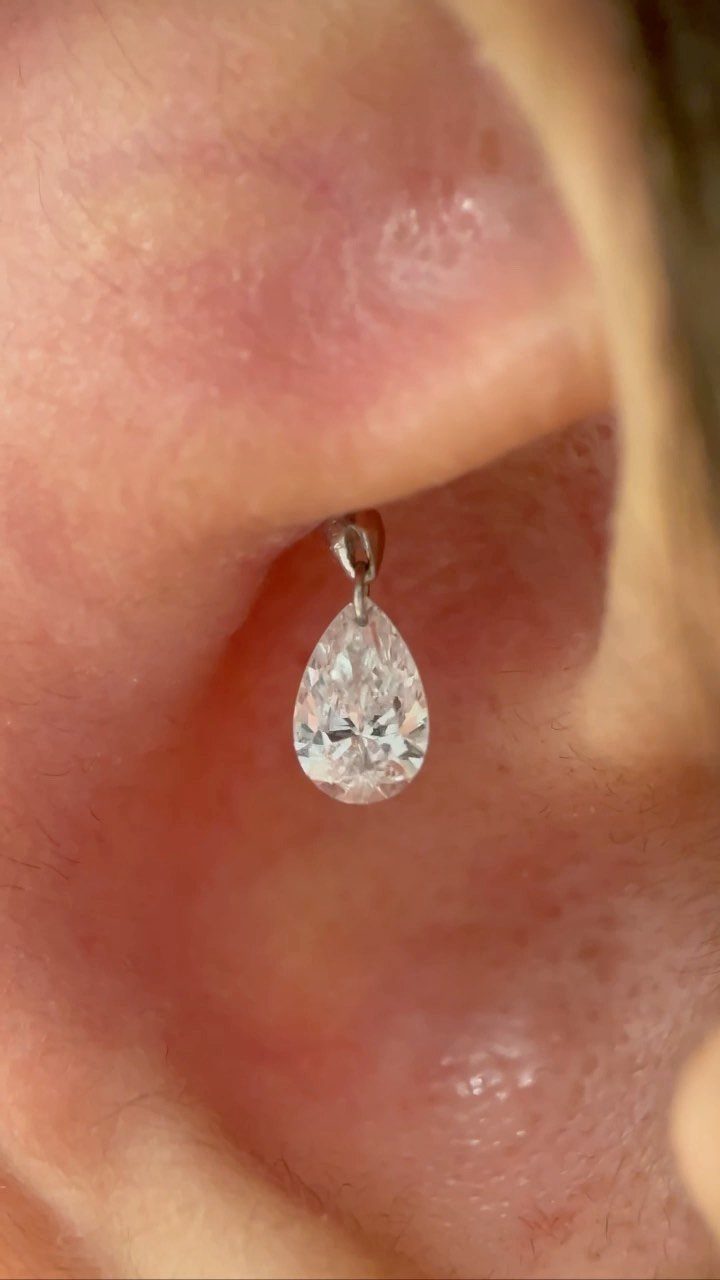
The conch sits in the deep bowl of the ear, central enough that a stud faces forward like a lobe earring but tucked enough to stay out of the way.
Healing takes patience, and I would avoid hoops until then; the rotation irritates the fistula and sets back healing by weeks.
7. Curated Ear Aesthetics
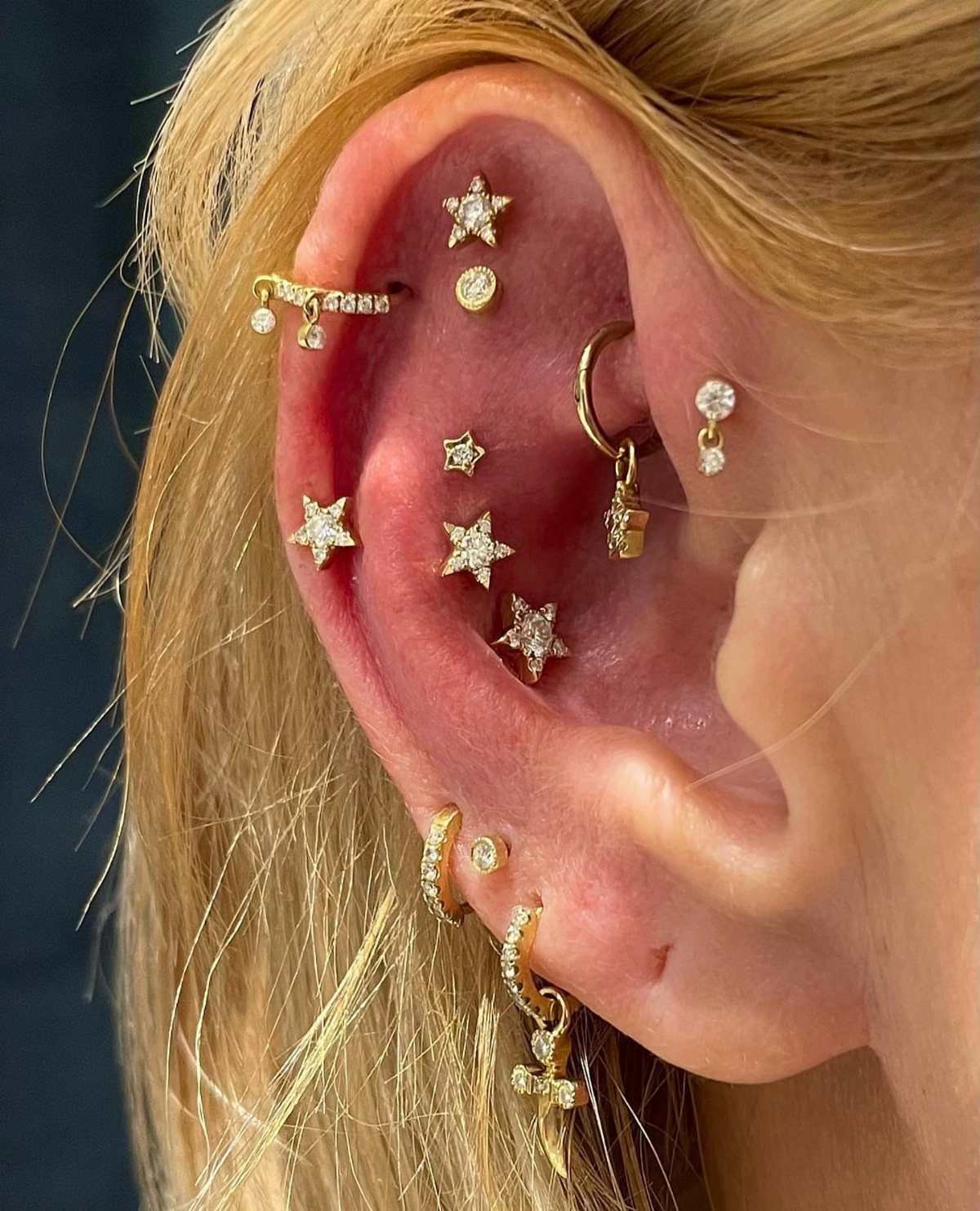
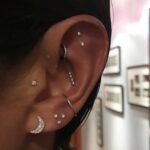
A curated ear treats the whole ear as one composition rather than a collection of random holes.
What I like about the approach: each piece is chosen for how it relates to the next, so a star stud talks to a hoop below it and the spacing feels intentional.
For someone building this over time, I would plan the layout before the second or third piercing; moving an established hole is not an option. Start with one metal family and vary the shapes so the eye travels.
8. Cartilage Chain Earring
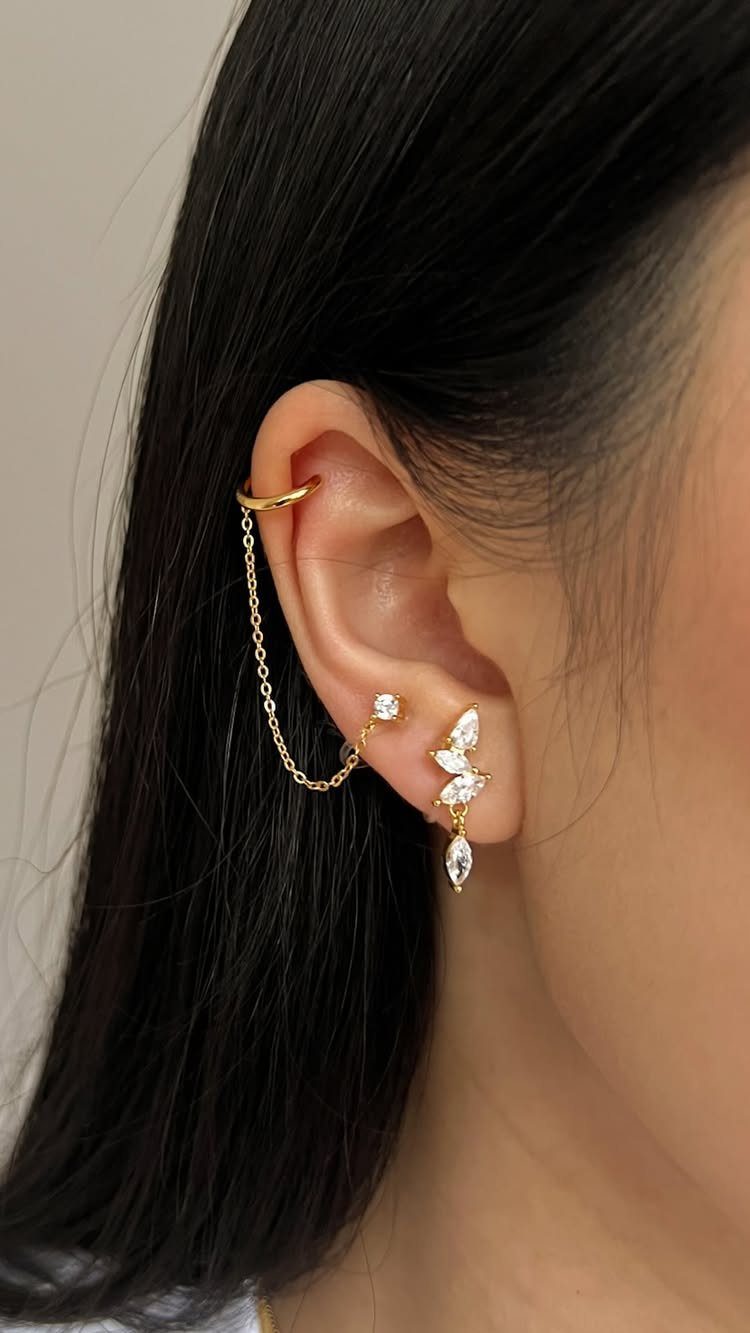
A cartilage chain turns two separate piercings into one piece that moves together.
The chain needs to be long enough to let the ear flex when you talk or chew, but short enough that it does not catch on hair or clothing.
I would have a piercer measure the distance between holes rather than guessing; a chain that is too tight pulls and irritates, and one that hangs slack snags.
Gold matches warm skin tones and holds up to daily wear better than plated alternatives.
9. Dangling Top Cartilage Charm
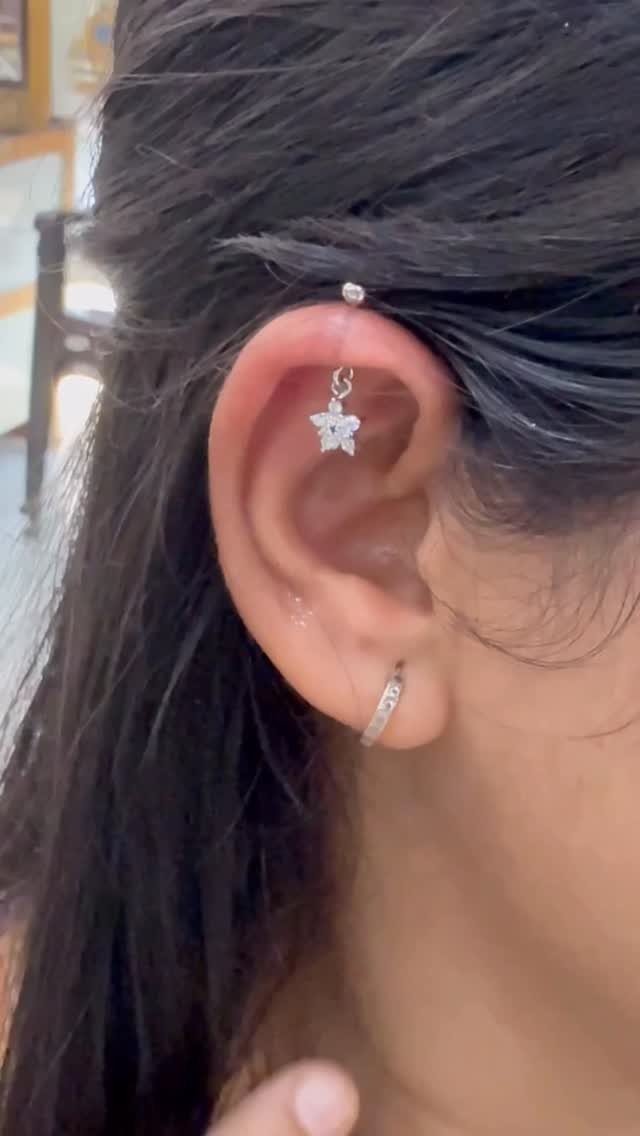
A dangling charm at the top of the ear catches light with every turn of the head, which is the point of putting movement so high.
Sleep is where you pay: anything that swings will tangle in hair and press into the pillow. I would reserve this for healed piercings only; a charm on fresh cartilage twists the fistula and sets back healing.
A lightweight star or small geometric shape keeps the pull gentle and the look clean if you are wearing it every day.
10. Upper Rim Multi-Stud Row
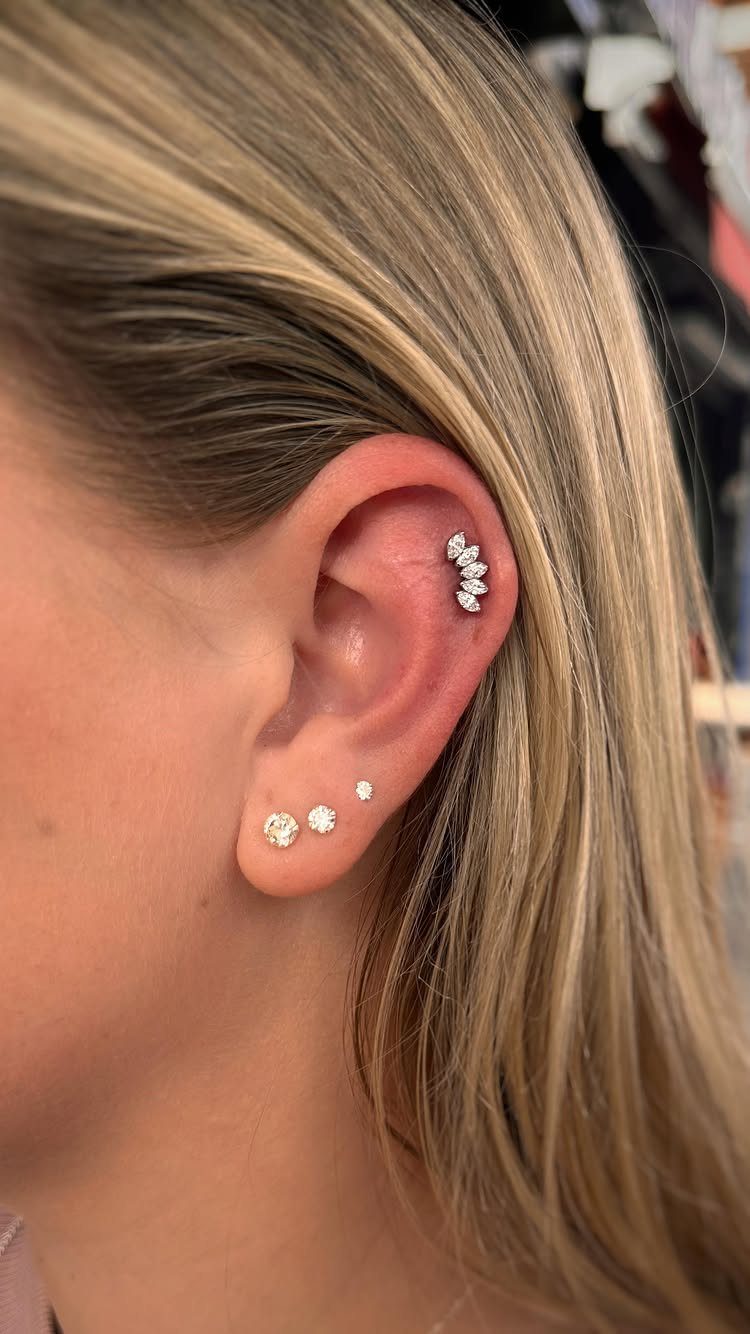
3 tiny studs marching up the outer rim read as a constellation rather than clutter, which is harder to pull off than it looks. The spacing beats the stones; too close and they merge, too far and they look accidental.
I would have all three done at once or plan the gaps with a piercer who marks before needling, since cartilage does not shift easily. Matching settings keep the row calm; mixing shapes turns the look busy fast.
11. Silver Crystal Upper Ear Piece
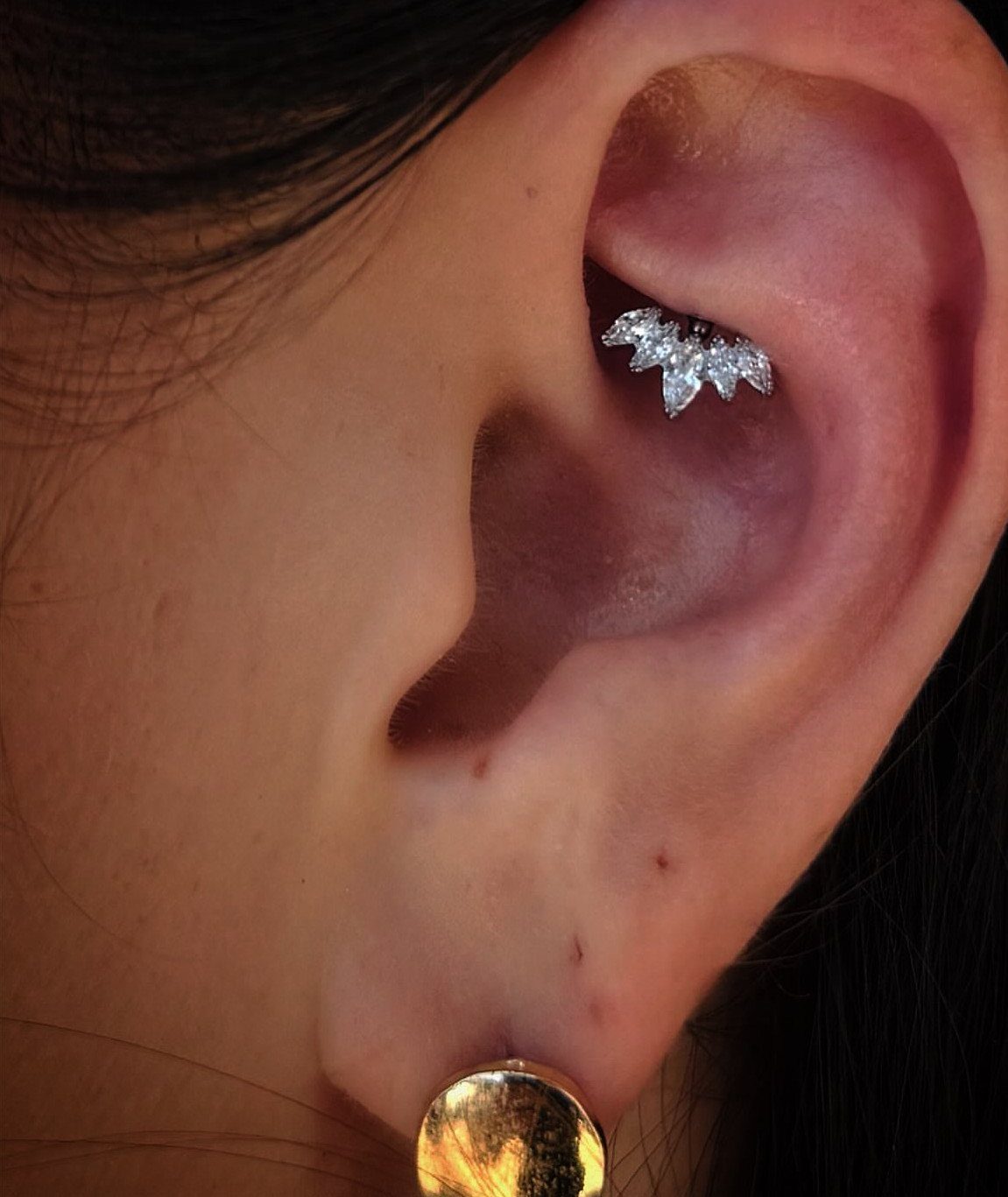
A crystal cluster at the upper cartilage gives the impact of a statement earring without the weight pulling on a lobe. The silver setting keeps the tone cool and lets the stones do the work.
For new piercings, I would choose a flat-back labret rather than a butterfly clutch; the cluster sits proud and needs a secure base that does not loosen with movement.
Clean around the setting carefully, since crystals trap oil and dull faster than plain metal.
Choosing the Right Jewelry
I would skip gold-plated and gold-filled entirely for a new hole; the surface layer wears thin and the base metal underneath reaches broken skin.
Sterling silver tarnishes and the oxidation stains tissue, so I keep it for lobes that have long since closed over.
People always underestimate sizing. A post that fits flush when the needle goes in will embed once swelling starts, so I would ask for a bar 2–3 mm longer than the tissue is thick.
That extra length looks awkward for a few weeks, but it accommodates the fluid buildup that peaks around day three. Downsize to a snug fit only after the swelling has fully passed.
Aftercare Recommendations
Saline spray twice daily is the routine I would follow, applying it to the entrance and exit without rotating the jewelry.
The temptation to twist a stud comes from old advice that wanted to prevent skin from sticking to the post; modern understanding is that rotating tears the fragile fistula and drags bacteria inward.
I would let the crust that forms at the edges soften and fall away on its own rather than picking.
Touching the jewelry with unwashed hands is the fastest way to introduce infection, and I include phone contact in that risk.
A helix or tragus stud pressed against a screen during calls traps heat and bacteria against the wound. I would switch to speaker or the other ear for the first month.
Watch for redness that spreads beyond the piercing site, heat that builds over days, or discharge that turns thick and yellow. Those signs mean a trip to the piercer or a clinic, not more home care.
Professional Piercers’ Advice
I would check whether a studio belongs to the Association of Professional Piercers before booking. Membership means they follow standardized sterilization and needle protocols, not the gun methods that blunt force cartilage and raise infection risk.
A piercer who cannot explain why they use needles over guns, or who brushes off questions about jewelry metal grades, is one I would walk away from.
Sterile needles should be opened from a sealed package in front of me, and the work surface should be covered in fresh barrier film.
I would expect to see an autoclave on-site or documentation of off-site sterilization; ultrasonic cleaners alone do not kill spores.
Experience with the specific placement matters. A daith or industrial requires angles that a lobe specialist may not have practiced, and I would ask to see healed photos of their work in that exact spot.
Frequently Asked Questions
What is the piercing on top of the ear called?
The outer rim cartilage piercing high on the ear is called a helix piercing. A forward helix sits on the rim closest to the face, while a standard helix sits farther back where the cartilage curves outward.
I would choose a slim profile for any of these, since bulky pieces press into the pillow for side-sleepers.
What is the prettiest ear piercing to get?
A daith piercing tends to draw the most compliments because the hoop sits tucked inside the innermost cartilage fold, catching light in a subtle flash that reads as refined rather than loud.
A gold hoop with a little sparkle works especially well there; the placement hides the scale so even a small stone gets noticed.
What makes it pretty also makes it tricky: the deep curve traps moisture and needs months of careful cleaning to heal well.
What types of earrings are recommended for initial piercings?
Straight-post studs or barbell-style earrings are what I would choose for a fresh piercing, since they allow for swelling and stay put during cleaning.
Captive bead rings also work because they leave room for tissue expansion without embedding. I would avoid anything with dangling parts, prongs, or butterfly clutches; movement and snagging tear the fragile fistula and slow healing.
How long should I wait before changing earrings after a new ear piercing?
A lobe piercing needs about 6 weeks before swapping jewelry, while cartilage takes closer to 6 to 12 months. The extra time for cartilage reflects its lower blood flow, which slows the whole healing process.
I would downsize to a snug post only after swelling has fully passed, not just when the calendar says so; changing too early drags bacteria inward and can restart the healing clock.