A fantasy wedding ranges from a single strand of fairy lights you hang yourself to a giant seashell dining setup that needs wind anchoring and a rain backup.
The idea that fits depends on whether your venue already supplies the atmosphere, a forest canopy, historic stone, glass conservatory, or whether you are building the entire world from scratch with suspended greenery, crystal canopies, and cascading fairy lights.
I would start with that question before touching any decor list, because a clearing with mature trees needs only copper-wire LEDs and clear chairs, while a blank ballroom demands the suspended greenery, crystal housings, and ceramic birds to invent a sky overhead.
1. Fantasy Hairstyles and Accessories
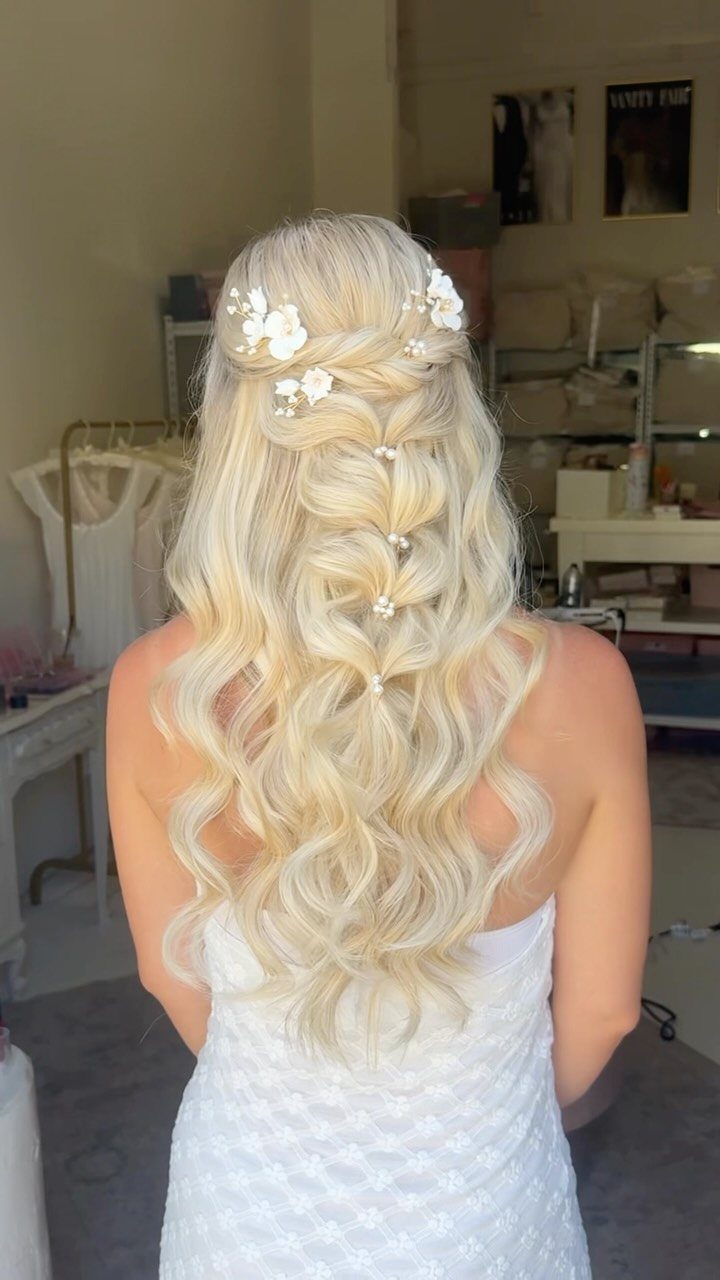
A half-updo with loose waves carries enough romance for a fantasy setting without requiring a professional stylist.
I like this approach because the braids add structure that keeps the style secure through hours of dancing, while the floral pieces read as ethereal rather than overtly bridal.
Small white blossoms woven through a braid work on hair from shoulder length down; shorter styles gain the same effect from a pinned arrangement at the crown.
The accessories do the thematic lifting here, so the makeup and gown can stay simple.
2. Choose Woodland-Inspired Details
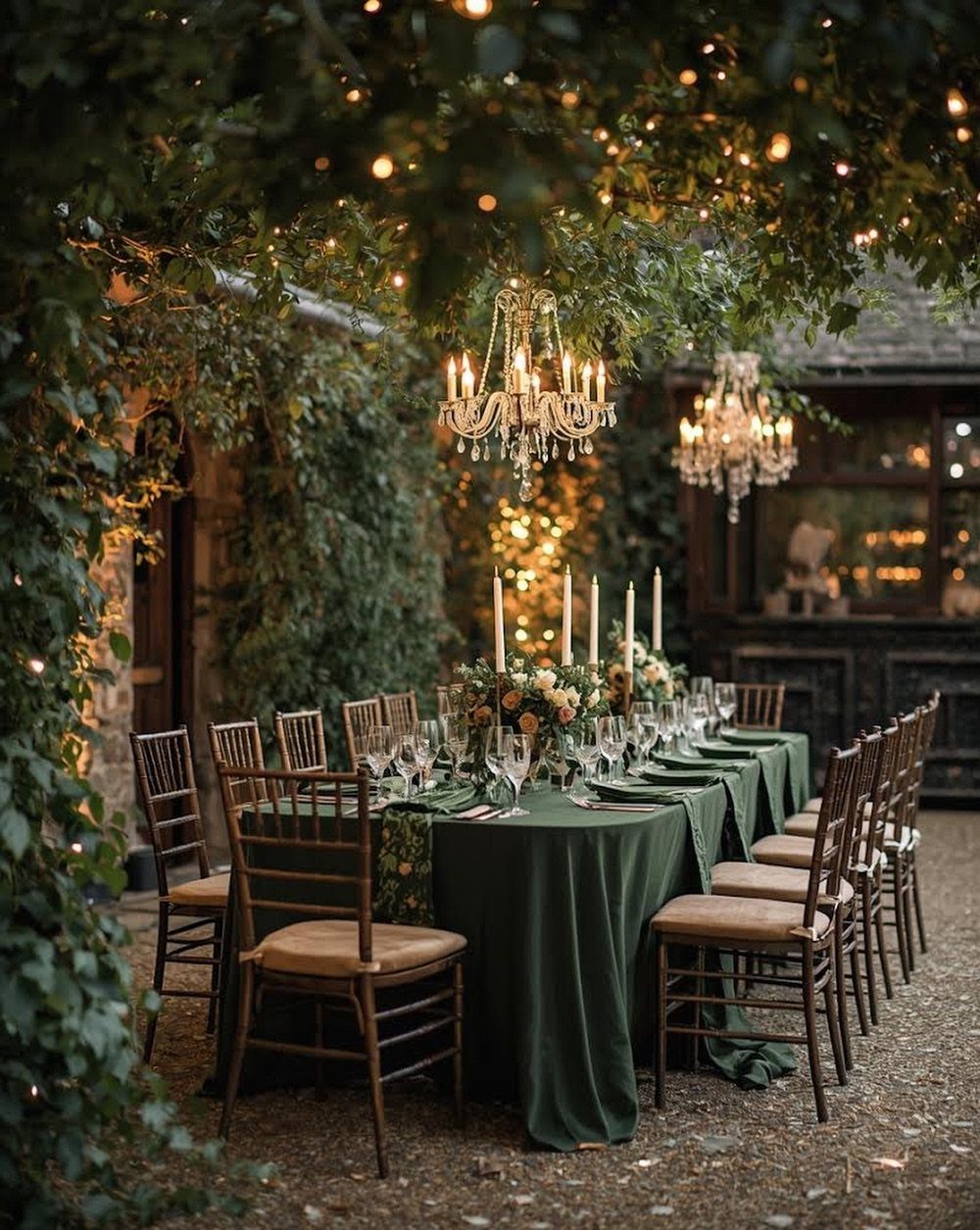
Crystal chandeliers hung from branches overhead pull the eye upward and add a touch of formality that keeps the scene from reading as a picnic.
I would choose mercury glass candleholders over clear ones here; they throw softer light against the canopy and pick up the green tones in the leaves.
The combination works best in a space with mature trees and some natural shade, since full sun would wash out the candle effect and compete with the crystals.
3. Fantasy Costumes
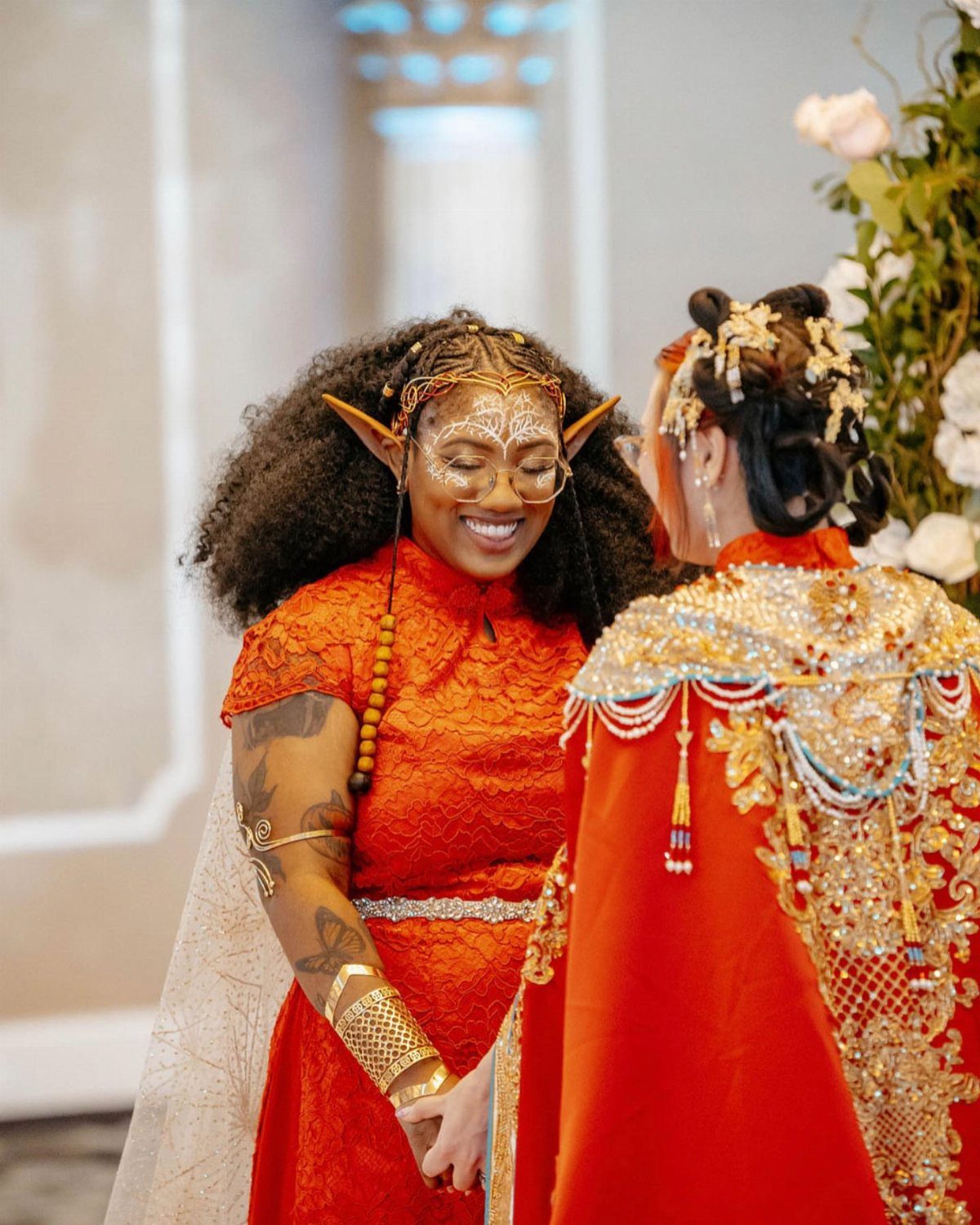
Deep red gowns with gold metalwork and pointed elf ears commit fully to the theme in a way that standard formalwear cannot match.
The ear pieces are silicone or latex, fitted over the natural ear and painted to match skin tone, and they stay comfortable for a full evening if you test the fit beforehand.
I find the pairing of two people in coordinated fantasy dress more effective than a single costumed figure; it reads as a world built together rather than one person in costume.
For guests who prefer subtlety, a single element, a cloak pin or a circlet, lets them participate without full commitment.
4. Candlelit Reception
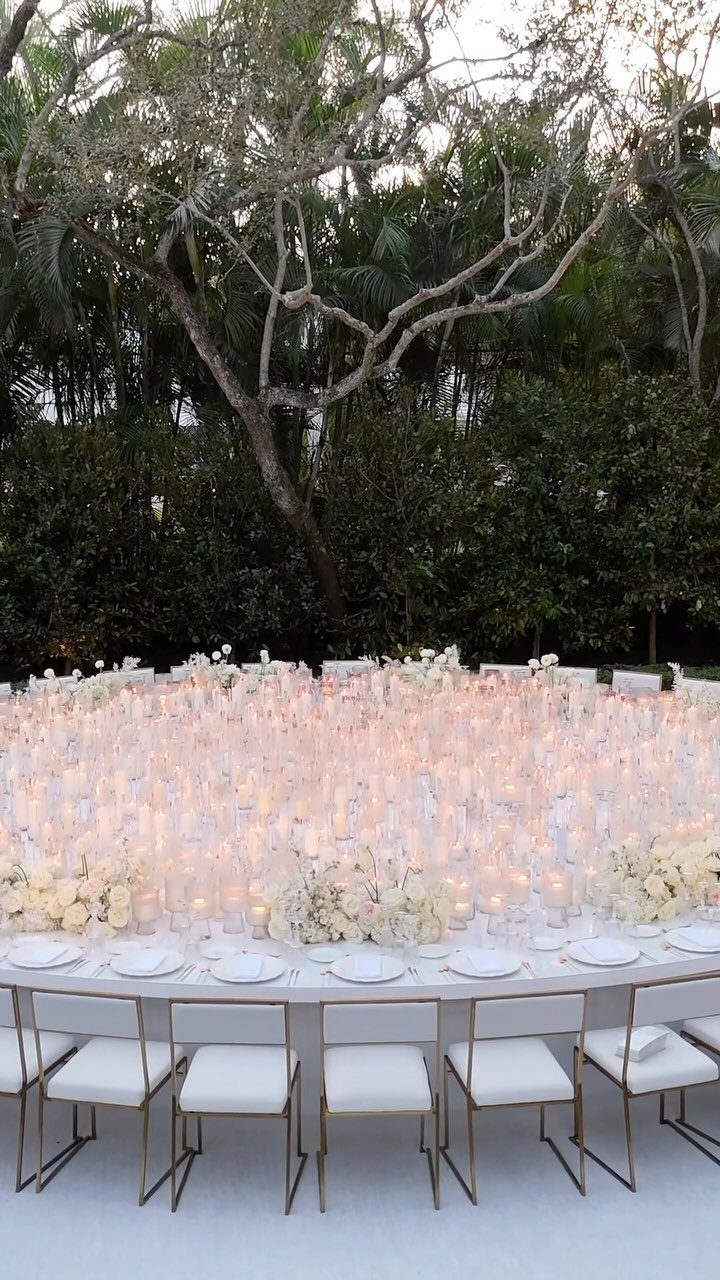
Hundreds of candles on a curved table create a single glowing surface that photographs as pure warmth against dusk.
The curved shape matters here; it lets guests see each other across the arrangement without craning, and it breaks the rigid geometry of a standard banquet setup.
I would use a mix of pillar heights, all white or ivory, with no scented candles, the fragrance would compete with dinner and overwhelm in concentration.
The practical limit is your venue’s open flame policy; many outdoor spaces allow it, but insurance requirements vary, and some require a fire watch attendant for events over a certain size.
5. Sweetheart Table
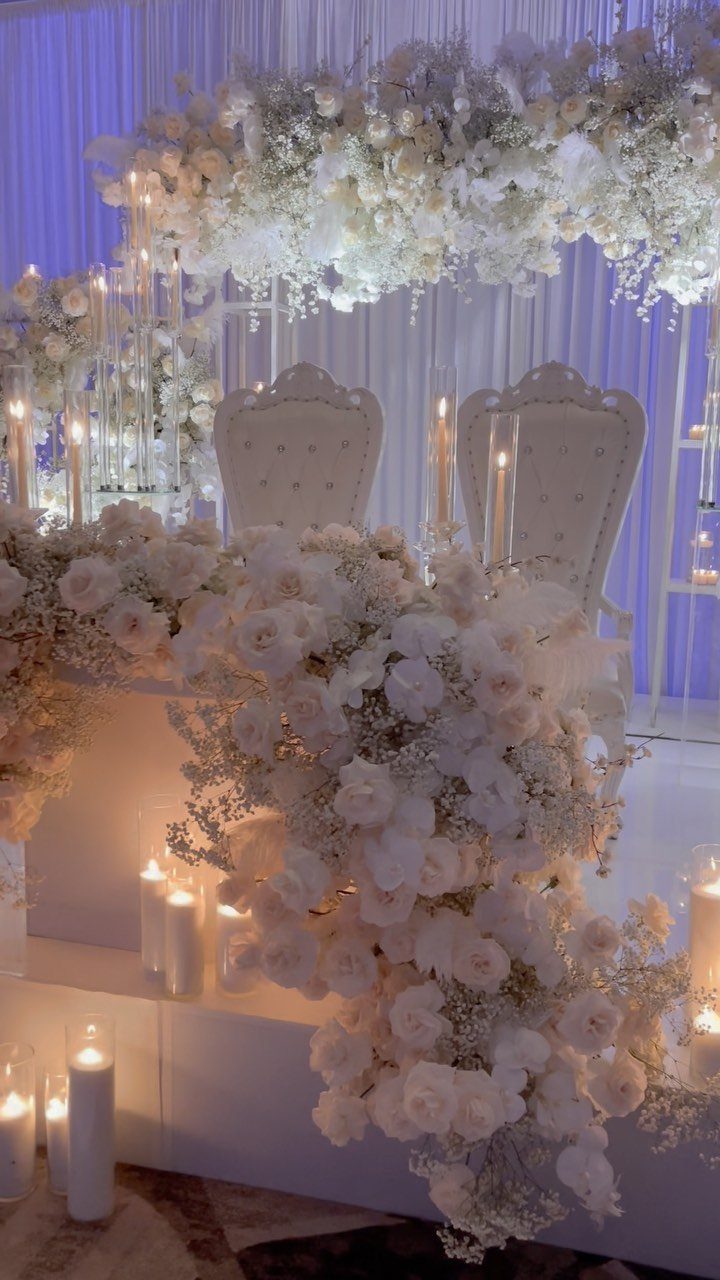
A dedicated table for two, set apart and canopied with flowers, gives the couple a private moment within the celebration.
The draped backdrop and ornate chairs frame the space like a portrait, which I prefer to the more common head-table arrangement where the couple faces the room but gains no intimacy.
Cascading roses need water sources or excellent silk; real blooms in this quantity weigh more than they appear and wilt quickly without hydration.
2 chairs rather than a bench allow the couple to angle toward each other, a small detail that reads as designed for conversation rather than display.
6. Fireworks Display
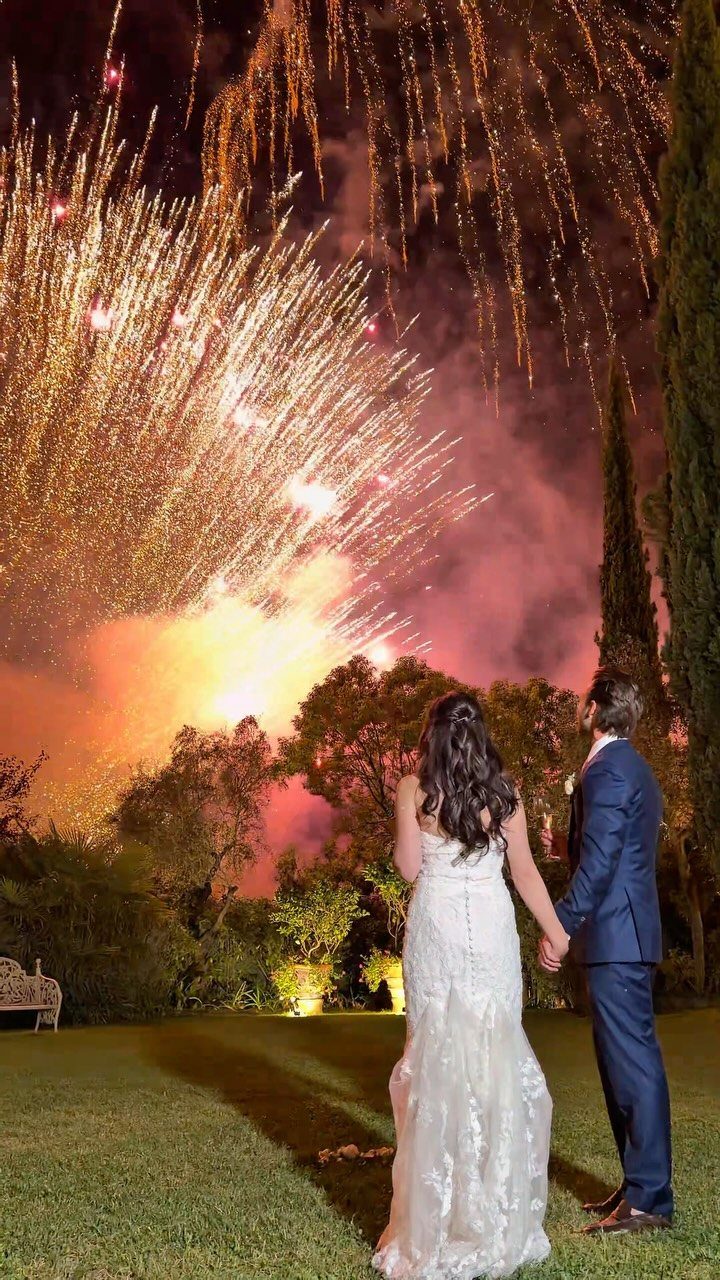
A fireworks finale gives guests a shared moment of outward attention after hours of focused social interaction.
The golden tones in the display photograph warmly against dark suits and white lace, and the timing, after the first dance but before the exit, lets the celebration peak rather than taper.
I would confirm the venue’s permit status directly; many outdoor spaces have existing agreements with pyrotechnic companies, but residential areas often restrict noise late at night.
A backup plan for wind or drought conditions is not optional in most regions, and the cost scales with duration more than with complexity of effects.
7. Hanging Wisteria Conservatory Reception
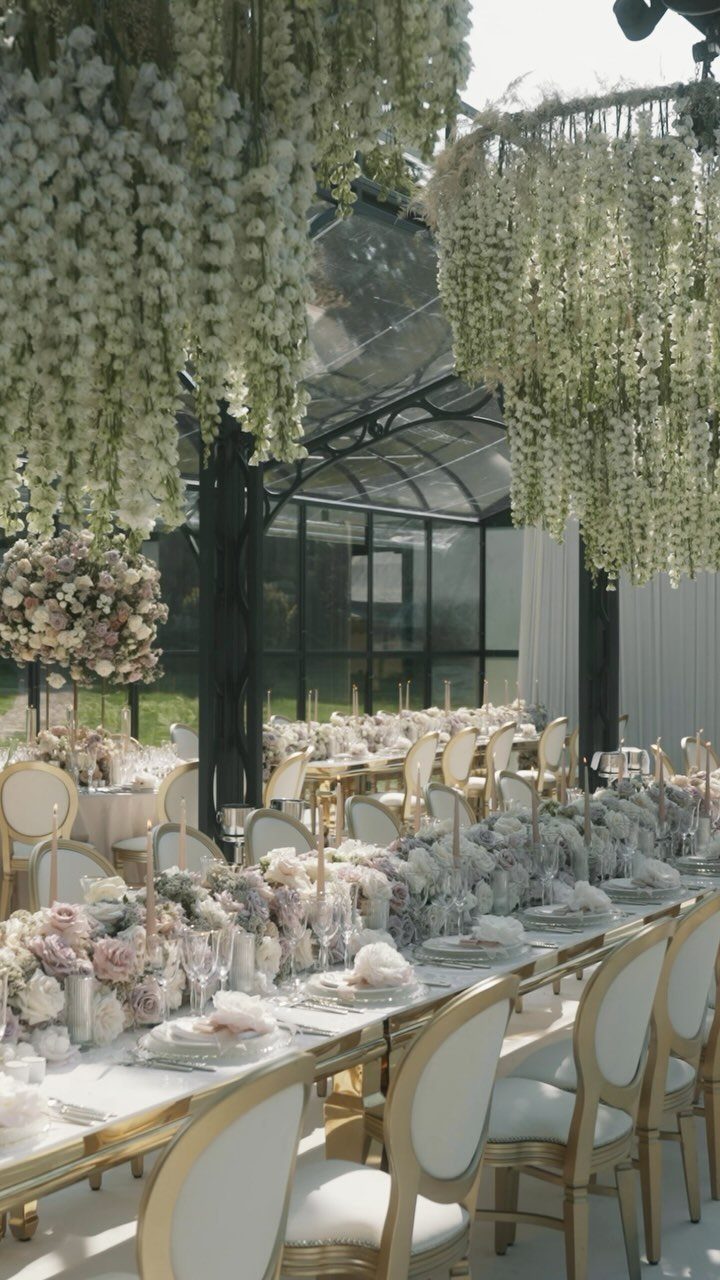
White wisteria hung in dense clusters from a glass conservatory ceiling turns an ordinary reception into something that feels grown, not arranged.
The glass walls do the heavy lifting by letting in natural light that makes the blooms glow from within, so the flowers can be silk rather than fresh without anyone noticing.
I would keep the table linens simple and the chairs metallic; too much fabric competes with the draped volume overhead.
8. Whimsical Giant Flower Decor
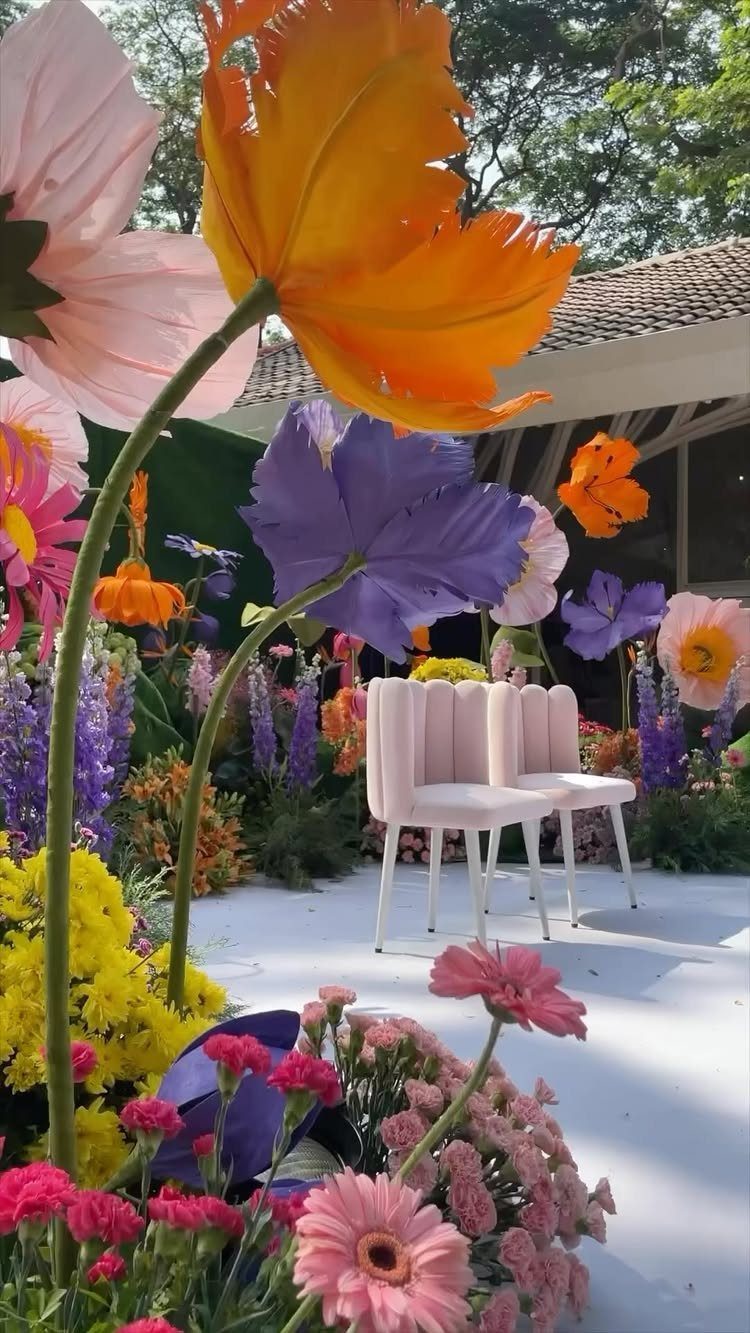
Oversized artificial blooms in saturated orange, purple, and pink surrounding 2 chairs create a photo moment that guests will use as a backdrop throughout the reception.
The scale is the point: flowers large enough to read as fantasy rather than merely oversized.
I would place this setup on grass rather than pavement; the slight unevenness of turf adds to the Alice effect and makes the giant flowers feel more at home.
The chairs should be pale, as in the visible setup, so they do not fight the color. One cluster like this is enough; scatter more around the grounds and the impact dissolves into theme-park territory.
9. Suspended Greenery and Crystal Canopy
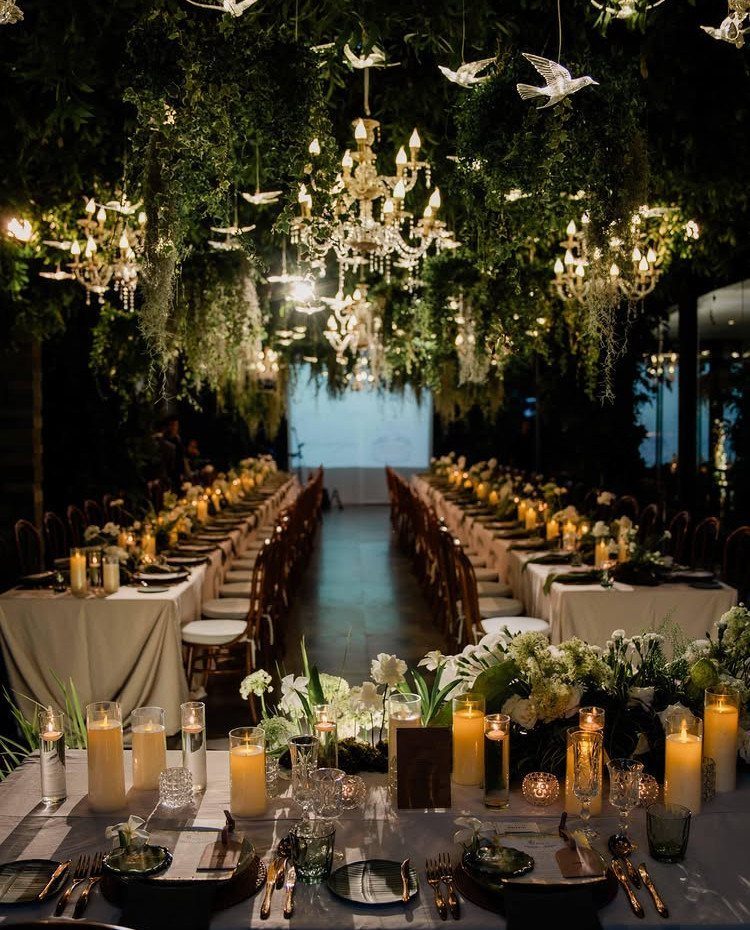
An outdoor dinner table set beneath layered greenery, crystal chandeliers, and small white birds suspended overhead creates a ceiling where none exists.
The chandeliers need power, which means either a tent frame to hang them from or battery-operated candles in real crystal housings; I would choose the latter for the cleaner silhouette.
The white birds, likely ceramic or painted wood, catch what light there is and keep the canopy from feeling too heavy.
This setup works best at dusk and after, when the crystals have something to refract; full sun flattens the effect and exposes every wire.
10. Bridal Cape Gown
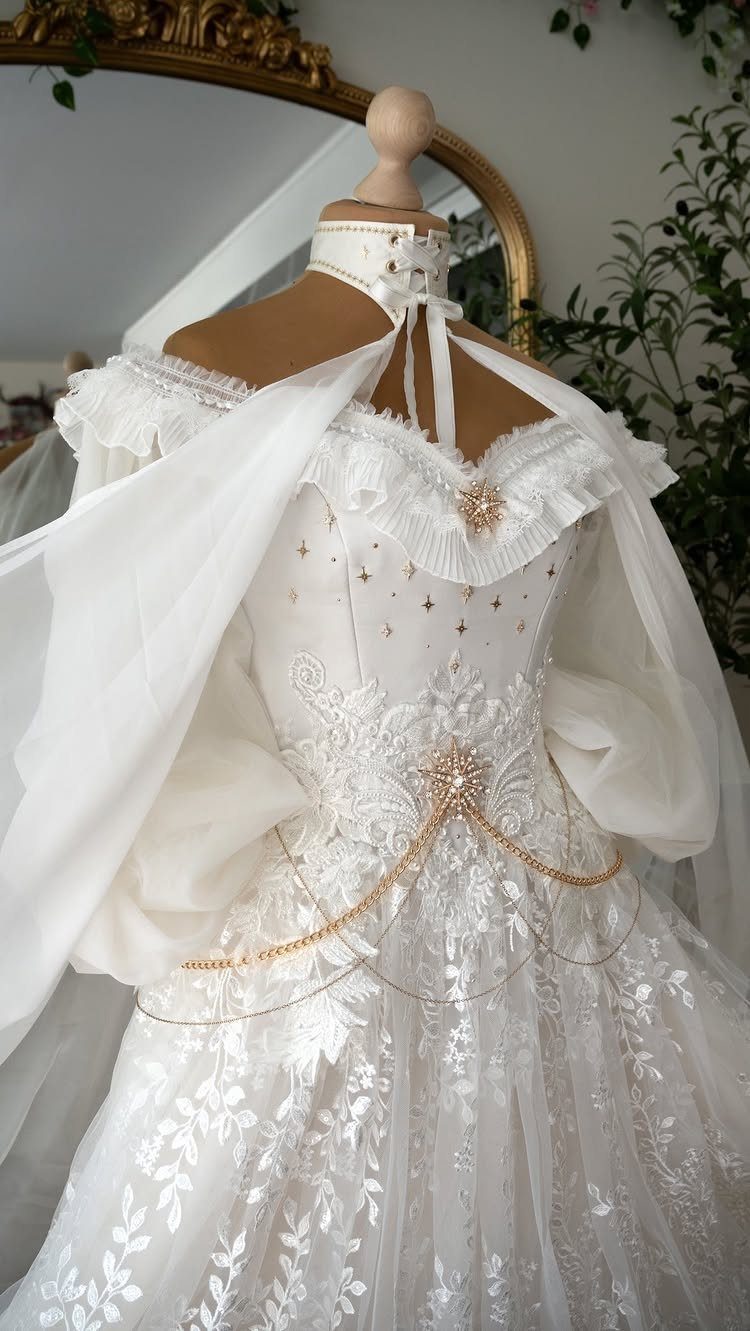
A sheer cape attached at the shoulders of a fitted gown gives the silhouette of a train without the weight or the need for bustling after the ceremony.
The gold chains at the neckline in the visible gown add structure that keeps the cape from reading as an afterthought; I would look for similar anchoring detail rather than a plain edge.
Lace embroidery on the bodice provides texture that photographs well when the cape moves, since the sheer fabric itself disappears in motion.
The cape length should clear the ground; any longer and it becomes a tripping hazard on stairs or grass.
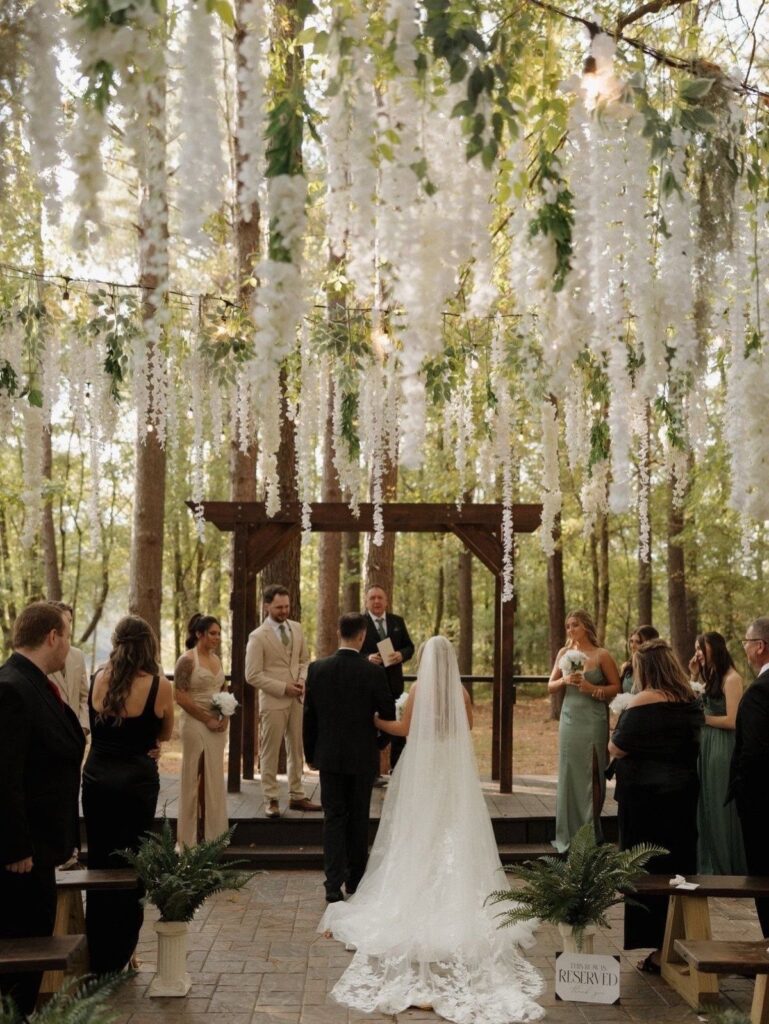
11. Cascading Fairy Light Canopy
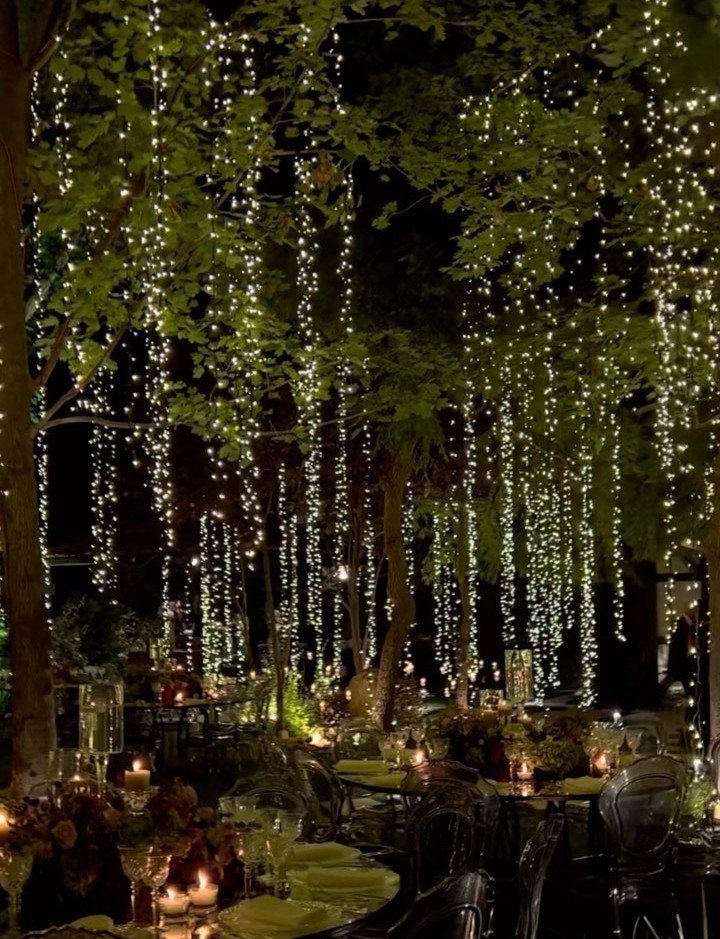
Vertical strands of fairy lights hung from tree branches create a curtain of light that defines an outdoor space without walls.
The density matters: strands spaced close together read as immersive, while wider spacing looks sparse from inside. I would use warm white LEDs on copper wire, they draw less power, stay cool, and conform to branch shapes without heavy clips.
Clear chairs keep the sight lines open so guests see the lights from every angle. A generator or outdoor-rated battery bank is non-negotiable unless your venue has outlets rated for outdoor use; most residential circuits will not handle this load.
12. Giant Seashell Dining Setup
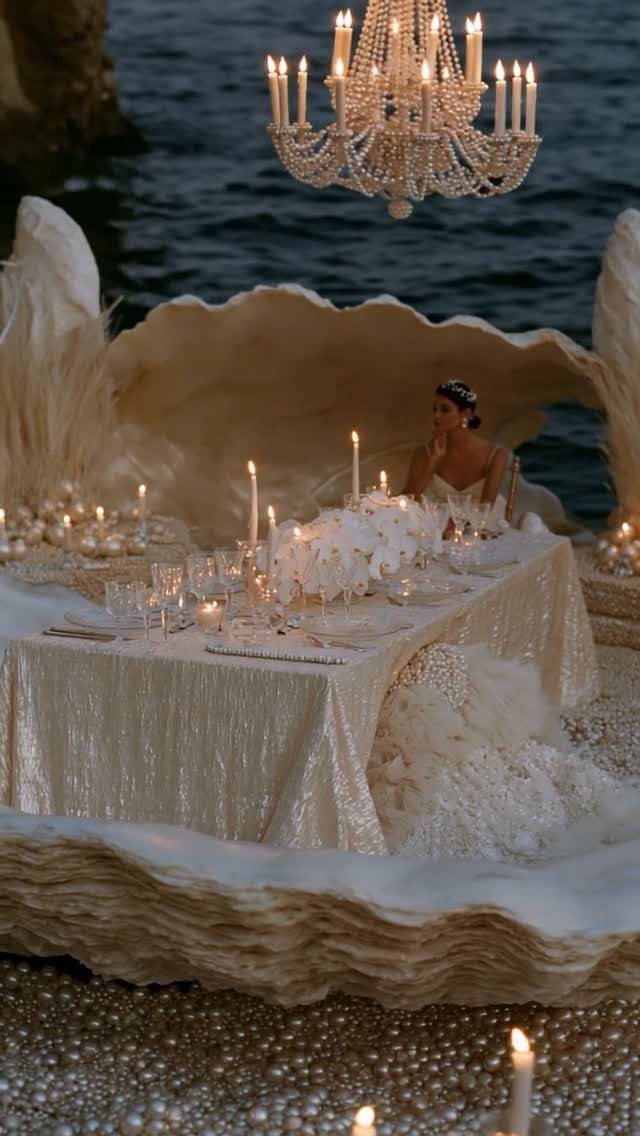
A dining table set inside an oversized seashell structure frames the couple as figures inside a jewel box, visible to guests but set apart.
The shell in the visible setup is smooth white, almost architectural, which keeps it from reading as beach kitsch; the crystal chandelier inside completes that gallery effect.
I would choose this for a waterfront venue where the horizon shows behind the open shell, the water extends the fantasy without needing more decoration.
The structure needs anchoring against wind, even a moderate breeze will catch the curved surface. A backup plan for rain is essential; the shell creates shelter for two, not for service staff or equipment.
Budget Planning
A fantasy wedding budget needs more cushion than a standard celebration because themed elements stack up fast. Themed decorations drive costs above typical wedding pricing, so I would build the decor line item first and let it inform the rest.
Wedding attire belongs in its own category, not folded into the general budget, since a cape gown or fitted elf ears run on a different scale than an off-the-rack suit.
Buying linen in bulk saves money; wholesale shops discount larger orders and some drop shipping charges once you hit their minimum. I would plan to reuse those linens across multiple events rather than treating them as single-use.
Proper storage between uses keeps the fabric usable and protects resale value if you later sell the pieces. Themed weddings breed last-minute fixes, so your budget needs a cushion for the problems you will not predict.
Venue Selection
The venue does more work in a fantasy wedding than in most themes because the architecture itself becomes part of the story.
A local historic building can stand in for a medieval castle without the travel cost, and county or state parks give mature trees and natural canopy for woodland or rustic fantasy at a fraction of private estate pricing.
I would walk any site in person with your coordinator or venue representative before committing; photographs flatten terrain and miss sound issues, light quality at your ceremony hour, and where the power actually runs.
Old castles, forest clearings, and historic mansions each carry a built-in atmosphere that reduces how much decor you must bring in.
A clearing gives you trees but no outlets for a fairy-light canopy; a castle gives you stone walls but rules about what can hang on them.
The atmosphere you want guests to feel is the first question to nail down, because that answer shapes what from your list is even possible.
Theme Declaration
Guests need lead time to participate in a fantasy theme, especially if you want costumed attendance rather than standard formalwear.
I would put the theme on the save-the-date and repeat it on the invitation with a note about participation level; some guests will commit to full fantasy dress, others to a single accessory, and clear communication lets each person choose without anxiety.
For decor, crystals, fairy lights, and glass pieces carry the magical effect without demanding fresh flowers at every turn. A crystal cake stand on the dessert table catches light and ties into the same materials used in centerpieces.
I would thread the theme through invites, photo booth props, and guest favors so the atmosphere holds from arrival to exit rather than concentrating only at the ceremony site.
Tulle or airy fabric on the wedding dress reads as ethereal without requiring a full costume change after the vows; coherence across the day matters more than one dramatic moment followed by ordinary dress.
Frequently Asked Questions
What is the best theme for a wedding?
A fantasy wedding theme works well for couples who want storytelling and creativity woven through the day. It lets the venue architecture, decor, and attire all pull in the same direction rather than defaulting to standard formal expectations.
A fantasy wedding builds its atmosphere through woodland details, candlelit receptions, and costumes that read as cohesive world-building rather than costume-party excess.
Does a wedding need a theme?
No, though a theme sharpens every decision and helps guests understand what to expect. A theme works as a practical tool: it drives venue selection, tells guests how to dress, and keeps decor spending purposeful rather than scattered.
Without one, you risk a collection of pretty elements that do not add up to an experience.
What is a rustic wedding theme?
A rustic wedding theme draws on natural materials, outdoor settings, and an unpolished aesthetic rather than formal elegance. Woodland-inspired details like tree-canopy installations, pine accents, and wooden place cards fit here.