Gold jewelry aesthetic runs from a whisper-thin chain that disappears into the collarbone shadow to a wide cuff that turns the whole forearm into display surface, and the pieces that follow show how to work every degree between them.
The single thing that decides which piece is yours is whether you wear jewelry as quiet habit or deliberate performance: a slim signet with private engraving faces inward, while oversized polished hoops become architecture for the face, and the list below gives you both paths plus every step between.
1. Simple Stud Earrings
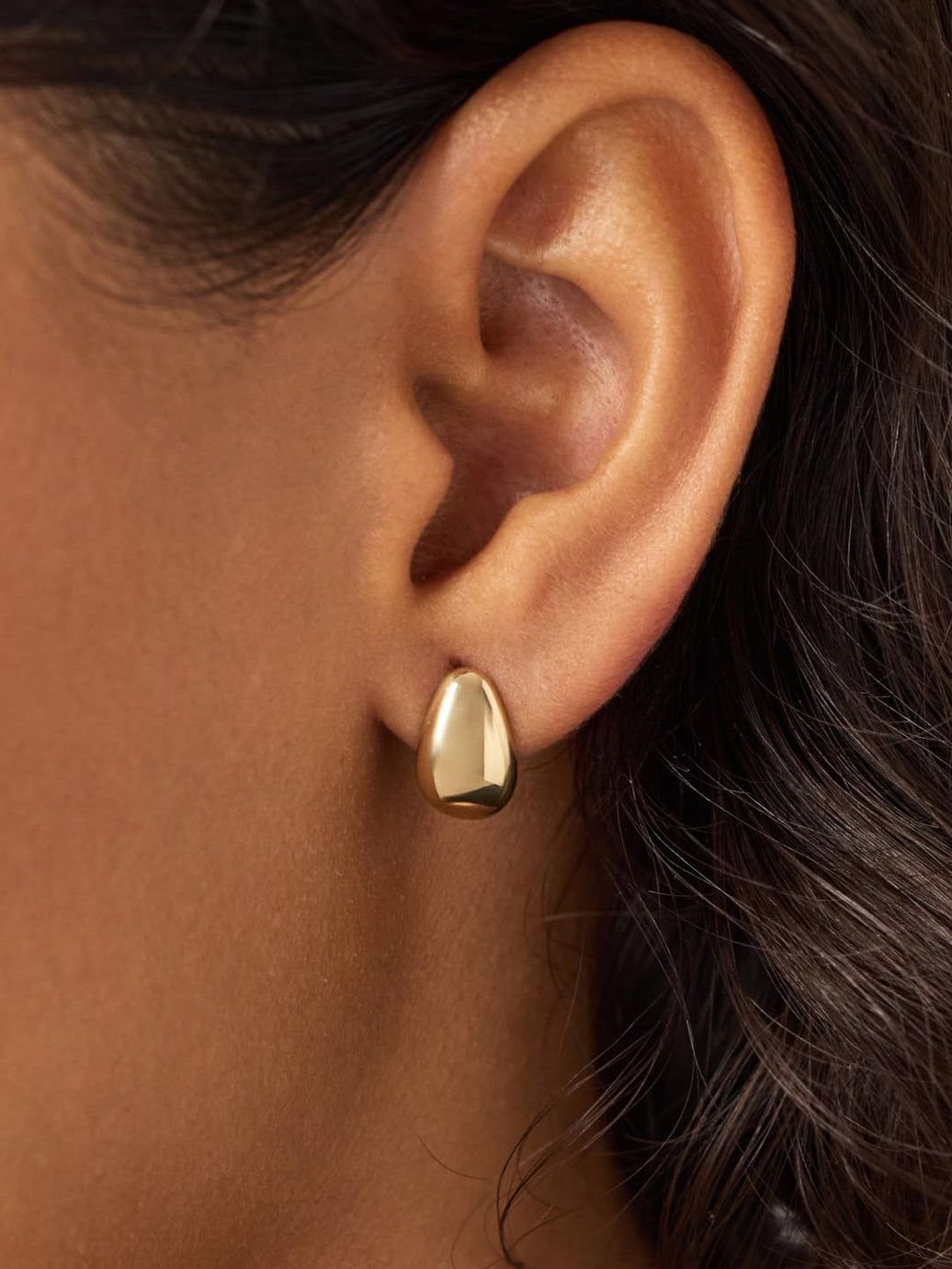
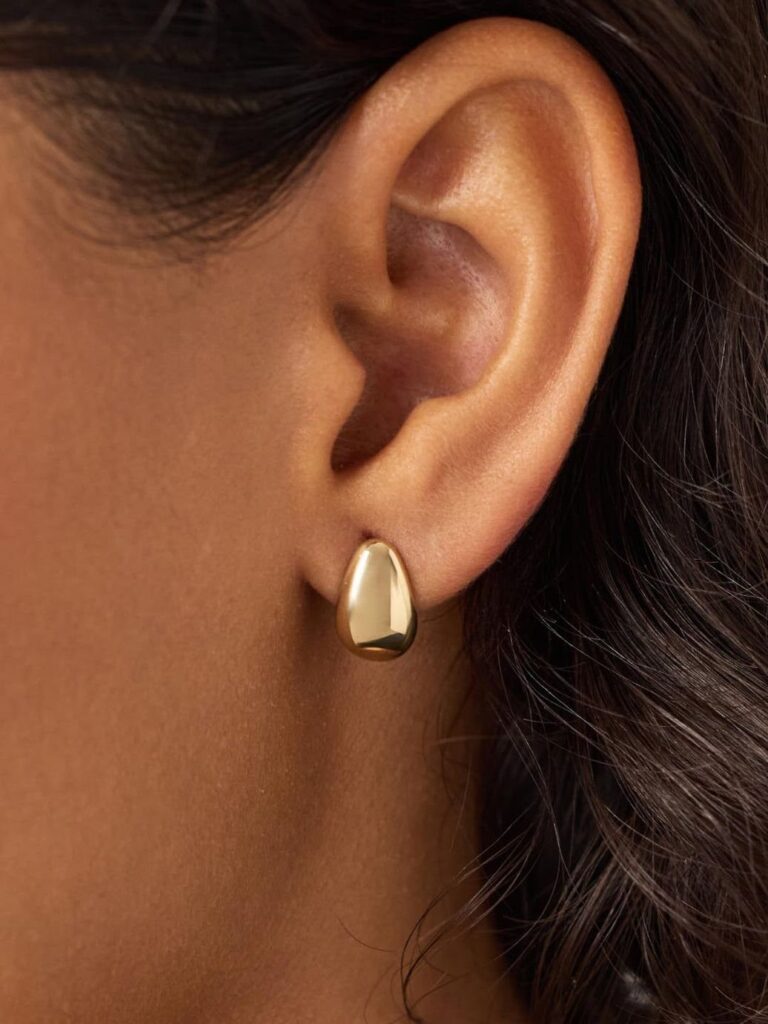
A single polished gold stud in a teardrop or soft organic shape reads as intentional without asking for attention.
These warm my face without anything swinging or catching. The smooth surface catches light differently than faceted stones; it glows rather than sparkles.
For everyday wear, a post with a secure friction back or small screw keeps the earring flat against the lobe.
I prefer 14K gold for the balance of color richness and durability; 18K looks warmer but softens faster with daily on-and-off.
A teardrop orientation, wider at the bottom, follows the natural line of the earlobe and sits more comfortably than a perfect circle.
These pair with anything else or with nothing at all.
2. Chunky Chain Necklace
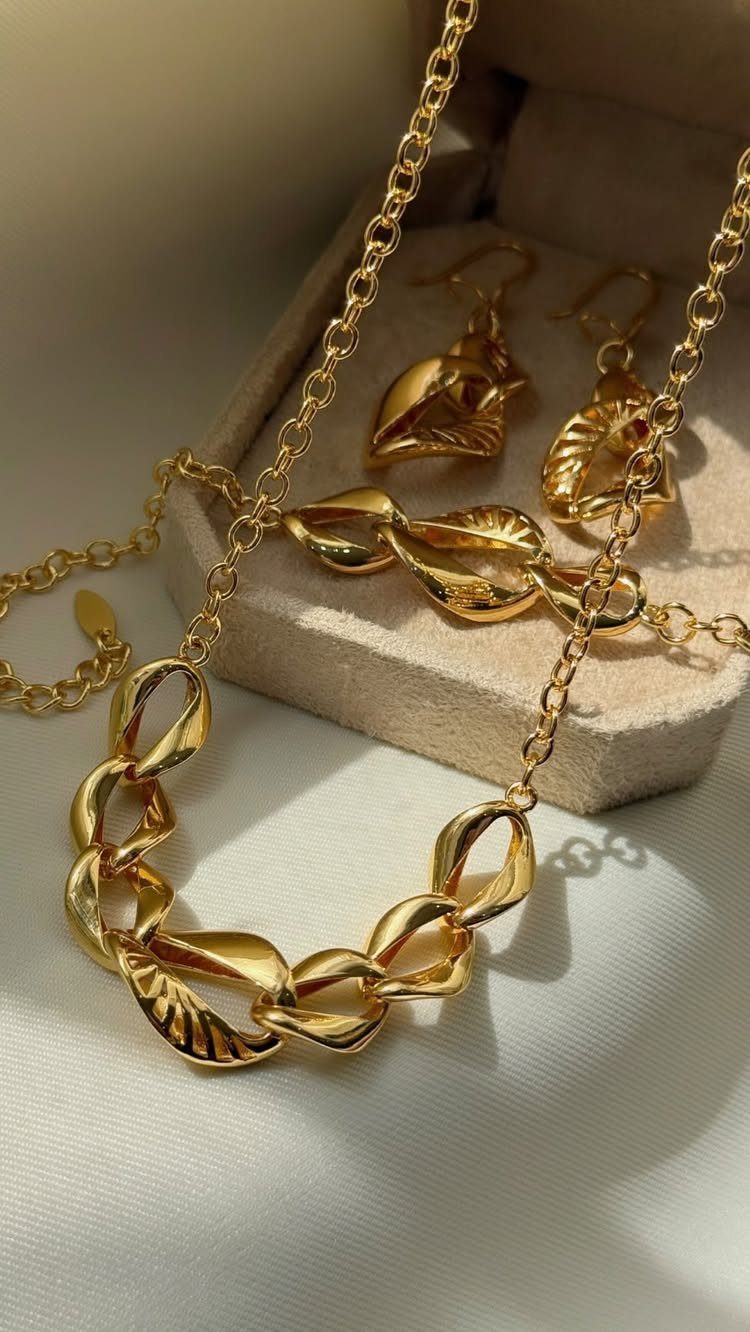
A thick gold chain with leaf-shaped links carries enough visual weight to stand alone as the single necklace in an outfit. This gives the impact of statement jewelry without the fuss of layering multiple strands.
The leaf link construction, visible in the matching set, gives the chain movement despite its heft; each link pivots slightly, so the necklace drapes rather than sits rigid.
Matching earrings and a ring in the same link style keep the look unified without requiring identical scale across every piece.
For proportion, I wear this with open necklines or over thin knits where the chain has room to sit at full length. A chunky chain against a high collar competes for space and usually loses.
3. Wide Cuff Bracelets
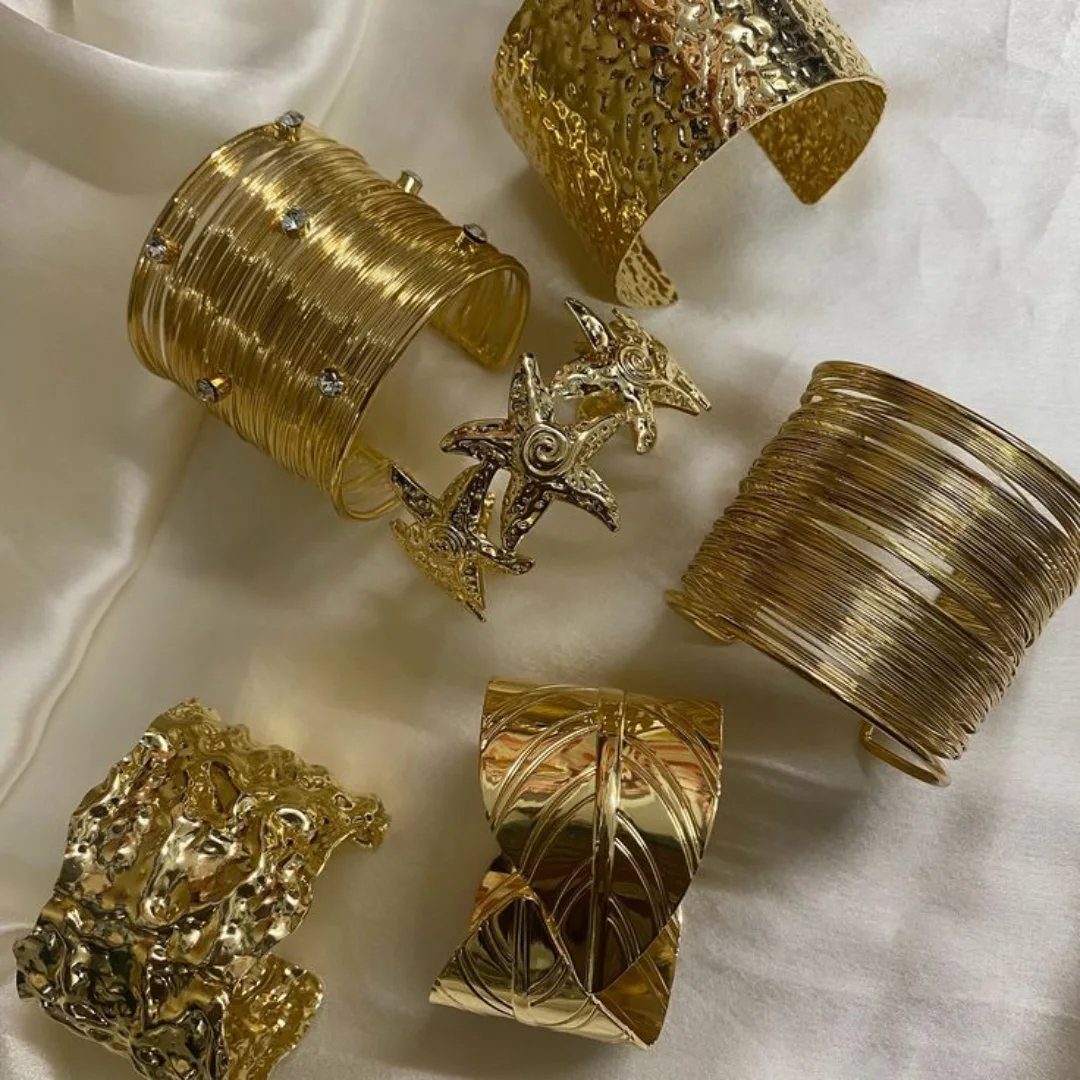
A cuff that spans most of the wrist width turns the forearm into a display surface.
I find these work best worn alone on one wrist; two competing wide cuffs look like armor, and a cuff plus a watch divides attention awkwardly.
A single metal reads very differently depending on surface treatment; starfish textures, hammered finishes, and smooth polish each carry their own weight.
A smooth polished cuff reflects light in broad sheets; a textured or patterned one breaks the reflection into smaller flashes and reads as more casual.
I choose polished for evening events where I want the gold to act almost like a mirror, and textured or nature-inspired patterns for daytime when the piece should look like it belongs with cotton and linen.
Slip-on cuffs need to fit snugly enough to stay above the wrist bone during movement but not so tight that they pinch when the hand flexes.
4. Filigree Detail Jewelry
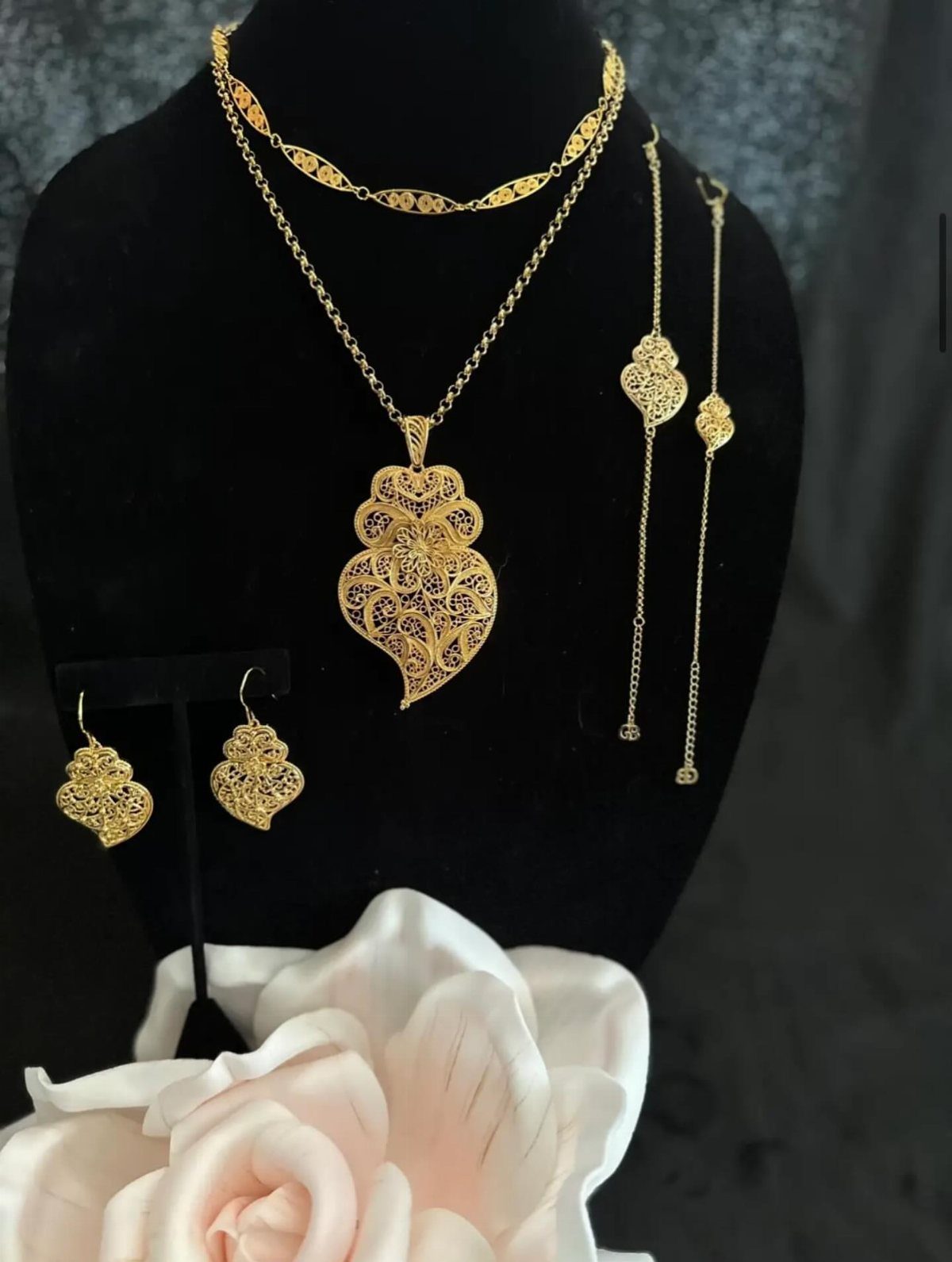
Filigree gold work builds pattern from thin wires soldered into open, lace-like designs.
The heart pendant and earring set shows the technique at its most traditional: scrollwork and loops creating negative space that lets skin or fabric show through the metal.
I find this style reads as more formal than solid gold pieces of similar scale. The openwork catches less light overall but creates more intricate shadow patterns.
For maintenance, filigree traps dust and skin oils in its crevices; I clean mine with a soft brush and mild soap rather than rubbing, which can catch and bend the fine wires.
The long drop earrings in the same set extend the filigree below the lobe. Movement and historical reference together suit hair worn up or smooth, where the wires won’t tangle.
5. Multi-Chain Necklace Layering
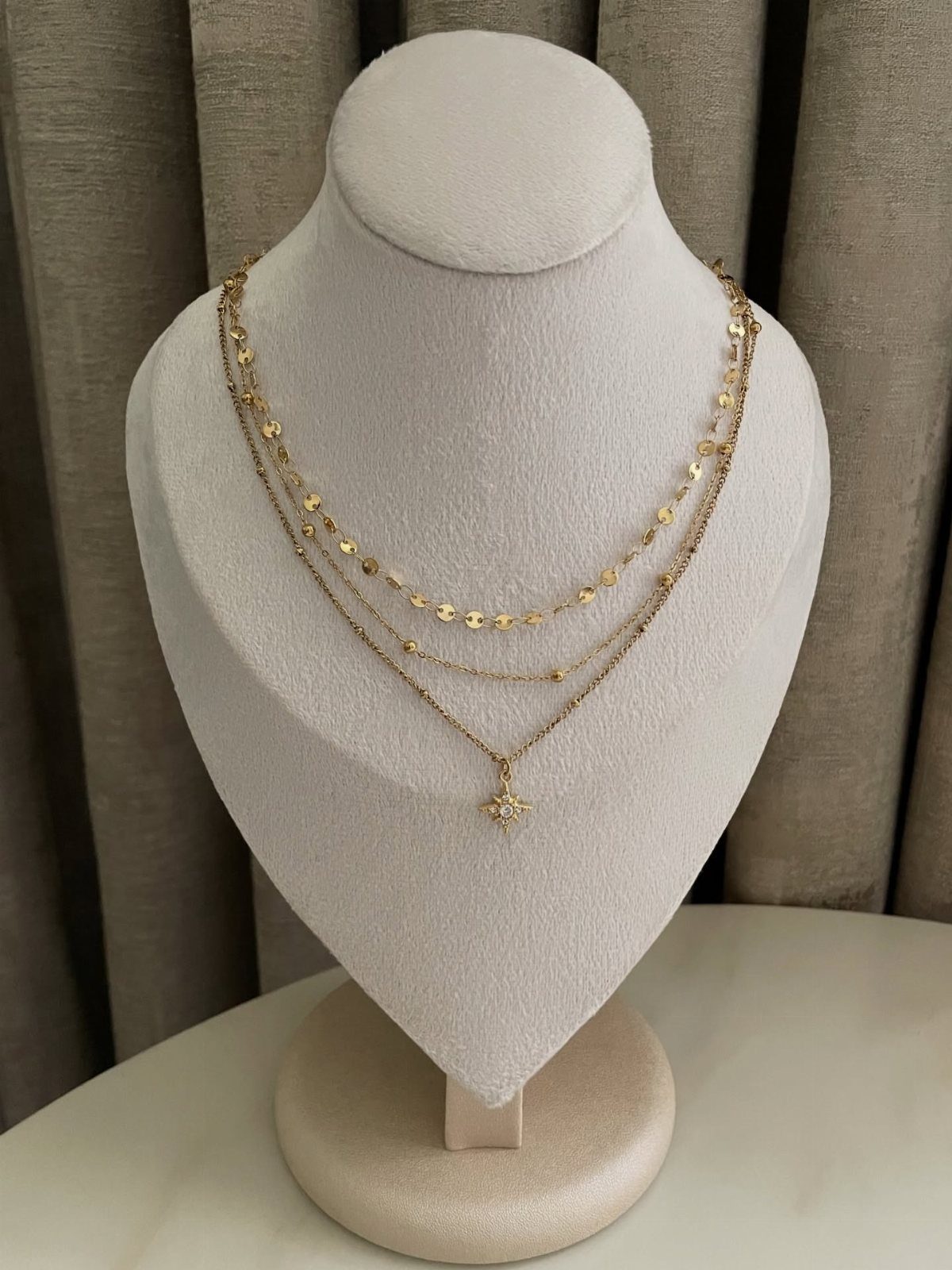
3 chains at graduated lengths let each pendant or bead station have its own visible zone.
The star pendant sits lowest, the beaded chains above it, so nothing overlaps directly. I build layers this way rather than letting pieces tangle at the same level.
Spacing chain drops close enough that each reads separately, but not so far apart that the chest between them looks bare, takes some trial.
A fixed multi-chain design, like this bust display, removes the daily decision of which necklaces work together; I also like the control of choosing my own, but it requires more trial.
For the bead and star combination shown, the mixed textures, smooth and granular, keep the all-gold palette from going flat. I check that the clasp or connection point at the back can handle the combined weight without twisting.
6. Stacked Ring Aesthetic
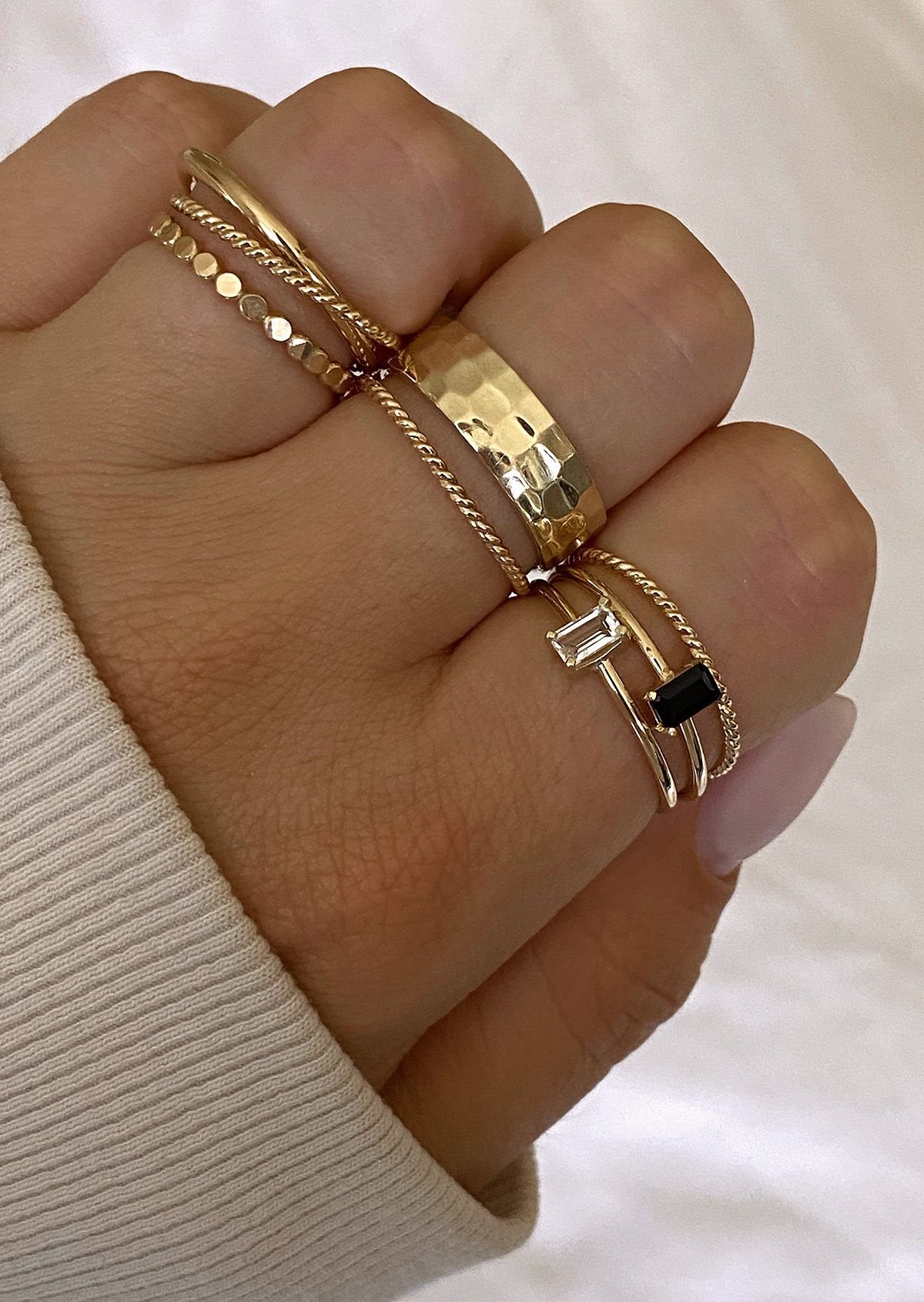
Wearing thin gold rings across multiple fingers looks collected over time rather than bought as a set. Black stone, clear stone, hammered and smooth bands: each ring makes a small statement, and the total reads as personal curation.
I start with one ring per finger as my base, then add a second on one or two fingers where the knuckle spacing allows.
Rings that sit at different heights on the finger, some at the base and some as midi rings above the lower knuckle, create more depth than a straight line across.
A neutral, textured background lets the metal and stones read without competition. I avoid stacking against busy prints or bright colors where the eye has too many places to land.
For comfort, thin bands with flat or slightly rounded profiles stack more smoothly than domed or pronged designs that push neighboring rings aside.
7. Layered Bracelet Stack
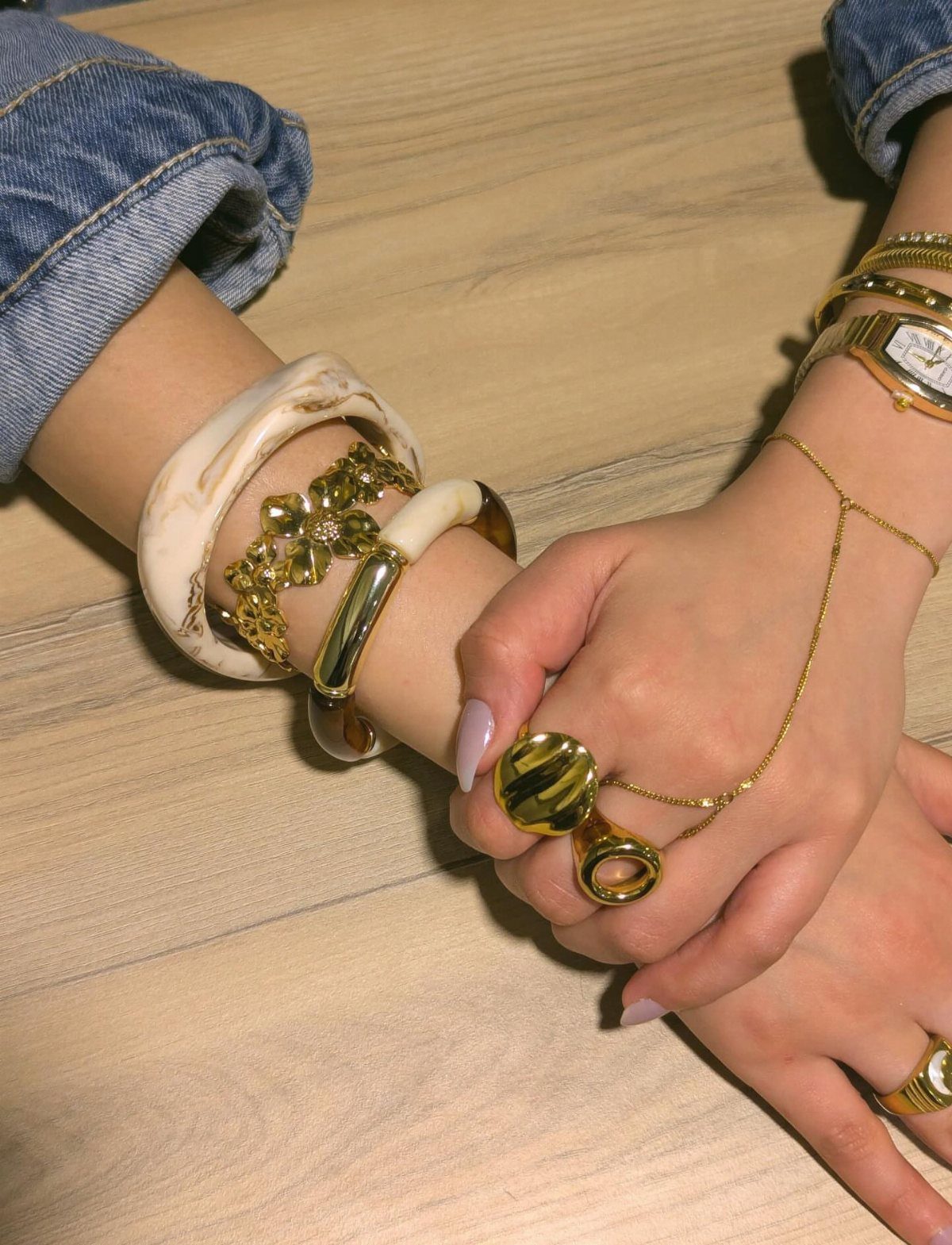
A slim gold watch sets the anchor; lighter chain and beaded bracelets gather above it toward the elbow. The marbled beads in the stack add warmth without competing with the metal.
I build from heaviest to lightest, wrist toward forearm, so nothing slides under the watch band.
Bangles need room to move; chains sit closer to the skin. More than 3 pieces per wrist and the sound and weight become their own distraction.
8. Ear Party Aesthetic
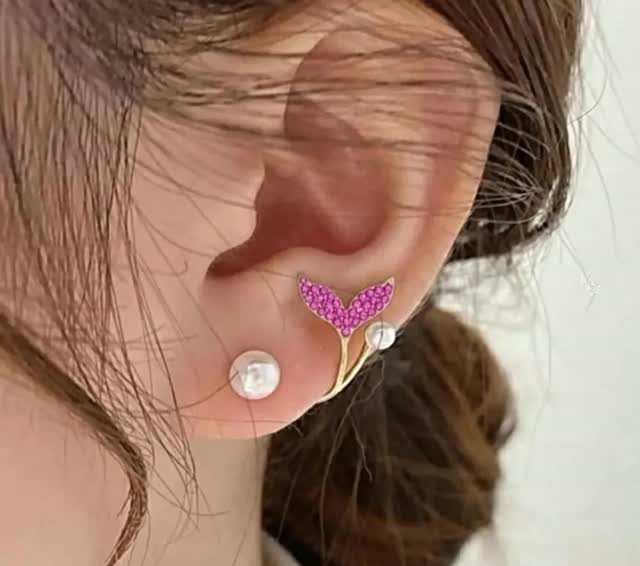
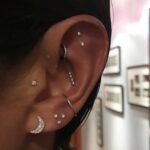
Multiple piercings let gold work as a gradient rather than a single accent. A pearl stud at the first lobe position stays classic; a mermaid tail with pink stones and a second pearl drops below for movement.
I think of placement by weight: heavier or more colorful pieces lower on the ear, simpler studs higher up.
The lobe has the most real estate; helix or upper cartilage piercings suit smaller, flatter gold shapes that won’t catch on hair.
Healing time matters. A new piercing needs time to heal before swapping to decorative pieces; I plan my layout around what I can actually wear.
9. Hammered Gold Finish
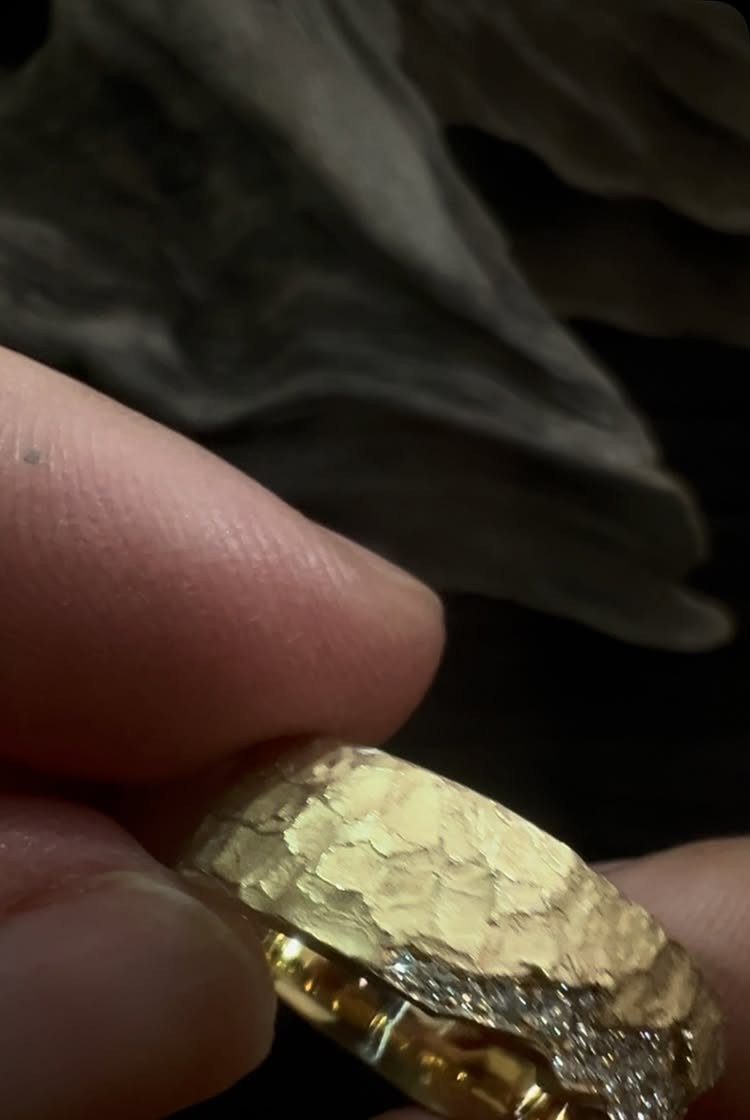
Hammered texture breaks a gold surface into dozens of tiny facets, each catching light at a different angle. The result reads softer than polish, more alive than matte.
Diamond accents sit differently on hammered metal than on smooth: the texture around them creates contrast without needing a heavy bezel setting.
I find this finish forgives small scratches that would show on a mirror surface; the hammering already contains the irregularity.
For rings especially, the slightly uneven surface interacts with skin in a way that feels personal rather than industrial. The tool marks remain visible, evidence of the hand that made it.
10. Twisted Rope Jewelry
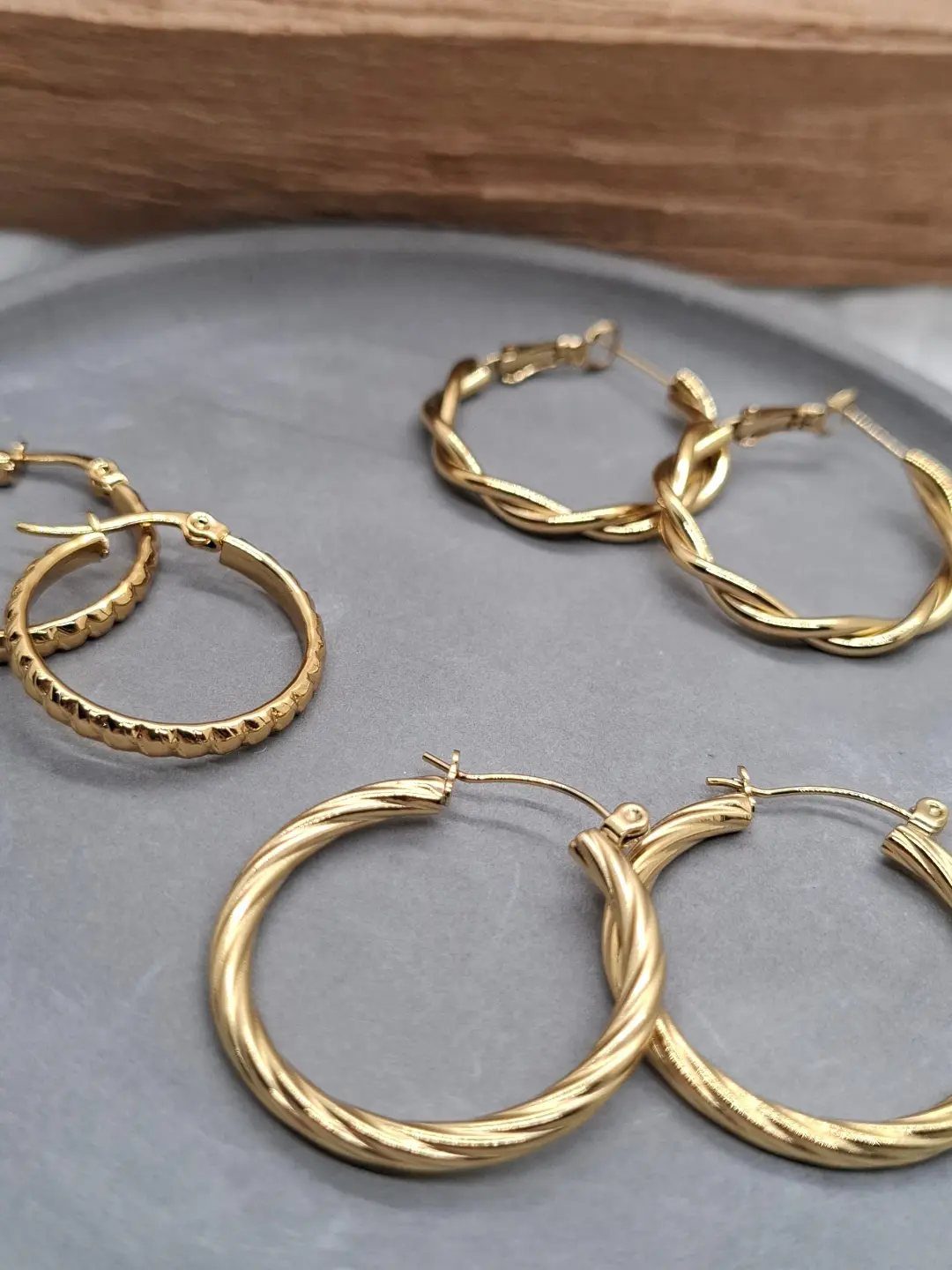
Twisted rope metal catches light in continuous diagonal lines, giving hoops a sense of motion even when still.
The texture adds visual weight without adding actual weight, which matters for larger diameters.
I match the metal color across the pair but don’t insist on matching the twist fineness; a slightly tighter or looser rope reads as variation rather than mismatch.
11. Sculptural Organic Shapes
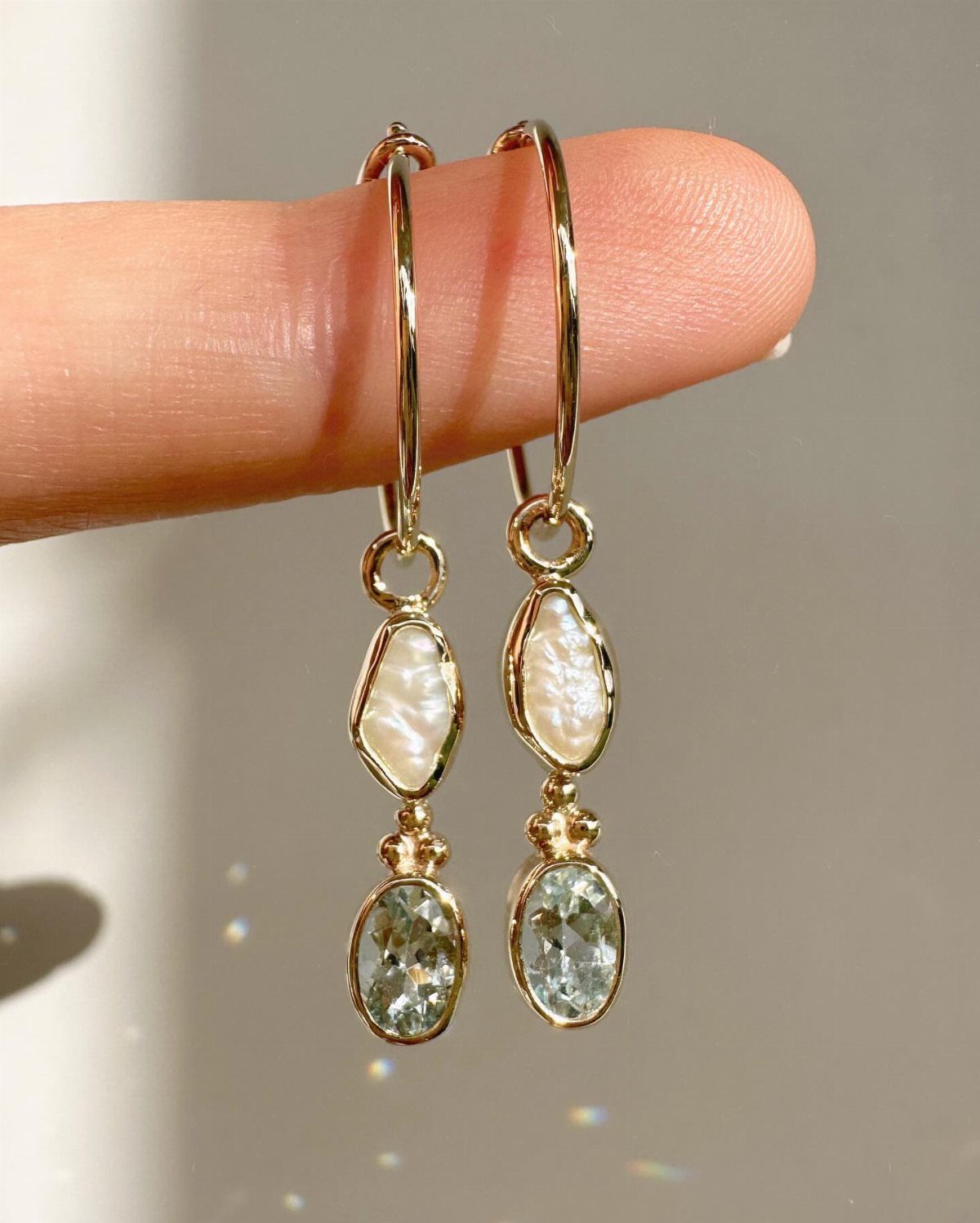
Fluid gold settings let pearls and stones keep their irregular shapes rather than forcing them into round bezels.
The organic white pearl and light blue gem each follow its own contour, held by metal that bends to accommodate rather than dominate.
I find this style bridges natural and made: the materials are clearly earth-grown, the setting clearly human-shaped. It suits the person who wears jewelry as both art and accessory.
The drop length here sits at the jawline, a placement that works with hair up or smooth. Longer organic shapes would need more room to move without tangling.
12. Oversized Hoop Earrings
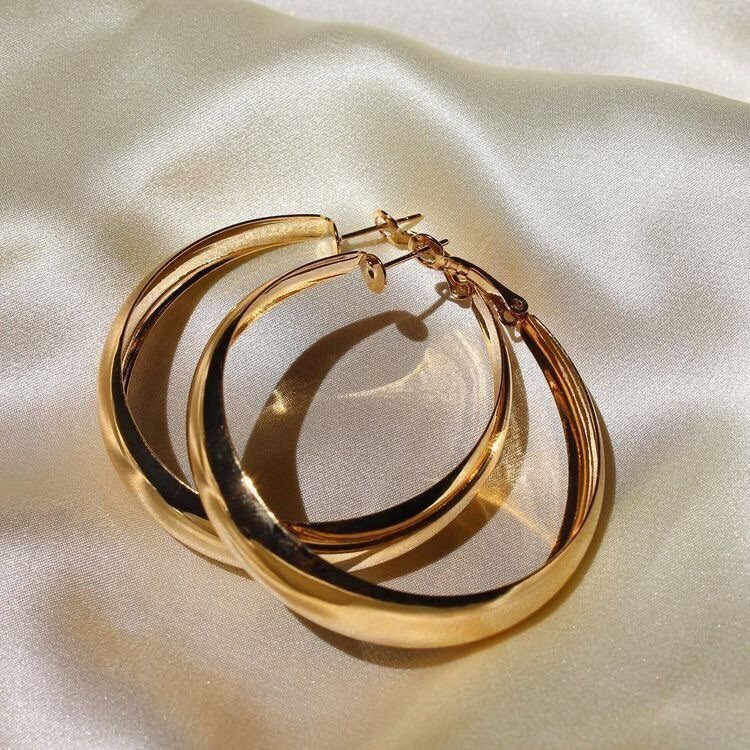
A polished gold hoop at this scale becomes architecture for the face, drawing the eye upward and outward. These need fabric with some give and sheen, not stiff structure competing for attention.
Weight is the real constraint.
Solid gold at that scale would pull; hollow construction or a lighter alloy keeps the look without the ache. I check that the closure clicks securely, a hinge weakness shows first at this size.
These turn a simple outfit into an event. I keep everything else minimal when I wear them.
13. Statement Cocktail Rings
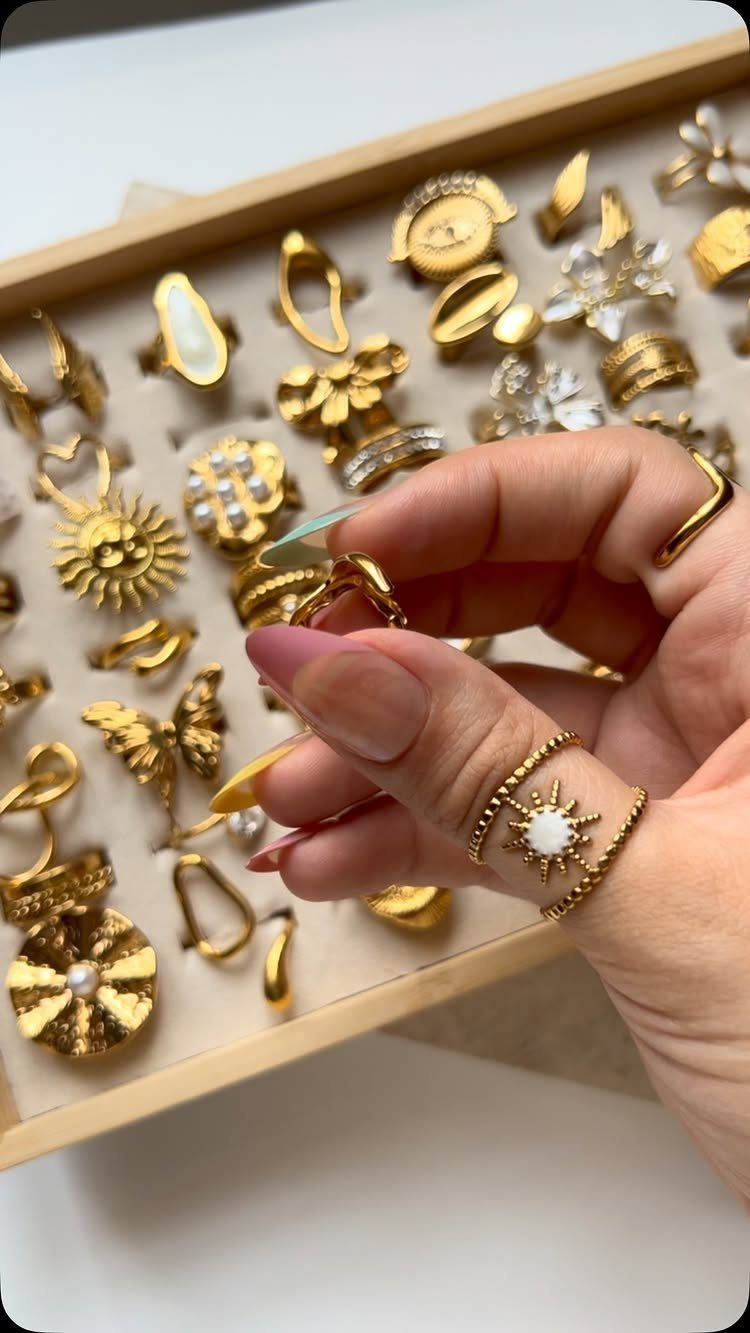
I choose one bold ring per hand at most; two competing statements split focus and look like costume.
These suit evenings when the hands will be visible: holding a glass, gesturing in conversation. For daytime, I move the same ring to the dominant hand alone, where it reads as personal habit rather than performance.
14. Delicate Single Chain
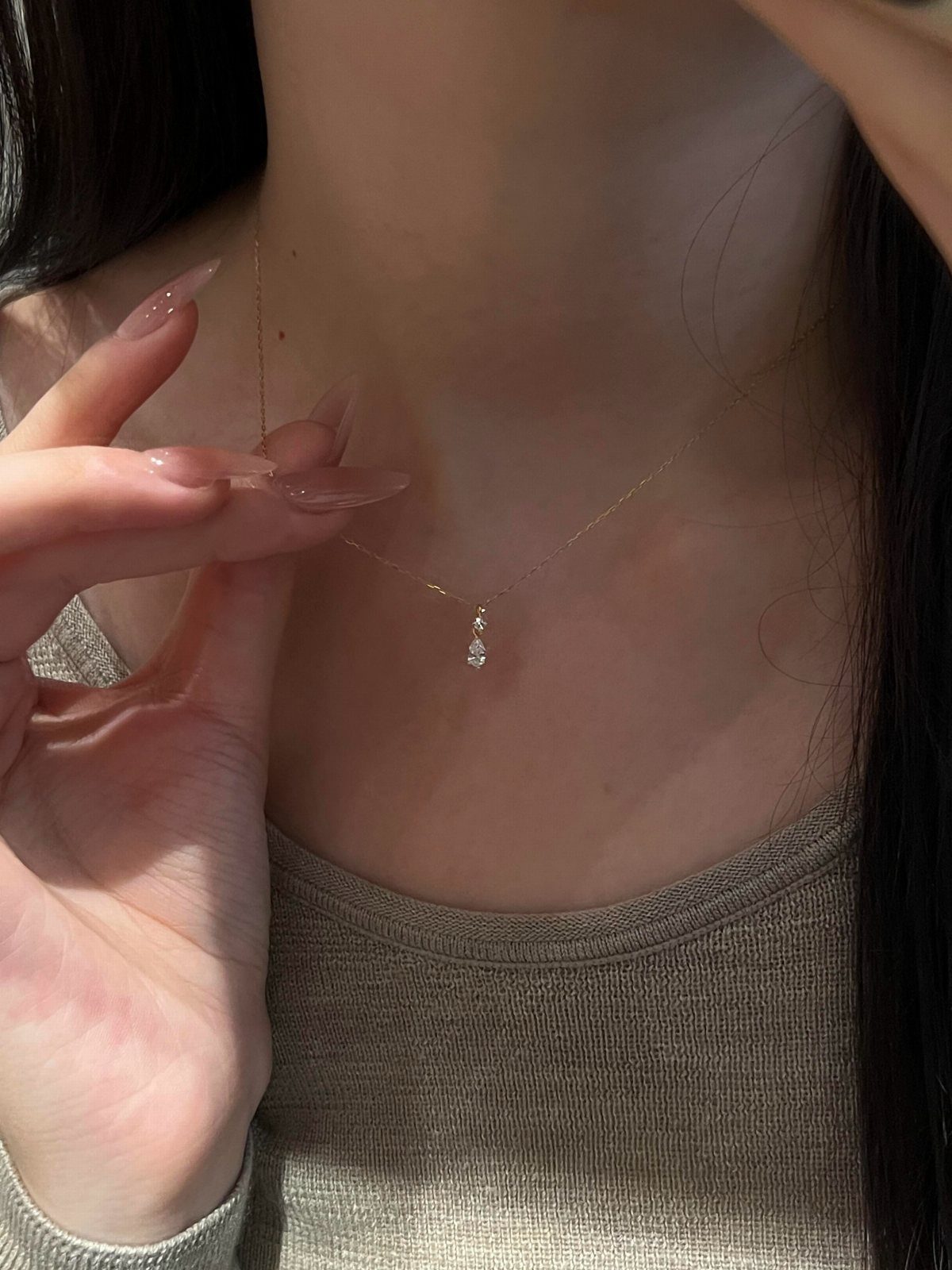
A whisper-thin chain with one small pendant sits so close to the skin it almost disappears into the collarbone shadow.
I wear this when the neckline does the talking: a ribbed top, a crisp shirt open one button lower than usual. The chain fills the space without starting a second conversation.
For the pendant, I prefer a single stone or simple drop over initials or symbols; the minimal scale makes busy shapes unreadable. A spring ring clasp stays flat and unobtrusive; a lobster claw at this fineness becomes the heaviest element.
This is my default for video calls and close quarters, where anything larger would enter the frame too aggressively.
15. Thin Signet Ring
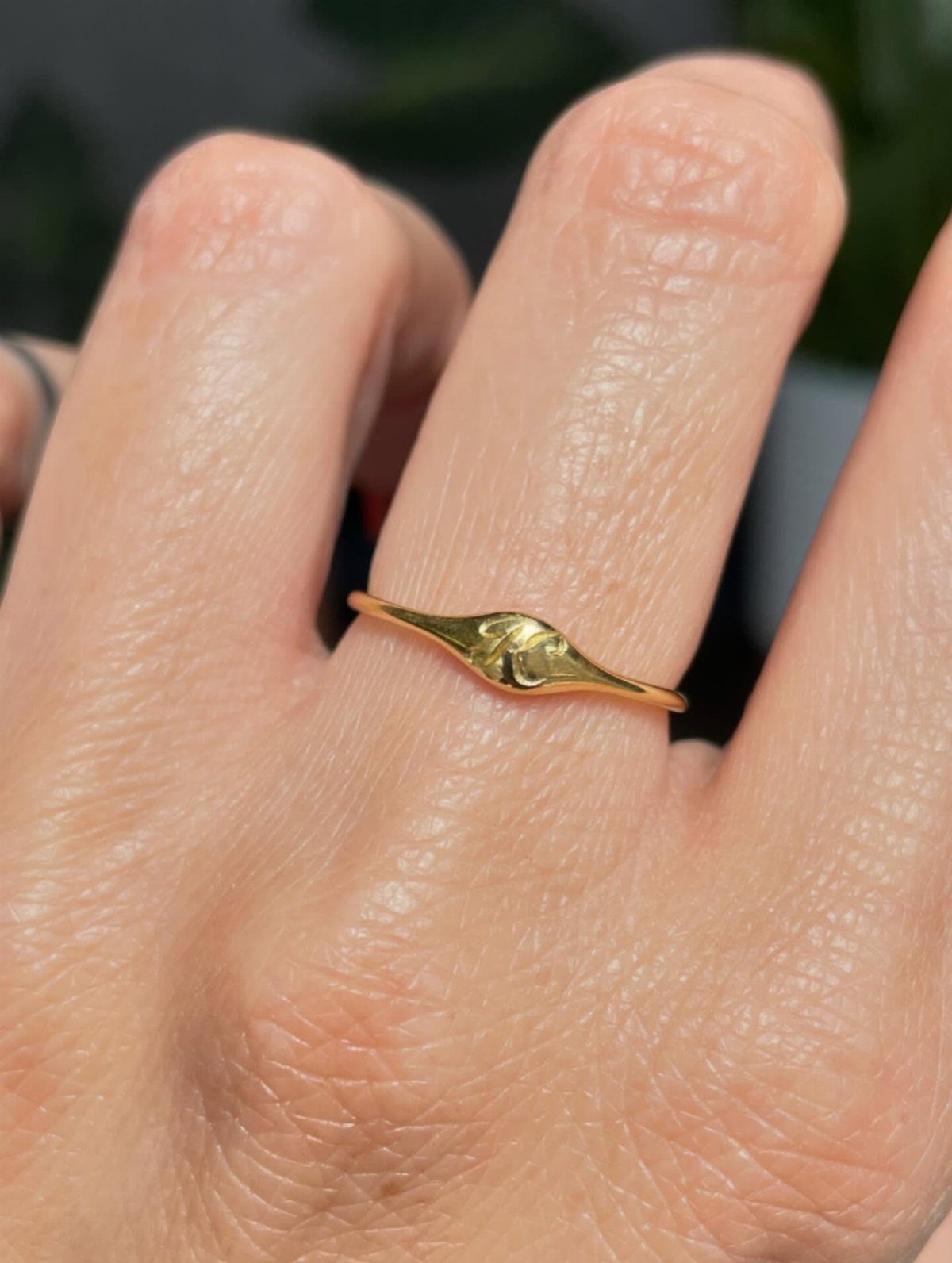
A slim band with a small engraved face carries history without the weight of tradition.
I like the engraving shallow and personal: a single initial, a tiny symbol, something that reads to me and not to everyone who shakes my hand.
Deep engraving on a thin face looks stamped rather than carved; the metal needs some height for the cut to hold its shadow.
Worn on the ring finger, it pairs with a wedding band or stands alone.
On the pinky, it reads as a deliberate choice, a small rebellion. I find the pinky placement works best when the engraving faces inward, private rather than displayed.
16. Gold Coin and Medallion Jewelry

A crescent moon and a round coin at different chain lengths let 2 symbols share space without competing for it.
I build this pairing by weight and meaning: the more personal symbol lower, closer to the heart, the more universal one higher as frame.
The moon and coin combination works because both carry ancient reference; mixing a classical medallion with a modern abstract shape would jar.
Chain thickness needs to match the pendant scale.
A heavy coin on a whisper chain looks like an afterthought; a small charm on a thick chain looks stranded. I aim for the chain width to sit at about one-third the pendant diameter.
17. Antique-Style Engraved Jewelry
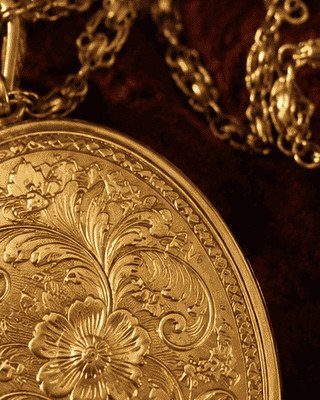
Hand-cut lines in gold catch light as shadow, creating depth no casting can replicate.
The oval locket shape suits engraving that flows rather than repeats; geometric patterns fight the curve. I check that the back is finished as cleanly as the front, since a locket flips and rests against fabric or skin.
Velvet storage matters for these pieces.
The raised engraving catches on rough surfaces; I have seen fine lines flattened by years in a jumbled jewelry box. A soft pouch or dedicated compartment preserves the cut.
This style suits the person who wears one or two meaningful pieces rather than constant rotation; the engraving rewards sustained attention.
18. Choosing a Consistent Tone
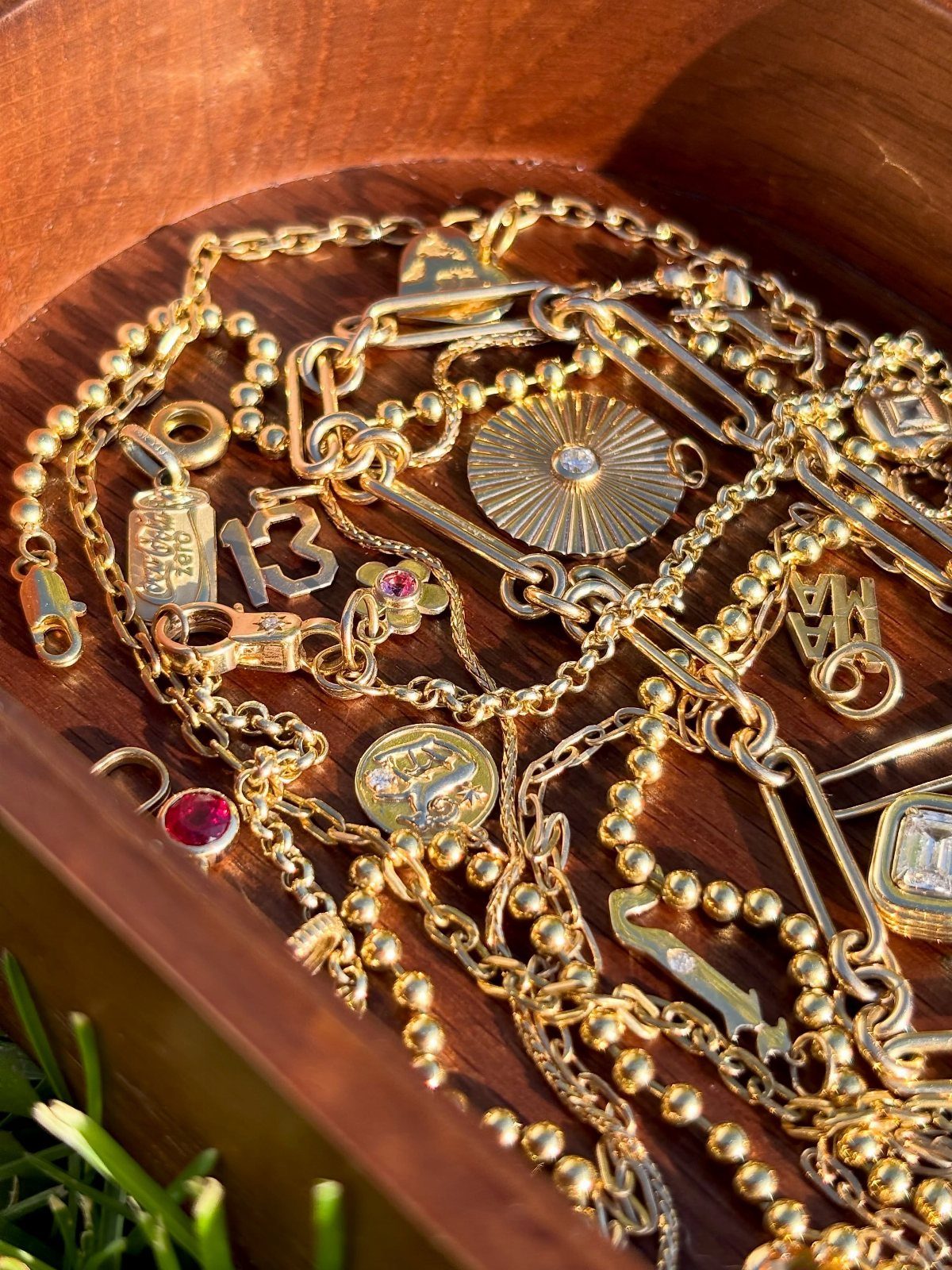
A bowl of mixed gold chains and charms only reads as a collection if the metal color holds steady across all of it.
I sort my pieces by undertone: warm yellow gold, cooler green-gold, or the near-neutral of 14K balanced alloy. Wearing two tones together, I find one always looks slightly off, like a shadow on the wrong side.
Rose gold is the exception that proves the rule; its copper warmth sits apart and I treat it as its own category, not a bridge between yellow and white.
Mixing deliberately with 2 clear tones beats accidentally pairing near-matches that read as mistake.
The test is indoor evening light, where subtle differences show most honestly.
19. Mixed Textured and Simpler Gold Jewelry
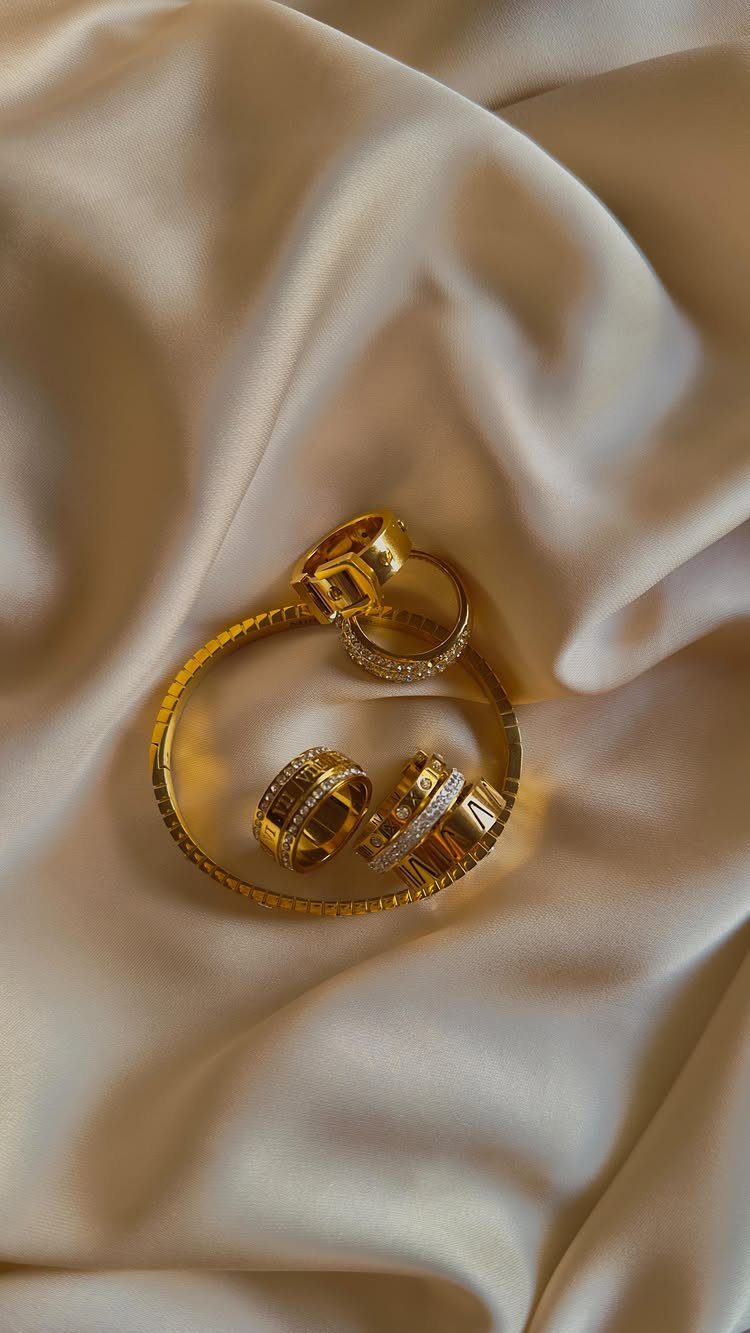
A hammered bangle paired with smooth rings and a clean earring shape lets each finish do its own work. The texture draws first glance; the plain pieces give the eye somewhere to rest.
I keep the metal tone identical across all of them, since texture already provides enough variation. Two textured pieces together compete; one textured anchor with simpler satellites reads as intentional.
The satin surface underneath the arrangement matters.
Soft fabric lets the gold read warm; rough linen would push the same pieces toward rustic. I choose my display surface before I decide which pieces belong in the stack.
Frequently Asked Questions
What are the names of different types of gold jewelry?
The styles I cover include simple studs, chunky chain necklaces, wide cuff bracelets, filigree pieces, layered chains, stacked rings, ear parties with multiple piercings, hammered finishes, twisted rope designs, sculptural organic shapes, oversized hoops, cocktail rings, delicate single chains, thin signet rings, coin and medallion pendants, and antique-style engraved lockets.
Each type serves a different placement on the body and a different level of formality, from the whisper-thin chain that nearly disappears to the architectural statement of a large hoop.
Is gold jewelry still in style?
Gold jewelry remains current because it adapts to whatever scale and texture the moment favors. Gold jewelry runs from barely-there delicate chains to oversized hoops, and all of it stays in active use.
I judge a piece’s relevance by whether the metal tone stays consistent with the wearer’s collection and whether the finish, polished or hammered or filigree, matches the occasion; those criteria have outlasted decades of trend cycles.