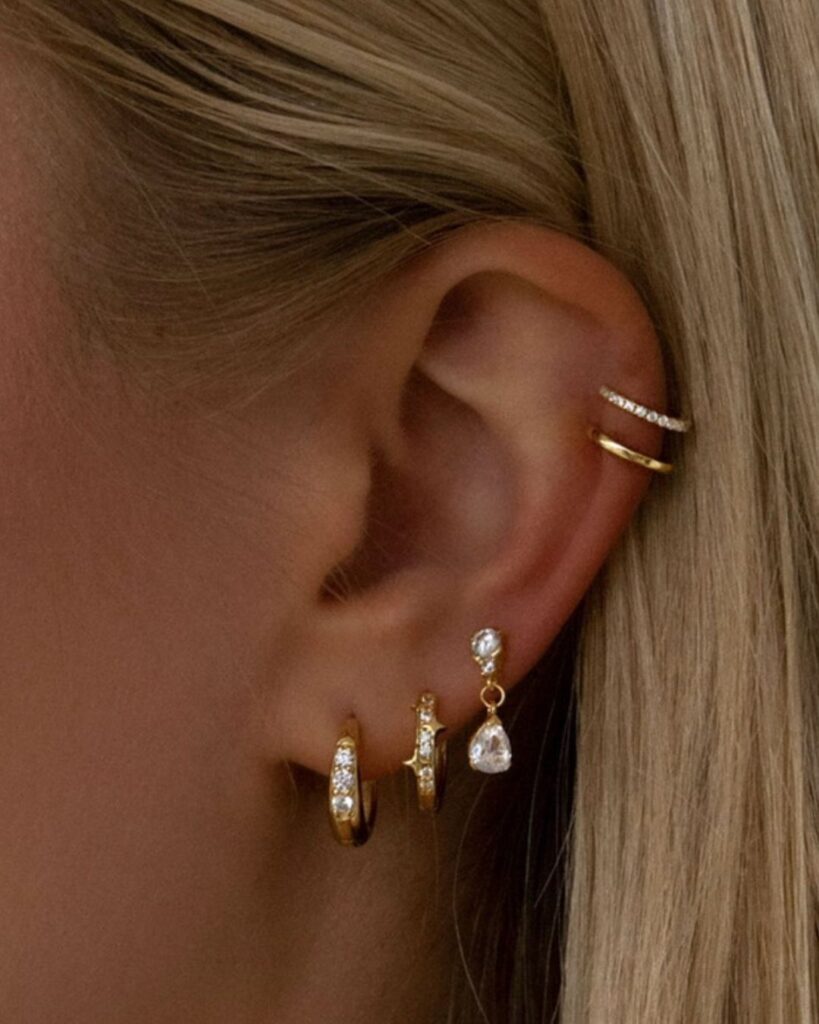
Every stack needs one earring that calls the shots on metal, size, and overall feel, usually the biggest or busiest piece in the lineup.
The arrangements below start at a quiet pair of studs and run to full ear curves, with setups that work for two piercings and others that need four or more to hold their shape.
How many holes you have shapes what you can build: ear cuffs work without any piercing, while multiple lobes let you run chains between separate studs so they read as one continuous piece.
1. Layering Hoops and Studs
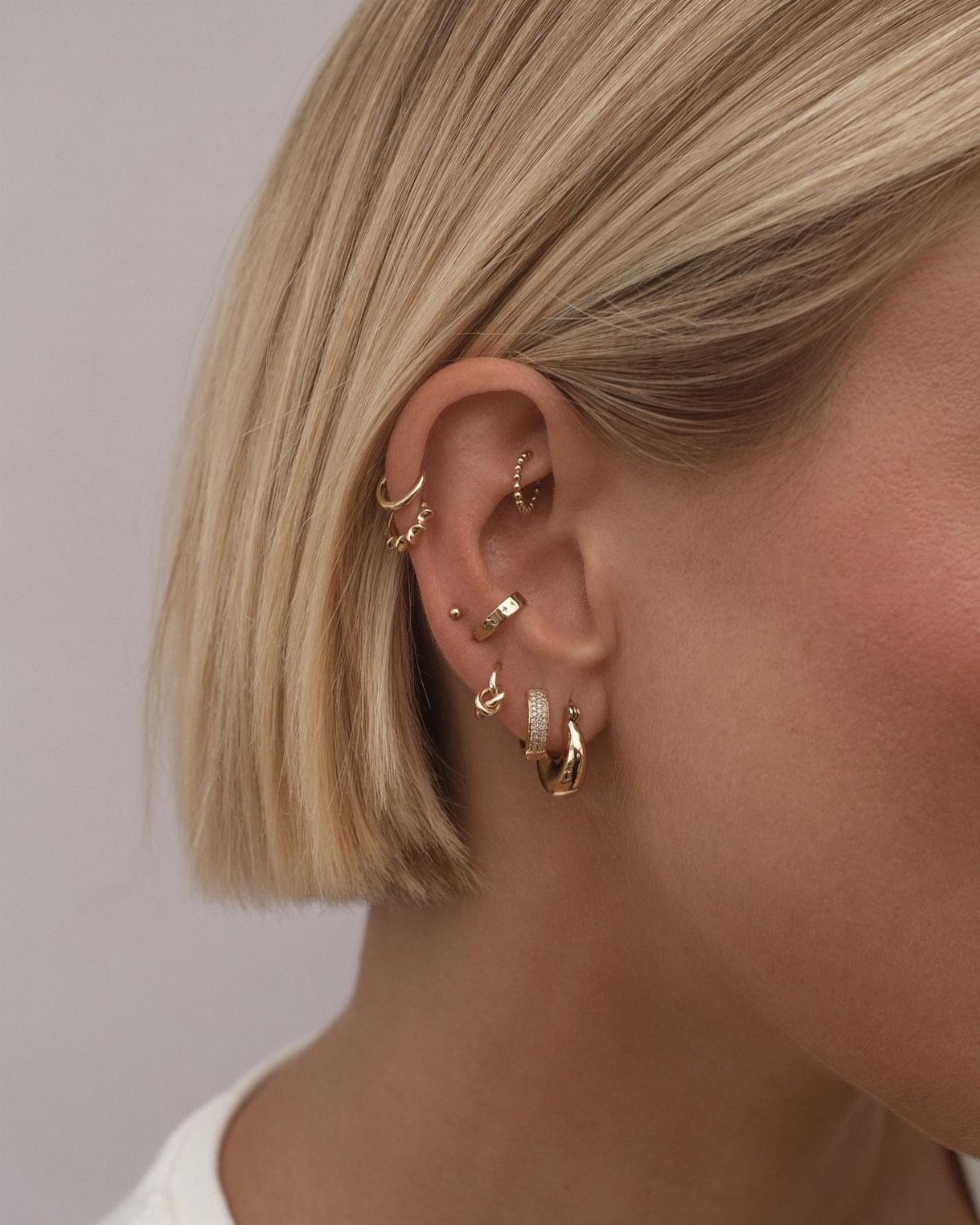
Gold hoops in graduated sizes sit alongside simple studs to build depth without crowding the ear.
I like starting with the largest hoop in the first piercing and graduating smaller moving outward, letting each piece breathe while still reading as one intentional stack. The mix of curves and points keeps the eye moving.
2. Ear Cuffs
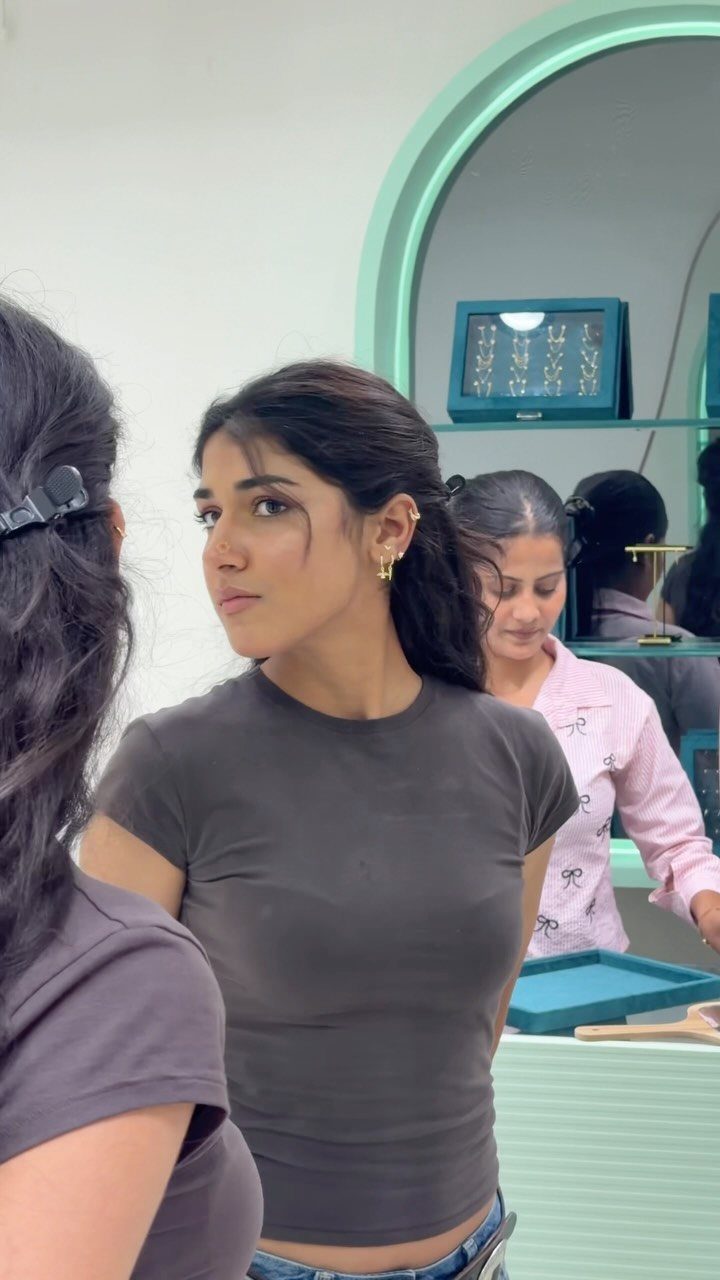
No extra piercing required. An ear cuff grips the upper cartilage and creates the illusion of a stacked look for anyone hesitant to commit to more holes.
Position it to catch light differently from your lobes; the contrast in placement does more visual work than any single piece alone. I find they stay put best on the outer rim rather than tucked deep into the fold.
3. Simple Stack
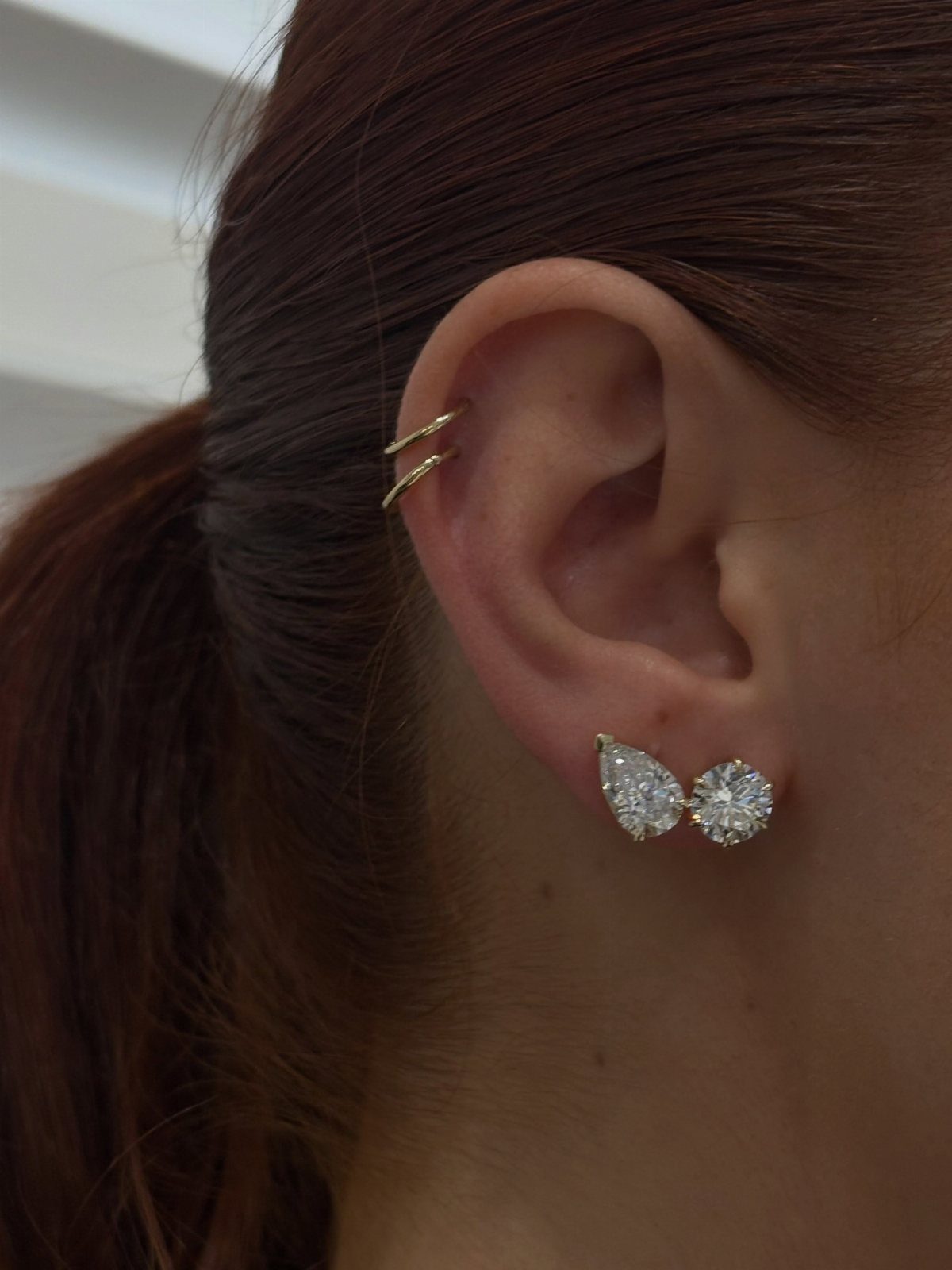
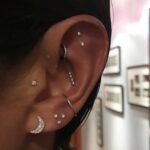
Two cartilage rings paired with two diamond studs make an everyday configuration that does not demand attention.
The rings add structure, the studs add pinpoint light, and together they read as finished without effort. This is the stack I reach for when my outfit already carries enough interest and I want my jewelry to keep quiet company.
4. Special Occasion Earring Stack
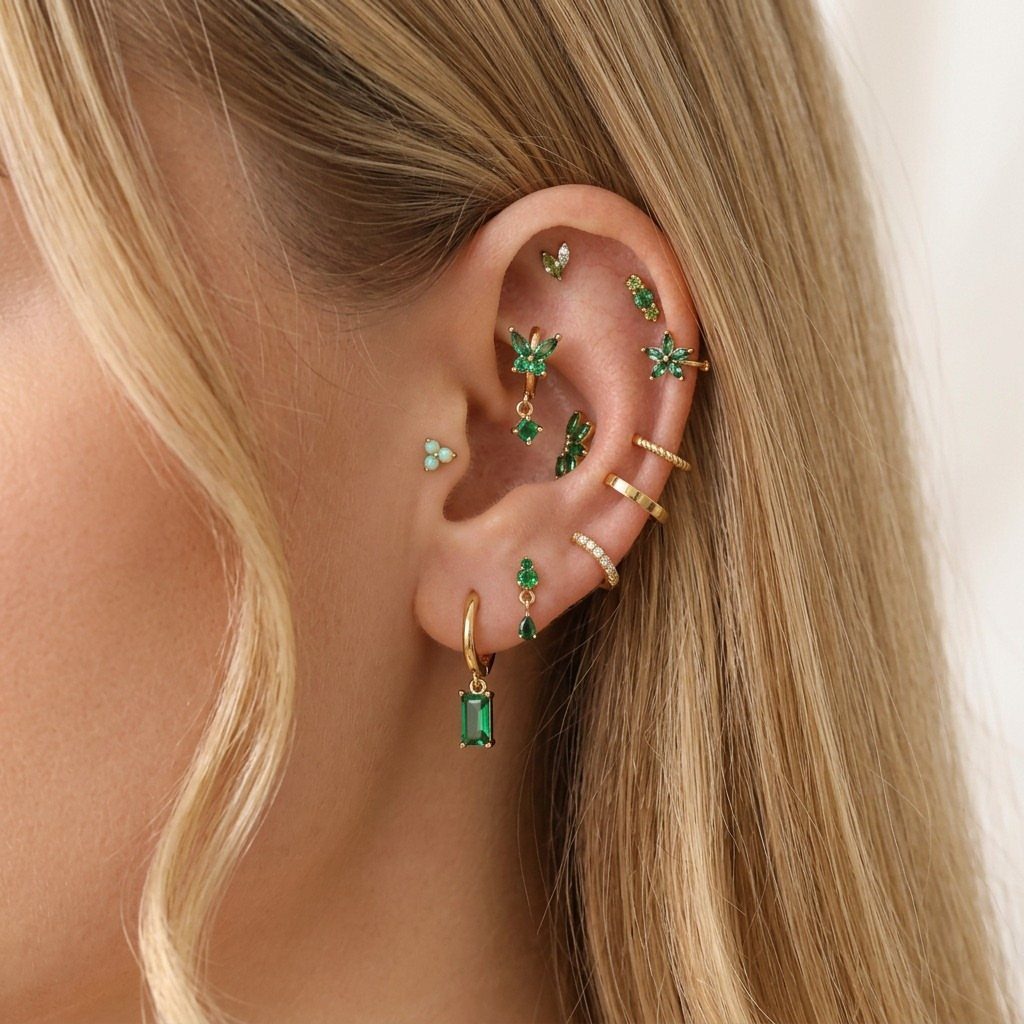
For an event stack, I keep metals consistent, gold here, and let the stones carry the color story so the overall look coordinates rather than competes with a necklace or bracelet.
The butterfly adds a touch of movement that photographs well from the side.
5. Cascading Earrings Stack
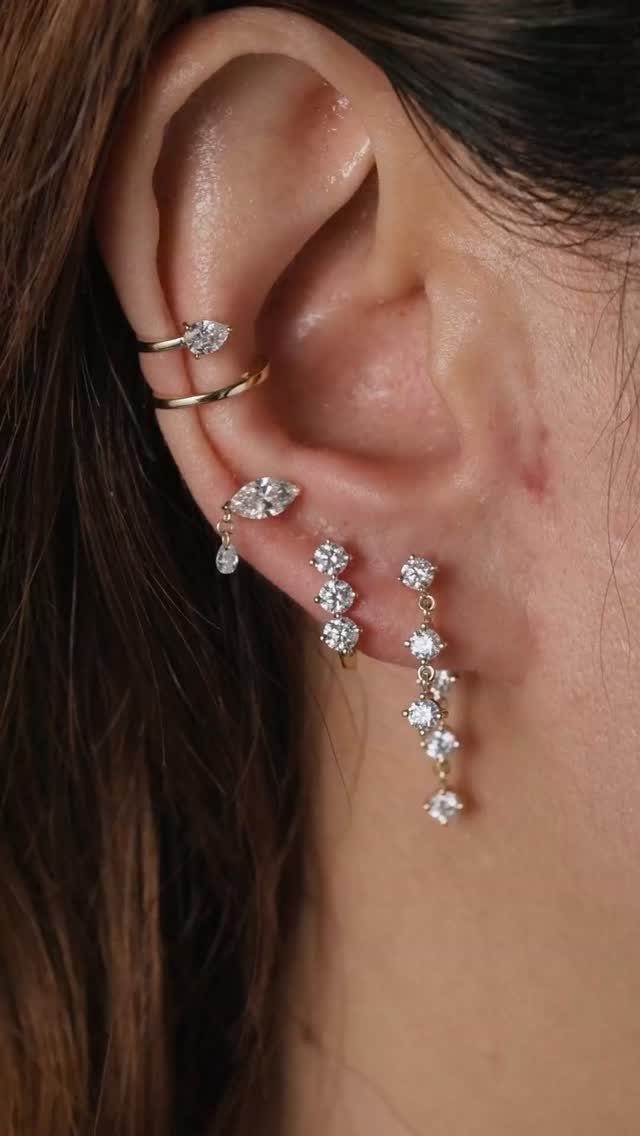
Varying lengths draw the eye downward along the ear’s natural curve. A helix cuff anchors the top while 3 descending pieces, stud to drop, create vertical rhythm.
I find this shape especially flattering when hair is pulled back, since the cascade needs room to read as a single gesture rather than isolated dots.
6. Bold and Delicate Jewelry Stack
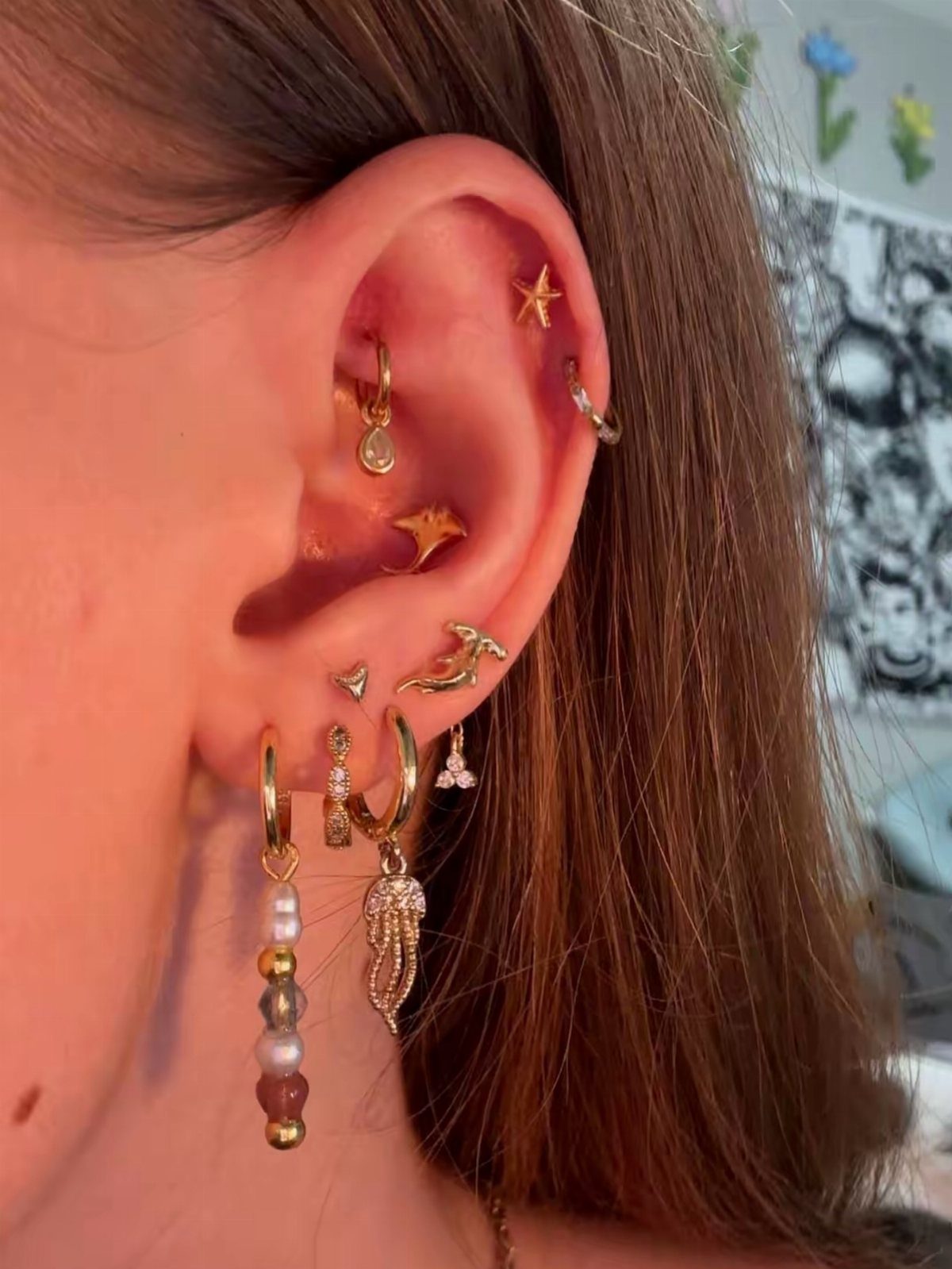
Mixing bold shapes with delicate charms works when the finish unifies; otherwise the delicate pieces disappear and the bold ones look accidental.
I would not add a fourth piece here. The three already negotiate enough territory, and stopping at the edge of too much is what makes this feel considered rather than accumulated.
7. Geometric Stack
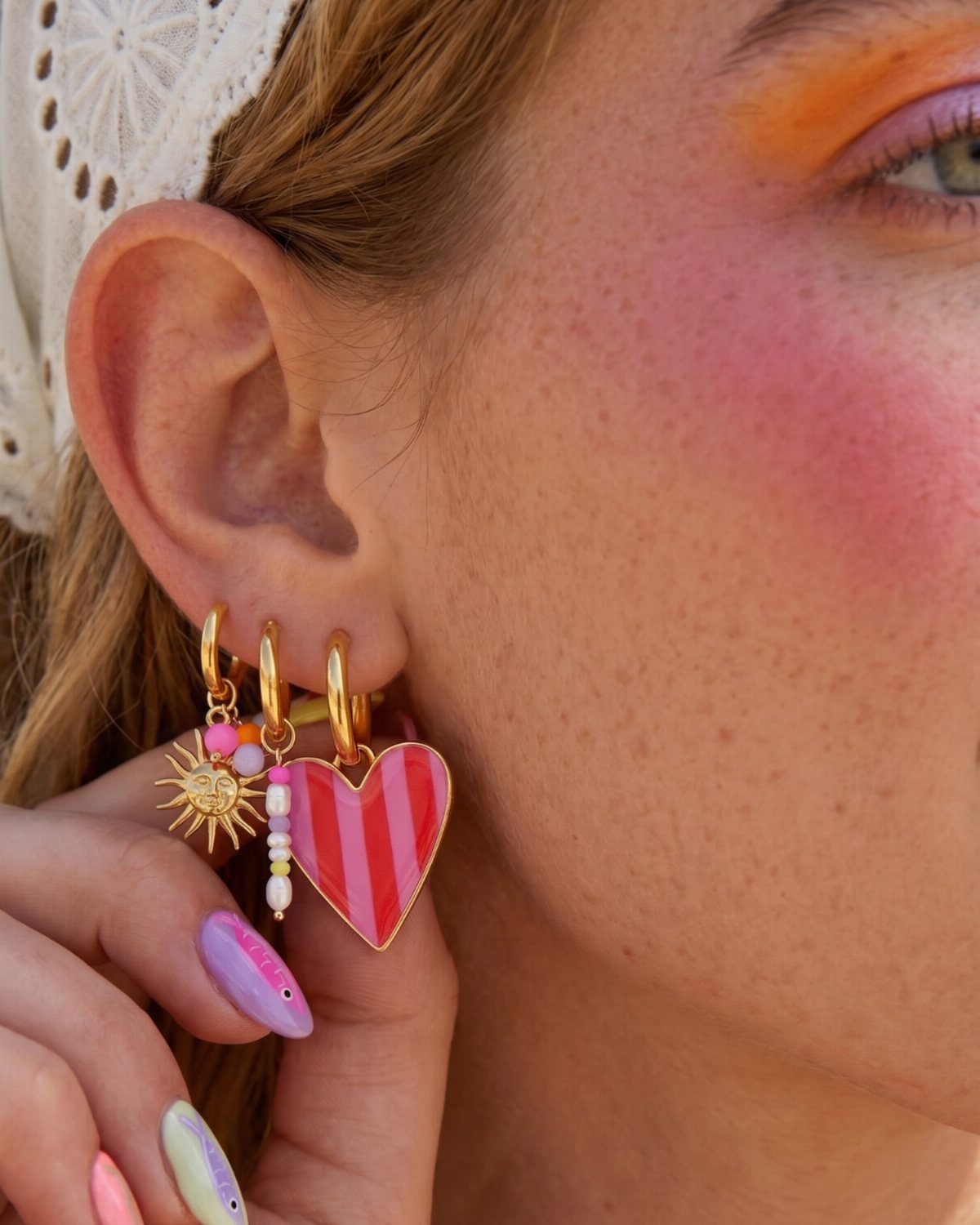
3 distinct shapes, sun, line, heart, give the ear a playful geometry that reads as collected over time rather than bought as a set.
I like this approach for anyone who already owns single earrings with character and wants to wear them together without matching. The shared gold finish is what keeps sunbeams and stripes from arguing.
Stick to one metal family and let the shapes do the talking. Two geometries is safe; three is the edge of busy, which is exactly where this stack lives.
When in doubt, you can always try the “3/2” rule: three earrings in one ear, two in the other. It’s an easy way to keep your stack balanced and intentional.
8. Chain Connected Earring Stack
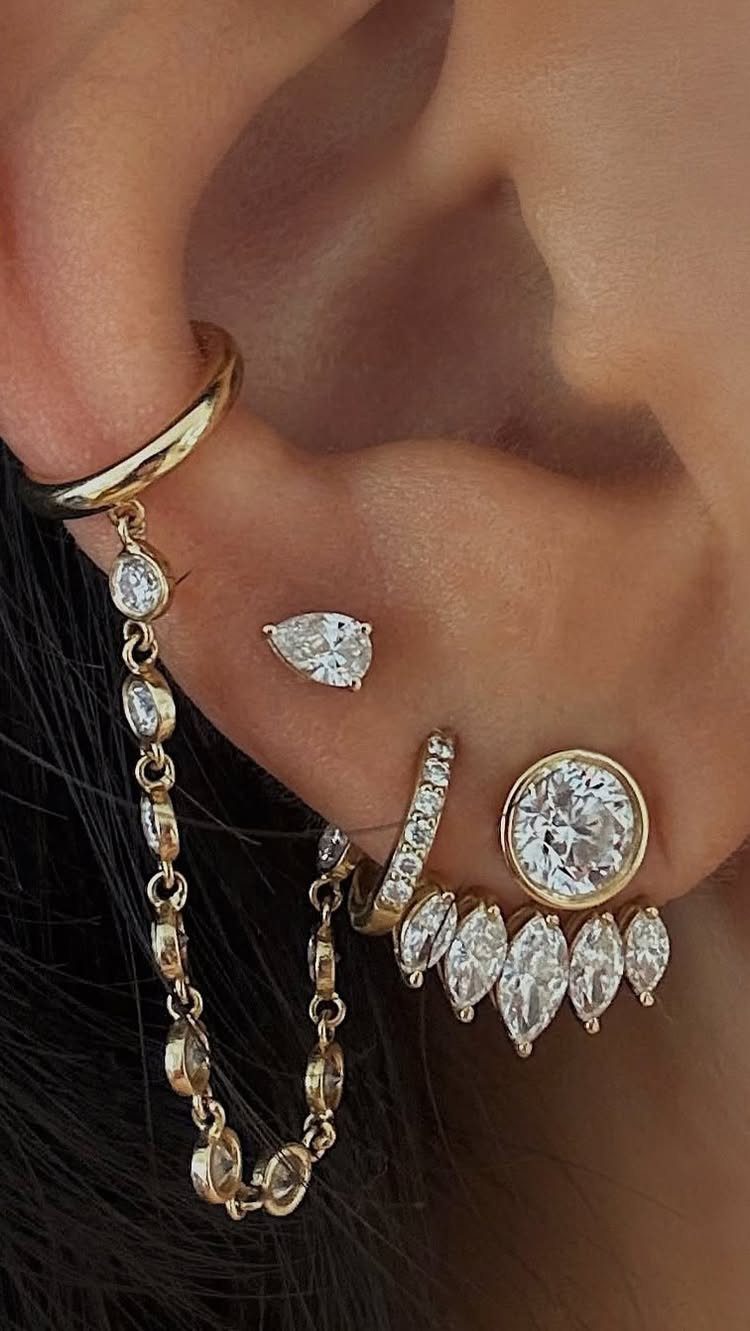
Fine chains draped between piercings turn separate studs into one continuous piece, a look that reads far more engineered than standard stacking.
I find it works best with at least three holes; two studs linked by a single chain can look like a repair rather than a choice.
The diamonds here catch light at each anchor point, so the chain itself stays subtle while the structure gets the attention.
Position the shortest chain at the top, letting longer ones fall naturally. Check that the clasps or loops do not pull; tension distorts the ear over hours.
9. Mixed Metal Gemstone Charms
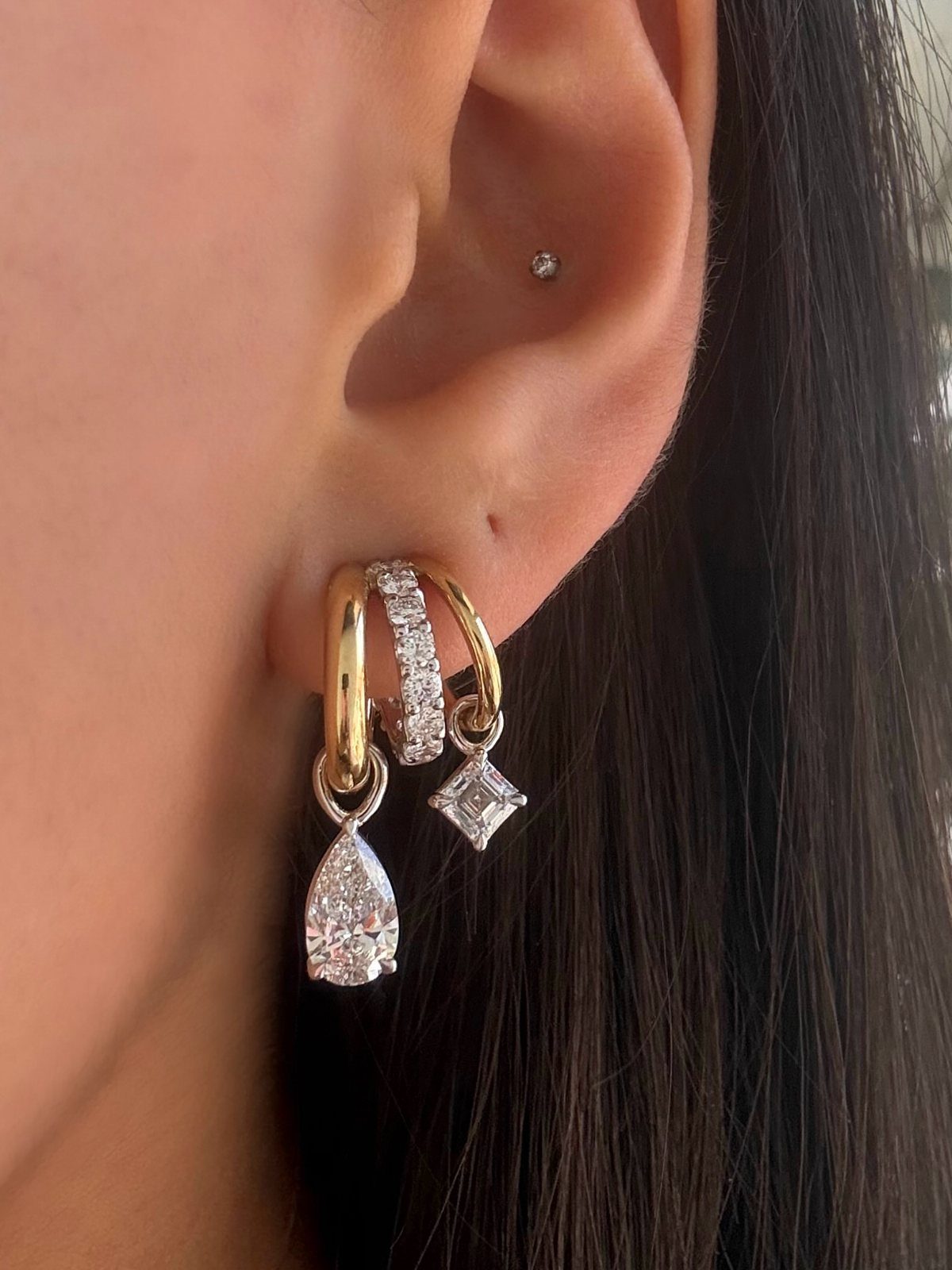
Gold and silver together used to be a rule broken; now it reads as deliberate, especially when the stones bridge the two.
Pear and square cuts, both geometric, keep the mix from feeling accidental. I would add the upper stud only after the hoops are placed; its placement changes whether the stack reads as ascending or scattered.
Huggie hoops are the right base here. Their close fit leaves room for dangling charms without snagging, and the small diameter keeps the metal ratio balanced between gold and silver rather than letting one dominate.
10. Monochromatic Teardrop Studs
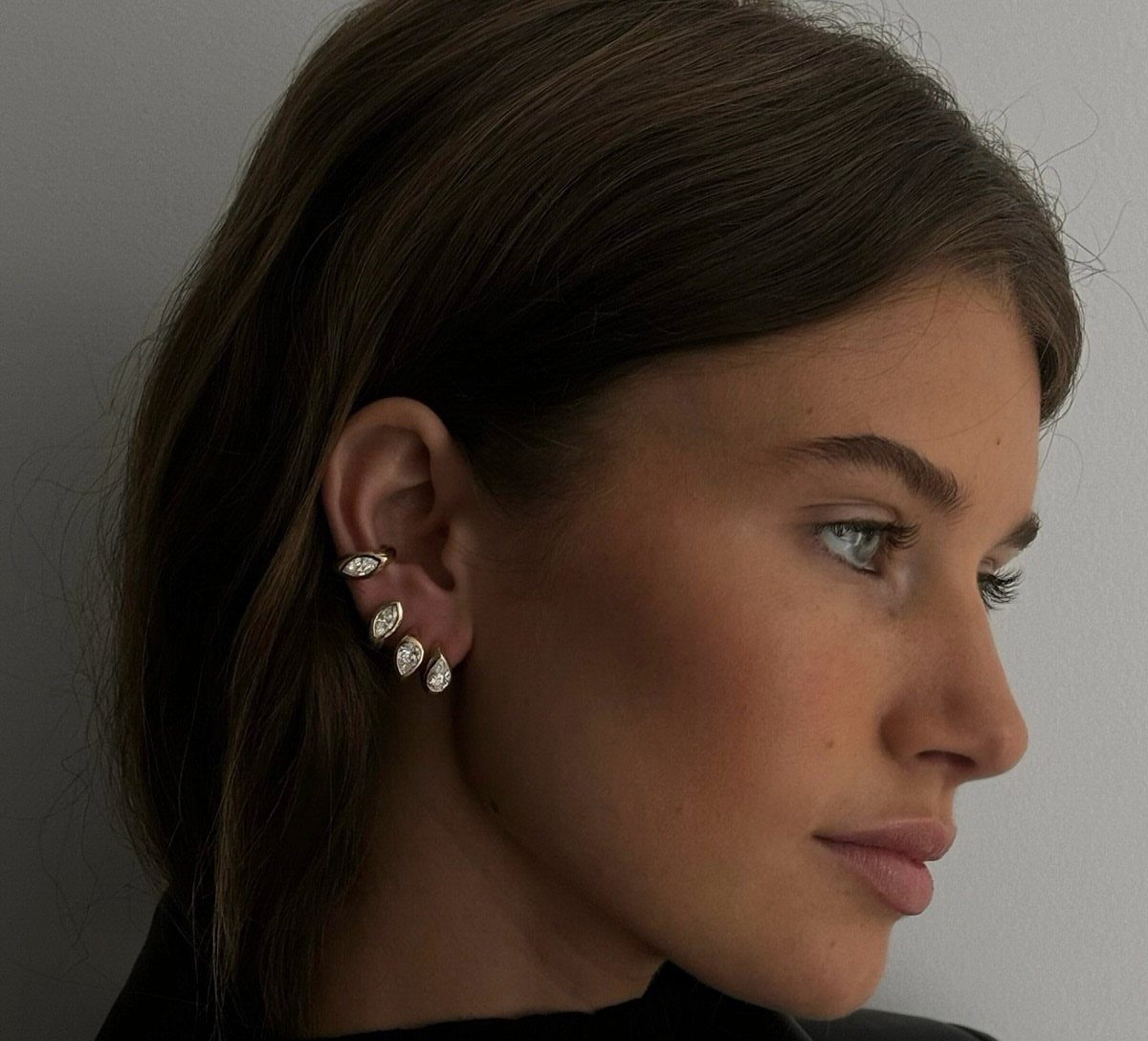
3 identical studs in a vertical line is the simplest stack to execute and the hardest to make interesting. The teardrop shape saves it; the slight point gives each stud direction, so the repetition reads as rhythm rather than redundancy.
I place the largest at the bottom, where the lobe flesh supports it, and scale down as I move up.
This is the stack for days when you want the stones, not the styling, to carry the look. No thinking required after the initial placement.
11. Sculptural Spiral Ear Stack
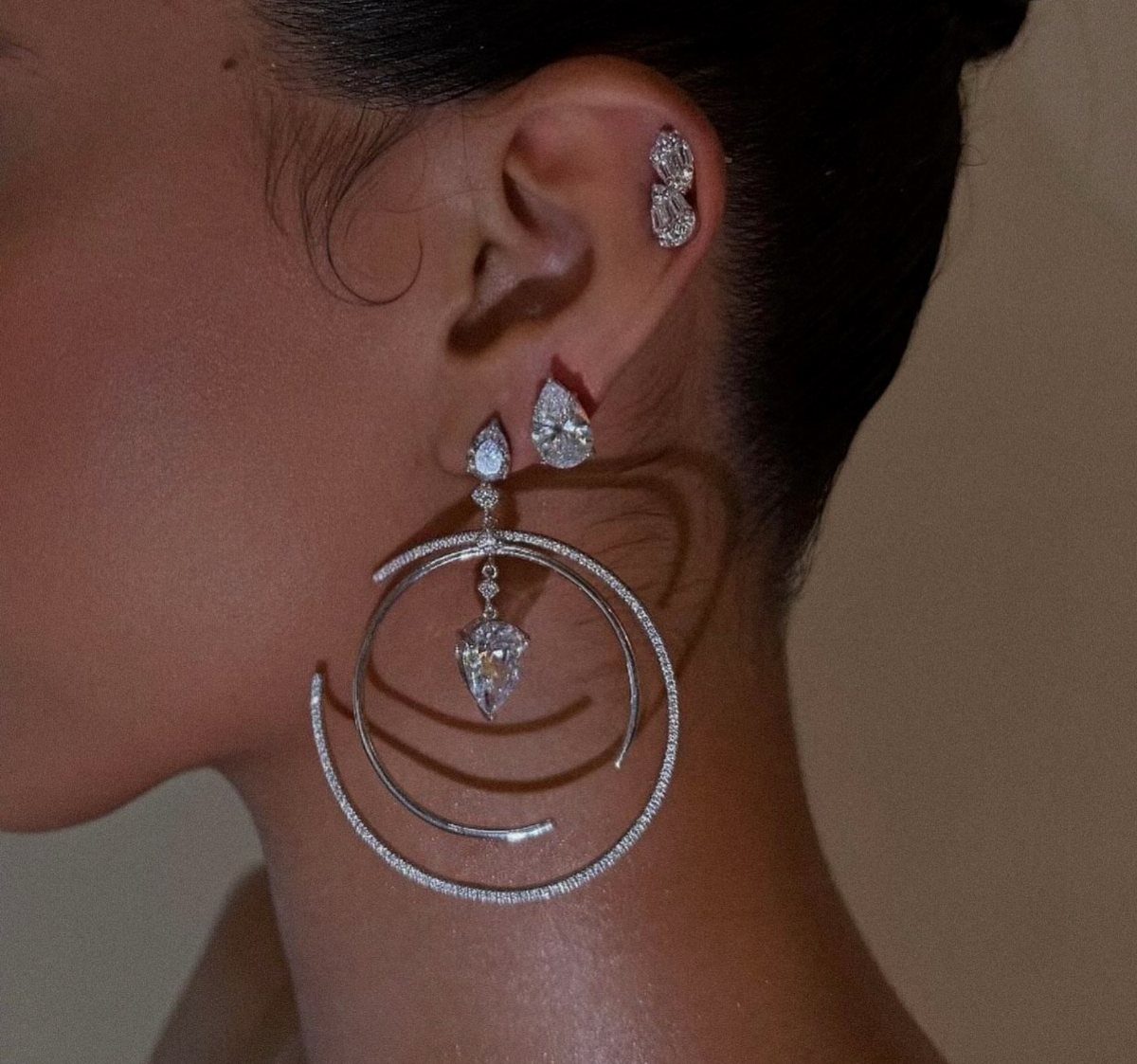
One large spiral drop defines the whole ear, with diamond studs playing supporting roles that keep the focus on the single dramatic shape.
I would not add color here; the spiral already carries enough movement, and competing hues would fracture the eye’s path. The silver tone reads cooler than gold would, which suits the architectural quality of the form.
Studs should sit high and tight, nearly flush, so they read as punctuation rather than competing sentences. The spiral needs room to turn; check mirror images from both sides before leaving the house.
12. Colorful Gemstone Statement Drops
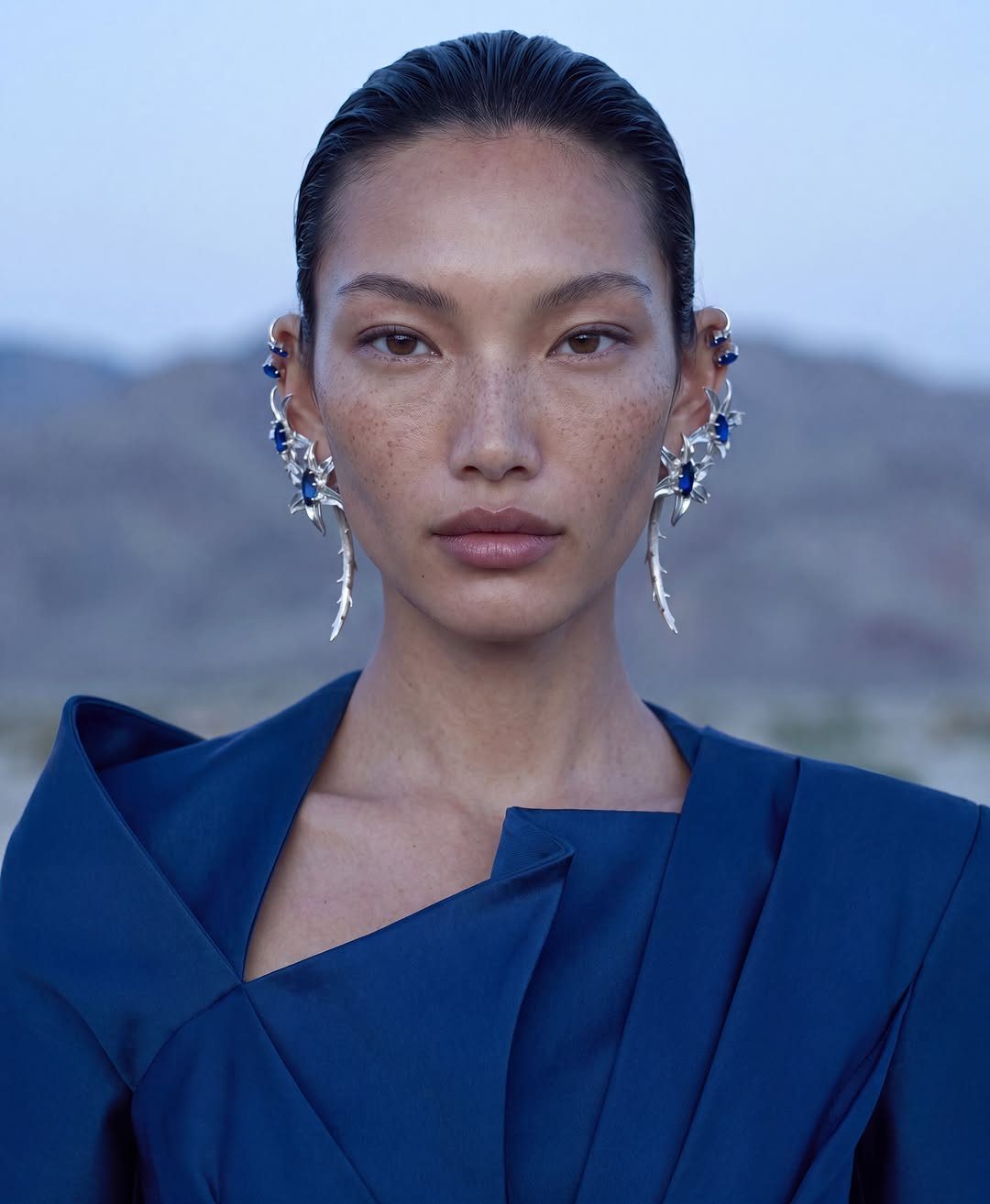
Curved silver drops with blue stones use color as the organizing principle, echoed by the garment choice so the ear does not float in isolation.
I find this level of coordination works for photographed events more than everyday; the match between earring and outfit can feel costumed under office fluorescent light. The scale demands attention, so hair up or pulled back is non-negotiable.
For a version that travels better, smaller drops in the same stone keep the color story without the weight. The curved line flatters most face shapes; straight drops can read severe by comparison.
Earring Types for Stacking
Studs are the workhorse of any stack, small enough for second or third piercings and comfortable enough to sleep in. I keep a rotation of 14k gold pairs for this reason; they pair with anything and never irritate.
Hoops and huggies add the curve that studs cannot. A small huggie sits close to the lobe, lighter than it looks, and catches light without swinging into your phone or mask strap.
Dangling earrings belong lower in the stack, where they have room to move without tangling with cartilage pieces.
Ear cuffs suit anyone still deciding on more piercings. They grip the outer rim best, as I noted earlier, and require no healing time.
For cartilage specifically, barbells and flat backs lie flush against the skin. They do not snag on hair or helmets the way butterfly backs can, and they stay put through workouts and sleep.
Charm hoops split the difference between plain hoops and full drops. The charm adds personality without the weight of a dangle, though I check that the attachment point is soldered closed, not just looped.
Choosing a Focal Point
One piece has to lead. I choose the largest or most detailed earring first, everything else arranges itself around it.
The anchor sets the metal, the scale, and the mood. A gold huggie carries a different visual weight than a diamond stud of the same diameter, so I treat them as separate categories when I plan a stack.
I place it where the eye lands naturally, usually the lowest lobe piercing, then build upward with smaller supporters.
Diamond studs, climbers, and pierced ear cuffs all work above the anchor if they stay quieter than it.
The mistake I see is matching scale; 2 pieces of equal weight cancel each other out. Hierarchy is what makes the stack read as intentional.
I repeat one element through the whole ear, a metal, a shape, a stone type. Without that thread, even expensive pieces look like they fell out of different jewelry boxes.
Before I leave the house, I check spacing in a hand mirror from both sides.
Each piece needs to read alone and as part of the group. If two blur together, I remove one.
Earring Care Tips
I clean stacked earrings more often than singles, since they sit closer together and trap more skin oil and hair product. A gentle jewelry cleaner and soft brush reach the backs and between links where cloth cannot.
Storage matters as much as cleaning. I use dry, airtight containers with separate compartments; chains left in a pile will kink, and 14k gold against silver can leave transfer marks over months.
I begin with a minimal base and add only when the current stack feels like nothing, not when I feel like shopping. Intention beats quantity.
Mismatched earrings work if the mismatch is purposeful. All 14k gold, or all diamond accents, gives the ear a unifying rule so the shapes can differ.
I do not match both ears unless the occasion calls for it. Symmetry feels formal; deliberate imbalance feels modern, but only if each ear was composed with the same care.
If a stack starts to pull or itch, I take out the heaviest piece first and see if the rest can stay. Comfort is the final test of whether a stack succeeds.
Frequently Asked Questions
What is the 2/3 earring rule?
The 2/3 earring rule means covering roughly two-thirds of the ear with simple pieces and leaving one-third for something that stands out, which keeps the stack balanced without going cluttered.
A medium hoop, a diamond stud, and a thin ear cuff together have more movement than 2 matching pairs ever could; the odd count keeps your eye traveling.
What are the best earrings to stack?
Studs, hoops, huggies, and ear cuffs are the most versatile for building stacks.
Hoops and huggies add curves that studs cannot, while huggies sit close to the lobe without swinging into phone cords or mask straps. Ear cuffs suit anyone who wants the stacked look without committing to more holes.
Can I mix metals in my earring stack?
Yes, though I find it works best when the stones or shapes bridge the 2 metals so the mix reads deliberate rather than accidental.
Gold and silver together now read as intentional, especially with pear and square cuts that tie the palette together.
Huggie hoops make a good base for mixed metal stacks because their close fit keeps the metal ratio balanced rather than letting one tone dominate.