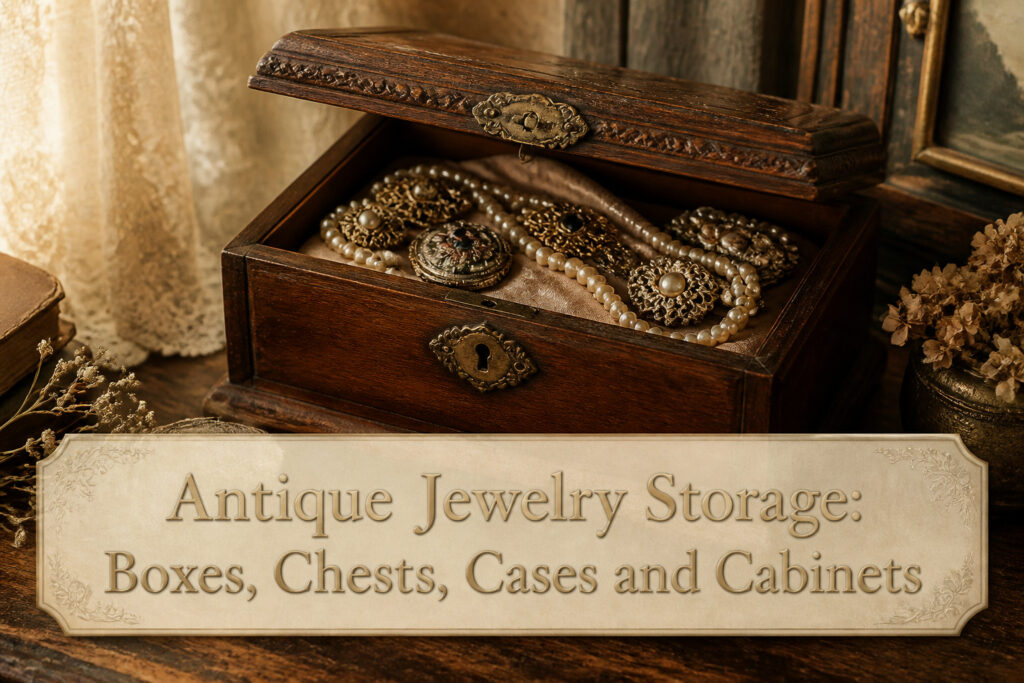
Antique jewelry storage means boxes, chests, cases, and cabinets built specifically to protect pieces that outlast their original owners by decades or centuries.
The catch is that what looks beautiful can quietly damage what it holds; unfinished wood releases acids that darken silver over years, and glass cases without airflow trap moisture against metal.
A Tiffany blue box from 1886, originally given free with a purchase, now sells for £50–£100 because buyers want the story the provenance tells.
Jewelry Boxes

A mid-century onyx box, made in Italy during the 1960s, measures 5.31 x 3.93 x 1.93 inches and sits on a vanity like a small stone sculpture.
The weight and coolness of onyx suit rings and cufflinks, though the shallow lid leaves no room for taller pieces.
Charles Lewis Tiffany introduced his now-famous blue box in 1886, originally sized for the Tiffany Setting Engagement Ring.
He refused to sell the boxes separately; by 1906 he was telling The New York Sun he’d give one free to any customer who chose a design to put inside.
The color alone, officially known as Tiffany Blue, became recognisable without any logo at all.
Georgian ring boxes, coated in Moroccan leather and tooled and gilded over wood, still survive after two centuries. These mini treasure chests outlast the mass-produced cardboard of today by design, not accident.
Demand for original boxes has climbed sharply in the last decade, tracking the rise of one-of-a-kind jewellery and online selling.
Antique jewellery boxes now fetch £50–£100 each, a price that would have seemed unlikely fifteen years ago when dealers often gave them away.
The engraved initials and stamped silk interiors help trace a piece to its original owner and retailer, which matters more to buyers now than simple storage ever did.

Size: 7" W x 2" D x 9" H
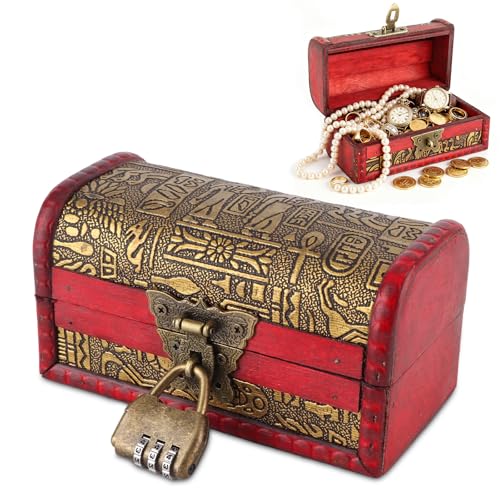
VINTAGE, HANDMADE: The mini wooden box is made by hand, and the surface is treated with a special old-fashioned process. Retro European style design, with Egypt patterns, more mysterious.
Jewelry Chests

Jewelry chests are where you land when a single box stops being enough.
The Chinese Vintage Carved Teak Tabletop Jewelry or Bath Cabinet, priced at $495, sits at the higher end of what you will find, but that money buys you compartments for rings, necklaces, and the pieces that tangle if they touch.
Wood dominates these larger pieces for good reason. Teak, rosewood, and oak all show up repeatedly, and each carries weight that keeps the chest from sliding when you pull a drawer.
A Victorian Antique Jewelry or Keepsake Chest with nickel mounts runs $495 as well, so the price point is not exotic, it is the entry fee for solid construction.
The carved and inlaid surfaces matter more here than on small boxes because a chest lives on a dresser or vanity where you see it daily.
An Art Deco Vintage Oak Jewelry Armoire Chest with swing-out doors at $475 offers a different play, doors that open to reveal tiered storage rather than drawers you stack. That choice between drawers and doors is the first thing to settle.
Drawers hide dust better. Doors let you scan everything at once.

HANDCARVED FLORAL DESIGN - Features detailed floral hand carving that gives this wooden jewellery box a decorative and traditional look. Each piece is handcrafted, making it suitable for display on a dresser, shelf, or bedside table.

Size (Inches): 8" x 5" x 3" ,Size (CM): 20.32cm x 12.7cm x 7.62cm This is a Handmade item and slightly variation can be found. Each piece will remail unique. In fact this is the actual beauty of these products.

ABOUT WOOD: Crafted with high-quality Indian Rosewood, also known as Sheesham wood, and adorned with Indian Traditional Carving. Our artist have tried their best to make this wooden box a true masterpiece that exudes elegance and sophistication. FORESTIS GALLINARIA never uses pre-mature Sheesham wood for manufacturing this travel wooden jewelry box. We always use fully mature and seasoned Sheesham wood so that our customers could enjoy the clarity of the completely developed fine grooves which are clearly visible on this original wooden box. Stage-based quality check prevents this organizer from warping and joint-dislocation.
Display Cases

Glass changes everything about how antique jewelry lives in a room.
A transparent case lets light pass through and hit the stones and metalwork the way a drawer never would, which matters when the piece was made to catch candlelight or gaslight.
The tradeoff is real: glass blocks air circulation more than an open velvet tray, so silica gel or a small dehumidifier becomes necessary inside the case or the climate control fights you.
What convinced me, reading through a dozen of these setups, is that UV-filtering glass pays for itself if you are displaying anything with pearls, opals, or shell cameos. Standard window glass does not stop the wavelengths that fade and dry.
The best balance I have seen is a case with glass on three sides and a solid back panel you can line with acid-free felt; you get the stage effect without turning the piece into a greenhouse.
The humidity question is where most people trip. Glass seals well enough that the interior becomes its own microclimate.
A small digital hygrometer inside the case, checked every few weeks, tells you whether you need to add or remove a desiccant pack. Skip that step and the visibility you bought becomes the problem that traps moisture against the metal.

PIRATE TREASURE CHEST FOR KIDS: Immerse your children in the world of pirate adventures with this captivating pirate treasure chest, bring lots of fun for kids playtime, great pirate treasure chest box for kids children girls boys prizes.

★Product Info -Dimensions(LxWxH): 10" x 6.7" x 6.5"/25.6 x 17 x 16.5cm. It is perfectly sized to sit on your dresser without without taking up too much space.Packing included: 1 x Wooden Treasure Chest Box (Accessories are not included.Please pay attention to the size before purchasing)

Product Info -Size (L*W*H) 7.3"x 5.1"x 2.4",Please pay attention to the size before purchase (Jewelry are not included)
Travel Cases
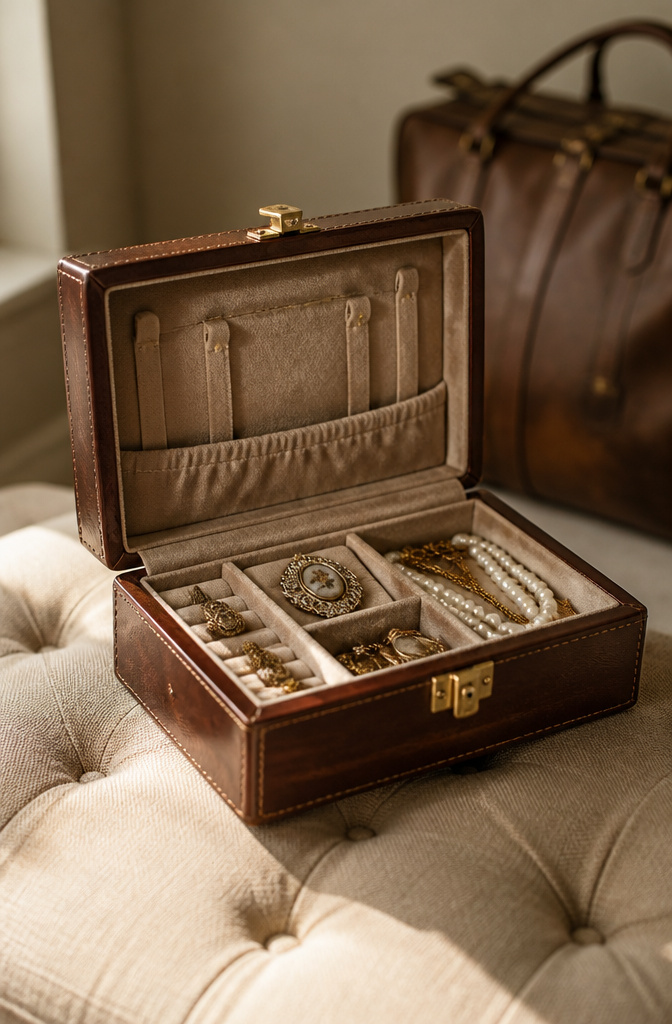
A travel case for antique jewelry sits in a different category from the box that lives on your dresser.
The whole point is movement: the lining has to stay put when the case tilts in an overhead bin, and the closures need to survive jostling in a car trunk. Stationary storage can afford a little give.
A travel case cannot.
What separates a usable travel case from a jewelry roll that will tangle everything by hour three is rigid internal structure. Soft pouches collapse; that collapse lets a brooch pin work itself into a necklace chain.
The antique pieces I would not trust to anything without a solid frame are the ones with fragile settings or dangling elements that swing.
Compact sizing here is a tradeoff, not a virtue on its own. A case too small forces stacking, and stacking means friction.
Friction is how gilt wears off and how stones loosen in their mounts. The right case leaves each piece breathing room without letting it slide.
When this becomes necessary depends on the jewelry, not the trip length. A single Victorian mourning brooch carried to an appraiser needs the same protection as a full collection driven across three states.
The mistake is assuming short distance equals low risk. Most damage I have read about happened in the last mile: the cab ride, the hotel elevator, the handoff to a hotel safe that turned out to be full.

[All-In-One Solution] This versatile unit combines a full-length mirror, jewelry organizer,bottom drawer and storage rack into one sleek piece. It's the ultimate solution for eliminating clutter and meeting your ever-growing organizational needs.

[Large Storage Capacity]: With 120 earring slots, 36 earring holes, 98 ring slots, 36 necklace hooks, 5 storage shelves, 2 drawers, 1 bracelet rod and 1 pouch for cosmetic brush, this jewelry armoire will keep all your jewelry organized.

Top Flip Mirror & Multi-Compartment Organizer: Conveniently apply makeup or check your look with the built-in flip-top mirror. Four divided compartments keep rings, bracelets, and small accessories neatly organized for easy access.
Wall-Mounted Cabinets
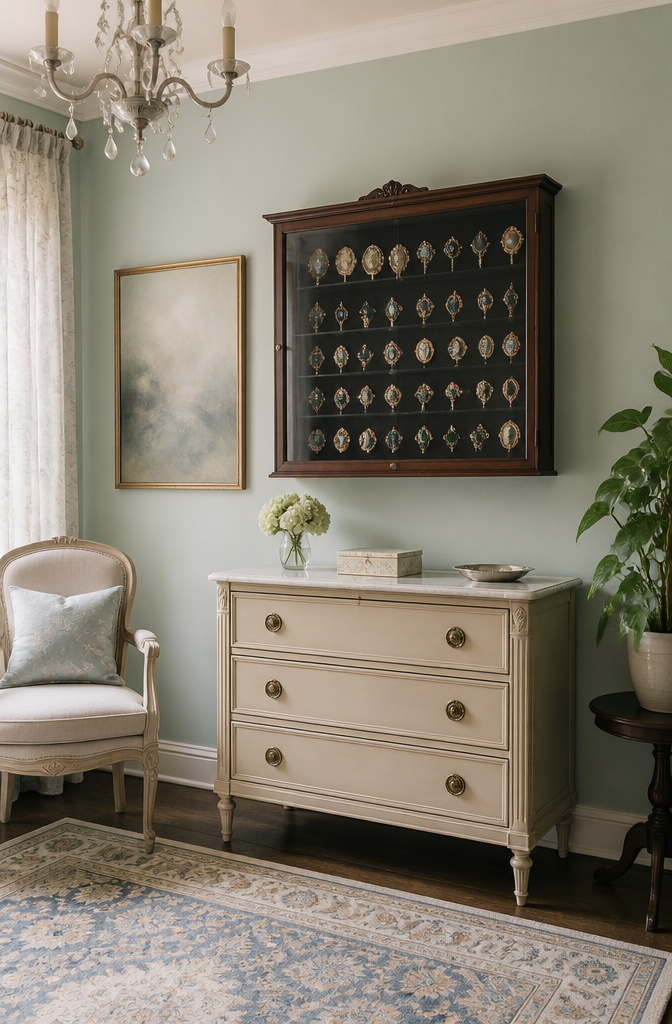
Wall-mounted cabinets turn the vertical space most people ignore into active storage. Unlike boxes that stack and bury pieces, or chests that eat floor space and demand a kneel, a cabinet keeps everything at eye level.
The glass-fronted ones let you scan a collection in seconds without lifting a lid, which matters when you own more than you remember.
What convinced me, reading through a dozen of these setups, is how differently the same capacity feels. A chest holding forty pieces reads as cluttered; a shallow cabinet with the same count reads as curated.
The depth is the trick. Most wall units run six to eight inches deep, so rings and brooches sit in single rows rather than layers.
You see what you have, and you use what you see.
Room integration is where the real split from floor storage happens. A cabinet mounted above a dresser or between windows reads as furniture, not as storage, which matters in small bedrooms where a chest would dominate the corner.
The trade is access: you need wall studs, level mounting, and enough clearance to swing the door.
Renters often skip them for this reason, though a French cleat system removes the damage issue if you are willing to install the bracket pair.

Deluxe Black Leatherette Ring Box

QUALITY MADE - Our ring storage box is made of high-grade microfiber material exterior, and high quality velvet interior, designed to keep your precious rings in perfect condition.

Package Include: You will receive 1 pcs dark green book-shaped ring box, size: 6.7×5.7×3.4cm/2.63×2.24×1.33 inch, inner diameter: 5×3.5cm/1.97×1.38 inch
Choosing by Size and Material

A tabletop box carved from rosewood or teak usually holds twelve to twenty pieces, enough for a modest rotation of rings and small pendants.
Standing chests with swing-out doors, like the Art Deco oak armoire I keep spotting in listings, jump to forty or more slots plus necklace hooks. For collections that outgrow furniture, collector cabinets with mirrored backs become the practical ceiling.
Wood absorbs humidity shifts better than metal, which is why most antique storage leans on mahogany, cedar, or pine. Glass tops let you scan without opening the lid, though they trade that convenience for weight and fragility.
Metal enters mainly as mounts and hinges; the bronze Greek Muses box and the cloisonné enamel pieces use it for show, not structure.
| Storage type | Typical capacity | Primary material | Best for |
|---|---|---|---|
| Tabletop box | 12–20 pieces | Wood (rosewood, teak, pine) | Rings, small pendants |
| Standing chest | 40+ pieces with hooks | Wood (oak, mahogany, cedar) | Mixed jewelry, necklaces |
| Collector cabinet | 60+ pieces | Wood with glass panels | Large collections, display |
| Metal-accented box | 8–15 pieces | Metal with enamel or lacquer | Single statement pieces |
Match the interior to the jewelry, not just the exterior to the room. Pieces with silk or velvet lining, like the pink silk Shanghai dresser chest, protect finishes better than bare wood.
A collection heavy on Victorian silverplate or delicate Limoges porcelain needs individual slots; piled together in a deep box, they scratch.

Size: 1.69*1.69*2.36 inch,fits most box/case triangle edge.

Multi-size compartments with 3 layers. Multitude of storage options made it well organier for the jewellery, bracelets, earrings, necklace, brooch, clips and so on.

Product Infos - Small Size, measures 3.7"L x 2.4"W x 2.7"H. Package included : 1 x Oval Vintage Jewelry Box (Jewelry are not included. )Please pay attention to the dimension on image before purchase and clean the jewelry box with a soft & dry cloth, don't wash velvet lining insid
Materials That Protect
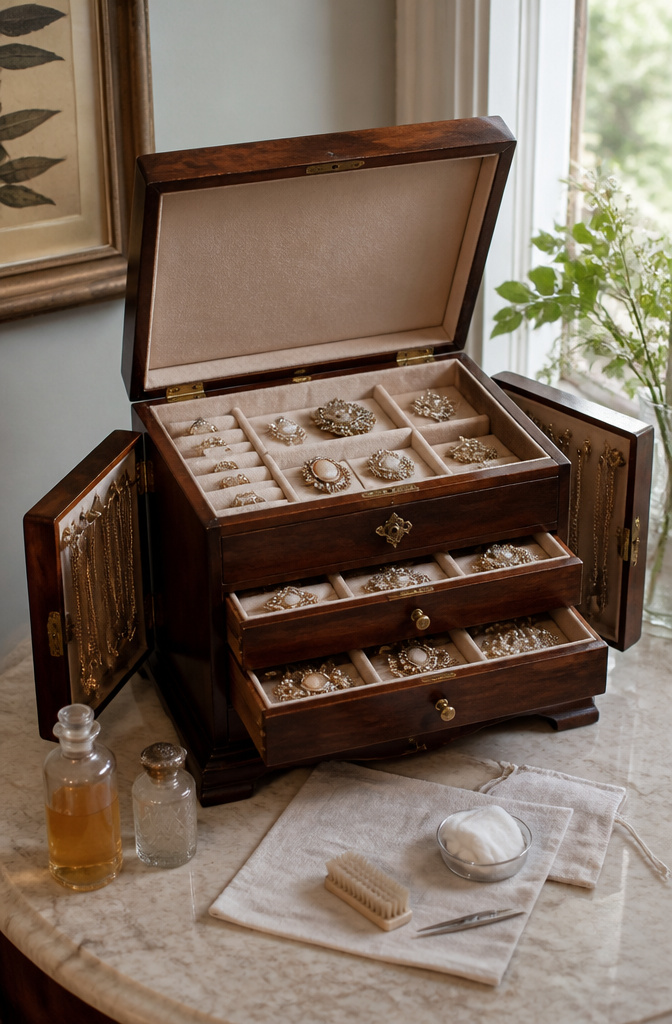
Wood draws most of us toward antique jewelry storage for the same reason it draws us toward antique furniture: it ages well and carries weight without shouting for attention.
What convinced me, reading through a dozen of these builds, is that the interior finish matters more than the exterior grain. Unfinished wood or certain stains release acids over years that will darken silver and pit softer metals.
A cabinet lined with velvet or felt helps, but only if that fabric is itself archival-grade; cheaper synthetics trap moisture and can glue themselves to a brooch’s backplate in humid months.
Glass tops on cases solve one problem and create another. You can spot the piece you want without lifting every lid, which matters when you are handling filigree that has survived two centuries already.
Direct sunlight through that same glass, though, will bleach pearls and heat metal enough to expand settings loose from their stones.
The move is keeping display cases against interior walls and away from windows, or swapping to UV-filtering panels if the room layout leaves no choice.
Metal hardware deserves more suspicion than it usually gets. Brass hinges and iron clasps look period-appropriate and often are original, but they sweat in damp basements.
A silica packet tucked in the corner is not enough; you need airflow or a dehumidifier running in the room if your storage sits below grade.
I would rather store less and store it upstairs than rescue a green-fogged necklace from a beautiful locked chest that turned into a sealed box of swamp air.

HANDCRAFTED DECORATIVE WOODEN BOX - Elegant carved wooden jewelry box made from durable mango wood. A unique keepsake storage solution for trinkets, accessories, or as a decorative wooden gift box for any room.

Product Info: Package includes 1 x rectangular vintage jewelry box (Jewelry are not included.) Measuring 3.5"L x 2.4"W x 1.4"H, please pay attention to the dimension on image before purchase and clean the jewelry box with a soft & dry cloth, don't wash velvet lining inside

【BRASS INLAY FLORAL DESIGN】: The box features a beautiful floral design with brass inlay. The delicate floral patterns are intricately crafted and complemented by the shimmering brass accents, creating a visually captivating piece.
How Storage Changed

Jewelry storage has always tracked what society valued and what materials were on hand. Ancient pieces were kept in whatever sealed the deal: carved stone, woven textile, or simple wood.
The real shift came when boxes became part of the gift itself.
The Tiffany blue box arrived in 1886, created specifically for the Tiffany Setting Engagement Ring. Charles Lewis Tiffany refused to sell the boxes separately; in 1906 he told The New York Sun he would give one away free with any purchase.
The color alone became recognizable without a logo, and that box is now nearly 150 years old as an icon.
Georgian ring boxes, often coated in Moroccan leather with tooled and gilded surfaces over wood, show the same instinct. These pieces were built to last, and they did: over 200 years later, they still function as miniature treasure chests.
Demand for original boxes has jumped sharply in the last decade. Where dealers once gave them away, Georgian examples and other antique boxes now sell for £50–£100 online.
The draw is partly social media’s appetite for individuality, partly the provenance: initials and retailer stamps on silk interiors let owners trace a piece back to its first keeper.
A box that once held a ring now holds a story, and buyers are willing to pay for that.

Product Infos: Package include a Jewelry box measure. It measures 5.6"L x 4.7"W x 3"H. Different from the small size, the large size box is designed with 2 separate compartment for you to storage jewelry. Please pay attention to the size and open way before purchase

Antique Silver jewelry Box With simple Design

MATERIAL-This vintage jewelry box is made of premium zinc alloy with beatiful gold color surface which is long-lasting,anti-oxidize,rustless and it will never fade, long lasting to use
Keeping Pieces Clean in Storage

Moisture is the thing that quietly ruins stored antique jewelry before you notice. Over time, what convinced me, reading through a dozen guides to antique jewelry storage, is that prevention costs almost nothing compared to restoration.
- Wipe each piece with a soft cloth before it goes away. Skin oils and residue from soaps or lotions accelerate tarnish in enclosed spaces.
- Let everything dry completely. A damp piece sealed in a box traps humidity against metal and stones.
- Add something to absorb ambient moisture. Silica gel packets work, though they need replacing once saturated. Plain chalk sticks or pieces of charcoal do the same job more slowly and without the upkeep.
- Separate metals when possible. Silver stored touching gold can leave dark marks that need professional polishing to remove.
- Check stored pieces every few months. Tarnish caught early wipes off; tarnish left alone etches into the surface and changes the piece permanently.

[Specialized Mirror Jewelry Cabinet] You deserve a better jewelry armoire with high quality and optimal structure for long-term usage. Each part of the design is designed for everyday use, so you won't have to bend over or squat too much to protect your joints.
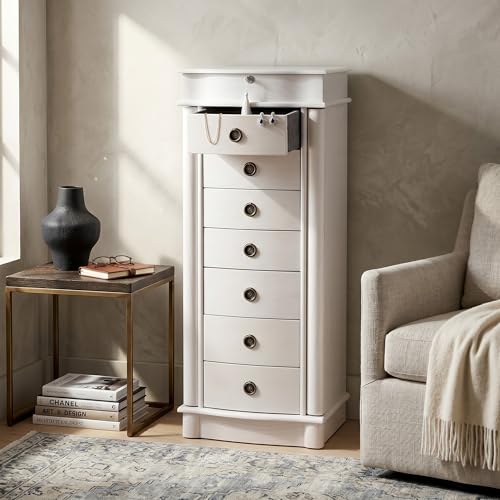
Traditional Jewelry Armoire with Mirror – Classic styling pairs perfectly with bedroom or dressing room décor.

[Spacious Storage & Great Organizing] Nicetree Jewelry cabinet with mirror features two bottom drawers and one storage shelf for your larger items as face masks or travel bags for easy access, it is designed to end your mess and keep things organized.
Custom and Bespoke Options

A velvet-lined tray cut to fit an Art Deco bracelet you inherited changes how often you reach for it.
I watched a collector have a small cabinet built with drawers sized to her specific rings, each channel padded to the stone’s height so settings never pressed against wood.
The cost ran higher than an off-the-shelf chest, but the pieces stopped catching on generic dividers, and she wore them more.
Proper storage shapes value over time in ways appraisers notice. A pendant kept in a compartment that lets its chain hang freely develops fewer kinks and less stress at the clasp.
A brooch stored flat in a fitted slot avoids the gradual warp that happens when it leans against a box wall for years.
The condition bump at resale is hard to isolate, but buyers gravitate toward pieces that show they were lived with carefully.
What convinced me, reading through how these pieces trade, is that provenance includes storage now. Original cases matter to collectors.
A custom solution that mimics that protection, sized to what you actually own, functions as the same signal. The limitation is that bespoke work requires knowing your collection well enough to describe it.
Measure your longest chain, your widest cuff, the height of your tallest ring stack before you commission anything.

PREMIUM GENUINE LEATHER – Crafted from premium full-grain navy blue leather, this leather ring holder protects your jewelry with a soft inner lining that prevents scratches. It provides the durability needed to safeguard your rings and other precious items for years to come.
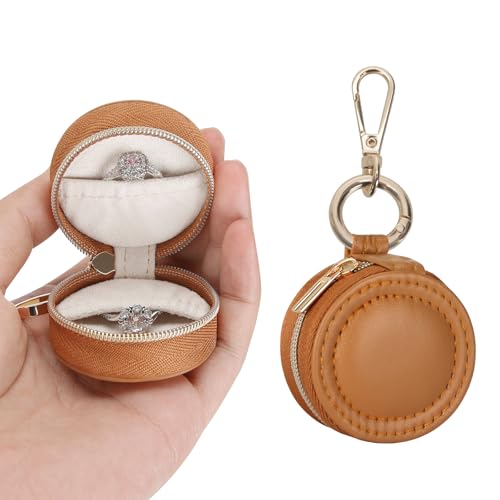
No More Losing Your Ring - Our ring holder box has a delicate gold snap-closure key chain that you can attach to your keys, bag,pants and work apron to remind you not to forget your ring or other small jewelry .

This engagement ring box is made of gorgeous leather material, velvet inside, which featured with fine, soft, shiny, comfortable touch, protect your jewelry.
Frequently Asked Questions
What is the best way to store antique jewelry?
The best way to store antique jewelry is in specialized boxes, chests, or cabinets that protect against moisture, light, and physical damage. Wood absorbs humidity shifts better than metal, so mahogany, cedar, or teak pieces work well.
For display, UV-filtering glass and a digital hygrometer inside the case prevent the fading and trapped moisture that ruin stones and settings over time.
How do I choose the right jewelry box?
Choose based on your collection’s size and what you actually wear. A tabletop box holds 12–20 pieces, a standing chest with hooks manages 40-plus, and collector cabinets handle 60 or more.
Match the interior lining to your jewelry too: silk or velvet protects finishes better than bare wood, and individual slots keep delicate pieces from scratching each other.
What materials are best for jewelry storage?
Wood remains the standard for antique jewelry storage because it ages well and buffers humidity. Teak, rosewood, oak, mahogany, and cedar all appear in quality pieces.
Glass tops let you scan without opening the lid, though they add weight and require UV filtering if the case sits near light.
Metal works best as accent hardware, not primary structure, since brass and iron can corrode in damp conditions.