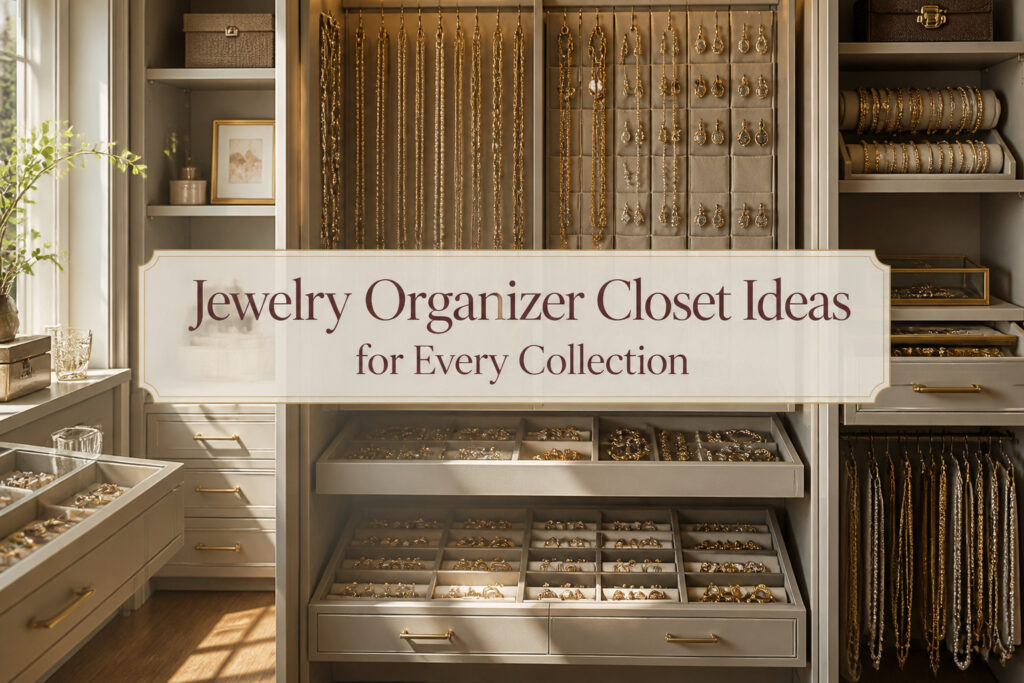
A jewelry organizer closet is any system that stores jewelry inside your closet rather than on a dresser or bathroom counter, and the difference between a setup that works and one that fails usually comes down to how well it handles tangles.
My first attempt was a shallow drawer insert; my long necklaces knotted into a bird’s nest within a week.
The fix was vertical storage: hooks that keep chains hanging straight, with pocketed sections for earrings and rings you grab daily.
Jewelry Boxes

A jewelry box still ranks as the most common fix for closet jewelry storage, backed by five separate product lines and editorial roundups I compared while planning my own setup.
Styles range from small acrylic cases with clear lids to solid wood boxes finished in stone veneer or high-grade timber.
The acrylic route wins for visibility: compartments keep rings upright and earrings paired, so you spot what you need without unpacking everything.
Wood and fabric-lined options trade that transparency for a softer look, but the same internal logic applies, padded slots for necklaces, ring rolls, bracelet cushions.
What sold me on the box approach over hanging alternatives was the compartment design that prevents metal-on-metal contact. Tarnish on silver and scratches on gold settings happen fast when pieces jostle together in a drawer.
A box with built-in dividers sorts jewelry by type automatically, which matters more than I expected on rushed mornings.
Reader’s Digest flagged this specifically for reach-in closets where surface space is tight: the box sits on a shelf or hangs on a closet rod hook, and the footprint stays small.
The catch is capacity. One box handles a daily rotation fine, but a growing collection outgrows even the larger sizes faster than you’d think.
Plan for a second box or a different system entirely once the lid starts refusing to close.

Product features: The Victor Jewelry Display Organizer Tray is wrapped in high-quality velvet fabric and replaced with regular cardboard through durable composite boards, making the product suitable for long-term use. At the same time, it ensures that the jewelry display box can effectively protect your jewelry from scratches.

Ideal Gifts: Ideal for girl and woman who loves jewelry

Spacious & Organized Storage: Whole size - 13" x 8.6" x 2.4", this organizer features 48 individual compartments, offering ample space for earrings, rings, bracelets, brooches, necklaces, and watches. Effectively resolves jewelry clutter.
Over-the-Door Organizers

Vertical space in a closet is easy to overlook until you run out of drawer space entirely.
Over-the-door jewelry organizers solve this by turning the back of a door into storage that was not there before, and they install without tools or wall damage.
The styles run wider than most people expect, from slim fabric panels with clear pockets to mirrored cabinets that swing shut.
What convinced me, reading through the options, was how the open designs let you see everything while you are still picking out clothes. No cabinet door to open, no drawer to slide.
You stand at the rack deciding between shirts and your necklaces are already in view. That visibility is a tradeoff, though.
If you prefer your jewelry out of sight, the exposed hooks and rows will bother you every morning.
The travel-ready versions roll up and fasten with ties, which matters more than I first thought. A friend keeps one packed permanently; she hangs it in hotel closets and never unpacks her earrings onto a bathroom counter.
For the closet itself, sizing the organizer to the door height is the only real constraint. A standard panel fits most, but the longer ones with mirror attachments need clearance at the bottom that not every closet provides.

Spacious & Organized: This earring organizer features 48 uniformly sized transparent pockets (2.3" x 3.5"), offering ample and well-organized storage space. It easily holds earrings, rings, bracelets, watches, hair accessories, and more. Made of transparent PVC material, it is waterproof and stain-resistant, keeping every item clearly visible and neatly separated to eliminate clutter.
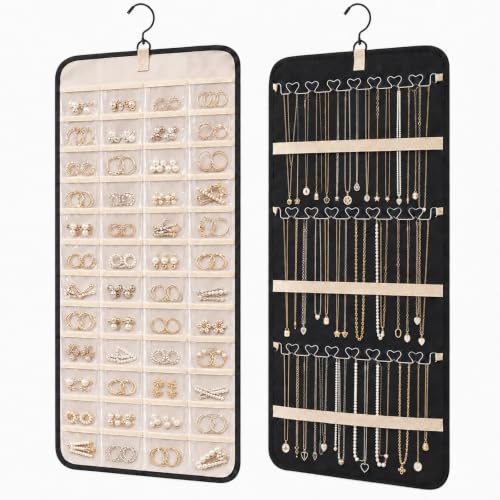
【LARGE-CAPACITY DOUBLE-SIDED STORAGE】This hanging jewelry organizer uses both sides to separate necklaces, earrings, rings, bracelets and watches. Multiple clear pockets and hanging sections provide organized jewelry storage while keeping everyday pieces visible and easy to reach.
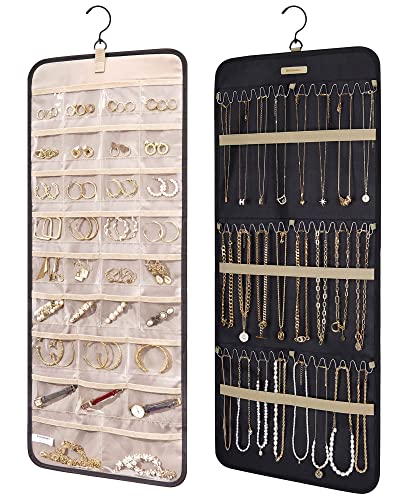
BAGSMART Hanging Jewelry Organizer Roll Travel Jewelry Organizer
Hooks and Hangers

Wall space inside a closet is usually dead space until you put it to work. A row of simple hooks changes that fast, giving necklaces and bracelets a dedicated perch where they hang straight and stay untangled.
The real payoff is the grab-and-go access: pieces you wear most often sit right at eye level, no digging through a box required.
Jewelry hangers add another layer of flexibility. Those with open hooks handle long necklaces that tangle the instant they touch anything else, while pocketed versions corral earrings and rings in one slim profile.
Either style keeps the collection right beside the clothes it matches, which matters more than it sounds on rushed mornings.
What convinced me, reading through a dozen of these setups, is that the best systems mix both: hooks for daily rotation, hangers for the overflow. The wall gets the pieces in play; the hanger handles the rest.
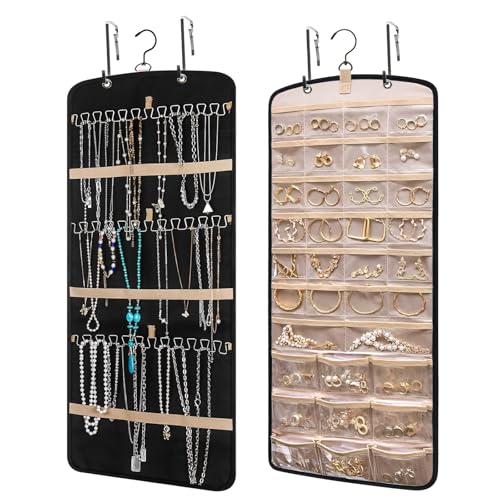
SPACIOUS DOUBLE-SIDED DESIGN FOR MAXIMUM STORAGE - This over-the-door jewelry organizer features a double-sided layout with 28 small pockets, 2 large compartments, and 9 medium slots, offering ample space to neatly store rings, earrings, necklaces, bracelets, and more. Designed with 2 door hooks and 1 standard hook, it can be easily hung on doors, walls, or glass surfaces.

You will receive ONE hanging jewelry organizer, double-sided with a total 80 pockets

【Space-Saving Design for Small Spaces】: Transform unused door space into a neat and organized zone! This over the door shoe organizer fits standard doors and keeps your floors clutter-free — ideal for dorm rooms, apartments, or small closets. (Tip: Check your door clearance before hanging.)
Shallow Drawers with Partitions

Deep drawers are where earrings go to die. You know the move: dump everything onto the bedspread, sort through the pile, hope the missing stud turns up before the cat walks off with it.
Shallow drawers change the math entirely. Nothing sinks more than an inch or two, so the piece you want stays in view from the moment you pull the handle.
Partitions turn that open space from a jumble into actual storage. Small compartments keep rings from sliding into necklace chains; slightly longer slots handle bracelets without letting them tangle.
The trays themselves can layer, one sitting above another, which squeezes more use out of the same drawer footprint. Velvet or plush lining helps too, soft enough that a dropped piece doesn’t click against hard wood.
The outside stays ordinary, just another drawer front in a closet run. Inside, the collection reads like a display case.
For anyone worried about a piece walking off, that plain exterior is its own quiet security.

Keep Jewelry Organized: Necklace holder keeps everything in order, saves space. Keep your desk clean, prevent jewelry from getting tangled and lost. Makes my daily routine much smoother

Tangle Free Necklace Holder: This necklace organizer is designed for rings, necklaces, and bracelets, especially for longer necklaces that have to be folded up to fit inside the jewelry box, what a mess of necklaces. This necklace holder is perfect for keeping delicate chain necklaces separated & tangle free.

FREE RETURNS & EXCHANGES - If there is any dissatisfaction in use you can contact us for a refund or exchange at any time.
Pegboards

A pegboard mounted on the inside of a closet door turns dead space into customizable storage that grows with your collection.
Hooks, baskets, and shelves all fit the same perforated board, so earrings and bracelets can sit right beside necklaces that need more drop room.
The board itself can be cut to the exact dimensions of the door, painted to match the closet interior, and set inside a frame that keeps the edges from snagging sleeves.
What convinced me, reading through the setups that work, is how little gets locked in place: move a hook two inches left and a tangle of chains becomes a row of hanging loops.
That adaptability matters when a new piece arrives and the old arrangement suddenly makes no sense. Painting and framing takes an afternoon, but the result looks intentional rather than like hardware store salvage.
For renters, the whole unit lifts off with a few screw holes to patch, unlike built-in cabinetry that stays behind. The tradeoff is exposure: dust settles, and every piece is visible to anyone opening the door.
A shallow curtain or a quick daily wipe solves that, or you live with it because the wall of color and texture is the point.
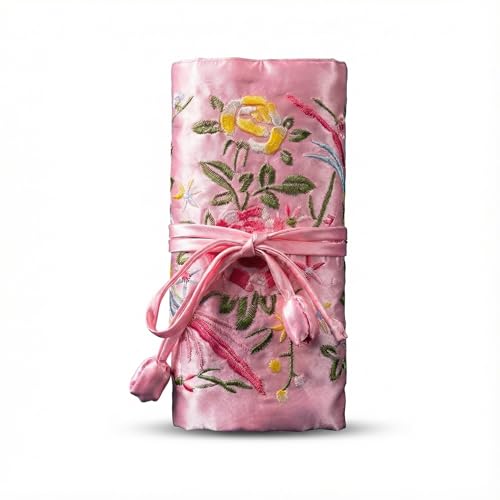
Charming Floral Embroidery: This travel jewelry bag features delicate, colorful floral embroidery on pink satin, adding a sweet, feminine touch while serving as an elegant accessory for your jewelry storage
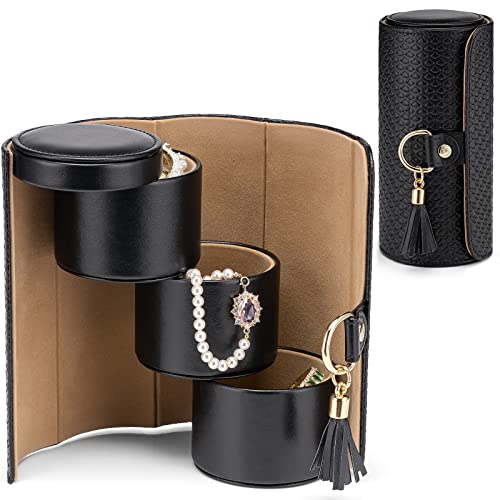
Portable Size - L 3.3 x W 3.3 x H 7.3 inches when closed. Compartments: W 2.75 x H 2 inches each

This embroidery jewelry organizer will bring a warm and welcoming energy to any room you decide to display it in. It can be used to store earrings, rings, fashion jewelry, trinkets, keys or just odds and ends. The top is decorated beautifully with flower carving.
Pouches for Travel

A full jewelry organizer closet setup stays home when you travel, which is where a lighter system takes over.
Small pouches work for earrings, rings, and bracelets: they keep pieces from scratching each other and drop straight into a corner of your carry-on without needing repacking at every hotel.
The limitation shows up with necklaces, which tangle too easily in soft-sided pouches without structure.
For anyone who travels with jewelry often enough to justify the cost, a structured case changes the math. The Cuyana Large Jewelry Case runs $198 and measures 3 by 6.5 by 4.6 inches in leather with a metal zipper.
A strap under the lid holds necklaces, bracelets, and earrings, while two semi-circle snap pouches with thin leather flaps protect smaller items from scratching.
The tradeoff is the gap between lid and base: without a scarf or tissues stuffed inside, everything rattles. The necklace strap also starts stiff and needs several uses to soften.
A smaller travel size from the same line fits better in a carry-on if you pack light.
Either way, the case sits on a dresser at home and moves to luggage for trips, which is more than most closet organizers can claim.
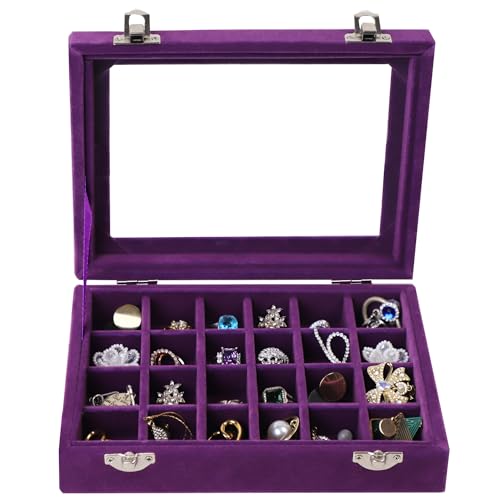
High-quality material: The jewellery box is made with parcel velvet. It is lightweight and provides a perfect perch for your jewellery. Comes with transparent tempered glass and integrated safety locks which ensure more security.

Large Capacity Small Compartments.: This acrylic earring storage box has 5 drawers with 120 small grids, total Size 8.46 x 6.1 x 5.78 inches, each compartments size 1.26 x 1.26 inches, please note the small size

This small round jewelry case is lightweight and compact, perfect for tucking into your purse, tote, or carry-on bag to keep your jewelry organized while traveling.
Ring Dishes

A ring dish on the closet shelf keeps the pieces you remove at the end of the day visible and within reach.
Open storage works here because these are the earrings and bands you wear daily, not the fine jewelry that needs locking away.
I learned the hard way that a covered box for everything slows down the morning routine. The dish sits where I see it, so the same silver band goes back on instead of sitting forgotten in a drawer.
Covered dishes exist, and vintage ones hold their own against newer designs, but the practical value is the same: a flat surface that catches what comes off.
You can also drop a ring dish into a shallow drawer as a movable partition. It corrals smaller pieces that would otherwise slide under a necklace tray.
The combination gives you both accessibility and a little order without committing to a full drawer rebuild.

❗️Note: You will only receive one jewelry organizer, the main picture shows the front and back of the hanging organizer.❗️
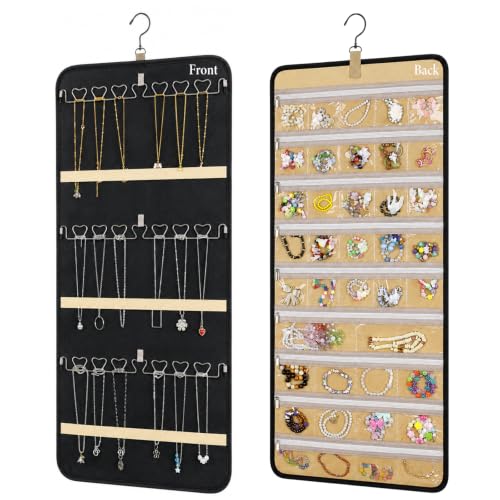
Spacious Dimension Specifications: anti-tangle earrings rings hanger with jewelry bags measures 33.07 x 14.17 inches (84x36cm) with capacity for 30+ necklaces and dozens of small items. 360-degree rotating hanger adapts to doors, closets, or wall mounting locations.

1.【48 Clear Pockets for Organized Earring & Ring Storage】Features 48 generously sized transparent PVC pockets on one side, perfectly designed to store and display earrings, rings, bracelets, watches, and hair accessories. The crystal-clear grid allows you to instantly spot and select your desired pieces, eliminating the hassle of rummaging through cluttered drawers.
Jewelry Safes

A jewelry organizer closet setup that holds anything genuinely valuable needs a safe built into it somewhere, not just prettier boxes on a shelf.
Wall-mounted cabinets sized for a dozen pieces sit beside floor-standing units that swallow whole collections, and the gap between them is where most people guess wrong the first time.
I almost did: ordered a compact one, realized my grandmother’s sapphire strand coiled in the door pocket left no room for the everyday gold chain, and had to step up a size.
Locking mechanisms split three ways. Keyed locks stay reliable but the key hunts you down at 6 a.m. when you need the earrings.
Electronic keypads fix that until the battery dies mid-code. Biometric readers cost more and sometimes need a second press, though they win on speed once trained.
Fires happen; the Mycube Classic Fire line rates for them, which matters if the closet sits near a water heater or furnace.
Insure the pieces that would hurt to lose, the diamonds and solid gold, because a safe slows a thief rather than stopping a determined one. The peace of mind is real, but it is partial peace.

Transparent pockets jewelry holder organizer to store necklaces, earrings, rings, bracelets, hair accessories etc. Good visual on all Jewelery, easy to find the items in it.

Maximize Storage with 24 Clear Pockets: Overall size 22.5" W x 56" H

[CAPACITY & SMART ORGANIZATION] Featuring numerous clear PVC pockets on the front, this XL hanging jewelry organizer offers generous space to categorize your entire collection. It allows you to store rings, earrings, studs, and hair clips individually, keeping small accessories separated and easy to locate. This high-capacity design maximizes storage potential while serving as a comprehensive system that holds more than a traditional jewelry box.
What Fits Your Collection

Necklaces tangle fastest, so the hanging organizers with hooks win for anyone with chains or pendants.
My first attempt at a jewelry organizer closet was a shallow drawer insert, and my long pieces knotted into something resembling a bird’s nest within a week.
The over-the-door styles from Space Envy changed that: hooks keep strands vertical and visible, while pocketed versions handle earrings or rings you reach for daily.
Size of collection matters as much as type. A small vanity-top box works for under fifteen pieces, but once you pass two dozen items, visibility becomes the problem.
You forget what you own. The Container Store’s drawer inserts and hanging options scale upward without demanding more closet real estate, which matters in reach-in closets where every inch is already claimed.
For renters or anyone avoiding wall damage, over-the-door units install without drilling. Some roll up with padding for travel, mirror included, so the same organizer serves a bathroom hook at home and a hotel door on the road.
Desk organizers repurposed from office supply stores fit small shelves inside walk-in or reach-in closets, compact enough for a makeup corner but limited to favorites you wear weekly.
The mistake is buying for the collection you wish you had rather than the one sitting in a pile on your dresser right now. Start with the tangle-prone pieces, solve that problem first, and build outward.
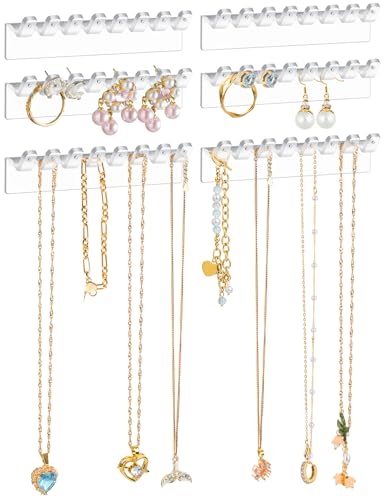
Ample Storage Capacity: Includes 6 compact wall-mounted racks with 8 hooks each—perfect for organizing earrings, necklaces, bracelets, rings, and more in one convenient place.

Effortlessly Organize Your Jewelry - store all your necklaces and bracelets in a relatively compact area, and you can easily find the jewelry you need.

Space-saving Design: Our hanging jewelry organizer combines a dual-sided layout with a large storage capacity, allowing you to store all your jewelry in a compact space. Perfect for small-space living, it maximizes vertical storage and fits neatly in closets or over doors.
Small Closet Strategies

A narrow closet wall still holds more than most people use. The back of the door is the first place to claim, and over-the-door organizers with clear pockets let you see every piece without digging through a drawer.
Some roll up and fasten for travel, which saves repacking time if you move jewelry between home and a gym bag or suitcase.
Hooks along the interior side wall or the back panel keep long necklaces from tangling, and shallow drawer inserts on any existing shelf turn dead height into sorted rows of earrings or bracelets.
The combination matters more than any single piece. A door organizer handles daily pieces within reach, hooks take the long chains that otherwise knot, and a slim desk organizer on the shelf corals the extras.
Without all three, the small closet shrinks faster than it needs to.

Tangle-Free Travel Jewelry Case — 12 individual slots keep necklaces, chains, and bracelets separated in this compact jewelry organizer travel essential, preventing the frustrating tangles that plague ordinary jewelry bags. Each slot features a snap closure and elastic strap to hold necklaces of various lengths firmly in place.

PREMIUM MATETIAL: Crafted from soft velvet fabric, this necklace holder pocket offers a dust-proof and scratch-resistant. Every necklace, bracelet, and chain stays shiny and well-protected in this premium storage
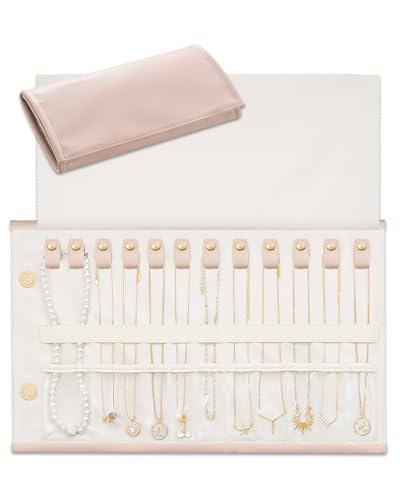
Premium Materials: Made of high-quality PU leather, lined with soft velvet and PVC for protection; Durable, stylish and specially designed to keep your necklaces organized
Materials That Last

Acrylic boxes let you see what you have at a glance, which matters more than I expected once a collection grows past a single tray.
Wood adds weight and warmth to a closet shelf, but the grain can hide smaller pieces against a similar tone.
Fabric organizers hang flat and take up almost no depth, though the tradeoff is visibility: earrings sink into pockets and you end up patting down rows to find the pair you want.
The care divide is sharper than the price gap.
Acrylic scratches with a dry cloth and needs only lukewarm water; wood swells in humid closets and eventually needs oiling or refinishing; fabric collects dust and perfume residue and goes into the wash, which means emptying it first.
| Material | Best For | Care Needed |
|---|---|---|
| Acrylic | Quick visibility, small spaces | Wipe with damp cloth; avoid abrasives |
| Wood | Style, heavier pieces | n/a |
| Fabric | Tight spaces, travel | Machine wash; empty before cleaning |
For a reach-in closet, acrylic wins on function. Wood wins if the organizer sits open on a dresser and you want it to look like furniture.
Fabric works best as a secondary system: travel pouches or overflow storage you pull out only when you need it.
Keeping Order Once Set Up

Sorting by type keeps necklaces from snagging on earring posts, but a jewelry organizer closet with limited slots forces harder choices.
When I planned mine, I started with color because it let me spot gaps fast, then shifted to occasion once the collection grew.
Wall-mounted holders and over-the-door units rarely include covers, so pieces left there pick up dust faster than drawer-stored ones. For anything sentimental or high-value, a jewelry safe inside the closet adds a layer the organizer alone cannot give.
Maintenance is the part I underestimated. Velvet-lined trays shed fibers; acrylic scratches if wiped with the wrong cloth.
I clean organizers quarterly and check that closures still latch, since a weak hinge on a door-mounted unit sends earrings scattering. The upfront sorting takes an afternoon, but the five-minute weekly reset is what actually preserves the system.
DIY Alternatives Worth Trying

A clear cosmetic case works better than you’d expect for organizing pieces by color, since you can see straight through to each tray without labeling anything on the outside.
Desk organizers with shallow compartments do the same job for rings and earrings, usually at a lower price point than anything sold specifically for jewelry.
The tradeoff is that neither option comes with the soft lining that prevents tarnish, so sterling silver still needs its own cloth pouch tucked inside.
I ended up wrapping a spare eyeglass cloth around the bottom tier of mine and calling it done. If your collection runs heavy on necklaces, the shallow depth becomes the limiting factor fast; chains tangle the moment they stack.
For bracelets and stud earrings, though, this is the kind of repurposing that actually holds up in daily use.
Frequently Asked Questions
What are the best jewelry storage solutions?
Jewelry boxes, over-the-door organizers, hooks and hangers, shallow drawers with partitions, and pegboards all work well depending on your collection and closet size. Boxes with compartment designs prevent metal-on-metal contact that causes tarnish and scratches.
For growing collections, hanging organizers with hooks keep necklaces untangled and visible.
How can I maximize space in a small closet?
Claim the back of the door first with an over-the-door organizer that has clear pockets so you see every piece without digging.
Add hooks along interior side walls for long necklaces, and use shallow drawer inserts on any existing shelf to turn dead height into sorted rows.
The combination of door organizer, hooks, and slim shelf unit matters more than any single piece.
What types of jewelry organizers are available?
Jewelry boxes range from acrylic cases to wood with fabric lining; over-the-door styles include fabric panels and mirrored cabinets; wall hooks and hangers keep pieces at eye level; shallow drawers with partitions or stacking trays corral smaller items; pegboards mount inside doors for fully customizable hook and basket arrangements; travel pouches and structured cases protect pieces on the road.