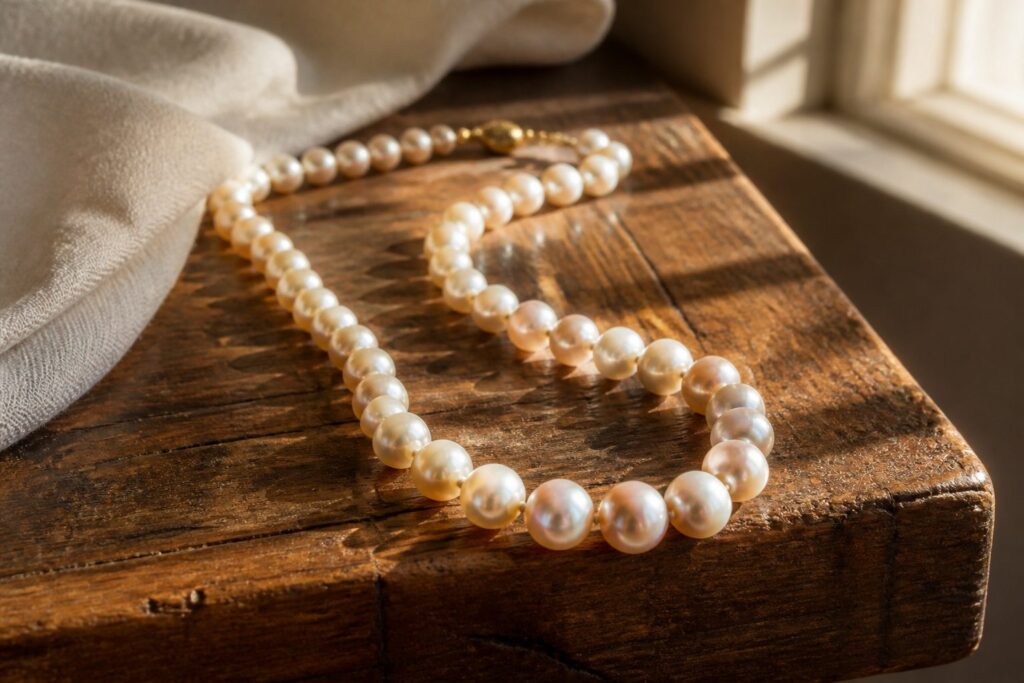
Real pearl jewelry is any piece made from genuine nacre formed by a living mollusk, not factory-coated plastic or ground shell.
The condition that matters most is thickness: a cultured pearl with layers too thin will wear through to its bead core in years, not decades.
Most of what you will see sold today is cultured, which accounts for ninety to ninety-five percent of all pearl jewelry, because wild pearls have become collector’s items rather than standard stock.
A Japanese Akoya necklace at 7.0–7.5 mm in AAA quality lists near $1,100–1,300, while a matched freshwater set with necklace, bracelet, and earrings starts closer to $312.
Pearl Necklaces
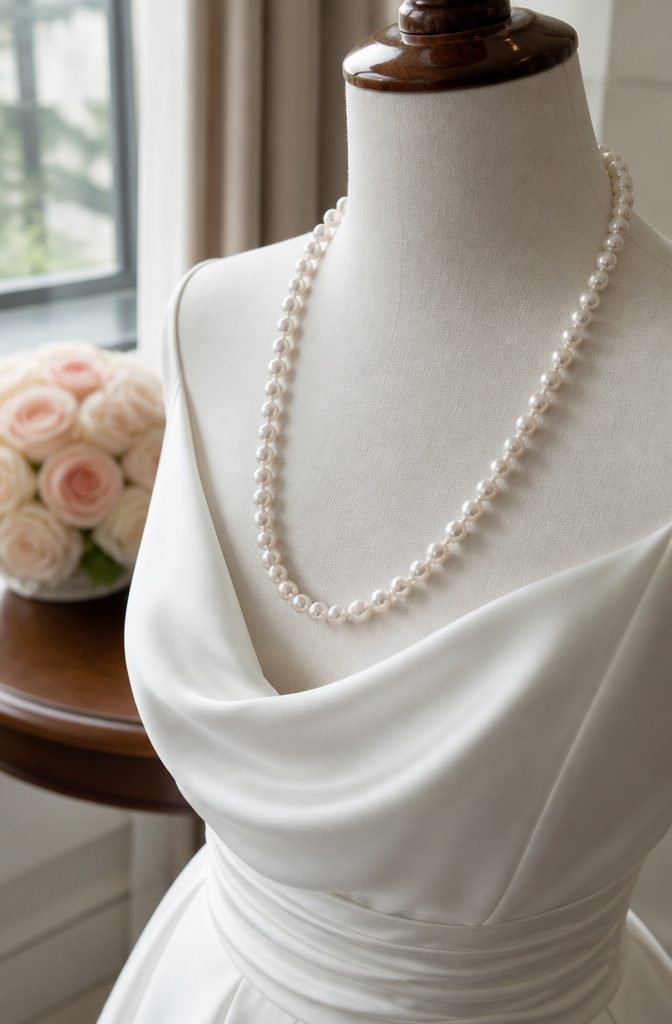
A necklace is where most people start with real pearl jewelry, and the decision comes down to three things that are easy to overthink: how long the strand hangs, how big each pearl measures, and whether you want a continuous row or something spaced out like a tin-cup style.
The AAA Quality 6.5 x 7mm White Akoya Cultured Pearl Necklace sits at a practical entry point for saltwater pearls.
Akoyas from this range run slightly smaller and carry the tighter, more mirror-like luster Japanese waters are known for. I would pair this with office wear or a wedding guest dress; the size reads refined without trying to announce itself.
For a step up in surface cleanliness and matching, the 6.5–7.0mm White Freshwater Pearl Necklace in AAAA Quality gives you nearly perfect rounds at roughly half the saltwater price.
The AAAA grade here means fewer blemishes and better uniformity than AAA, though the luster stays softer and more satin than glassy. Freshwater pearls also run rounder now than they used to, so the old visual giveaway is gone.
Length changes everything a strand does. A 16-inch choker sits at the collarbone and works best with open necklines.
An 18-inch princess length is the default for a reason: it clears most collar lines and layers without fuss. Anything longer starts to read as deliberate styling, not everyday default.
Tin-cup necklaces, with pearls separated by gold or silver chain, wear lighter and shift more with movement.
I find them easier for summer, when a full heavy strand can feel like too much against bare skin. Less presence is the cost; they are accents, not statements.
For a first piece of real pearl jewelry, I would buy the AAAA freshwater necklace at 18 inches. The quality is visible, the price is forgiving, and the length never fights your wardrobe.
Pearl Earrings
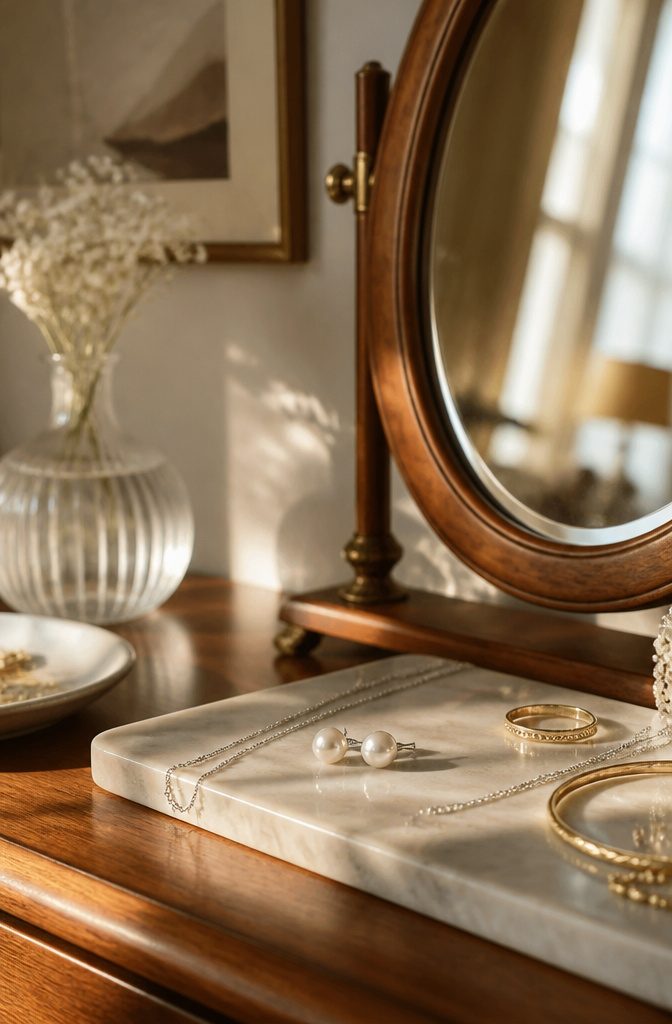
Stud earrings keep a pearl close to the lobe, which means the 7.0–7.5mm White Akoya Round Pearl Stud Earrings sit at the upper edge of what most women wear daily without the weight dragging.
At that diameter, the pearl covers roughly the middle third of an average earlobe, enough to catch light but not so large that it competes with necklace layers or a structured collar.
Drop styles change the physics entirely.
The same 7.0–7.5mm Akoya suspended from a French wire or lever-back will read smaller in photographs because the setting hides less pearl, yet it moves with the wearer and throws light differently at every angle.
For desk-to-dinner wear, I prefer the stud; for occasions where the ear is meant to carry the whole look, the drop wins.
Backing security matters more with pearls than with diamonds or colored stones because the nacre surface can crack if the earring drops and hits tile.
Friction backs work for studs under 8mm, but anything heavier or any drop style benefits from a locking back or a small lever mechanism. The extra five seconds at the mirror saves the piece.
Akoya pearls in the 7.0–7.5mm range run slightly smaller than similarly labeled Freshwater rounds, so a buyer cross-shopping the two should expect the Akoya stud to read more refined and the Freshwater to read fuller on the ear.
That is the choice: precision presence or soft volume.
Pearl Rings
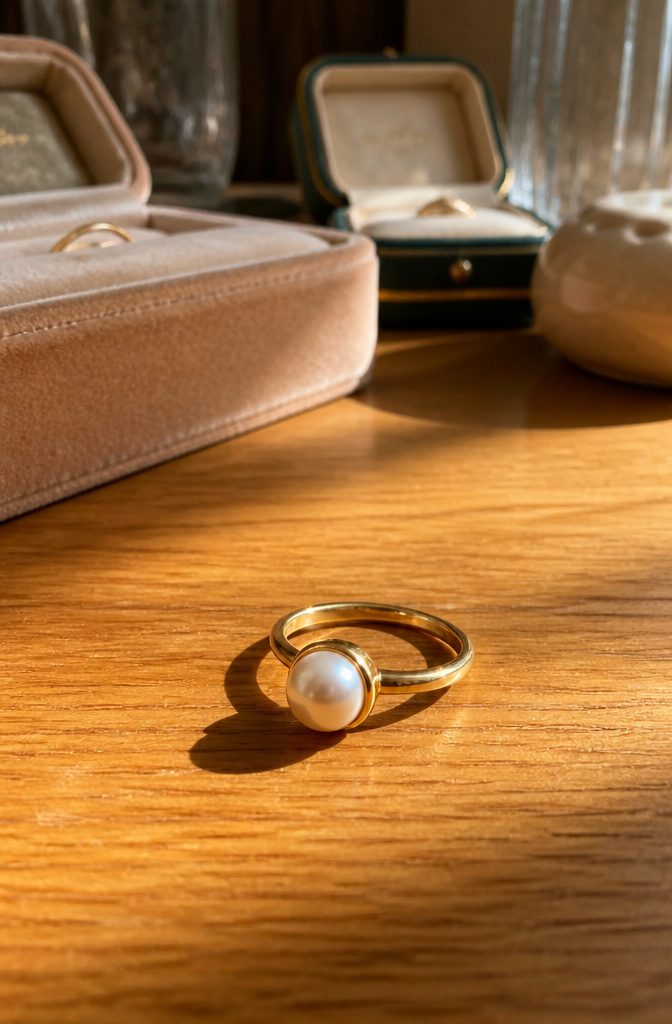
A pearl ring is the riskiest piece of pearl jewelry you can buy, and the setting is what makes it survive daily life.
I look for bezels or split-shoulders that cradle the pearl below the line of impact, not prongs that leave the nacre exposed to every desk edge and car door.
Gold fills that role better than silver; it is softer, so it absorbs shocks that would crack a brittle silver claw against the pearl.
The sizing problem is the one that stops most buyers. A jeweler cannot stretch, cut, or otherwise resize a pearl ring once the shank is set around the gem without risking the glue, the mount, or the pearl itself.
I tell anyone considering one to get sized at two different times of day, warm and cold, because a quarter-size difference decides whether the ring spins on the finger or traps enough pressure to loosen the setting over months.
Half-sizes matter here more than with other jewelry.
Daily wear dulls luster faster on a hand than on ears or a neck.
The pearl meets hand sanitizer, lotion, and the acid of your own skin directly. I rotate my pearl rings out and treat them as occasion pieces, not as the ring I never remove.
What you gain is intimacy, a ring against your skin; what you lose is time, since that spot wears the gem faster.
Pearl Bracelets
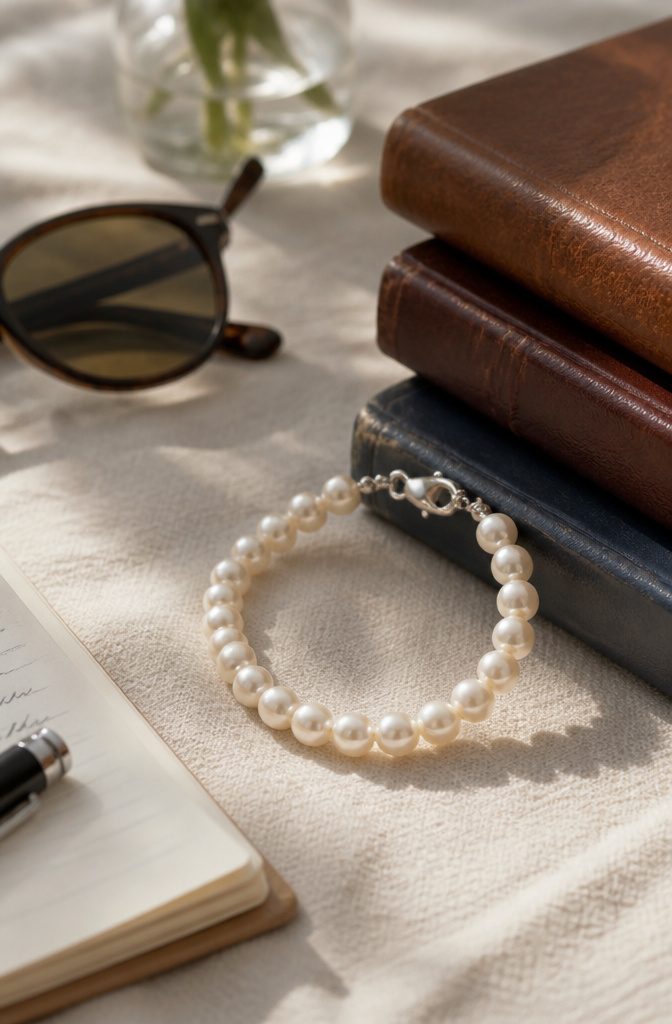
A strand bracelet with 7.0–7.5mm white freshwater pearls sits differently on the wrist than any necklace ever could.
The pearls brush against desks, keyboards, and doorframes all day, which means the nacre faces steady abrasion that earrings or pendants simply never encounter.
For that reason, I look first at how the strand is finished rather than at the individual pearl grade.
Single-pearl designs on a chain or bangle solve the wear problem another way.
One pearl means fewer contact points, and the setting itself takes the friction. Visual weight shifts: a lone 8.0–8.5mm pearl reads delicate against a full bracelet, and some wrists need that density to feel balanced.
Clasp choice matters more here than on a necklace, where gravity does half the work.
A loose lobster claw on a pearl bracelet slips when you bend your arm; a box clasp with a safety catch stays put but adds bulk against the inner wrist.
I prefer the latter for strands above $200, since dropping the piece defeats the whole purchase.
Freshwater bracelets in the 6.5–7.0mm range run softer in luster than Akoya, but the price gap lets you wear them without calculating every gesture. That freedom is worth the step down in mirror-bright reflection for anything meant for daily rotation.
Pearl Pendants
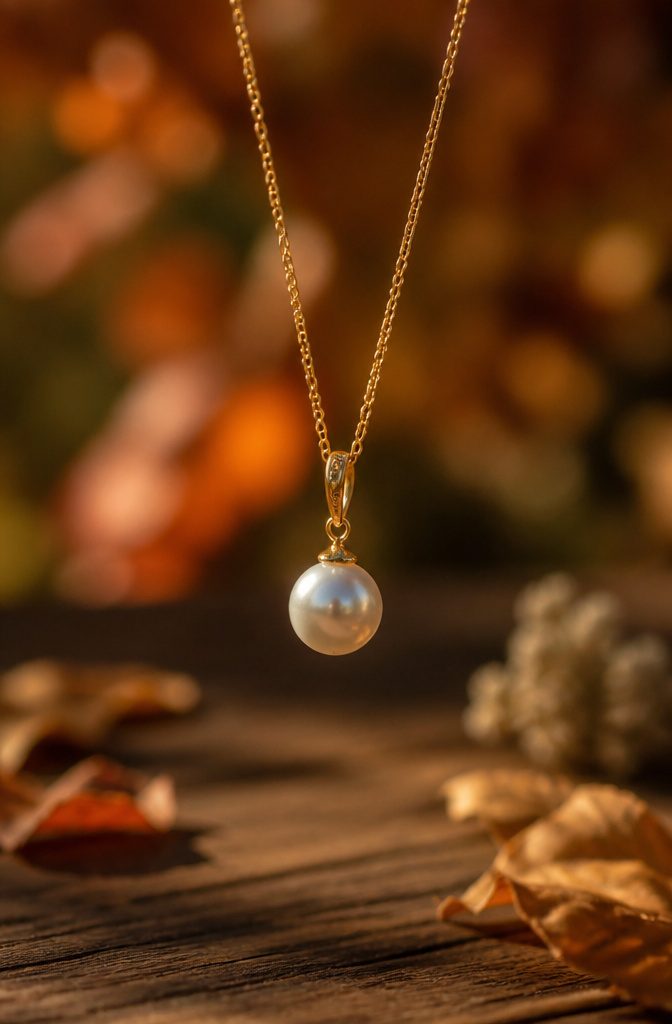
A single pearl on a fine chain draws the eye to one clean point of light, which is why I reach for that shape when I want something that reads as considered rather than accumulated.
The cluster designs, two or three pearls grouped at staggered heights, add movement but split the focus; they work better on a shorter chain where the grouping sits high and reads as one intentional shape.
The setting at the top of the pearl is the detail that betrays or conceals quality.
A simple cap in gold or silver, drilled straight through, exposes the bead nucleus or the slight irregularity where the oyster formed the pearl around an intrusion.
A partial bezel or a small halo of metal cups that point and gives the designer somewhere to hide the drill mark.
I prefer the capped look for baroque and off-round pearls, where the organic shape already tells the story, and a cleaner setting for rounds, where symmetry carries the piece.
Chain length matters more with pendants than with any other pearl piece because the pearl itself is the entire statement.
Sixteen inches sits at the collarbone and keeps a single pearl in constant view; twenty inches drops to the sternum and wants a larger pearl, 9 mm or above, so the weight of the visual matches the drop.
Anything longer and the pearl disappears against fabric unless the design clusters or adds a secondary element below it.
Pearl Sets
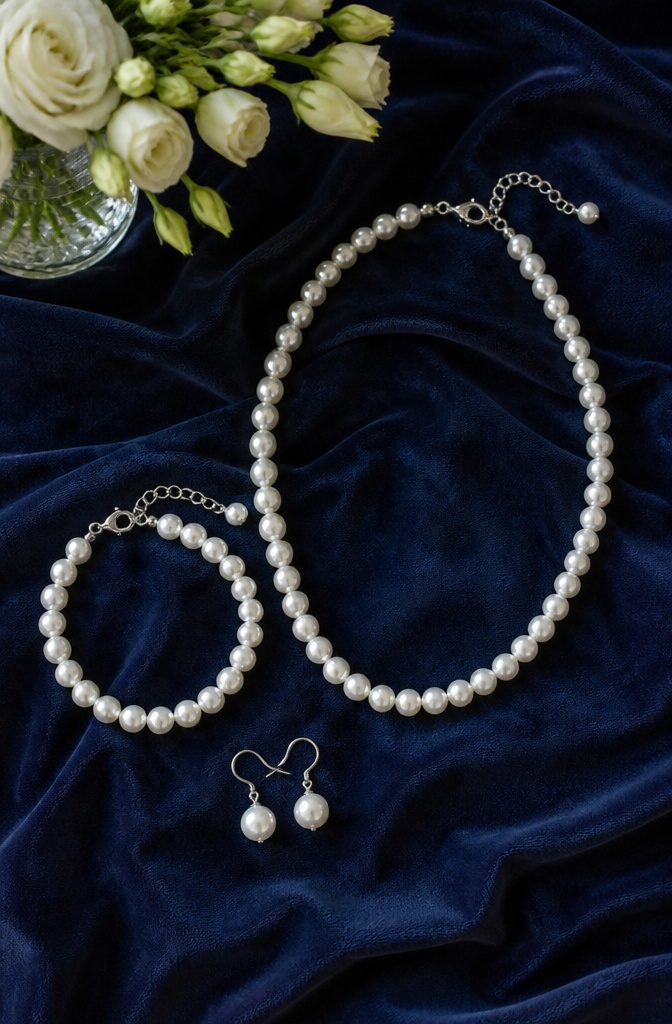
A matched pearl jewelry set is not three pieces bought at the same time.
True matching means the pearls share the same body color, overtone, luster grade, and size tolerance, harvested from the same lot so their surfaces respond to light identically.
Assembled pieces can look close under store lighting and diverge by afternoon sun.
Sets from the same source list at a meaningful discount against individual purchases. The 6.5-7.0mm white freshwater necklace, bracelet, and earrings together run $390 where the equivalent strand alone would eat most of that budget.
Japanese Akoya white pearl sets in AAA quality list at $1,520 against necklace-plus-studs combinations that would push past $2,000 assembled separately. The savings come from bulk grading: one lot, one labor cycle, one markup instead of three.
You lose flexibility.
A set locks you into one pearl size and one metal. If you prefer a larger stud than your necklace carries, or want yellow gold earrings against a white gold strand, buying piecemeal protects that choice.
I would take the set for a first serious purchase and break out only after I know which variables matter to my own wearing.
Loose Pearls
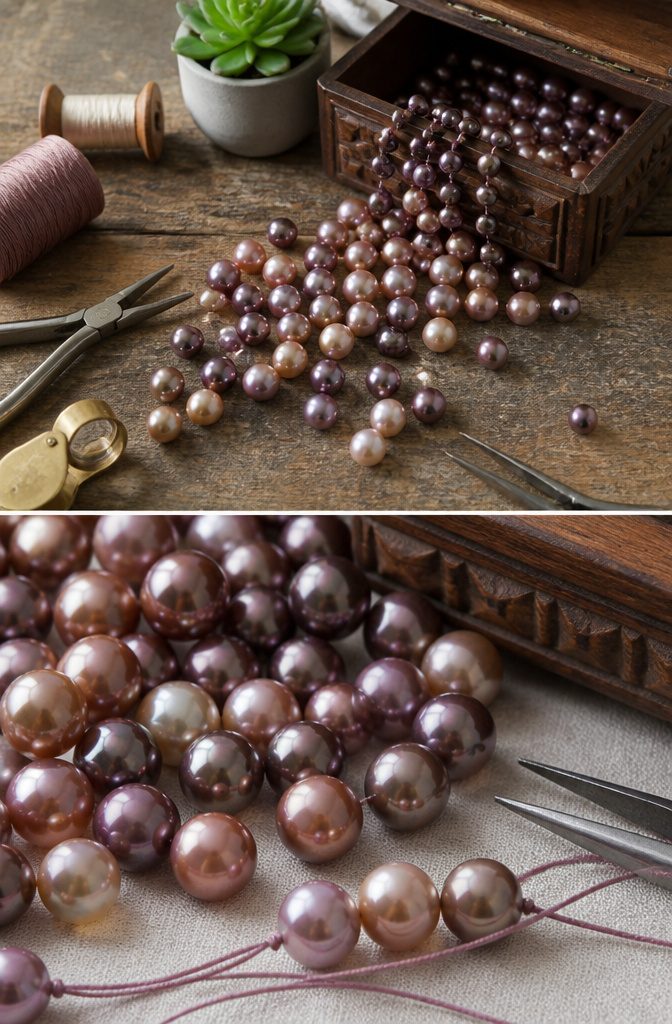
Loose pearls let you build exactly what you want, but only if you specify the right details up front. I always start with the Edison freshwater cultured pearls when someone wants real presence without the saltwater price jump.
They run larger than typical freshwater varieties, and the luster plus color range, purples and bronzes alongside classic cream, gives designers more room to work with than standard white strands.
Size, drill hole type, and matching are the three specs that make or break a custom piece. Half-drilled pearls sit best in rings and earring studs; through-drilled work for strung necklaces and bracelets.
For matching, even top-grade Akoya known for near-perfect uniformity still carry subtle luster and overtone differences. Freshwater drops and baroques vary more, so order extras if the design needs eight matched pearls, because genuine cultured pearls never clone themselves exactly.
The slight body color shifts and surface character you see under good light, that satin glow versus any plastic shine, are how you confirm you received real material before setting it.
Bridal Jewelry
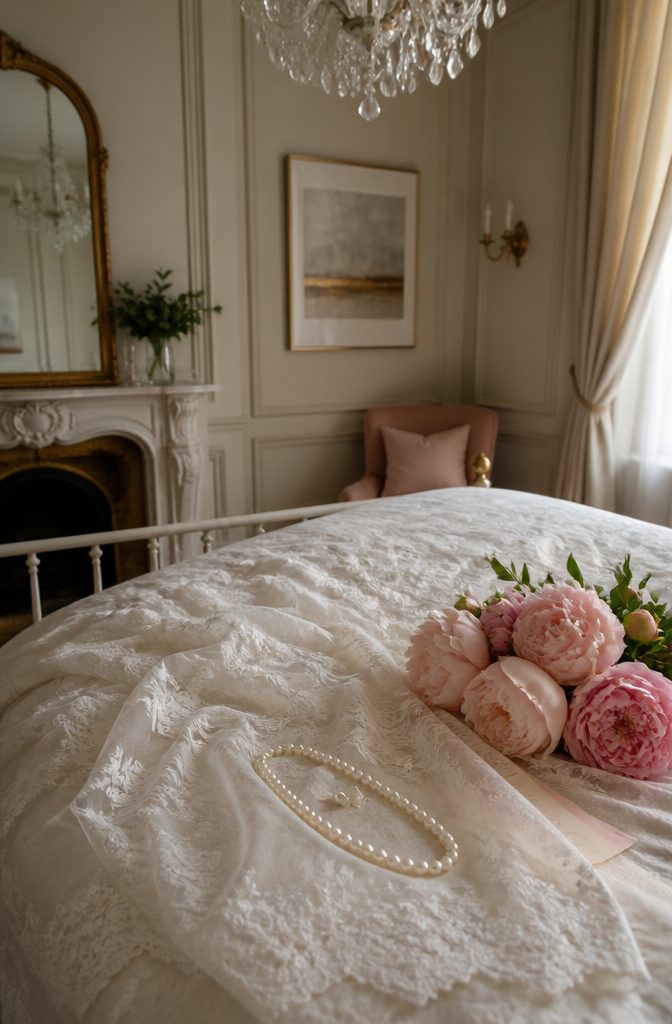
A bride in a pearl strand and studs reads softer than one in full diamond fire, and that softness is usually the point.
Real pearls carry a warmth that flatters skin without competing with it, which matters when the dress itself is the star.
I notice the tone question first, because it decides whether the pearls work or fight the look.
A bright white pearl against an ivory gown turns slightly chalky at the throat in daylight; the closer match is usually ivory or cream south sea or freshwater.
A stark white Akoya works only when the dress is equally cool white. Either way, real pearl jewelry earns its place at a wedding because it does not insist on attention the way brilliant-cut stones do.
Heirloom logic also pulls toward genuine pearls over diamonds for bridal sets. A strand passed down holds story in the nacre itself, surface wear and all.
Diamonds reset cleanly into new mountings; pearls rarely survive re-drilling without risk. So the choice to start with pearls is partly a choice about what kind of history the piece is meant to carry.
You gain practicality. Real pearls scratch, absorb perfume, and loosen from skin oils.
A bride planning to wear her set again needs storage in soft cloth, not the velvet that traps moisture, and a restringing timeline every few years if the strand sees regular use. For one day only, that concern drops away.
Baroque Pearls
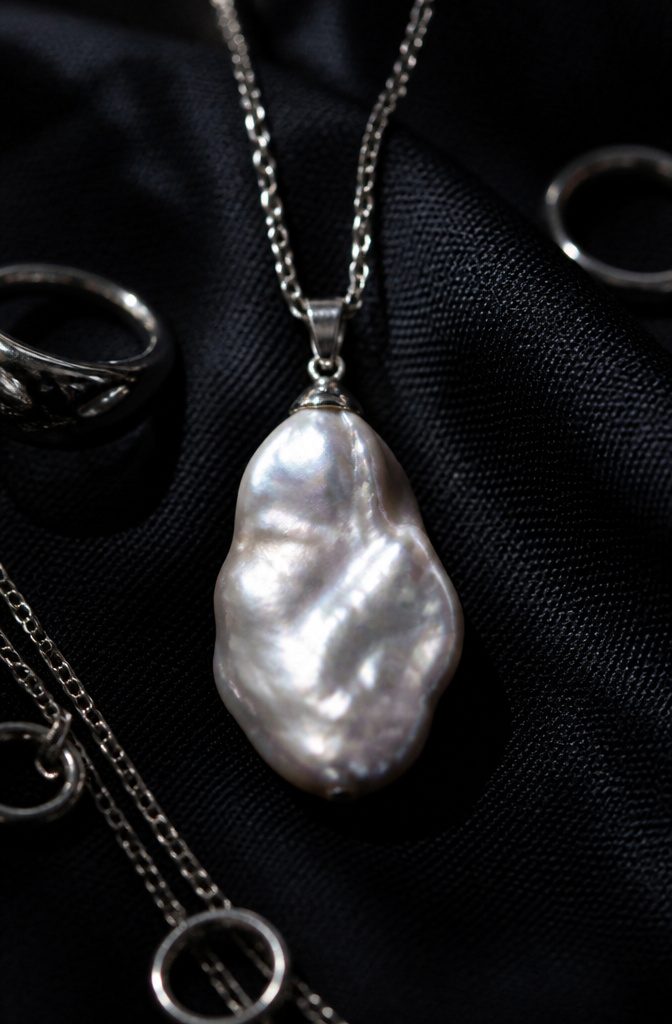
Genuine baroque pearls carry the kind of irregular, non-spherical shapes that round pearls get discarded for.
Their surfaces bulge and fold in lopsided curves, each one unique enough that a strand of them reads as a collection of individual stones rather than matched copies.
That asymmetry is exactly why some buyers seek them out: a baroque pendant hangs with a weight and movement no perfectly round bead can mimic, and earrings built around two deliberately mismatched shapes feel more modern than classic studs.
Pricing follows this logic of controlled uniqueness.
A baroque pearl from the same mollusk and harvest as a round grade might cost half as much carat for carat, but the gap narrows fast when the shape happens to echo something recognizable or the orient, the play of color across the surface, concentrates in one dramatic patch.
Designers who work in silver or mixed metals often prefer baroque stock because a single striking shape carries the whole composition; the setting can stay simple and let the pearl’s outline do the visual work.
You lose some ease of wear. A baroque stud with a pronounced lump can sit unevenly on the lobe, and a ring with a heavy off-center mass wants a lower, more protective bezel than a symmetrical equivalent.
Check how the shape distributes weight before you buy, especially for pieces meant for daily wear. A baroque that pulls to one side will twist on a chain or rotate on a finger in ways a round pearl never does.
Mabe and Mother of Pearl
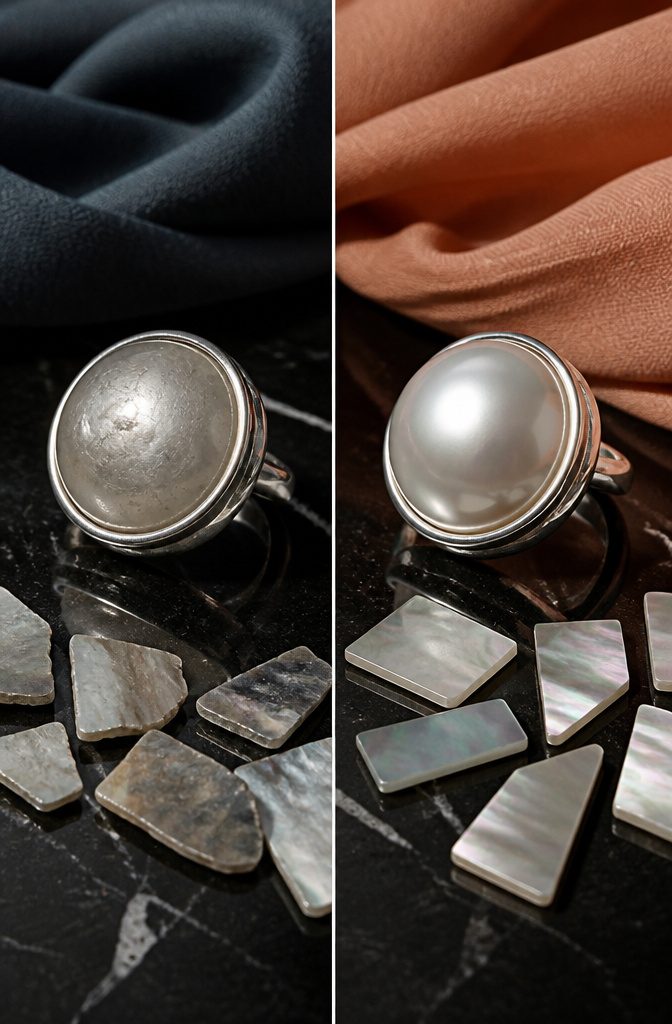
Mabe pearls sit against the shell wall rather than growing suspended inside the mollusk, so they emerge as domed hemispheres with a flat back.
Jewelers typically bezel-set them or mount them with a solid backing, which keeps them affordable next to round pearls of similar size.
The luster runs bright and orient can be striking, but the shape limits you to earrings, rings, and pendants where the flat side sits hidden against skin or metal.
Mother of Pearl is not a pearl at all. It is the shell’s inner nacre layer, cut and polished into inlay, watch faces, buttons, and entire sheet panels for jewelry boxes.
In jewelry it reads as iridescent surface rather than rounded gem, and that difference matters when you are shopping for pearl jewelry real versus shell-derived pieces sold alongside it.
Mabe pearls are genuine cultured pearls with a nacre coating you can measure in millimeters; Mother of Pearl carries no such nucleus and no bead inside, just layered shell compressed to hardness.
Price usually separates them clearly. Mother of Pearl costs less per carat weight and appears in fashion jewelry where the look of iridescence matters more than pearl status.
Mabe pearls cost more, still count as pearls on a certificate, and suit buyers who want a bold, flat-backed statement without paying for a full-spherical South Sea.
I would choose Mabe for a cocktail ring where the dome catches light at a table, and Mother of Pearl for a cuff or inlay detail where I want shimmer across a surface without calling it pearl.
Cultured Pearls
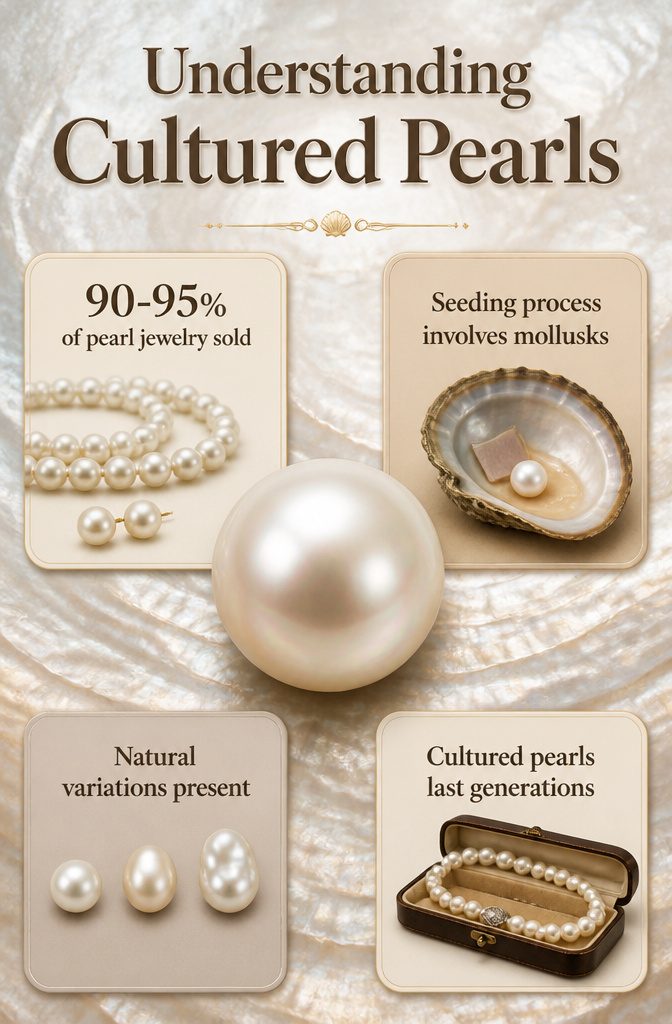
Cultured pearls are real pearls, and they account for roughly 90–95% of all pearl jewelry sold today. A technician seeds a living mollusk with either a tiny mother-of-pearl bead or a square millimeter of mantle tissue.
That core irritates the animal just enough to trigger a pearl sac, which the mollusk then coats in crystalline nacre layer after layer for months or years until a harvestable pearl forms.
The human hand only starts the process.
Everything after nucleation is the mollusk’s own slow biological work, which is why a cultured pearl carries the same natural variations as a wild one: inclusions, uneven nacre depth, and shifts in luster, color, and shape. No two match exactly.
If you are shopping for pearl jewelry real enough to last generations, cultured is almost certainly what you will be buying. Wild pearls have become collector’s and estate pieces, not standard stock.
The distinction that actually matters on the counter is whether the nacre is thick enough to wear well, and whether the seller is honest about what grew inside the shell versus what was factory-made.
The Tooth Test and Other Real Checks
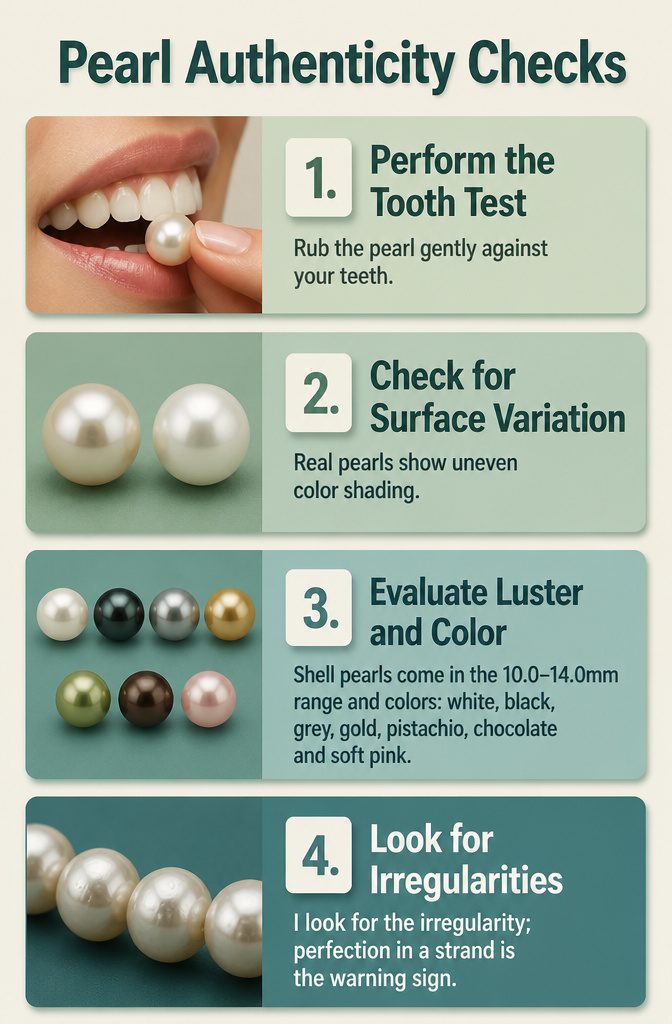
The tooth test remains the quickest first check: rub the pearl very gently against your teeth and feel for a fine-grit, sandpaper-like texture.
That grit comes from thousands of microscopic aragonite platelets layered on the surface of genuine pearls, which rate only about 3 on the Mohs hardness scale.
Synthetic pearls feel smooth, almost plastically so, because they lack those crystalline layers. I treat this test as directional, not conclusive; shell pearls, for instance, will pass it because they are built from ground mother-of-pearl or solid shell material.
Surface variation tells the rest of the story.
Real pearls show uneven color shading, subtle luster shifts and minor imperfections. Shell pearls mimic those traits more convincingly than standard synthetics, but their light reflection stays too uniform, and their hues read as flat, solid pastels without natural depth.
They usually come in the 10.0–14.0mm range and colors borrowed from luxury types: white, black, grey, gold, pistachio, chocolate and soft pink. I look for the irregularity; perfection in a strand is the warning sign.
Akoya, Tahitian, Freshwater, South Sea
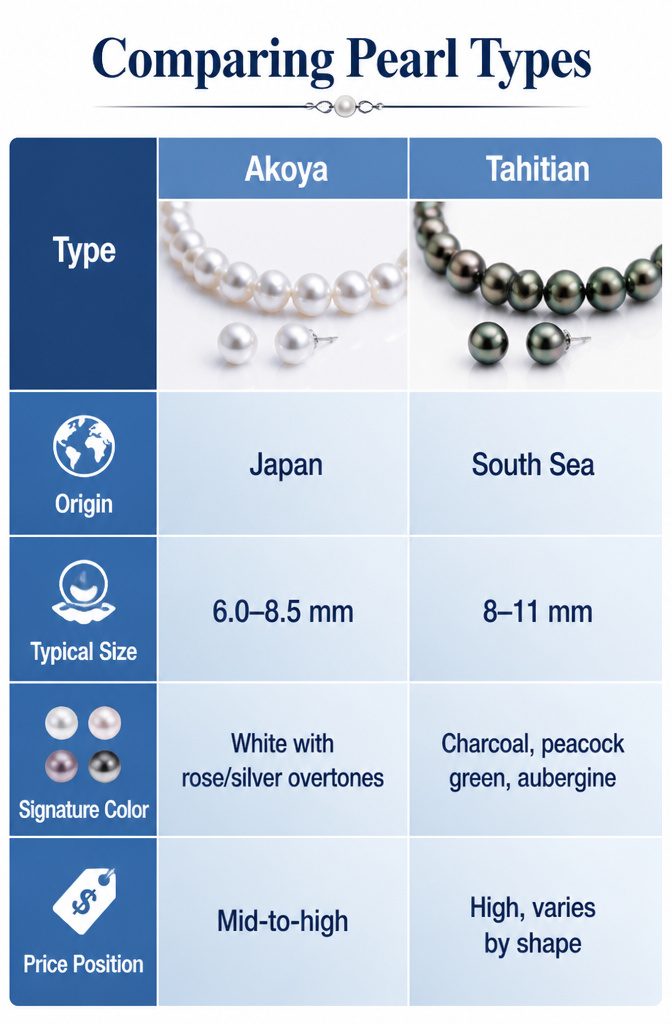
The four main pearl families each carry a different personality, and knowing which one matches your budget and the occasion saves you from overspending on the wrong strand.
Akoya pearls come from Japanese waters and stay on the smaller end, usually 6.0–8.5 mm. Their hallmark is a mirror-like luster and the classic white color with rose or silver overtones that comes to mind when someone says "pearl necklace."
They sit in the mid-to-high price range: a 7.0–7.5 mm AAA-quality necklace runs around $1,100–1,300, while matching stud earrings land nearer $184–296 depending on size. If you want one piece that reads as "real" to every generation, this is it.
Freshwater pearls are the accessible entry point. Grown in lakes and rivers, they run 7.0–10.0 mm comfortably, with white as the standard though pink, mauve, lavender, and even black dye treatments exist.
A 7.0–7.5 mm bracelet hits about $144, and full sets with necklace, bracelet, and earrings start near $312. The luster is softer than Akoya, more satin than mirror, which works in your favor for daytime wear that does not compete with office lighting.
Tahitian pearls deliver the drama. These South Sea natives grow 8–11 mm and bring charcoal, peacock green, and aubergine tones that shift under light with what sellers call "orient," that soap-bubble iridescence no synthetic replication catches.
A pendant starts around $184, though a full strand of 8–10 mm circles climbs past $648. The surface marks and circling are natural, not flaws, so resisting the urge to hunt for "perfect" here actually gets you the real thing.
South Sea pearls, in white and golden varieties, are the largest and rarest.
They start around 10 mm and push upward to showpiece sizes, with a touchable, almost warm glow that photographs more candlelit than flashbulb. South Sea pearls sit at anniversary price points, not impulse territory, priced alongside Japanese Akoya as investment-grade pieces.
| Type | Origin | Typical Size | Signature Color | Price Position |
|---|---|---|---|---|
| Akoya | Japan | 6.0–8.5 mm | White with rose/silver overtones | Mid-to-high |
| Freshwater | Lakes/rivers | 7.0–10.0 mm | White, pink, mauve, lavender, black | Entry/affordable |
| Tahitian | South Sea | 8–11 mm | Charcoal, peacock green, aubergine | High, varies by shape |
| South Sea | South Sea | 10 mm+ | White or golden | Investment/luxury |
My own leaning: Akoya for a first serious piece, Freshwater for experimenting with size and color without regret, and Tahitian only once you have the basics covered and want something that does not read as "bridal party."
AAA, AA, and What Grading Means
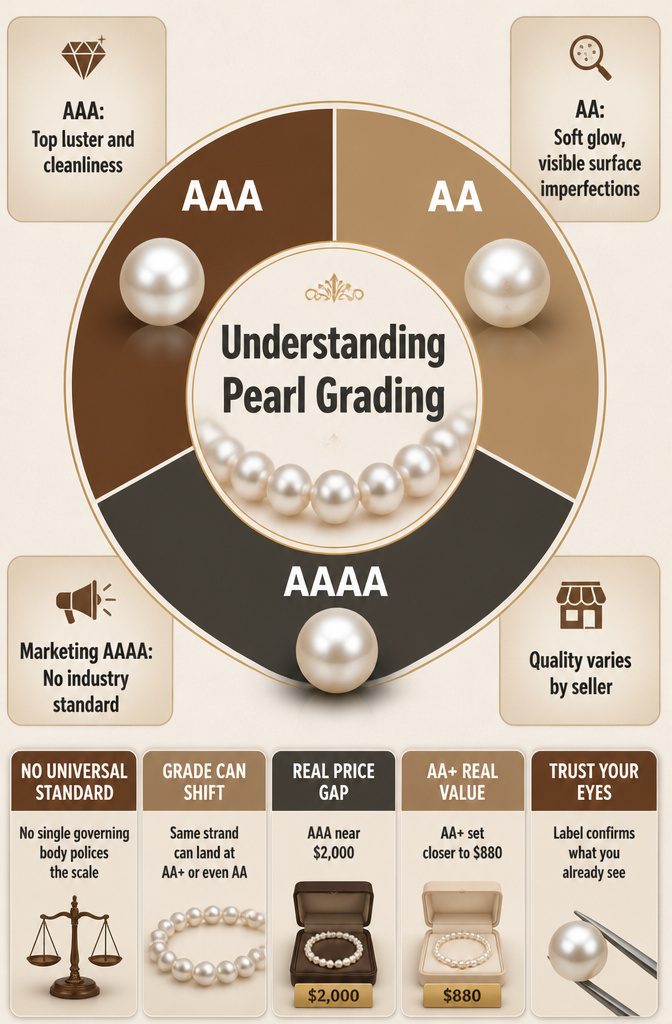
Pearl grading runs on a scale that looks simple until you try to use it across sellers.
AAA marks the top tier for luster and surface cleanliness, the two traits that catch light across a room versus trapping it in dull spots or blemishes.
AA sits below, still wearable but visibly softer in glow and more forgiving of pits or rings.
Some vendors push AAAA as a step above AAA, though that fourth A has no industry-wide backing; it is a marketing layer, not a standard.
The same strand graded AAA at one shop might land at AA+ or even AA elsewhere, because no single governing body polices the scale.
A Japanese Akoya necklace at 7.0–7.5mm in AAA quality can list near $2,000, while an AA+ set of the same type and size might run closer to $880.
That gap is real, but the letters alone do not tell you which piece justifies it.
I grade the pearl itself before I grade the label: hold it under a single light source, roll it slowly, and watch whether the reflection stays sharp or breaks apart.
The label should confirm what your eye already sees, not replace it.
Care by Type
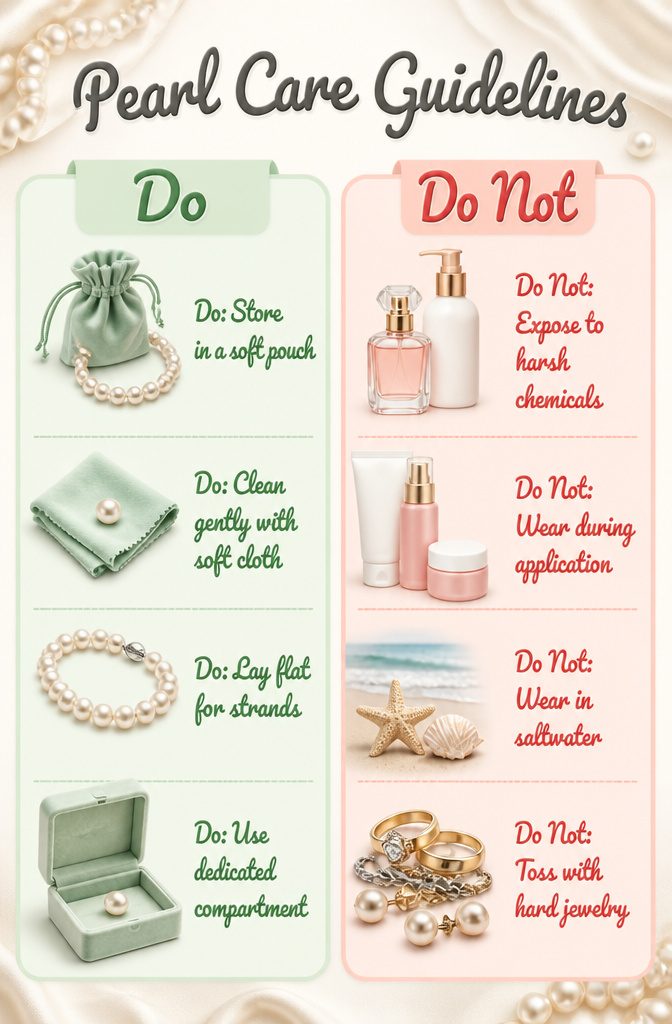
Pearls demand gentler treatment than almost anything else in a jewelry box. The nacre surface that gives them their glow is also what makes them vulnerable to everything from perfume to a stray ring tossed in the same drawer.
Keep them away from cosmetics and harsh chemicals, full stop. That means last on, first off: pearls go on after makeup and hairspray have settled, and come off before you reach for cleanser or sunscreen.
The chemicals in everyday products etch nacre over time, dulling luster that no polishing will restore.
Storage matters just as much. Toss a strand into a dish with metal chains or gemstone rings, and the harder materials scratch the pearl surface.
I store mine in a soft pouch or dedicated compartment, lying flat for strands to prevent the silk thread from stretching.
Saltwater and freshwater pearls carry slightly different care needs. Saltwater varieties, Akoya and South Sea and Tahitian, tend to have denser nacre and hold up marginally better to wear.
Freshwater pearls, more common in the entry-level market, often have softer nacre that shows scratches sooner. Both types still need the same baseline protection; the difference is in how forgiving each is when you slip up.
Pricing and Value
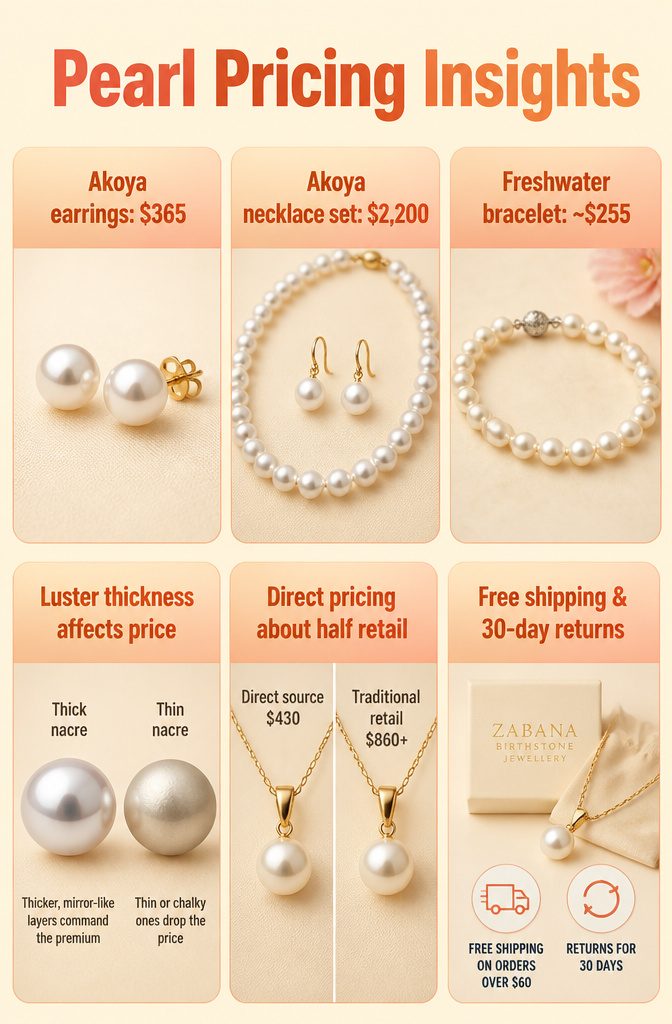
Real pearl jewelry runs a wide spread.
A single pair of 6.5–7.0mm white Akoya stud earrings sits around $365, while a matched 7.5–8.0mm Akoya necklace and earring set can push past $2,200. Freshwater pieces land lower, a 7.0–7.5mm bracelet at AAAA quality asking roughly $255.
The gap comes down to luster layer thickness and how evenly that nacre coats the bead. Thicker, mirror-like layers command the premium; thin or chalky ones drop the price even at the same millimeter count.
Direct sellers now price at about half traditional retail by cutting the markup chain. That changes what "good value" means: a $430 Akoya pendant in 14K gold from a direct source competes with a lesser-grade piece at a department store counter.
For the buyer, the move is to weigh the grading (AAA versus AAAA) against the actual surface quality rather than the label alone.
Zabana Birthstone Jewellery ships free on orders over $60 and accepts returns for 30 days. The policy matters because pearl luster photographs poorly; you need the piece in hand to judge whether the nacre depth justifies the outlay.
Frequently Asked Questions
How can you tell if pearls are real?
Rub the pearl gently against your teeth; real ones feel slightly gritty from microscopic aragonite platelets, while synthetics feel smooth.
Look also for uneven color shading, subtle luster shifts, and minor surface imperfections. Perfect uniformity across a strand is usually a warning sign.
What types of pearls are available?
The four main families are Akoya, Freshwater, Tahitian, and South Sea.
Akoya runs 6.0–8.5 mm with mirror-like luster and classic white tones. Freshwater spans 7.0–10.0 mm with softer satin glow and lower prices.
Tahitian delivers 8–11 mm in charcoal, peacock green, and aubergine. South Sea starts at 10 mm in white or golden varieties and sits at the investment end.
What warranty comes with my jewelry?
Custom pearl jewelry carries a lifetime warranty, while ready-made pieces include a one-year limited warranty. Check which category your piece falls into before purchase, since the coverage gap is substantial.
Which pearl is costly?
South Sea pearls command the highest prices, starting around 10 mm and pushing to showpiece sizes with a warm, candlelit glow. Japanese Akoya in AAA quality also sits in the upper range, with 7.0–7.5 mm strands listing near $2,000.
Tahitian strands climb past $648 for 8–10 mm circles. Freshwater remains the most accessible entry point.
Where can I buy real pearls for jewelry making?
Start with loose Edison freshwater cultured pearls if you want size and color variety without the saltwater price jump.
Specify half-drilled for rings and studs, through-drilled for strung necklaces and bracelets, and always order extras beyond your exact count because genuine pearls never clone themselves exactly.