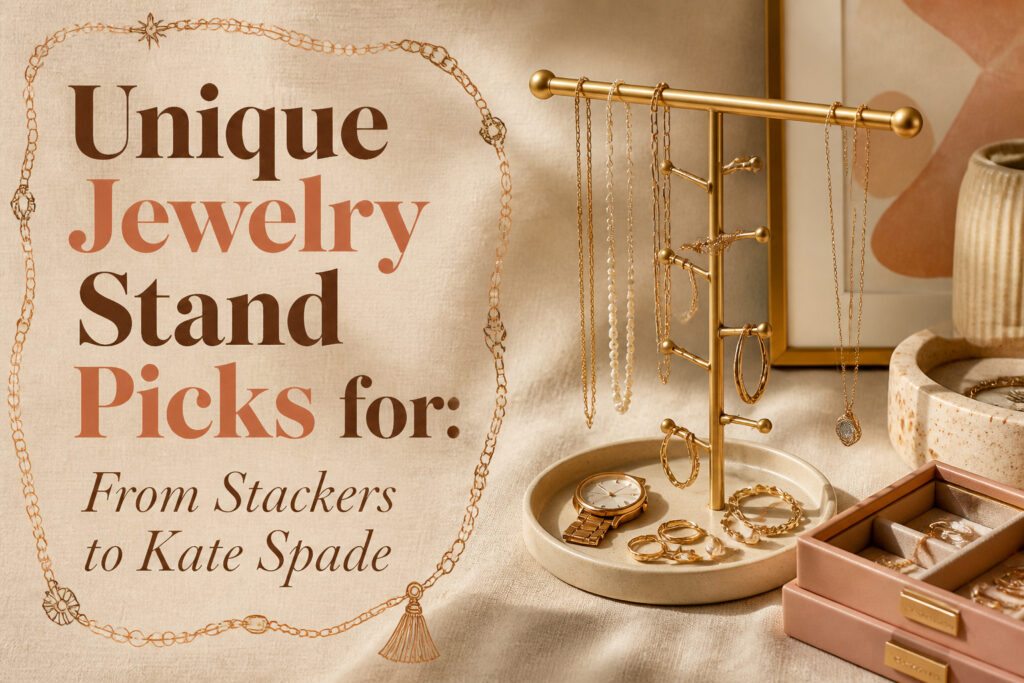
The right jewelry stand keeps your chains from mating into knots you only find when you’re already late, but only if you match its build to what you actually own.
A vertical tree like Umbra’s branching metal frame saves surface space yet demands ceiling height; a modular Stackers tray system grows with your collection but stays invisible in a drawer.
Most buyers size too small twice, once on the first purchase and again on the replacement.
1. Stackers Modular Jewelry Organizers

The Stackers modular system showed up in more roundups than any other option I tracked, five separate times, which says something about how flexible the design actually is.
Each unit is a shallow tray with its own lid, and the compartments inside vary: some are sized for rings, some for earrings, some with deeper wells for watches or chunky cuffs.
What changes the game is that you buy only the trays you need, then stack them in whatever order makes sense for your own collection.
A small jewelry box stops working the moment your earrings outgrow the single velvet strip it came with. Stackers sidesteps that by letting you add another tray instead of starting over.
If you pare down later, the same tray slides back out and stores flat. The lids keep dust off pieces you do not reach for daily, and the whole column still fits inside a drawer when counter space runs out.
For anyone whose collection shifts size with the season, that adaptability is the reason the system keeps winning recommendations.

𝟖-𝐏𝐢𝐞𝐜𝐞 𝐒𝐭𝐚𝐜𝐤𝐚𝐛𝐥𝐞 𝐒𝐞𝐭 𝐰𝐢𝐭𝐡 𝟒 𝐃𝐢𝐬𝐭𝐢𝐧𝐜𝐭 𝐒𝐭𝐲𝐥𝐞𝐬: Includes 8 stackable trays in 4 designs (2 of each): 18-compartment trays, 1-compartment open trays, ring organizer trays, and necklace/bracelet trays. Uniform size of 8.3" x 5" x 1" fits standard drawers perfectly.

𝐂𝐨𝐦𝐩𝐥𝐞𝐭𝐞 𝟖-𝐏𝐚𝐜𝐤 𝐉𝐞𝐰𝐞𝐥𝐫𝐲 𝐎𝐫𝐠𝐚𝐧𝐢𝐳𝐚𝐭𝐢𝐨𝐧 𝐒𝐨𝐥𝐮𝐭𝐢𝐨𝐧: This set provides a versatile 8-pack solution with 4 distinct tray designs, each included in a pair, allowing for flexible combinations to meet diverse storage needs. All trays share a uniform footprint of 8.3"L x 5"W x 1"H, ensuring they fit neatly side to side or stack perfectly in your drawers.
2. Umbra Jewelry Stand

The modern tree-like structure of the Umbra jewelry stand branches upward from a weighted base, with slender metal arms ending in small posts and hooks.
Necklaces hang at staggered heights so chains never overlap, while a lower tray corrals stud earrings and rings where you can actually see them.
That visibility matters more than I expected when I started comparing stands; what looks tidy in a drawer becomes invisible, and what hangs at eye level gets worn.
The branching layout does the anti-tangling work for you. Gravity keeps chains extended, and the vertical spacing means you can lift one piece without disturbing its neighbor.
In tighter spaces, the footprint stays narrow while the storage runs upward. The tradeoff is height; on a low dresser, the top branches sit below eye level, which dulls the convenience.
For anyone with more necklaces than surface area, though, the proportions solve a real problem.
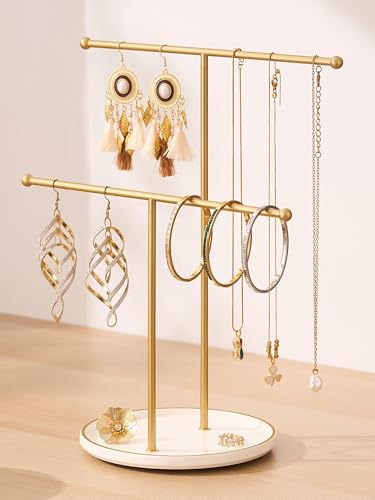
Premium Ceramic Tray: Features a glossy ceramic tray with a gold-rimmed finish, perfect for holding rings, pins, or small accessories. Easy to clean and adds a touch of luxury to your vanity.
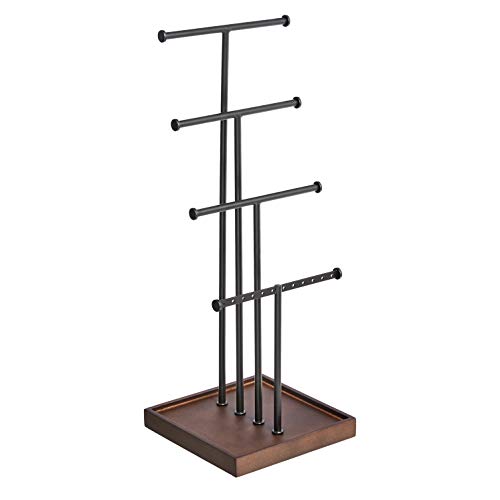
Jewelry stand with 4 tiers for hanging earrings, necklaces, bracelets, and more
3. Mele & Co. Jewelry Box

A mirror-backed lid that actually stays open changes how you use a jewelry box. Mele & Co. builds theirs with a hinge that props at ninety degrees, so the mirror faces you while both hands sort earrings.
The interior splits into tiered compartments: shallow trays for rings, deeper wells for bracelets, a padded strip that keeps necklaces from sliding into a knot. Traditional construction, but the proportions suit contemporary collections where delicate chains outnumber brooches.
What convinced me, reading through a dozen of these, was the bridging. The exterior reads heirloom, mahogany finish and brass hardware.
Inside, the layout assumes you own stackable bands and layered pendants, not just a single strand of pearls. One detail I kept noticing: the removable tray.
Lift it out and the box becomes travel-ready, or stays put and the lower level stores bulkier watches.
The catch is weight. Solid wood construction means this sits on a dresser, not a floating shelf.
For anyone with a growing collection who still wants the box to look like furniture, that tradeoff lands squarely in the right column.

Jewelry Organizer:This Jewelry Holder with 56 hooks,can storing and showcasing a large number of necklaces.It accommodates necklaces of various lengths and prevents them from tangling together.
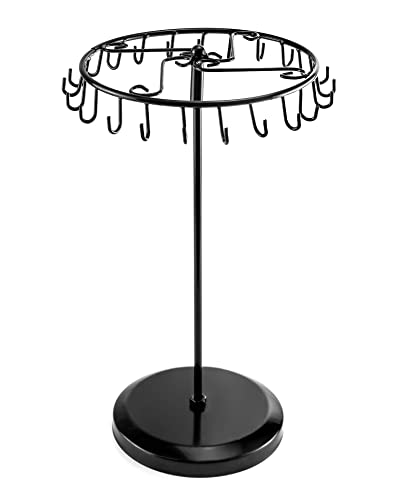
Durable: Full metal construction, sturdy and durable to use.

【Adjustable Height Necklace Hanger】Tired of your long necklaces dragging on your dresser? This necklace holder organizer stretches up to 25 inches, offering perfect space for your longer pieces. No more tangles, just a neat, elegant necklace display every day
4. S’well Jewelry Stand

The S’well jewelry stand brings sustainability into this list without making a statement piece of it. The body is formed from recycled stainless steel, finished in a soft matte that doesn’t compete with whatever you hang from it.
What convinced me, looking through the options, was how quietly the eco-friendly choice sits in the room: no reclaimed-wood texture or visible grain calling out its virtue, just clean curves and a weighted base that doesn’t tip when you reach for earrings half-asleep.
The recycled steel content runs through the entire frame, not just a accent panel, which matters if you’re buying for the principle and not only the look.
The finish resists the water spots that plague bathroom-counter storage, though the narrow vertical rods mean necklaces tangle if you layer more than two or three per hook. For a small collection worn regularly, the restraint keeps the display readable.
For drawers full of backup pieces, this isn’t the stand that holds them all.

Style Upgrade: Featuring a unique double-door opening design, opening it adds a touch of ritual to your life. The outer layer is made of high-quality vertical textured leather, which is water-resistant & easy-to-clean, paired with exquisite gold-tone hardware. It's not just a storage box, but also an elegant work of art on your dresser top

Keep Your Jewelry Safe and Organized: Our standing jewelry armoire features 5 pull-out drawers and 2 side doors with hooks to store all your jewelry, including rings, necklaces, bracelets, watches, and glasses. Each compartment is lined with soft velvet to protect your jewelry from scratches and damage.

Jewelry Storage, 3 Layers: Keep all your jewelry organized in this jewelry box from our GISELLA Collection—small pieces of jewelry go in the various slots of the top layer, and big jewelry goes in the bottom 2 drawers
5. Tiffany & Co. Jewelry Tray

A Tiffany & Co. jewelry tray trades raw storage volume for something harder to replicate: the way light hits silver and the weight of a piece that stays put on a dresser.
The leather-lined versions feel deliberate, almost desk-object in their restraint, while the sterling silver edge models pick up fingerprints fast enough that you will wipe them down more often than you expected.
What convinced me, reading through a dozen of these roundups, is that the tray format works best for someone who already owns the boxes and stands and wants one surface for what they wear daily. Rings and a watch.
Maybe a pair of studs. The moment you add necklaces, the lack of hooks or tiers becomes the whole story: chains slide, tangle, and you are back to a drawer.
The price lands where most organizers do not, which is the point and also the problem. You are buying the name, the craftsmanship, and a footprint that does not expand.
For a small collection worn with intention, that is enough. For anyone who rotates pieces weekly, the elegance wears thin around day three of fishing through a pile.

Multi-Functional: This jewelry tray set comprises four trays with different layouts and one glass lid.The dividers in the trays are all adjustable,providing ample storage space for your various precious items of jewelry,such as rings,earrings,necklaces and bracelets

Notes: Grids are not fixed, please DIY after receive necklace holder, jewelry box for necklaces with lid keeps your jewelry free from dust and tangles

Multi-Functional: This jewelry tray set comprises four trays with different layouts and one glass lid.The dividers in the trays are all adjustable,providing ample storage space for your various precious items of jewelry,such as rings,earrings,necklaces and bracelets
6. MDesign Jewelry Organizer

A clear acrylic tower with tiered drawers sits quietly on a bathroom counter or inside a dresser without demanding attention.
The MDesign organizer leans hard into that practicality; no velvet lining, no brass feet, just compartments sized for what actually gets tangled, earrings in one shallow layer, bracelets in a deeper one below.
What convinced me, reading through a dozen of these, was how the brand keeps the footprint narrow.
You can line two of them side by side in a standard medicine cabinet depth, or split one between a vanity and a travel bag since the whole unit weighs next to nothing.
The shallow top drawer is the move for daily pieces, the ones you grab before coffee; everything else drops into the lower tiers you open maybe once a week.
The look is deliberately invisible, which is either a relief or a limitation depending on whether your jewelry stand doubles as bedroom decor.
For renters sharing a single bathroom shelf, or anyone whose collection outgrew the decorative ceramic dish years ago, that anonymity is the point.
The plastic feels less forgiving than lined wood when a necklace catches on the edge pulling it free, but it wipes clean in seconds and never holds onto moisturizer residue.

Package Content: you will receive 18 pieces of velvet jewelry trays in 6 styles, enough to meet your daily needs, can be applied to display jewelry on retail stores, trade shows or handicraft displays, can store various jewelry easily

1. Includes 4 styles with 4 trays each. All trays measure 8.3 x 5 x 1 in, designed as modular drawer inserts for flexible jewelry storage and easy stacking.

4-Piece Velvet Jewelry Trays Set - This stackable jewelry organizer includes 4 jewelry tray inserts that neatly store and display rings, earrings, necklaces, bracelets, watches, sunglasses and so on. Easily view your collection and find what you need in seconds—no more tangled chains or missing pieces.
7. Kate Spade Jewelry Stand

Bright enamel dots, gilded scallops, and stripes in navy and pink give Kate Spade jewelry stands the look of a dressed-up vanity rather than a storage solution.
Where the minimalist picks fade into white shelving and the luxury trays ask for marble countertops, these pieces want to sit against a painted wall or above a vanity cluttered with perfume bottles and lip gloss tubes.
The hardware reads younger, more dorm-room-meets-first-apartment than forever-home investment.
What convinced me, reading through a dozen of these, is that the playfulness is structural, not just surface pattern. A scalloped ceramic dish lifts out for travel.
A metal tree frame leans into the shape of a bow. The colors are saturated enough to read as decor even when the stand holds nothing, which matters if your collection is still small.
The tradeoff shows up in versatility. A rose-gold wire holder with acrylic florals looks wrong in a bathroom with slate tile.
It also asks for more frequent dusting, white enamel being less forgiving than brushed brass. For buyers under thirty building their first organized system, that seems like a fair exchange.
For someone merging jewelry storage with existing adult furniture, probably not.

360° Rotating Design for Easy Access: Spins independently to let you find necklaces quickly without tangling. Ensuring smooth rotation and clutter-free display that saves time and makes jewelry selection effortless every day

ELEGANT DESIGN: This elegant jewelry display tower combines functionality with exquisite style, bringing a fresh appearance to your space, and the top deer design is an attractive decorative element. The metallic gold finish adds a sense of luxury and complements any interior design scheme.

Aesthetically pleasing minimalist style - Elegant minimalist style can be a practical and good-looking addition to your dresser.
8. Songmics Jewelry Organizer
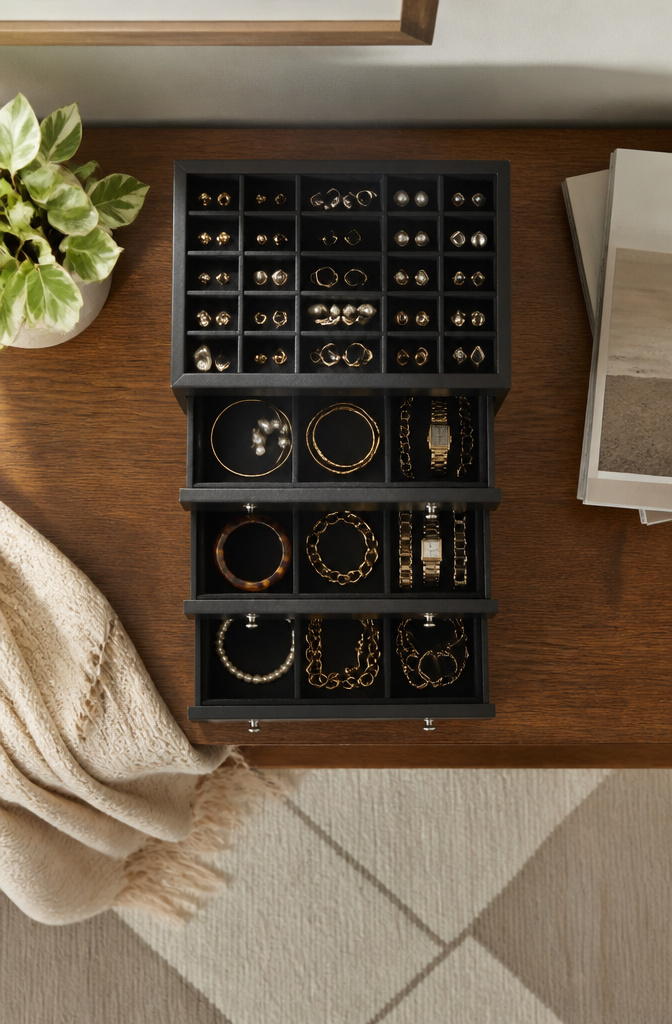
A jewelry collection that spills across three dresser drawers finally found its match in the Songmics Jewelry Organizer, a piece built for volume first and aesthetics second.
Six drawers stack beneath a top tray ringed with necklace hooks, turning what used to be a half-hour morning dig into a two-minute retrieval.
The compartments run small to large, so stud earrings stay separated while chunky bracelets and watch bands claim their own real estate.
The trade is footprint. At roughly 11 by 7 by 13 inches, it demands more counter space than a single-tier stand and looks more storage unit than display piece.
For renters or anyone rotating jewelry seasonally, the sheer capacity means one organizer replaces the scattered boxes and ziplock bags that multiply in closet corners.
The velvet-lined drawers slide smoothly enough, though the pressed-wood frame will show wear faster than hardwood alternatives if you yank drawers open daily.
What convinced me, reading through a dozen of these capacity-focused options, is that Songmics commits fully to function rather than hedging with decorative compromise.
The glass lid on top lets you scan contents without opening, a small detail that matters when you own enough to forget what you have.
For the person whose collection outgrew their current system two birthdays ago, this is the practical reset that stops the overflow.
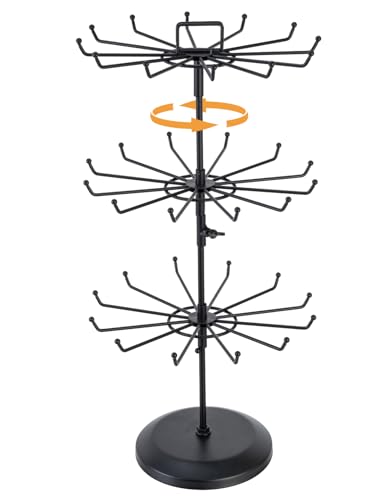
Retro style metal wire spinning jewelry necklace tower display stand in a matte black powder-coat finish with a top handle that doubles as a card or sign holder **Some assembly required**
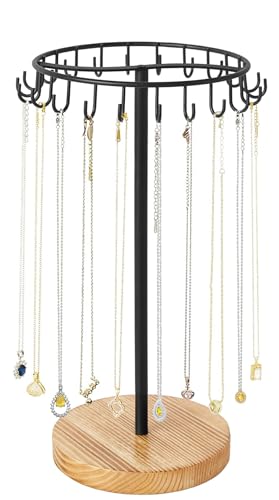
Larger storage capacity necklace holder stand:The necklace holder rack has 22 hooks,providing enough space to store and display your necklace.Convenient for you to store your necklaces in one place while avoiding them getting tangled together.

✔SHAPE - This jewelry stand is designed to like tree with birds.detachable design, comes in 2 pieces.
9. Godinger Jewelry Stand
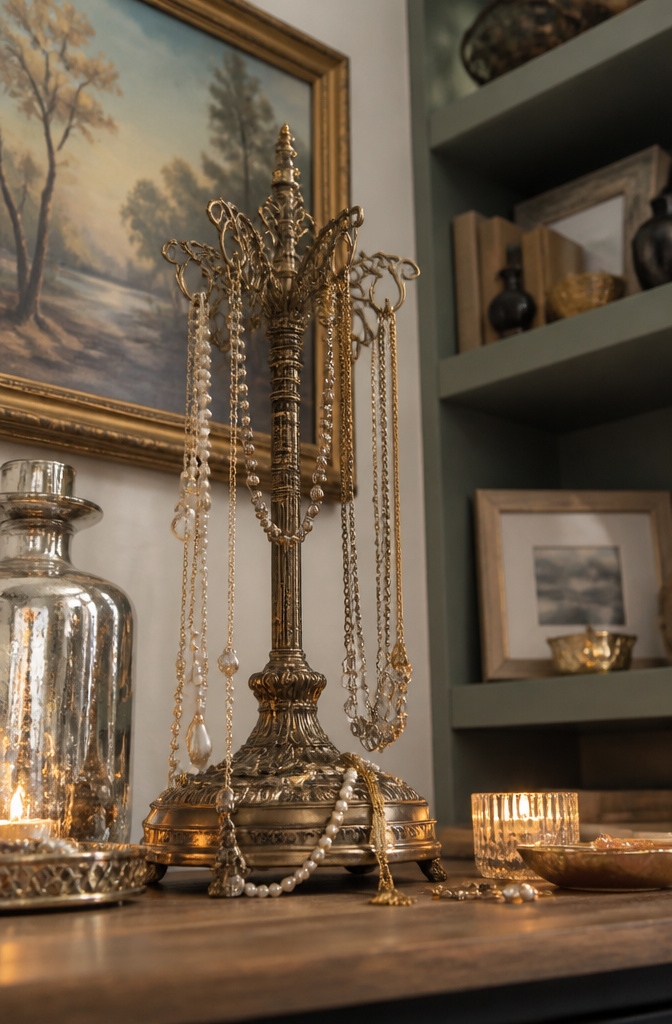
A Godinger jewelry stand sits somewhere between furniture and storage, and that tension is exactly what makes it work in a room that already has enough clutter.
The metalwork tends toward scrollwork and vintage finishes that read closer to a decorative etagere than to the clean rods of a modern organizer.
You hang a necklace on one of these and the piece becomes part of the display, not just an item waiting to be worn.
The risk is obvious once you live with it: the stand can swallow your jewelry visually. Ornate arms compete with pendants, and a crowded base turns into visual noise fast.
What convinced me, reading through a dozen of these, is that the owners who keep them functional limit themselves to three or four statement pieces and leave the rest in a drawer.
The stand becomes a rotating gallery, not an archive.
Weight matters more than you’d guess with decorative builds. A lightweight Godinger piece looks substantial in photos but tips when you pull a bracelet free.
The heavier cast versions cost more and eat shelf space, yet they stay put.
That tradeoff is the whole point of the category: you are buying something that has to be looked at, not just used, and the looking costs you in footprint and in the editing you do every morning.

Jewelry Storage: Wooden jewelry box includes a mirror inside the lid and removable compartments for organizing rings, earrings, bracelets, and keepsakes.

【Elegant Crushed Diamond Glam Design】Featuring sparkling crushed diamonds and a luxurious mirrored glass finish, this mirrored jewelry box adds elegant glam decor to any vanity, dresser, bedroom, or bathroom countertop. The reflective design creates a sophisticated luxury aesthetic while beautifully displaying your favorite jewelry and accessories
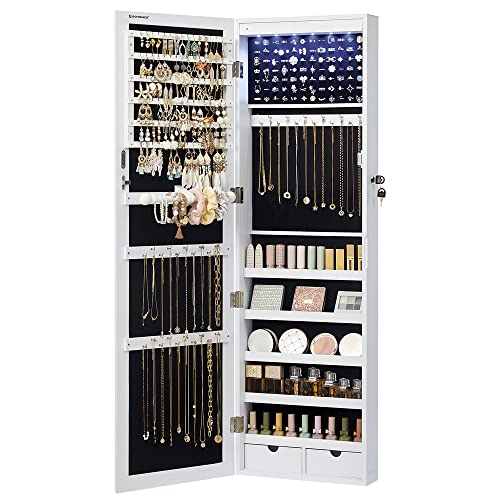
[Specialized Jewelry Cabinet] You deserve this well-constructed and designed jewelry cabinet from SONGMICS. The solid MDF body is for long-term use and the full-length mirror is framed to avoid leaving fingerprints on it every time you use the cabinet
10. Zojirushi Jewelry Organizer
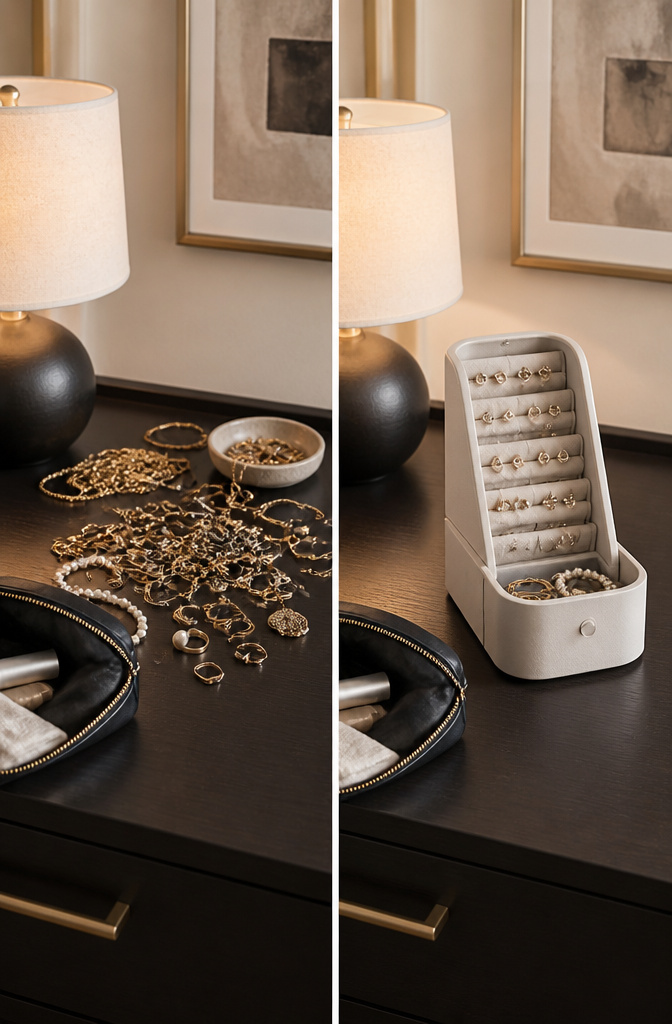
A compact jewelry organizer solves the problem most stands ignore: the space between hotel nightstands and apartment dressers where a full display topples or disappears.
The Zojirushi builds small by design, with tiered compartments that stack vertically rather than spreading across a surface. That upright footprint, roughly the size of a hardcover book standing on end, fits inside a carry-on without arguing for room.
The tradeoff shows in capacity. What convinced me, reading through how these get used, is that owners treat it as a working case rather than a collection archive.
Rings and earrings layer into padded slots; necklaces run through slim channels that keep chains from marrying each other in transit.
Bracelets and watches sit in the shallow bottom tray, which doubles as a lid when the whole thing snaps shut.
Where it falls short is display. This is not the piece that elevates a vanity.
The exterior reads practical, almost appliance-like, and the colors trend toward the muted. For someone who wants their jewelry visible and arranged as decor, this is the wrong tool.
For the reader who needs order in a 400-square-foot studio or a suitcase that closes without sitting on it, the small-box logic wins outright.

【 High Quality 】 This jewelry box is made of wood composite covered by soft velvet inside which protect your jewelry in good condition

Jewelry Organizer Set: The package includes 8 stackable jewelry organizer tray, 1 lid. The jewelry organizer trays are made of velvet, soft and comfortable, providing a good protection for your earrings, necklace, bracelet, rings.

5 in 1 Jewelry Holder: Whole size:11 x 7.1 x 6.38 inches, include 10 hooks tray for necklaces; 24 grids tray for earrings,studs,cuffs; 9 ring rolls + 4 big grids(removable) tray for rings bracelets , deeper tray with 10 slots for watch or sunglasses. You can visually see all of your precious belongs, makes selection easier,while being space savvy! These trays can be used alone or combined.Create your own jewelry box with a variety of colors and styles.
What Material Quality Means for Daily Use

Solid wood, powder-coated metal, and high-grade acrylic each handle daily wear differently, and the wrong choice shows up fast.
A soft pine ring holder I kept on my dresser picked up dents from heavy signet rings within six months; the oak replacement I swapped in still looks new two years later.
Wood wins for necklaces and bracelets because it absorbs shock instead of transferring it to delicate chains.
Metal stands feel cold and clinical until you see how they perform in humid bathrooms. Brass and steel resist the moisture that warps wooden bases and clouds cheap plastic.
That said, uncoated metal can react with silver jewelry, leaving dark marks where the pieces rest. I learned to look for powder coating or a felt liner at every contact point.
High-grade acrylic and resin fall between the two. They are light enough for travel stands and clear enough to disappear visually, but they scratch more easily than either wood or metal.
A microfiber-lined drawer with acrylic dividers protects pieces better than an open acrylic tree that leaves earrings knocking together.
The finish matters as much as the material itself. Raw wood needs occasional oiling; chipped paint on metal exposes rust-prone steel underneath.
The stands that last are the ones where the maker accounted for what happens after the first month of use.
Design Aesthetics That Actually Fit Your Space

A unique jewelry stand only earns its spot on your dresser if it actually belongs there. I learned this after bringing home a sculptural brass piece that photographed beautifully but fought every line in my bedroom.
The mid-century legs clashed with the soft, rounded furniture already in the room, and the warm metal turned muddy against my cool gray walls.
The tension is real: you want the stand to show off your jewelry, yet it has to live somewhere.
Modern minimalist designs with clean planes and muted finishes tend to disappear just enough to let a turquoise pendant or gold chain read as the feature.
Vintage styles with turned wood or velvet pads do the opposite; they announce themselves and ask your pieces to compete.
What convinced me, reading through how people actually use these, is that the smartest buy matches your room’s existing mood but steps one notch away in material. Painted wood against painted furniture becomes invisible.
Painted wood against linen upholstery or stone creates tension that helps both things read.
Small spaces punish the mismatch hardest. A stand that crowds your surface becomes clutter no matter how pretty the necklace draped on it.
The silhouette matters more than the finish: vertical lines draw the eye up and preserve counter space, while wide horizontal trays eat it.
Functionality Without Tangling

Chains left in boxes have a way of mating into knots you only discover when you’re already late. Earrings slip through the gap between velvet-lined compartments and rattle around the base until one disappears.
Bracelets draped over posts too slim for their width stretch out of shape by morning. A unique jewelry stand earns its place by stopping these failures before they start.
Necklaces need height and separation. The best stands hang each chain from its own hook or bar, spaced far enough apart that the clasps never touch.
Anything less, and you’ll spend ten minutes with a pin and a magnifying glass on a Tuesday night.
Earrings do better on open grids or shallow dishes than in deep wells. The post backs catch, the hooks tangle, and the pair you wanted is suddenly archaeology.
Ring holders with individual slots keep stone settings from knocking against metal bands that scratch them.
Bracelets need width proportionate to their opening. A post meant for rings will warp a cuff overnight.
The right diameter lets the piece rest in its natural shape, weight distributed rather than pinched.
A decade of jewelry collecting has taught me that where you keep your treasures matters as much as the treasures themselves. Otherwise, you risk scuffed gold, tangled chains, or, even worse, the heartbreak of something going missing.
That collector’s warning about loss and damage is what separation and spacing translate to in daily use. The stand that looks prettiest on your dresser is the one that keeps every piece reachable and intact.
Sizing Your Stand to Your Collection
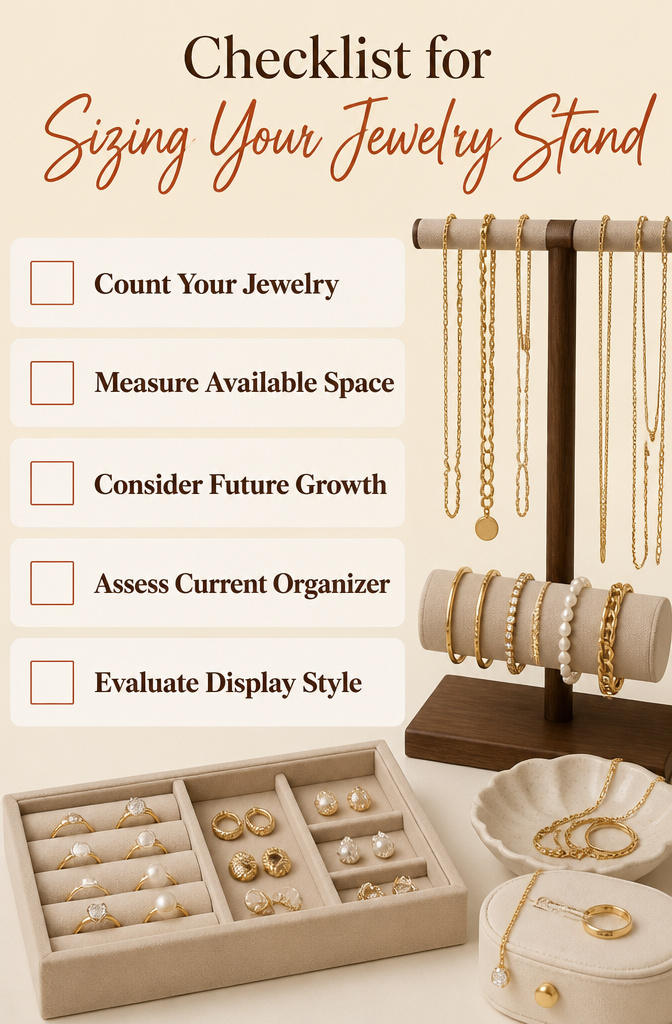
A decade of jewelry collecting has taught me that where you keep your treasures matters as much as the treasures themselves. Otherwise, you risk scuffed gold, tangled chains, or, even worse, the heartbreak of something going missing.
I have over 200 pieces of jewelry that I store across a number of trays, cases, and even a miniature curio cabinet.
But the right jewelry organizer for you is really about what you have, whether that’s a large collection of inherited heirlooms or a small slate of demi-fine pieces.
Buying too small is the error most people make twice — once when they underestimate how quickly a collection grows, and again when they repeat the mistake with the replacement.
A stand that fits your current twelve pieces perfectly will leave you shopping again in six months if you buy even casually.
Too large brings its own problem: necklaces slide off angled bars, earrings scatter across trays designed for triple the count, and the whole display starts to look like a shop waiting for stock rather than a personal collection.
The balance sits somewhere between eighty percent full, which looks intentional, and the clutter that comes from cramming.
Frequently Asked Questions
What is the best jewelry organizer?
The best jewelry organizer depends on how your collection lives and grows. Stackers wins for anyone whose collection shifts size, since you add trays instead of replacing the whole unit.
Umbra suits necklace-heavy collections in tight spaces, while Songmics handles volume when pieces have already overflowed drawers. Match the stand to your habits, not just your current count.
How do I organize my jewelry?
Start by separating pieces by type and how often you wear them.
Hang necklaces at staggered heights so chains never overlap, keep earrings in open grids or shallow dishes where posts stay visible, and store rings in individual slots so stone settings do not knock against metal bands.
Daily pieces belong in the shallow top drawer or at eye level; everything else drops into lower tiers you open less often.
What materials are best for jewelry stands?
Wood absorbs shock and protects necklaces and bracelets from dents, though it needs occasional oiling and can warp in humid bathrooms.
Powder-coated metal resists moisture and stays stable on counters, but uncoated metal can react with silver and leave dark marks.
High-grade acrylic and resin work for travel since they weigh little and disappear visually, yet they scratch more easily than either wood or metal.