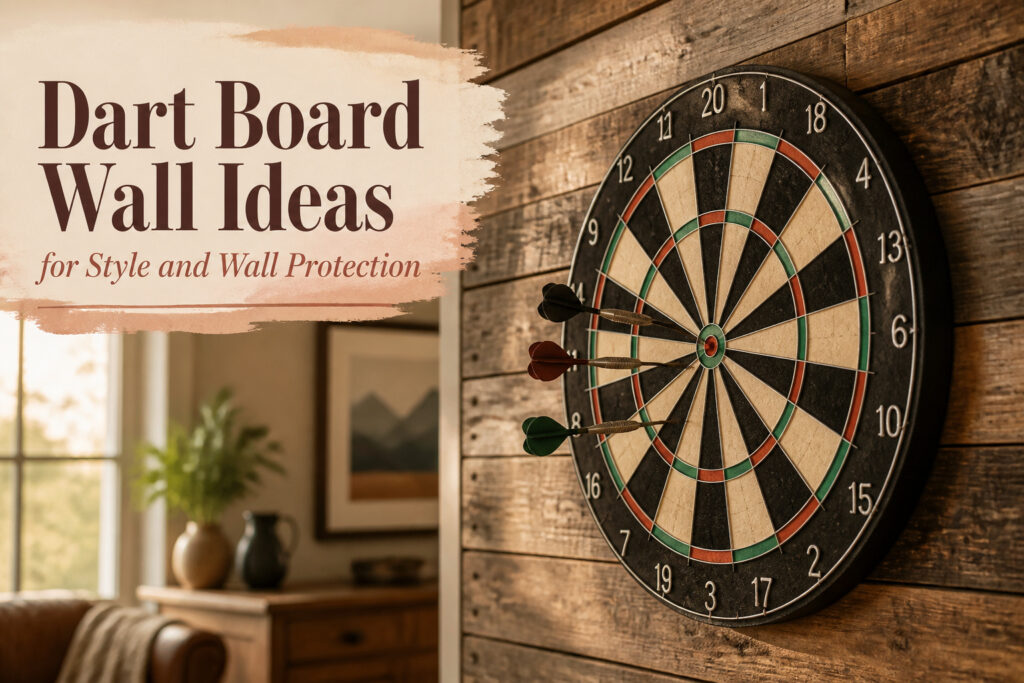
A dart board wall idea works or fails on one detail: whether it catches the steel-tips you actually throw, or just the soft-tips you planned to buy. The 0.47-inch felt panel that saves drywall from bounce-outs does nothing for a slatted barn-wood surround that lets darts slip through to the plaster behind it. Reclaimed wood with foam backing covers both, but only if the backdrop extends at least 12 inches past the board’s edge on every side.
1. Rustic Wooden Backdrop
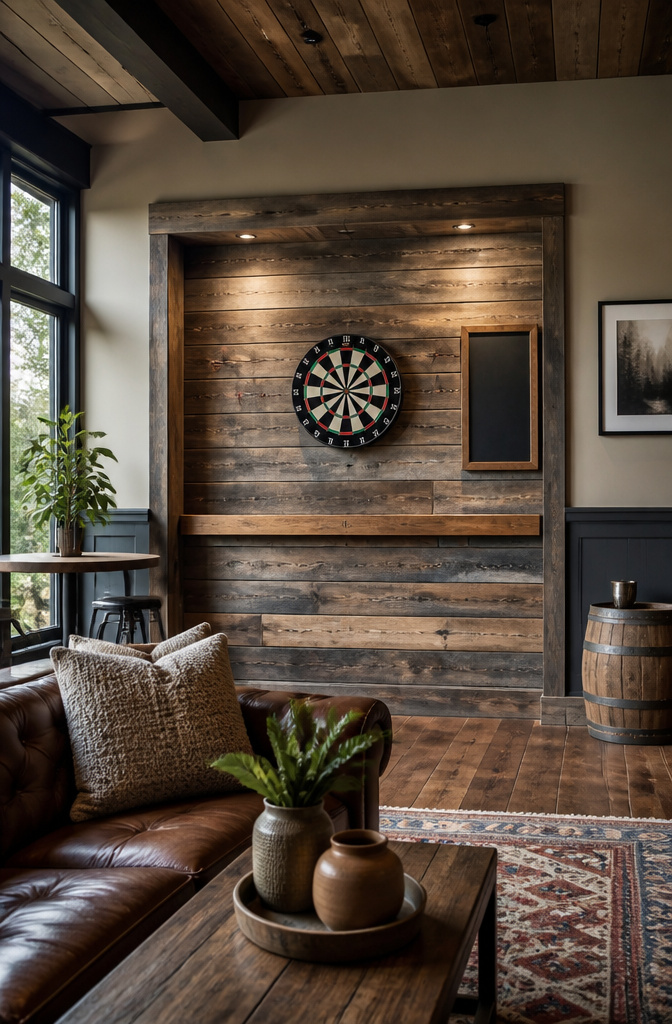
Reclaimed barn wood turned on its side gives a dartboard surround the kind of visual weight that sheetrock never will. The weathered grain, all silvery checks and iron-stain streaks, sits against the board’s black and red face like two different eras of handmade craft arguing politely. Stray darts that miss the wire bury themselves in softwood rather than drywall, and the damage becomes part of the character instead of a repair bill.
Two approaches show up repeatedly in builds people actually finish. One runs the boards vertically in a wide panel, framing the board with enough margin that a wild throw from six or eight feet out still finds wood. The other builds a slatted wall, gaps and all, which reads lighter but catches fewer darts cleanly. The solid panel wins if you throw steel-tips; the slatted look works for soft-tips or for display boards that see more photo shoots than league nights.
Eye-level mounting matters more than most people think, and the barn wood gives you a natural reference line. The center bull sits at 5 feet 8 inches from the floor to match regulation height, and a horizontal board run at that level makes the measurement visible without a tape. Dark stain or weathered finish both work; the chalkboard score strip some builders add next to the board wears better against raw wood than against painted drywall.
2. Vintage Framed Dartboards

A pub-era dartboard with its faded cork and worn numbering already carries character. Framing one turns that wear into the point rather than hiding it, making the board display-worthy art that still catches darts.
The frame itself does the wall protection work. A deep shadow box or wide molding extends two to three inches beyond the catch ring, so a dart that misses the outer wire still buries in wood or mat board instead of drywall. Gold metal frames suit boards with painted metal bands; rough-sawn oak matches the ones with rope or leather trim. I would skip narrow frames entirely. They look delicate against the bulk of the board and leave too little margin for error on a throw.
Shadow boxes add the most depth, letting you stage antique darts or a scorecard behind glass without sealing the board itself. The tradeoff is weight and cost. A standard 18-inch board needs roughly 24 inches of framed diameter, which gets heavy fast in hardwood. Two approaches split the difference: mount the board on a recessed backing so the frame sits flush, or choose a lighter open frame with no glass and let the board breathe. The first reads more like gallery art; the second stays truer to pub utility.
3. Dartboard as Wall Art

Angling a dartboard a few degrees off true vertical shifts the whole room’s reading of it. The board stops looking like equipment waiting for use and starts reading as sculpture with a secret function. In a gallery wall mix, that tilt lets the face catch light differently from the neighboring frames, so the wire numbers cast small shadows against matte prints and photographs that share the same color range.
The wall protection question gets trickier here. A board surrounded by framed pieces can’t carry a wide cork surround or a painted plywood backboard without visually shouting over the art. The usual catch-ring or cabinet that protects drywall from stray steel-tips becomes a design problem, not a solution. Smaller frames hung tight to the board’s edge, maybe six to eight inches out, act as informal bumpers, but a missed throw at that angle skips differently than one at flat vertical. Gallery-wall density means one deflection can tag a photograph glass or a thin frame corner.
Two ways to play this: keep the surrounding frames in the same tonal family so a scuff reads as patina, or pull the dartboard slightly forward on a spacer so missed darts fall behind the plane of the art instead of sliding along it. The spacer wins if the wall color behind is already dark; the tonal match wins if you want the whole cluster to read as one intentional composition from across the room.
4. Interactive Wall Art with Darts

A large canvas with bold colors and intriguing patterns turns the wall behind your board into removable interactive wall art. Removable adhesive strips let you swap the backdrop whenever the room needs a reset, no patching or repainting required. The strips need to hold firm against the impact energy of nearby throws, so check the weight rating on the package and buy well above the canvas weight itself. A 28.5-by-42-inch backboard from the hardware side of this project runs about eight pounds dry, so the adhesive you choose should list a hold at least double that to keep the canvas from sagging after a humid weekend. Swapping designs every few months keeps the setup from going stale, and the canvas itself catches stray darts that miss the board entirely.
5. Themed Dart Board Corner

A corner setup keeps missed shots contained to two walls instead of spreading damage across an open flat surface. One source points to tropical and sports-bar themes as two directions that actually work: palm-leaf prints and tiki mugs for the first, neon and vintage memorabilia for the second. The seating makes or breaks whether anyone stays. Bean bags or bar stools placed at an angle let spectators watch without crowding the throw line, and a small fridge tucked nearby removes the back-and-forth to the kitchen that kills momentum during game nights. Corkboard or felt wall panels behind the board catch the darts that miss, and because the corner naturally frames the area, the protection looks intentional rather than apologetic. The whole thing reads as a deliberate hangout spot, not a repair strategy in disguise.
6. Dart Board with Built-In Shelving

Built-in shelving around a dart board turns storage into a frame. The shelves hold your darts, flights, and maybe a trophy or two, but their real job is visual: they create a border that makes the board read as intentional furniture rather than hardware tacked to drywall.
Wood or metal both work, though the material needs to match the board’s finish or the whole thing looks accidental. Pinterest runs heavy on rustic wood against black wire numbers, or powder-coated steel paired with electronic boards. The gap matters more than the style. Shelves set too deep swallow the board; keep them shallow enough that the face still projects forward as the clear focal point.
Errant throws from the left or right get caught by the vertical side shelves before they hit wall. The top shelf blocks high arcs. What the shelves won’t catch is a straight miss dead center below or above, so this is partial protection, not a full backboard replacement. Sturdy mounting matters, because a shelf that wobbles under a glancing dart becomes a hazard. Local home improvement stores carry brackets rated for the weight, and the whole setup stays affordable.
7. Framed Dart Shadow Boxes
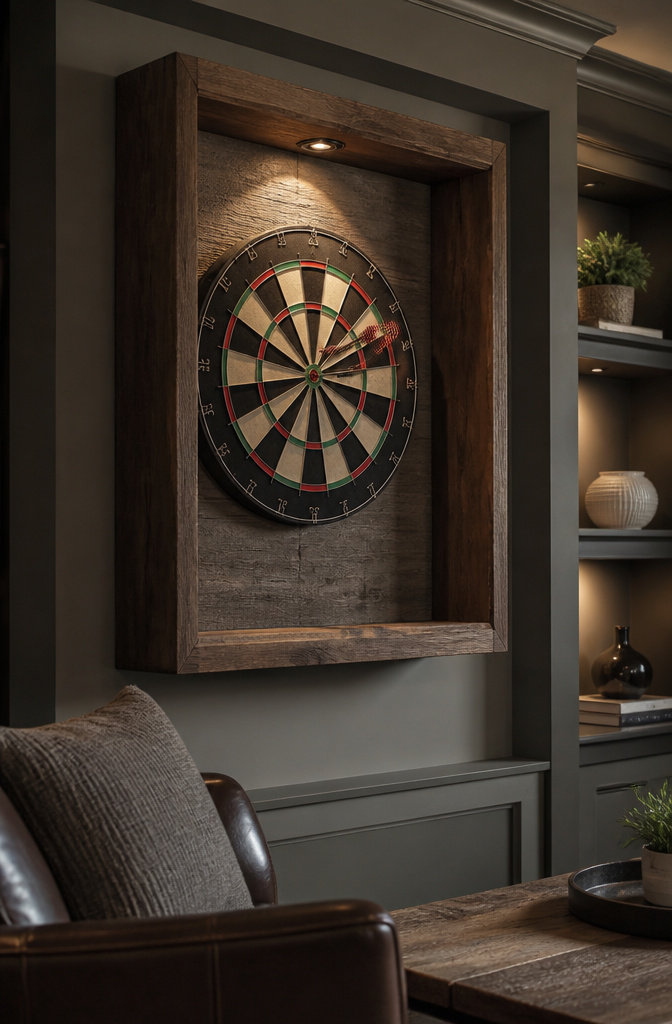
A shadow box frame needs at least four inches of depth to clear both the dartboard face and any darts left in the board, though six inches handles most setups without the points pressing glass. Glass fronts turn the whole thing into a display case: you look, you do not throw. Open fronts keep the board playable and let the frame act more like architectural trim, though dust settles on the sisal faster that way.
Foam inserts behind the board protect the wall from bounce-outs and keep the frame from carrying vibration into the plaster. Mixing frame colors with your dartboard, or hanging boxes at staggered heights, keeps the wall from reading like a grid. The real choice is whether this corner is for playing darts or for remembering them; the same box does both poorly.
8. Dart Board with Custom Art Backdrop

A printed backdrop behind the board risks looking like an afterthought once darts start missing. Cork panels solve that, and they double as the art surface itself. One approach that keeps the wall safe without turning the whole area into a target is to mount a cork section large enough to catch stray throws, then paint or print directly onto it. The texture absorbs impact, and a missed dart sinks in rather than punching through paper or vinyl.
The color choice matters more than the image detail. Bold graphics compete with the board for your eye during a throw; muted tones or a single accent color that matches existing décor keeps the focus where it belongs. Spotlights help here, too, angled to highlight the board while letting the backdrop sit in softer light.
Reclaimed wood frames the same idea differently, though it reads heavier in a smaller room. Cork wins for renters or anyone who wants to swap the look later without patching drywall. Either way, the backdrop should extend at least 12 inches past the board’s edge on every side to catch the throws that drift wide.
9. Rustic Wood Framed Dart Board
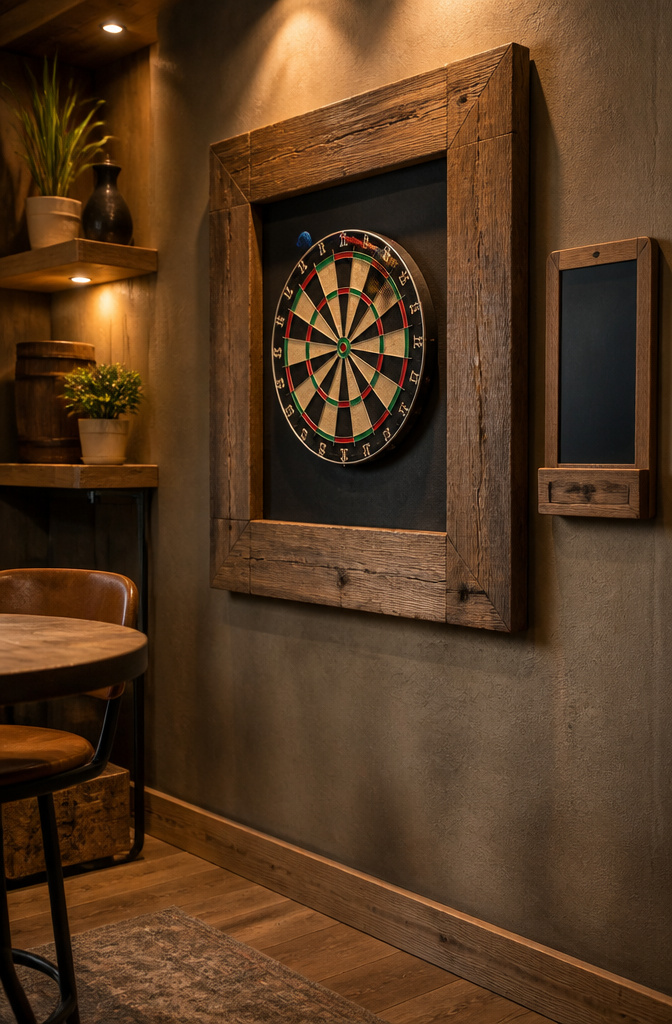
A thick wood frame around the dartboard gives you the warmth of farmhouse style without covering the whole wall in planks. Reclaimed wood carries the most character for this look, and the eco-friendly angle matters to plenty of buyers right now. The frame itself does real work: that solid border catches errant darts before they reach drywall, acting as a baffle that a bare board never could.
Stain choices run from rich dark tones to weathered finishes that look borrowed from an old barn. Either direction fits modern farmhouse or classic cabin rooms. Hang the board at eye level so the frame sits where it reads as intentional architecture, not an afterthought. A chalkboard section tucked beside the board keeps score without breaking the rustic mood, and foam backing behind the mount saves your paint from the occasional miss that slips past the frame.
Materials That Protect Walls

Reclaimed wood gives a dart setup its personality, but foam backing is what actually saves your drywall. The wood frame absorbs the occasional bounce-out and frames the board nicely, yet the darts that sail wide still hit with enough force to chip paint or leave pockmarks. A layer of foam behind the mount, or a felt panel like the Fluxynara protector at 0.47 inch thick, spreads that impact so the wall itself takes almost nothing.
Cork panels sit somewhere between the two. They look warmer than black foam and handle stray darts better than bare wood, but they compress over time and the holes start to show. For a basement or garage where function beats form, foam or felt wins. For a game room where the backdrop itself is part of the decor, reclaimed barn wood with cork behind it covers both needs without looking pieced together. The wood takes the visual weight; the cork takes the hit.
Lighting the Dart Area

Soft lighting turns the dartboard into something you actually want to look at when no one is throwing. A dimmable wall sconce or a narrow-beam track light positioned above and slightly in front of the board does this without the glare of an overhead fixture. The light should hit the board from roughly a 30-degree angle forward, which keeps your own head and arm from casting a shadow across the doubles ring while you are lining up a shot.
Bulb temperature matters more than most people think. Cool white or daylight bulbs, anything above 4000K, wash out the red and black sections of a standard London board and make the wire dividers harder to read against the surface. Warm white, around 2700K to 3000K, keeps those colors accurate to the eye and the whole face easier to read at a glance. I learned that after swapping in a daylight LED and wondering why my grouping looked worse in the evenings than it did under afternoon window light. The board had not changed. My eyes had.
Themed Seating and Decor Touches

Pub stools with an Irish theme sit lower than standard kitchen seating, which puts the thrower closer to the board and tightens the angle of each shot. That compact arc concentrates wear in a smaller zone on the wall behind the treble twenty, so the backing material needs to be denser in that exact spot. Leather armchairs in a gentlemen’s club setup do the opposite; the higher seat and deeper cushion push the player back, flattening the trajectory and spreading hits across a wider swath of cork or felt. Industrial benches, the kind you see in warehouse-style rooms, are the least forgiving because their hard edges lock posture in place. A thrower sitting on a plank bench cannot shift forward to compensate for a long dart, so the wall behind the board takes punishment at a consistent height rather than a scattered pattern. Matching the seating to the theme is only half the task. The other half is reading what that seating does to your stance, then sizing the protector behind the board to match the damage pattern your body will actually produce.
Frequently Asked Questions
What are some creative dart boards wall ideas?
Rustic wooden backdrops, vintage framed dartboards, dartboards mounted as wall art with a slight tilt, interactive removable canvas backdrops, themed corner setups, built-in shelving frames, shadow boxes, and custom art backdrops on cork panels all work well. Each gives the setup a distinct look while also handling stray throws. The solid barn-wood panel, for example, catches steel-tips and gains character with each hit, while a tilted board in a gallery wall reads as sculpture that happens to take darts.
How can I protect my walls from dart damage?
Foam backing behind the mount is what actually saves drywall, spreading impact so the wall takes almost nothing. Cork panels and felt protectors like the 0.47-inch Fluxynara also work; cork looks warmer but compresses over time and shows holes. Reclaimed wood frames or surrounds catch darts before they reach the wall, and a backdrop extending at least 12 inches past the board’s edge on every side catches throws that drift wide. Built-in shelving catches errant throws from the sides, and a corner setup naturally contains misses to two walls instead of an open flat surface.