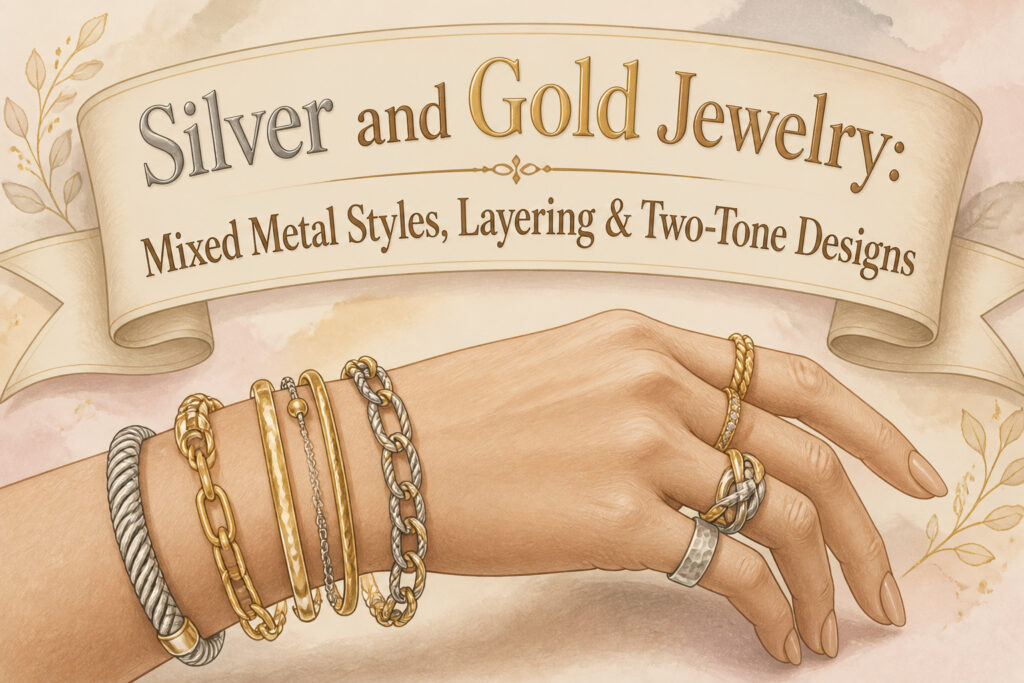
Silver and gold jewelry is the practice of wearing both metals together, whether in a single mixed-metal piece or by layering separate items. The old rule of one metal per outfit has collapsed, but the mix still fails when it looks accidental rather than chosen. A two-tone design like David Yurman’s Madison Chain Bracelet, with its alternating 18K gold and sterling silver links, proves the combination can read as intentional from the start.
Mixed Metal Jewelry

Mixed metal jewelry does the work of matching for you. Sterling silver and 18K gold sit together in a single piece, so the piece goes with whichever metal your other jewelry happens to be. David Yurman built a whole line on this idea, blending the two metals with what the brand calls a sculptural sensibility. The DY Madison Chain Bracelet puts that into practice with smooth and Cabled 18K gold links alternating with silver ones, a bold contrast that still reads as one coherent bracelet rather than two forced together. I used to think two-tone meant compromise, that you were choosing neither gold nor silver properly. The Madison changed that for me; the 5.5mm width sits flat enough for daily wear but the mixed links catch light differently than a solid chain would. With 214 mixed-metal pieces in Yurman’s current range, the approach has clearly found its audience. For someone building a jewelry collection that needs to work across occasions without constant swapping, mixed metal is the practical solve.
Two-Tone Jewelry

The surest way to stop second-guessing your metal mix is to let one piece do both jobs. Two-tone jewelry builds silver and gold into a single design, so the combination is already settled before you reach your mirror.
A Petite Cable Linked Necklace in silver and 18K gold handles this quietly. The links alternate metals in a small scale that reads as neutral up close and from across a room, which means it pairs with either metal in your existing collection without demanding a full wardrobe rethink. I have seen this style anchor everything from a silver chain stack to a solo gold pendant, and the 18K content keeps the warm links from looking like an afterthought against sterling.
Mejuri’s Harris Two-Tone Convertible Link Earrings at $175 work the same trick at a mid-range price point. The convertible link format lets you wear them as a single drop or doubled for a tighter line, and the two-tone finish removes the usual morning decision of which metal to commit to. At that price they sit in the brand’s typical $100 to $250 band, high enough to feel like real jewelry rather than costume, low enough that wearing them daily does not require a special occasion.
Layering Techniques

Necklaces and bracelets give the most control when mixing metals because you can adjust spacing and length until the balance feels right. Start with a delicate silver chain sitting closest to the collarbone, add a slightly longer gold piece with a small pendant, then finish with a longer silver chain carrying something bolder. The progression reads as intentional rather than accidental.
Distribute gold and silver pieces evenly across your look rather than clustering one metal on a single wrist or side of the body. A silver necklace pairs naturally with gold earrings. Stacking bracelets works better when metals alternate instead of forming solid blocks of color. This even distribution keeps one metal from dominating and lets each piece stand on its own.
Statement Pieces

The easiest way to wear silver and gold jewelry together is to let one piece do the work for you. Two-tone designs that fuse both metals in a single item remove every question about whether your stack matches, because the balance is already built in.
The Missoma Fused Two Tone Cuff Bracelet at $330 does exactly this. It takes a solid silver cuff and runs a ribbon of gold through its center, melted into the surface rather than plated on top. The result reads as intentional, not accidental, and it pairs cleanly with either metal you already own. I have seen this same approach in two-tone watches and mixed-metal rings, where a gold case against a silver band or a ring that twists both colors into one band does the same job of anchoring a look without forcing you to calculate proportions.
A piece like this also solves the morning decision. You grab it, you wear it, and whatever earrings or necklace you choose next already has permission to be either metal. The coherence comes from the item itself, not from your styling skill.
Everyday and Special Occasion Styles

The difference between everyday and special occasion silver and gold jewelry comes down to intention, not volume. For daily wear, a single mixed-metal piece does the heavy lifting: a fused cuff bracelet or a two-tone ring lets you roll out of bed and still look deliberate. I used to think I needed a full stack for the office, but one sterling silver and 18K gold Cable bracelet against a watch reads as put-together without the fuss.
Special occasions invite contrast and dimension. The same bracelet becomes the anchor for a stack, with chain links layered around it for a sculptural, intentional pile. A bold Bottega Veneta-style chain-link necklace paired with barely-there stud earrings balances statement with restraint; the drama lands because the earrings step back.
The real test is how it wears through the day. If you feel yourself adjusting or apologizing for it, the combination is off. For sensitive skin, 14k gold holds up better against daily sweat and oils than silver, which makes gold pieces smarter anchors for everyday rotation. On nights out, that concern fades behind the polish of the overall look.
Start with one two-tone piece you never have to think about. Build from there as the occasion asks for more, not because you feel you should.
Mixing Metals Without Rules

Gold and silver jewelry together used to feel like a mistake waiting to happen. The old rule was one metal per outfit, and breaking it took more confidence than most mornings allowed. That rule has quietly collapsed, and the replacement is simpler: wear what feels like you.
The shift is practical more than rebellious. Keeping a collection strictly gold or strictly silver means ignoring half the jewelry you already own. Mixing both metals lets a thin yellow-gold chain sit against a sterling silver pendant without either one looking out of place. The contrast itself becomes the point, adding depth that matching metals rarely achieve on their own.
Two-tone pieces make this even easier. A single bracelet or ring that combines both metals, like David Yurman’s Cable designs in sterling silver and 18K gold, does the mixing for you. It reads as intentional from the start, which helps if you’re still adjusting to the look. From there, layering separate gold and silver pieces feels less like breaking a rule and more like extending one.
What convinced me, reading through how these collections are styled, is that the finished look depends on texture more than color matching. Smooth gold against hammered silver, or a delicate chain against a heavier link, creates the kind of visual tension that reads as designed rather than accidental. The metals don’t need to "go together" in the old sense; they need to hold your attention long enough to register as a choice.
The only real mistake is wearing mixed metals apologetically, half-tucking a necklace or removing one ring to make the other feel right. Commit to the combination or skip it, but the middle ground, the visible hesitation, is what actually looks off.
Styling Balance

The first time I tried wearing silver and gold together, I stacked every yellow-gold bracelet on my left wrist and left the right bare except for one thin silver chain. The imbalance was obvious in every mirror selfie, though it took a friend pointing it out for me to see it. Distribute pieces evenly across your body, not by metal. A silver necklace reads better with gold earrings than with a silver pair that clusters everything north. The same logic holds for bracelets: alternating metals in a single stack beats color-blocking both wrists. Warm and cool tones do matter, but not the way rigid rules suggest. A bright sterling against buttery 14K can clash if the contrast is sharp and unintentional; letting one metal dominate slightly, maybe two-thirds to one-third, keeps the mix from looking like you grabbed jewelry in the dark. I still get this wrong sometimes, slipping on a third gold ring that tips the whole hand too warm. The fix is usually just moving one piece, a silver band to the other hand, until the weight feels level again.
Rings Bracelets and Necklaces

Mixed metal pieces do the coordination work before you even put them on. A two-tone ring with yellow gold and sterling silver already bridges both palettes, so the rest of your stack can lean either direction without looking accidental. I have watched friends struggle to mix separate gold and silver bands, only to find that one pre-balanced piece solves the whole problem.
Bracelets stack the same way. The DY Madison Chain Bracelet alternates smooth and cabled 18K gold and silver links, and that built-in contrast means you can add plain silver cuffs or delicate gold chains without overthinking the ratio. For necklaces, a two-tone chain with small links sits close to the collarbone and reads as neutral, letting you layer longer pendants in either metal without clashing.
The pieces that combine both metals intentionally, not as an afterthought, are the ones worth building around. A sculptural two-tone cuff or a crossover ring with entwined gold and silver strands carries enough visual weight that you need fewer total pieces to look finished. That is the difference between mixed metal styling that feels layered and styling that just feels busy.
Frequently Asked Questions
Can you wear gold and silver jewelry together?
Yes. Modern styling treats mixing these two metals as standard practice rather than a rule to break, and the combination adds depth that matching metals rarely achieve on their own. The only real mistake is wearing mixed metals hesitantly; commit to the combination or skip it.
How do I style gold and silver together successfully?
Distribute pieces evenly across your body rather than clustering one metal in one spot. A silver necklace pairs naturally with gold earrings, and alternating metals in a bracelet stack beats color-blocking both wrists. Let one metal dominate slightly, about two-thirds to one-third, to keep the mix from looking accidental.
What are some tips for mixing metals?
Start with a two-tone piece that combines both metals in one design, like a fused cuff or crossover ring; it does the coordination work for you. From there, layer separate gold and silver pieces by texture rather than color matching, such as smooth gold against hammered silver. For daily wear, 14K gold holds up better against sweat and oils than silver, making gold pieces smarter anchors for everyday rotation.